Santo Antônio Além do Carmo the old quarter past the Carmo
Santo Antônio Além do Carmo in Salvador: the Ladeira do Carmo walk, the Carmo churches, Cruz do Pascoal, the capoeira fort, the Museu do Mar, bay-view bars and June's trezena.
The essentials in 30 seconds
Santo Antônio Além do Carmo is the lived-in end of Salvador's historic centre: a ridge of colonial townhouses running north from the Pelourinho, reached by a five-minute climb up the Ladeira do Carmo. Along one street of about a kilometre you pass the two Carmo churches, the Cruz do Pascoal of 1743, a run of bay-view bars, the Museu do Mar Aleixo Belov and, at the far end, the old fort that has housed capoeira schools since 1981. Kitchens are busiest from Wednesday to Sunday, and the neighbourhood's own festival, the trezena of Santo Antônio, fills the first thirteen days of June. The former Convento do Carmo hotel has been closed since April 2020.
Where it is and where the name comes from
Santo Antônio is the strip of the Cidade Alta that carries on north once the Pelourinho ends. Officially the bairro is just "Santo Antônio"; the "Além do Carmo" everyone adds means "beyond the Carmo". In the late 16th century, houses spread outside the city-wall gate beside the Carmelite convent, and a street grew along the ridge beyond it. A small chapel to Saint Anthony was founded out here in 1594, and the district took its name from it.
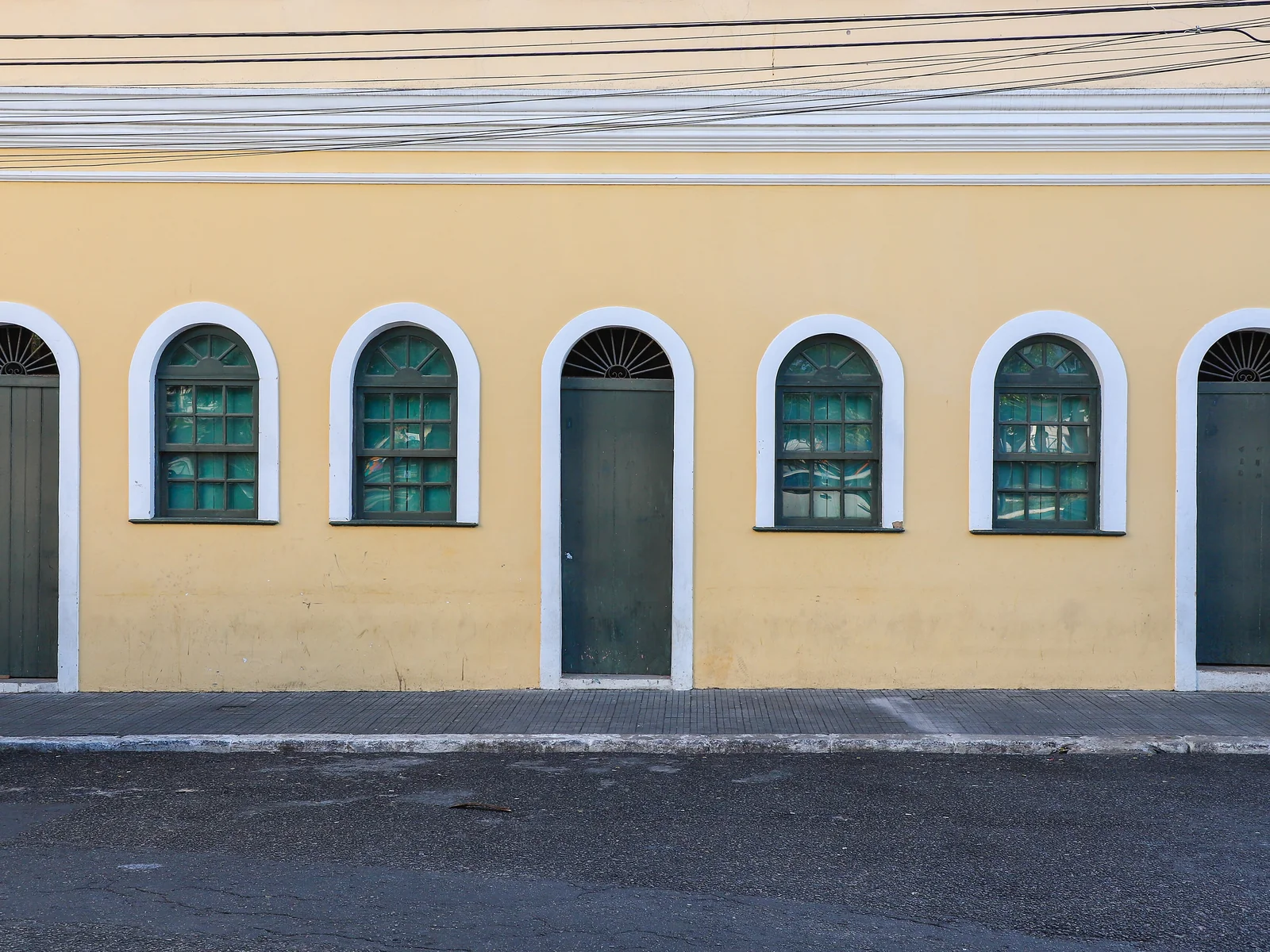
The houses are the same two- and three-storey sobrados as in the Pelourinho, but the daily life is different: street vendors still work the street every day, neighbours gather in the Largo de Santo Antônio in the evening, and the bars fill with locals as much as visitors. If you have read our Pelourinho guide, this is the walk to take once you have seen the famous squares: quieter, more residential, and with more of the bay in view. Our neighbourhoods guide places it among the city's other quarters.
The walk up from the Pelourinho
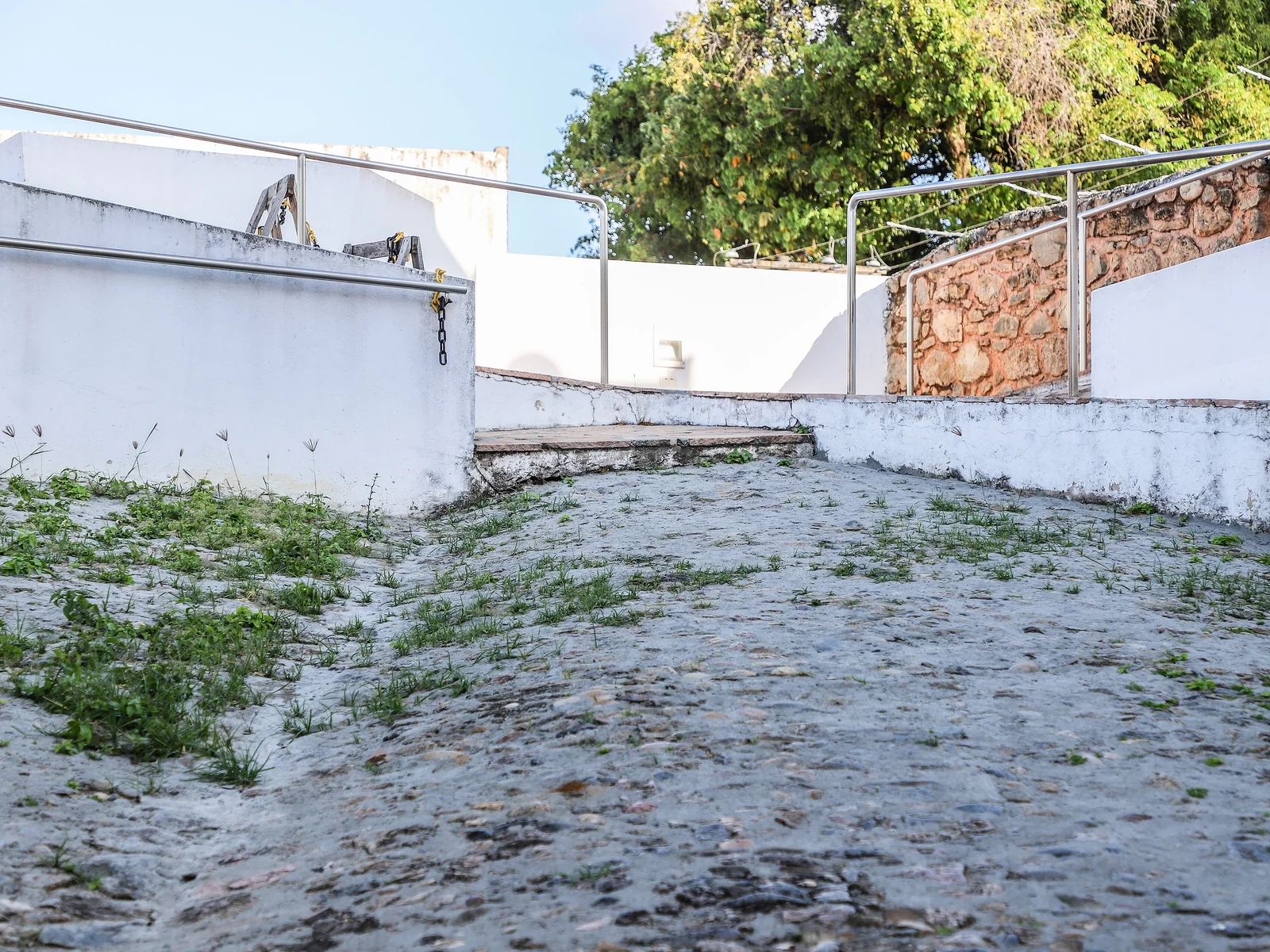
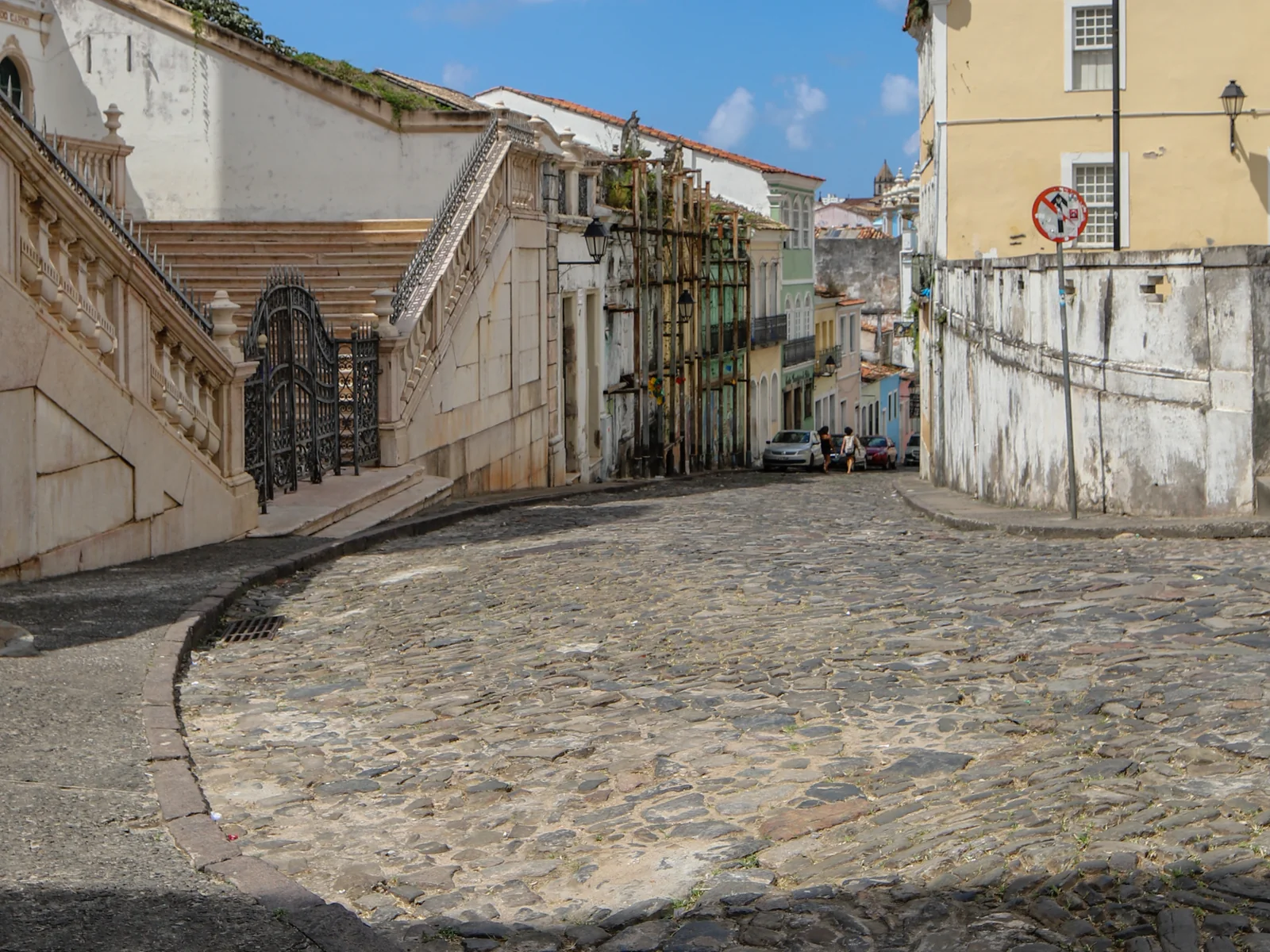
From the Largo do Pelourinho, the steep cobbled street climbing out of the lower end of the square is the Ladeira do Carmo, the only route you need. Partway up, a flight of stone steps rises off it at roughly 50 degrees: the Escadaria do Passo, leading to the Igreja do Santíssimo Sacramento do Passo. Anselmo Duarte filmed O Pagador de Promessas on these steps, and the film won the Palme d'Or at Cannes in 1962. The church above, a parish since 1718, has had long spells closed for repairs, so treat the interior as a bonus. Our Salvador at night guide covers the Tuesday music that sometimes happens on the steps.
At the top, the street levels out in front of the Carmo churches. From there the Rua do Carmo runs on along the ridge, becomes the Rua Direita de Santo Antônio at the Cruz do Pascoal, and ends at the Largo de Santo Antônio and the fort. Everything in this guide sits on that single line.
The Igreja da Ordem Terceira do Carmo
The church set back behind a broad stone staircase belongs to the Third Order of Carmel, a lay brotherhood founded in Salvador in 1636. Fire destroyed its first church on 21 March 1788, though many images were saved; the present building was started in 1803 and its lioz-stone façade finished in 1855. José Teófilo de Jesus painted the nave ceiling between 1815 and 1817, his first major commission.
The piece people come for is a cedar figure of the dead Christ carved by Francisco Xavier Chagas around 1730, with small rubies set into the wounds to stand for some 2,000 drops of blood. An ossuary and catacombs are reached through the sacristy. We could not find reliable published hours or an entry price in October 2026. Most of the old city's churches ask a small fee, roughly R$ 3 to 10 (under US$ 2), so carry small notes and go on a weekday in daylight. Our churches of Salvador guide covers the gilded interiors of the Pelourinho itself.
The Convento do Carmo and its hotel
Next door stands the much larger Carmelite church and convent. The Carmelites began their first convent on this hilltop in 1586; the present building dates from 1681 and wraps around two cloisters, and its history records that the Dutch signed their surrender of 1625 on the premises. The church, with an 18th-century silver front on its high altar, is open to the public; the convent is not.
In 2005 the convent opened as the Pousada do Convento do Carmo, the first Pousada de Portugal outside Portugal, with 79 rooms in the friars' cells. The Pestana group ran it for about 15 years and closed it on 15 April 2020. A Portuguese group, Convento do Espinheiro, bought the building in 2021 and in November 2023 announced R$ 40 million of works, with opening forecast for December 2024. We found no reopening as of October 2026, and a church guide updated in July 2026 still described the convent as inactive. If an old booking page offers the "Pestana Convento do Carmo", look elsewhere.
The Cruz do Pascoal
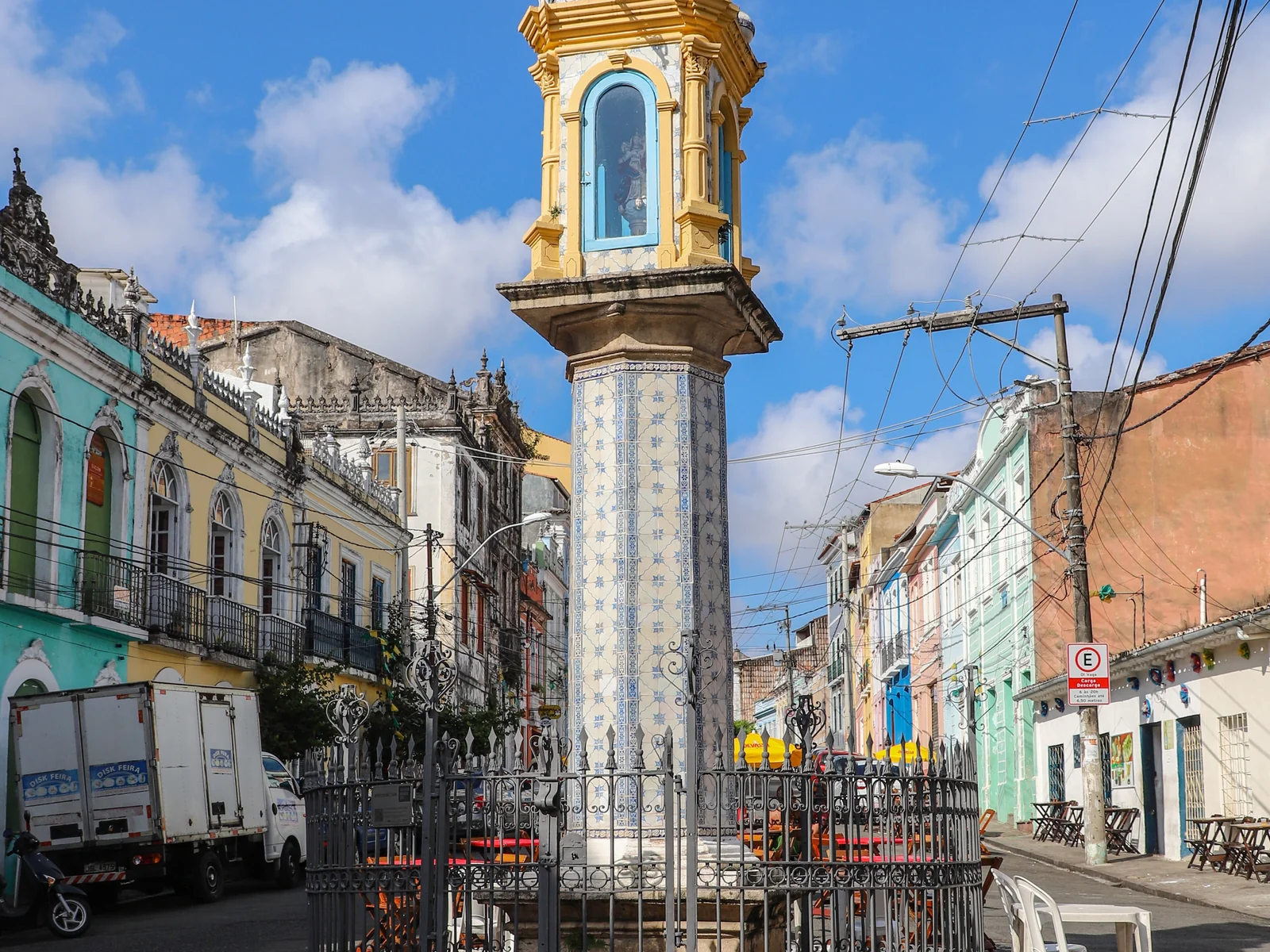
Carry on along the Rua do Carmo and the street opens into a small square with a tall stone cross. The Cruz do Pascoal was raised in 1743 by Pascoal Marques de Almeida to fulfil a promise to Nossa Senhora do Pilar, and it marks the point where the Rua do Carmo becomes the Rua Direita.
Three bars face each other here. Bar Cruz do Pascoal was opened in 1952 by a Spanish immigrant couple, Porfírio and Conceição; its back terrace looks straight over the Cidade Baixa and the bay, the dish is carne de sol with aipim purée, and in November 2025 A Tarde listed its beer, at about R$ 10 to 14 (US$ 2 to 2.70), among the cheapest in the city. R'Canto do Pascoal serves cold beer and petiscos at street tables daily from 11:30 and was once a champion on TV Bahia's Panela de Bairro show. Café e Cana, at Rua do Carmo 25, is the cocktail bar: 60th in the 2023 Exame Casual ranking of Brazil's best bars, with its house Cabra da Peste at R$ 30 (about US$ 6) in mid-2025. Our sunset spots guide has the timing for the terrace.
Along the Rua Direita de Santo Antônio
The stretch from the cross to the Largo holds most of the restaurants, bars and pousadas, in townhouses whose back rooms hang over the drop to the bay. Look for the Ladeira do Boqueirão, which runs down to the staircase of the Igreja de Nossa Senhora da Conceição do Boqueirão, built in 1726 by the Third Order of the Homens Pardos, a brotherhood of free men of mixed race. Its sacristy windows look over the bay to Itaparica, and its steps are where neighbours sit out in the evening. The side lanes keep old trade names, such as Rua dos Marchantes (the cattle dealers) and Rua dos Carvões (charcoal). You may also see a candomblé washing, when devotees clean a church's steps with flowers and scented water; watch from the side, and our candomblé guide explains the background.
Largo de Santo Antônio and its church
The street ends in the Largo de Santo Antônio, officially the Praça Barão do Triunfo: a wide square with a bandstand, the church on one side and the fort on the other. The Igreja de Santo Antônio Além do Carmo grew from the 1594 chapel and became a parish church in 1648. Irmã Dulce, canonised in 2019, was baptised and made her first communion here, and the church hosts chamber groups, orchestras and choirs through the year. In 2025 the parish was raised to an archdiocesan sanctuary.
On the corner of the yellow mansion, Yolo Coffee Bar, open since 2021, serves coffee, desserts, plates by chef Raphael Sepúlveda and cocktails; in mid-2025 it opened Tuesday to Thursday 15:00 to 20:00, Friday and Saturday 11:00 to 22:00 and Sunday 10:00 to 20:00. The Largo and the fort's walls are also the best free viewpoint in the quarter: the whole Cidade Baixa, the port and the Bay of All Saints lie below. The sun sets early, in the 17:00 hour for most of the year.
The Museu do Mar Aleixo Belov
The yellow three-storey mansion on the Largo is the Museu do Mar Aleixo Belov, opened in 2020. Belov was born in Ukraine and came to Bahia as a child with a family fleeing war; he went on to sail around the world five times on the Três Marias and the Fraternidade, and the museum holds what he gathered on them. In February 2026 the Fraternidade, a 21.5-metre sail-training ship, returned to Salvador after about ten months at sea as the first Brazilian-flagged vessel to complete the Arctic's Northeast Passage. In late 2025 the museum opened Tuesday to Sunday from 10:00 to 17:00, with tickets at R$ 20 (about US$ 4), R$ 10 half price, and free entry on Wednesdays. Our museums guide covers the city's other collections.
The Forte de Santo Antônio Além do Carmo
The fort guarded the northern approach to the city. It began as a trench dug during the Dutch invasion of 1624 to 1625; Governor Diogo Luís de Oliveira built the first fort between 1627 and 1635, and the stone walls went up in the late 17th and early 18th centuries. From 1830 it was a prison: it held Africans captured after the Malê revolt of 1835 and, from 1964, political prisoners of the military regime, until it closed in 1976. Our forts of Salvador guide sets it beside the city's other defences.
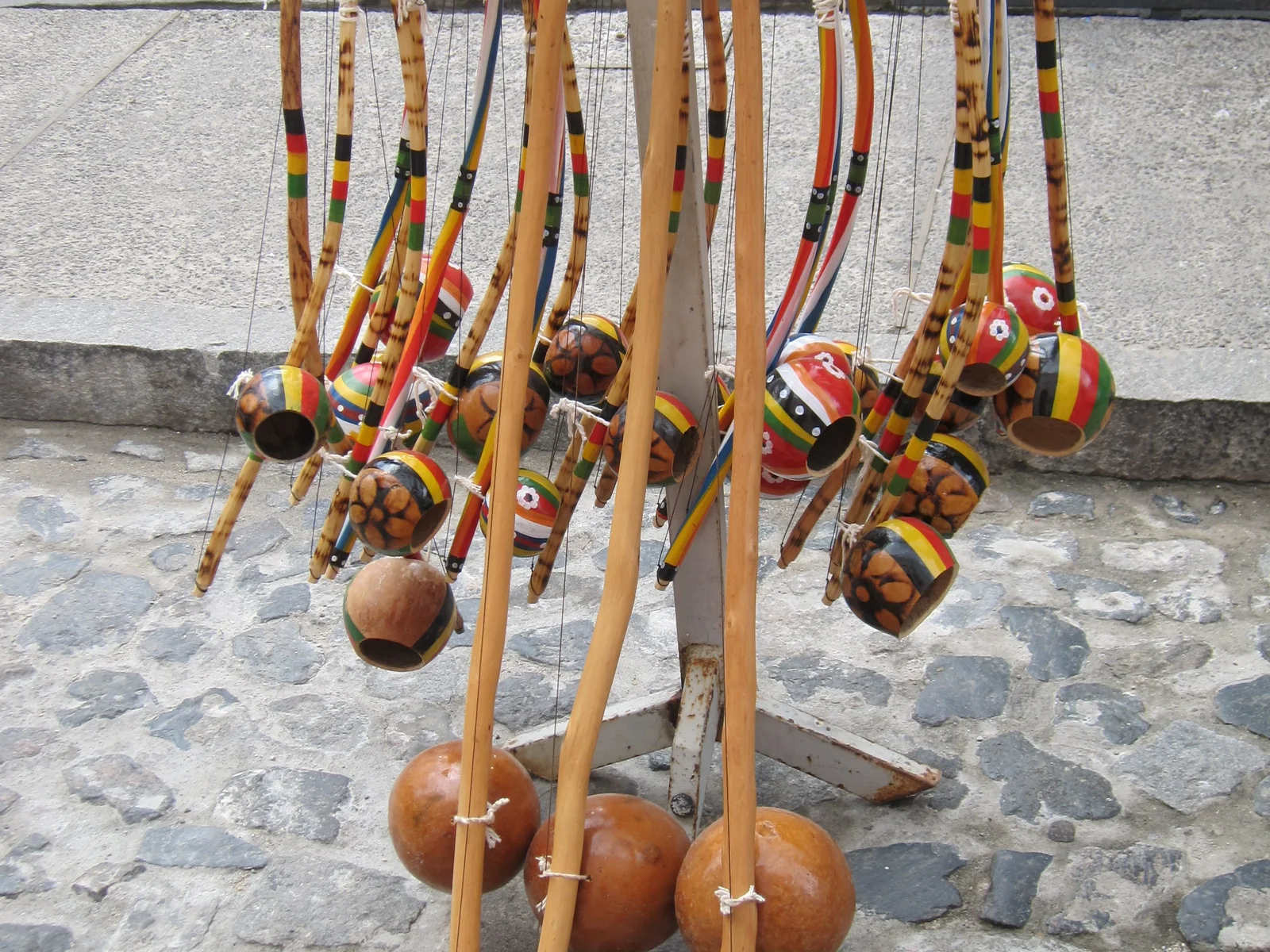
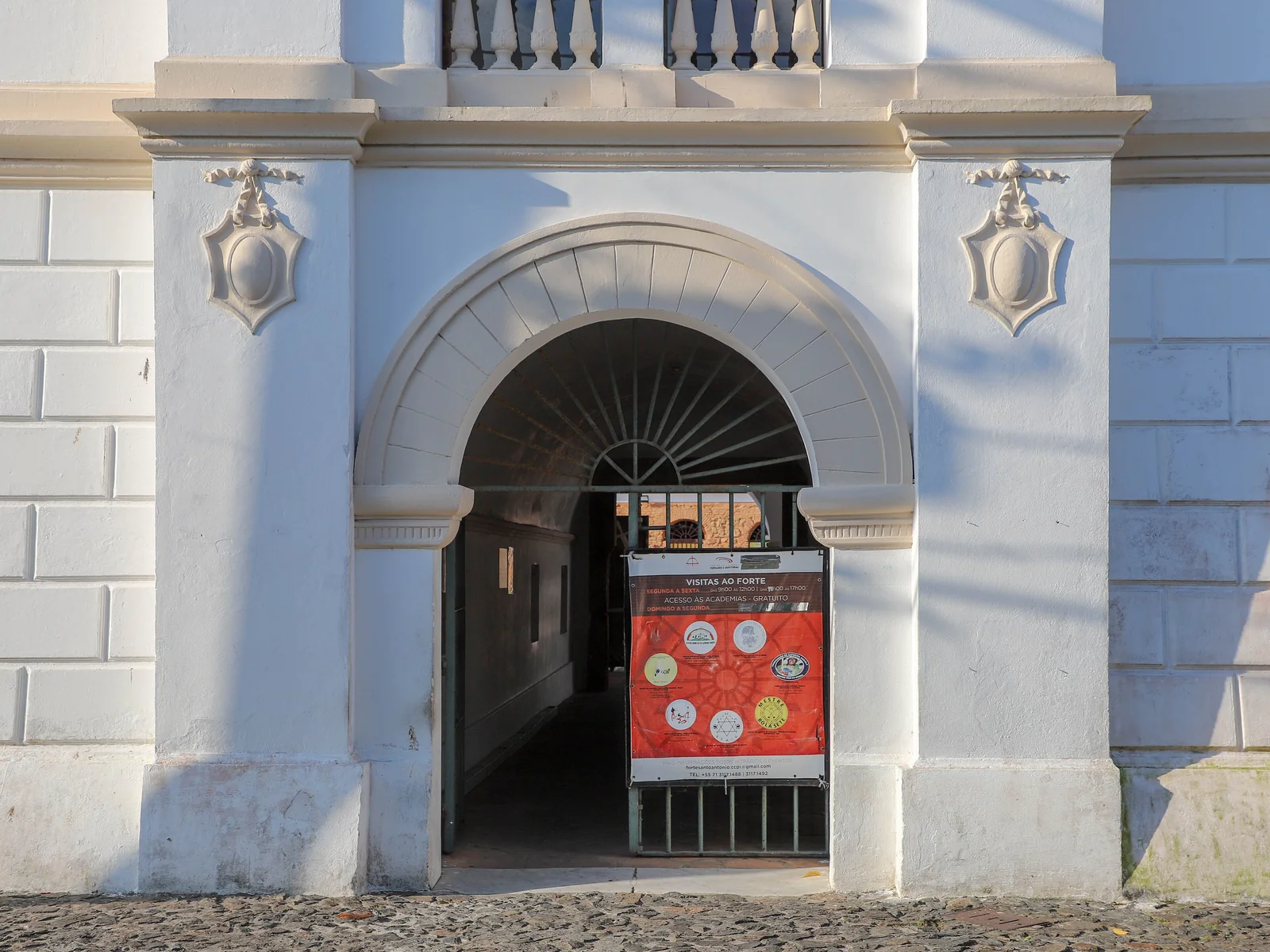
Capoeira arrived in 1981. Mestre João Pequeno, a student of Mestre Pastinha, taught his Angola academy here into his nineties (he died in 2011), and the Grupo de Capoeira Angola Pelourinho of Mestre Moraes trained upstairs. Between 1982 and 1988 the bloco afro Ilê Aiyê rehearsed in the yard. After a long restoration the fort reopened at the end of 2006 as the Forte da Capoeira, a reference centre for the art, run by the state heritage institute IPAC since November 2007. It has classrooms, a library and video archive, a memorial to the old mestres, a berimbau workshop and a parade ground of about 800 square metres, and two schools are based in the building.
Where to eat and drink
Every place below showed evidence of trading in 2025 or 2026. Hours come from mid-2025 listings and change often.
| Place | Where | What it is | Open (2025 listings) |
|---|---|---|---|
| Joca Mesa Bar | Rua Direita 90 | Three floors with bay views; regional cooking by chefs Jota Moraes and Isa Oliveira; opened April 2025 | Wed-Fri from 16:00, Sat-Sun from 12:00 |
| Isso é um Bar | Rua Direita 122 | Bay-view bar, seafood and pastéis; beers about R$ 13.50-19.90 | Wed-Fri from 16:00, Sat-Sun from 12:00 |
| Bar e Restaurante Ulisses | Rua Direita 541 | Sixty-year-old name; feijoada and regional food, bay view | Wed-Sun from 11:00 |
| Café e Cana | Rua do Carmo 25 | Cocktails and snacks facing the cross | Daily except Tuesday, from 12:00 |
| Bar Cruz do Pascoal | Rua Direita 2 | Since 1952; terrace over the bay | Mon-Sat, afternoon to late |
| R'Canto do Pascoal | Cruz do Pascoal | Beer and petiscos at street tables | Daily 11:30-23:00 |
| Daqui do Alto | Santo Antônio | Cheap neighbourhood boteco with a bay-view veranda | Daily from midday to midnight |
| Rango Vegan | Rua Direita | All-plant kitchen with a plantain moqueca | Check before you go |
For the cheapest beer in the quarter, A Tarde's November 2025 survey put Sol Brilhante second in the whole city, at about R$ 6 to 9 (under US$ 2). Vegetarians should read our vegetarian and vegan guide, which covers Rango Vegan and its neighbour Ânima.
Coffee and breakfast
Cafélier, at Rua do Carmo 50 opposite the convent, was founded by the artist Paulo Vaz in 1994 in the Pelourinho and moved here in 2004. It doubles as a small gallery, with cups signed by local artists and a back terrace over the bay; in April 2025 its coffee with whisky cost R$ 22 (about US$ 4). A few doors along, Padoca do Carmo, at Rua do Carmo 13, serves breakfast combos with a garden at the back.
The weekly rhythm
Monday and Tuesday are the quiet days. Joca, Isso é um Bar and Bar do Ulisses were all closed on both in 2025, Café e Cana shuts on Tuesdays and the Museu do Mar on Mondays, though the bars at the Cruz do Pascoal stay open. Wednesday is museum day, since entry is free, and the restaurant kitchens open from Wednesday afternoon. Weekend lunch, from noon on Saturday and Sunday, is when the street is fullest, with families at long tables and feijoada on the menus. On 2 July, Bahia's independence day, the civic parade fills the Rua Direita; see our Dois de Julho guide.
On Tuesday evenings the music moves downhill to the Terça da Bênção in the Pelourinho's squares, ten minutes away. By day the walk between the two is easy; after dark, keep to the lit line of the Rua Direita, Rua do Carmo and Ladeira do Carmo, or take an app car, as our Salvador safety guide suggests for the whole historic centre.
June: the Festa de Santo Antônio
Saint Anthony's day is 13 June, and this is his neighbourhood. In 2026 the parish ran its festival from 31 May to 13 June, opening with a new pilgrimage, the Caminho de Antônio, a walk of about 6 km from the Igreja de Santo Antônio da Barra past seven historic churches. From 1 to 12 June the trezena, the thirteen days of devotion, brought a mass every evening at 19:00. On the 13th came an alvorada at 5:30, masses from 6:00, a festive mass at 15:30, a procession at 17:00 through Santo Antônio and Barbalho, and at 19:00 the blessing of the bread, the Pão de Santo Antônio, with a craft fair and food stalls around it.
In 2027, 13 June falls on a Sunday; check the parish programme, usually out in late May. June also brings the historic centre's Sabores do Interior food route: in 2026, 22 places served São João dishes at R$ 27 to 99 (about US$ 5 to 19) until 25 June, among them Ulisses, Rango Vegan and Café e Cana. São João follows on 24 June; see our São João guide.
Staying in Santo Antônio
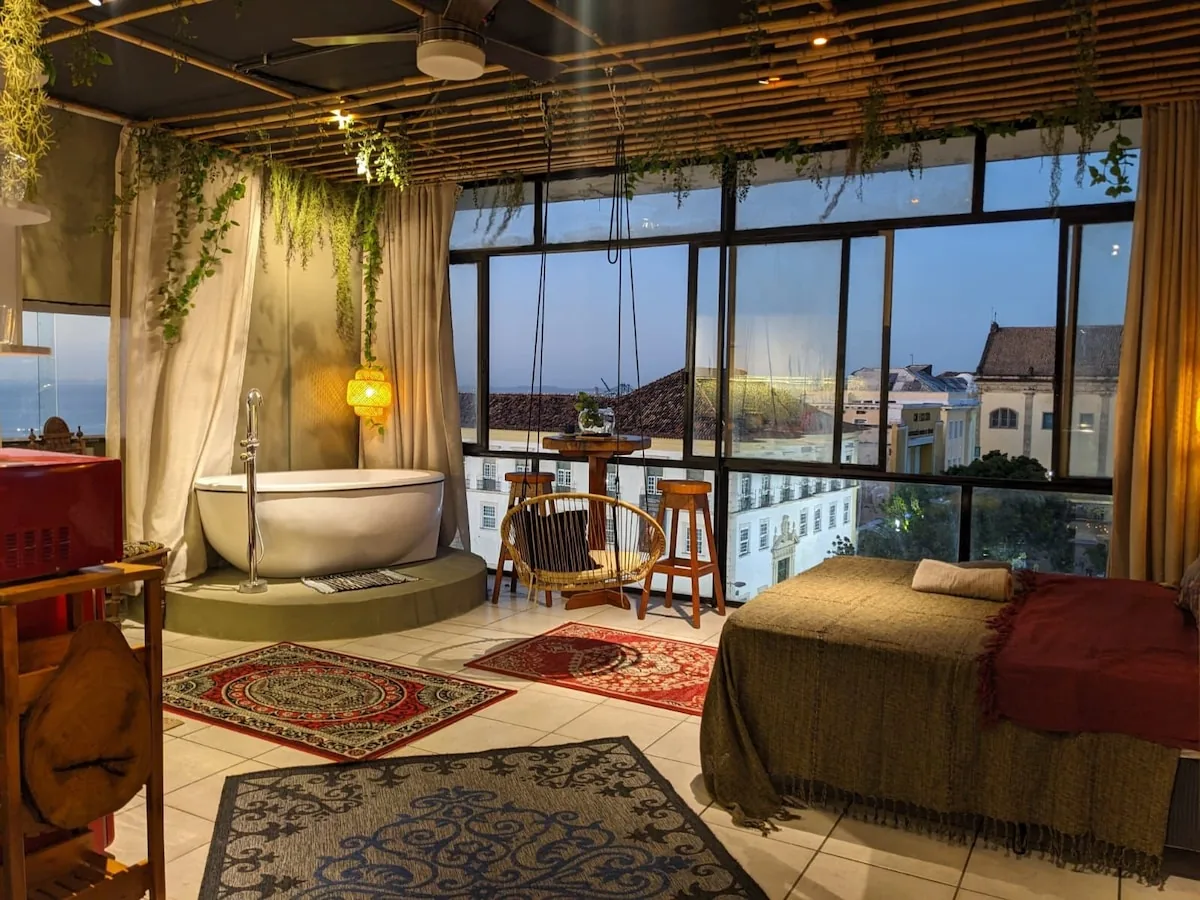
For twenty years the restored townhouses here have been turning into small pousadas, many with terraces over the bay; Pousada Des Arts shares the Joca building at Rua Direita 90, and Aram Yamí has six suites nearby. You sleep in a residential street inside the historic centre, with bars a few doors away. The trade-off is the 25 to 30 minutes on foot to the Elevador Lacerda and the steep ladeira home. Our guides to where to stay in Salvador and hotels near the Elevador Lacerda compare the options.
A simple half day
Leave the Largo do Pelourinho around 14:30 and climb the Ladeira do Carmo, stopping at the Escadaria do Passo and the Ordem Terceira do Carmo. Walk the Rua do Carmo and the Rua Direita, give the Museu do Mar an hour before it closes at 17:00, and step into the fort's courtyard. Then walk back to the Cruz do Pascoal for the sunset, or stay for dinner at Joca from Wednesday to Sunday. Our four suites are in the Cidade Alta, a few minutes on foot from the Elevador Lacerda and the Pelourinho and booked on Airbnb, so the whole afternoon starts at the door.
Frequently asked questions
How do I walk from the Pelourinho to Santo Antônio Além do Carmo?
From the Largo do Pelourinho, climb the Ladeira do Carmo to the Carmo churches, about 5 minutes. Then follow the Rua do Carmo and the Rua Direita de Santo Antônio for about a kilometre to the Largo de Santo Antônio and the fort. It is one line with no turns.
Is the Pestana Convento do Carmo hotel open?
No. Pestana closed it on 15 April 2020. A Portuguese group bought the building in 2021 and announced a December 2024 reopening, but we found none as of October 2026. The Carmo churches beside it can still be visited.
Can I watch or join capoeira at the Forte de Santo Antônio?
Yes, the fort is open to the public and has hosted capoeira schools since 1981. Timetables are not published reliably online, so go in the late afternoon or early evening, ideally Thursday to Sunday, and ask at the gate. For a guaranteed class, book a beginner's session in advance.
What is the ruby Christ in the Carmo church?
A cedar figure of the dead Christ carved by Francisco Xavier Chagas around 1730, in the Igreja da Ordem Terceira do Carmo, with small rubies in the wounds standing for about 2,000 drops of blood. Expect a small visitor fee.
How much does the Museu do Mar Aleixo Belov cost?
In late 2025 tickets were R$ 20 (about US$ 4), R$ 10 half price, and free on Wednesdays. It opened Tuesday to Sunday from 10:00 to 17:00.
When is the Festa de Santo Antônio in 2027?
Saint Anthony's day is 13 June, a Sunday in 2027, with trezena masses on the evenings before. In 2026 the 13th brought a procession at 17:00 and the blessing of the bread at 19:00. The parish publishes its programme in late May.
Sources
- Wikipedia: Forte de Santo Antônio Além do Carmo (fort history, prison, schools; checked Oct 2026).
- Wikipédia: Forte de Santo Antônio Além do Carmo (João Pequeno, GCAP, Ilê Aiyê, IPAC; in Portuguese; checked Oct 2026).
- Governo da Bahia: valorização da capoeira (Projeto Capoeira do Forte; in Portuguese; checked Oct 2026).
- Wikipedia: Church of the Third Order of Mount Carmel (history, ceiling, ruby Christ; checked Oct 2026).
- Wikipedia: Church and Convent of Our Lady of Mount Carmel (convent dates; checked Oct 2026).
- Wikipédia: Pousada do Convento do Carmo (2005 hotel, 1625 surrender; in Portuguese; checked Oct 2026).
- Wikipedia: Church of the Blessed Sacrament at Rua do Passo (steps and film; checked Oct 2026).
- Bahia Notícias: Pestana Convento do Carmo encerra atividades (closure, Apr 2020; in Portuguese; checked Oct 2026).
- Correio: Grupo português retoma obra do Convento do Carmo (sale and works, Nov 2023; in Portuguese; checked Oct 2026).
- Fui Ser Viajante: igrejas de Salvador (convent inactive, church fees; in Portuguese; updated Jul 2026).
- Virtual Museum of Lusophony: The Saint Beyond Carmo, Part II (Cruz do Pascoal, Boqueirão, Irmã Dulce; checked Oct 2026).
- Virtual Museum of Lusophony: The Saint Beyond Carmo, Part I (name, street life, 2 July; checked Oct 2026).
- Bahia Notícias: trezena e peregrinação 2026 (festival programme; in Portuguese; May 2026).
- Alô Alô Bahia / Correio: 7 bares no Santo Antônio (bars, hours, prices; in Portuguese; Jul 2025).
- Alô Alô Bahia: Joca Mesa Bar (opening, Pousada Des Arts; in Portuguese; Apr 2025).
- A Tarde: cerveja mais barata em Salvador (beer prices; in Portuguese; Nov 2025).
- Bahia Notícias: Sabores do Interior 2026 (June food route; in Portuguese; Jun 2026).
- Correio: café da manhã em Salvador (Cafélier, Padoca do Carmo; in Portuguese; Apr 2025).
- Correio: Cafélier completa 30 anos (founding and move; in Portuguese; Mar 2024).
- Bahia Notícias: Museu do Mar celebra 4 anos (hours, prices; in Portuguese; Nov 2025).
- Brasil de Fato: Fraternidade chega a Salvador (Arctic voyage; in Portuguese; Feb 2026).
Stay in the historic centre
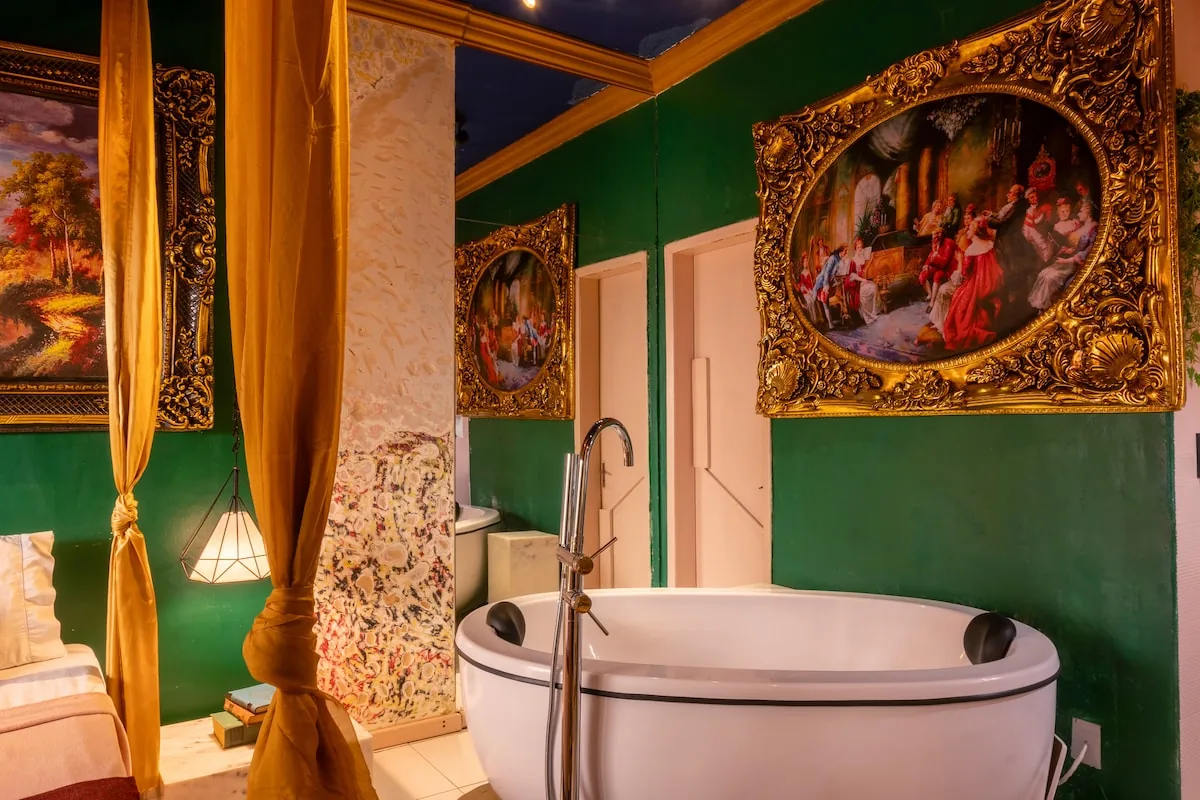
Our four suites are in the Cidade Alta, a few minutes on foot from the Elevador Lacerda and the Pelourinho. They are booked on Airbnb.


Salvador, in images
Photographs of the neighborhood, restaurant, and beach featured in this guide, with credit to each photographer.
Ready to discover Salvador?
Book one of the four Via Avantgarde suites in the Pelourinho — and receive the complete guides with recommendations for your stay.