Vegetarian and Vegan Salvador eating well off the seafood menu
Vegetarian and vegan in Salvador, Brazil: ordering acarajé plant-based, the banana-da-terra moqueca, per-kilo buffets, the fruit to know and the veg kitchens.
The essentials in 30 seconds
Going vegetarian or vegan in Salvador, Brazil is easier than the seafood-and-palm-oil reputation suggests, once you know the ropes. The Bahian classics do lean on fish, dried shrimp and dendê, yet the meat-free seam runs right through the everyday diet: acarajé ordered the plant-based way, tapioca off the griddle, a list of fruit most visitors have never met, comida a quilo buffets where you build your own plate, and a moqueca made from plantain instead of fish. A small but growing set of dedicated veg kitchens sits in Santo Antônio Além do Carmo, Rio Vermelho and Barra. Learn five phrases, keep an eye on the dried shrimp, and you eat well here.
How hard is it, really?
Salvador is a coastal city with an African-rooted kitchen, and that kitchen was built around seafood and dendê, the orange palm oil you smell before you see it. So the honest starting point is blunt: the dishes the city is famous for — moqueca, bobó, vatapá, caruru — are mostly off the table if you don't eat fish or shrimp. What surprises people is how much is left. Brazilians eat a great deal of rice, beans, cassava and fruit; self-service lunch counters put a real salad bar in front of you every day; and Salvador now has a proper handful of all-vegan restaurants. You will not go hungry. You will now and then have to ask one careful question, which is what the rest of this guide is for. Our Bahian food guide covers the meat-and-seafood canon; treat this as its vegetarian and vegan companion.
Acarajé and abará, ordered plant-based
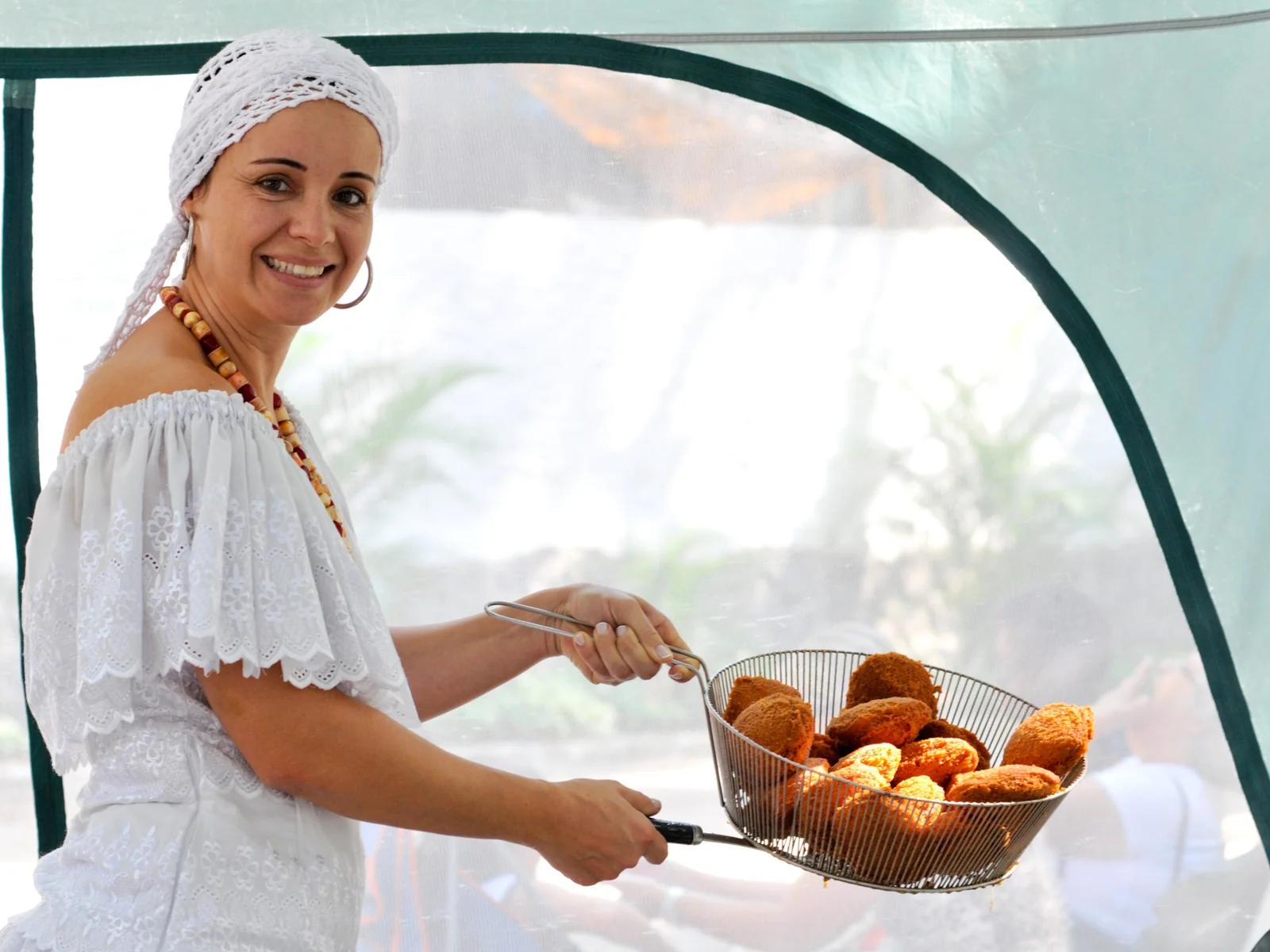
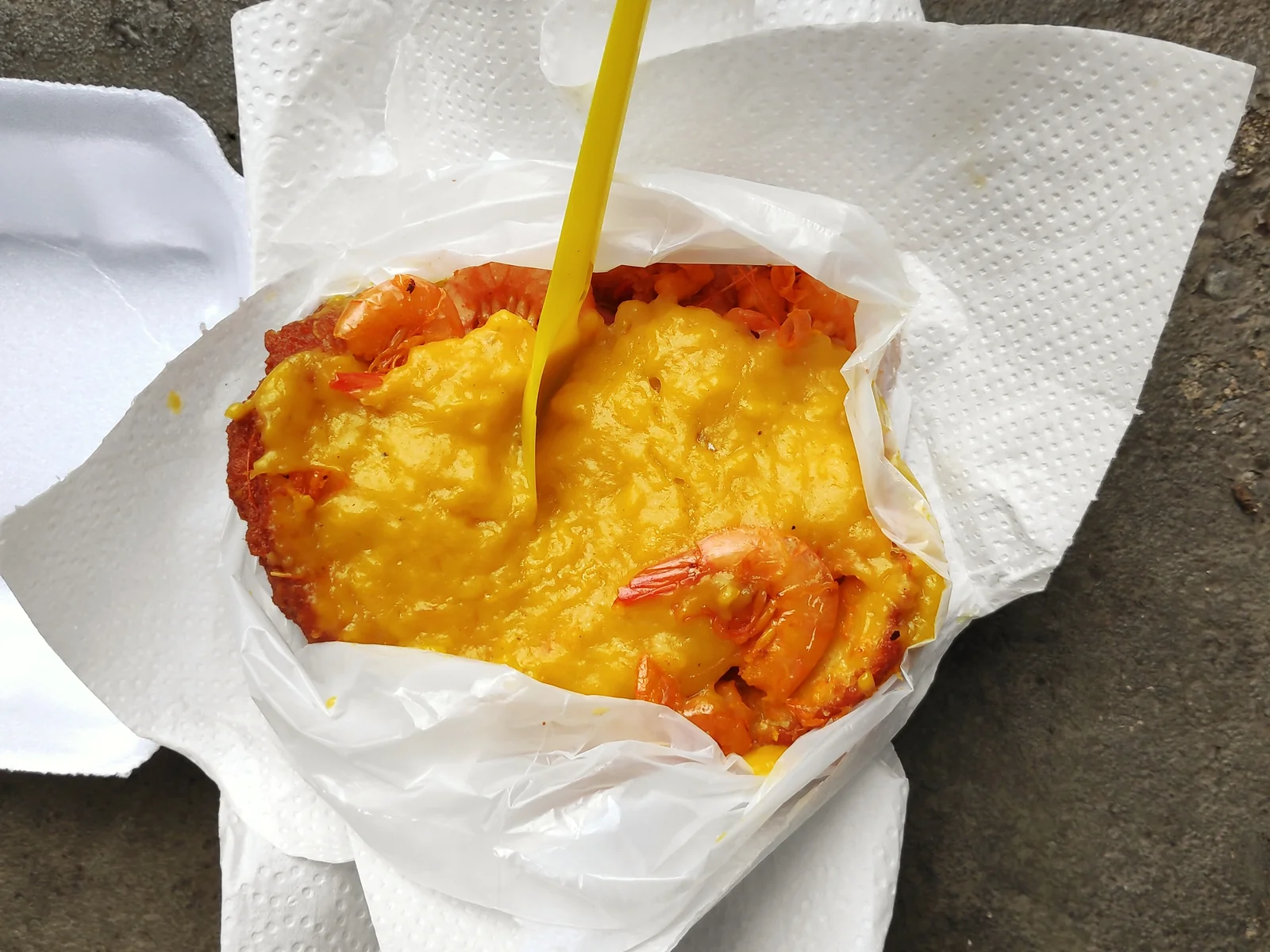
The fritter itself is friendly. Acarajé is a ball of ground black-eyed peas, onion and salt, deep-fried in dendê — a plant oil. The catch is what goes inside it. The baiana splits it open and loads it with vatapá and caruru, and both of those almost always contain dried shrimp, then usually adds whole dried shrimp on top. The fix is a short script. Ask for it só de vinagrete (just the tomato-and-onion salad) and sem camarão (no shrimp), and to be safe add sem vatapá, because the vatapá is where the shrimp hides. Most baianas take this in their stride; it is a normal request. A fully loaded acarajé costs about R$ 10 to R$ 15 (roughly US$ 2 to US$ 3), and a plain vinaigrette one is usually less. Its steamed sibling, abará, is the same black-eyed-pea batter wrapped in a banana leaf and steamed rather than fried — gentler on the stomach, but with the same warning, and sometimes with dried shrimp worked into the dough itself, so ask before you assume it is safe.
Tapioca, made in front of you
For a meat-free meal you can watch being cooked, find a tapioca stand. It is a soft, foldable crepe made from nothing but cassava starch — goma — scattered onto a hot dry griddle until it fuses into a round, then folded around a filling. Plain, it is naturally gluten-free and vegan. The sweet versions with grated coconut or banana are usually vegan too; the savoury ones lean on cheese, so ask for yours sem queijo or with vegetable fillings only if you are avoiding dairy. You will find tapioca at neighbourhood feiras, at beach kiosks and at dedicated tapioqueiras, and it costs a few reais.
The fruit universe
When all else fails, Salvador's fruit keeps you fed and happy. A juice bar — a casa de sucos — on nearly every corner will blend whatever is in season with water, or with milk unless you say sem leite. A few names worth learning:
- Jaca (jackfruit) — the giant knobbly fruit whose ripe pods are honey-sweet; picked unripe, it is shredded into carne de jaca, the pulled-pork stand-in you will see on veg menus.
- Mangaba — a soft, pale fruit of the coastal scrub, delicate and a little tart, met mostly as juice or ice cream because it bruises too fast to travel.
- Umbu — a small green-gold fruit from the dry interior, sharp and cooling, the backbone of countless roadside juices.
- Cupuaçu — the Amazon cousin of cacao, with creamy white pulp and a tart, almost chocolatey scent, turned into juice and ice cream.
- Acerola — a cherry-sized vitamin-C bomb, almost always drunk as juice.
- Graviola (soursop) — big and soft-spined, its custardy white flesh making a sweet-sour juice and a very good sorbet.
All of them are plant food by definition, cheap, and sold everywhere from carts to markets.
Comida a quilo — the everyday workhorse
The most useful words in Brazilian dining are comida a quilo: pay-by-weight, self-service restaurants where you fill a plate from a long buffet and it is weighed at the till. For a vegetarian this is the daily fallback, because you decide exactly what goes on the plate — rice, beans, farofa, sautéed greens, salads, roasted vegetables, often a dedicated meat-free dish or two. You pay by weight, with the price shown per 100 grams, so a big plate of vegetables is among the cheapest good meals in the city. The full sit-down scene is mapped in our Salvador dining guide.
Moqueca de banana-da-terra, the vegetarian flagship
The one Bahian classic that fully crosses over is moqueca de banana-da-terra — a plantain moqueca, simmered in the same golden base of dendê, coconut milk, tomato, onion and coriander, but with slabs of firm plantain where the fish would be. It is the vegetarian showpiece of the local menu, and the most reliable place to eat a fully vegan one is Rango Vegan, an all-plant cooperative on Rua Direita de Santo Antônio in Santo Antônio Além do Carmo, which lists a moqueca de banana-da-terra among its dishes and appears on the city's official moqueca map. Some traditional kitchens will also cook a vegetable or plantain moqueca on request — it never hurts to ask, since the base sauce is meat-free until the seafood goes in.
Where the dedicated vegetarian and vegan kitchens are
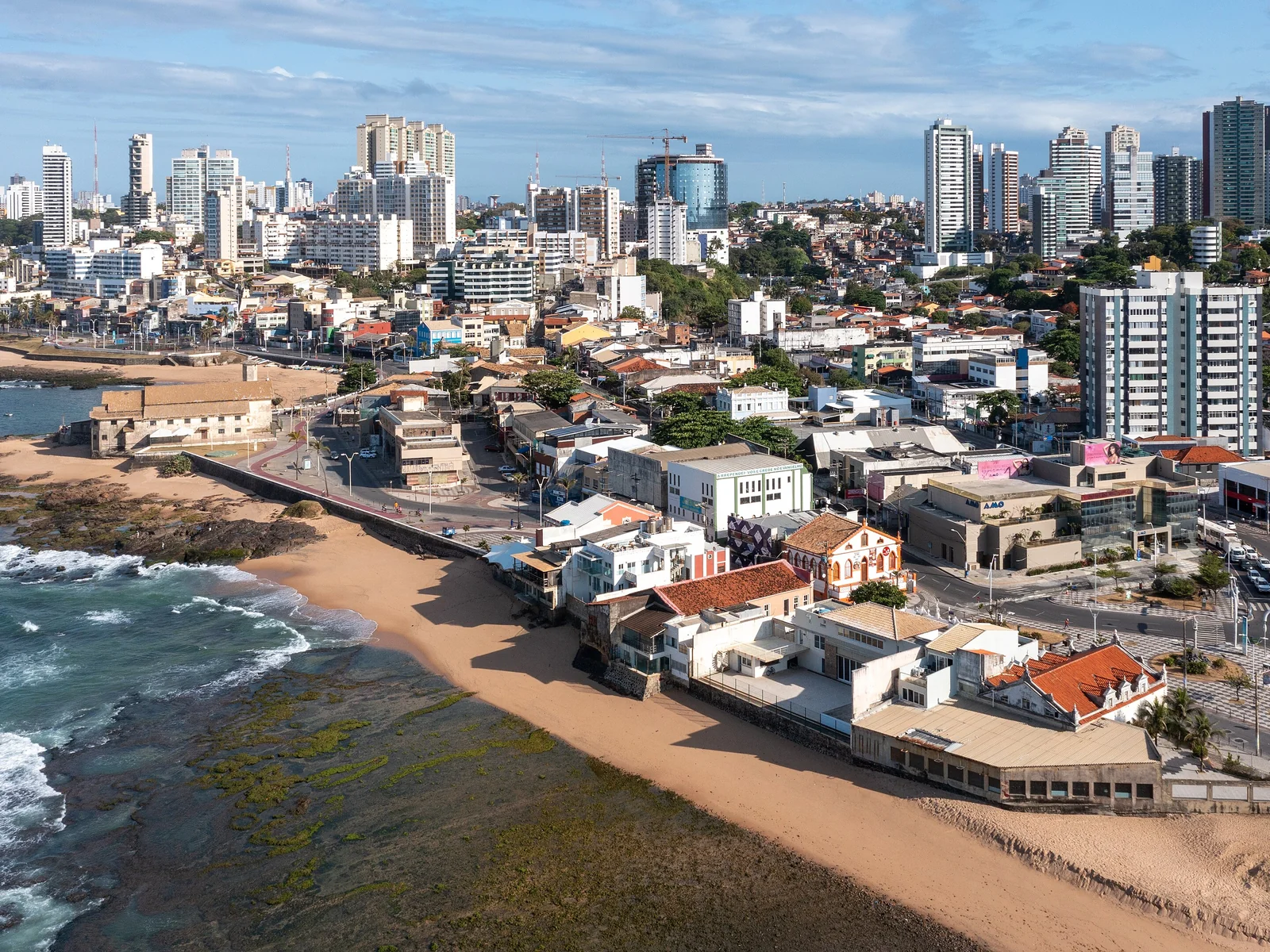
Fully meat-free restaurants are still a small club here, but a real and growing one, and they gather in three of the areas we map in the neighbourhoods guide. Right in the historic Cidade Alta, a short walk from the Pelourinho, Santo Antônio Além do Carmo holds both Rango Vegan and Ânima Cozinha Afetiva, a small all-vegan kitchen on the same street. In Rio Vermelho, the seaside district where the city goes out at night, Nana Veg is a fully vegan bistrô on Rua João Gomes, open for lunch daily and later at weekends. Nearer the beaches, the Barra and Canela stretch has the long-running natural-food kitchen Ramma on Rua Lord Cochrane and the vegan Vegalize in Canela, both weekday lunch spots. For the rest — B-Vegan, the city's first all-vegan snack bar, the patisserie Ravegana, and a periodic vegan fair — the community-run HappyCow directory keeps the most current list, which matters because small places move and change their hours. Even a few of the famous traditional restaurants help: Yemanjá in Armação, a Bahian institution, keeps vegetarian options on the card.
Self-catering: the feira and the supermarket
If your room has a kitchen, Salvador makes cooking for yourself easy and cheap. The vast Feira de São Joaquim, the working market near the ferry terminal, is a wall of fruit, beans, cassava flour, herbs and vegetables at a fraction of restaurant prices — go in the morning and carry small notes. Ordinary supermarkets stock tofu, plant milks and the usual staples, and neighbourhood hortifrútis (greengrocers) are on most corners. Even the água de coco sold from a street cart — chilled coconut water drunk straight from the shell — counts as lunch on a hot afternoon.
The words that get you fed
A handful of phrases removes almost all of the friction. Learn these:
- Sou vegetariano (or vegetariana) — I am vegetarian.
- Sou vegano (or vegana) — I am vegan.
- Sem carne — without meat. Sem peixe — without fish. Sem camarão — without shrimp.
- Tem leite? — does it have milk? Tem ovo? — does it have egg?
- Isto é vegano? — is this vegan? Tem carne no feijão? — is there meat in the beans?
Portuguese speakers appreciate the effort, and it genuinely changes what reaches your plate. Our Portuguese phrases guide has the pronunciation and a wider survival kit.
None of this needs a car. The vegan kitchens of Santo Antônio, the acarajé stands of the Pelourinho and a dozen per-kilo lunches all sit within a walk of the Cidade Alta — which is the quiet argument for basing yourself up here rather than out by the beaches. Our boutique suites put you a few minutes from the first plant-based moqueca of your trip.
Salvador, in images
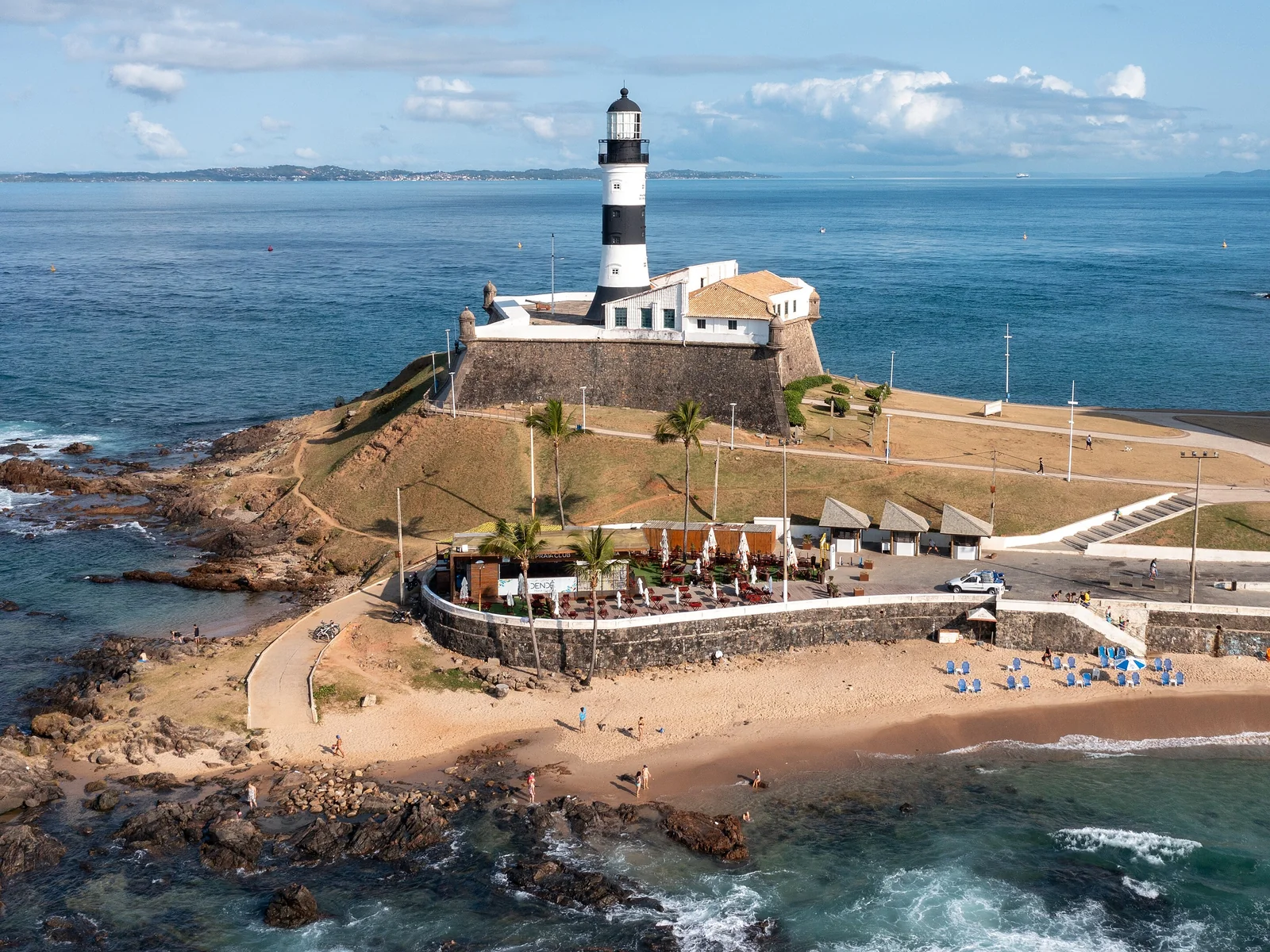
Photographs of the neighborhood, restaurant, and beach featured in this guide, with credit to each photographer.
Ready to discover Salvador?
Book one of the four Via Avantgarde suites in the Pelourinho — and receive the complete guides with recommendations for your stay.