Neighborhoods of Salvador where to stay and how each corner feels
Salvador is not one city — it's fourteen. A neighborhood-by-neighborhood guide through the Cidade Alta, Barra, Rio Vermelho, Itapuã, and the two favelas with the city's most expensive views: Gamboa de Baixo and Vila Brandão.
The essentials in 30 seconds
Salvador is a city of 2.4 million people spread across a jagged peninsula, where neighborhoods feel like different cities altogether. Sleep in the Cidade Alta to walk to the Pelourinho and the candomblé temples (this is where the Via Avantgarde suites live). Eat in Rio Vermelho, swim at Porto da Barra, shop in Pituba, and look at the Bay of All Saints from Mirante da Gamboa or Vila Brandão — two favelas with penthouse views. This guide walks through fourteen neighborhoods: what each one feels like, what each one is for, and when it's worth crossing the city.
The mental map: Upper City, Lower City, Atlantic Coast
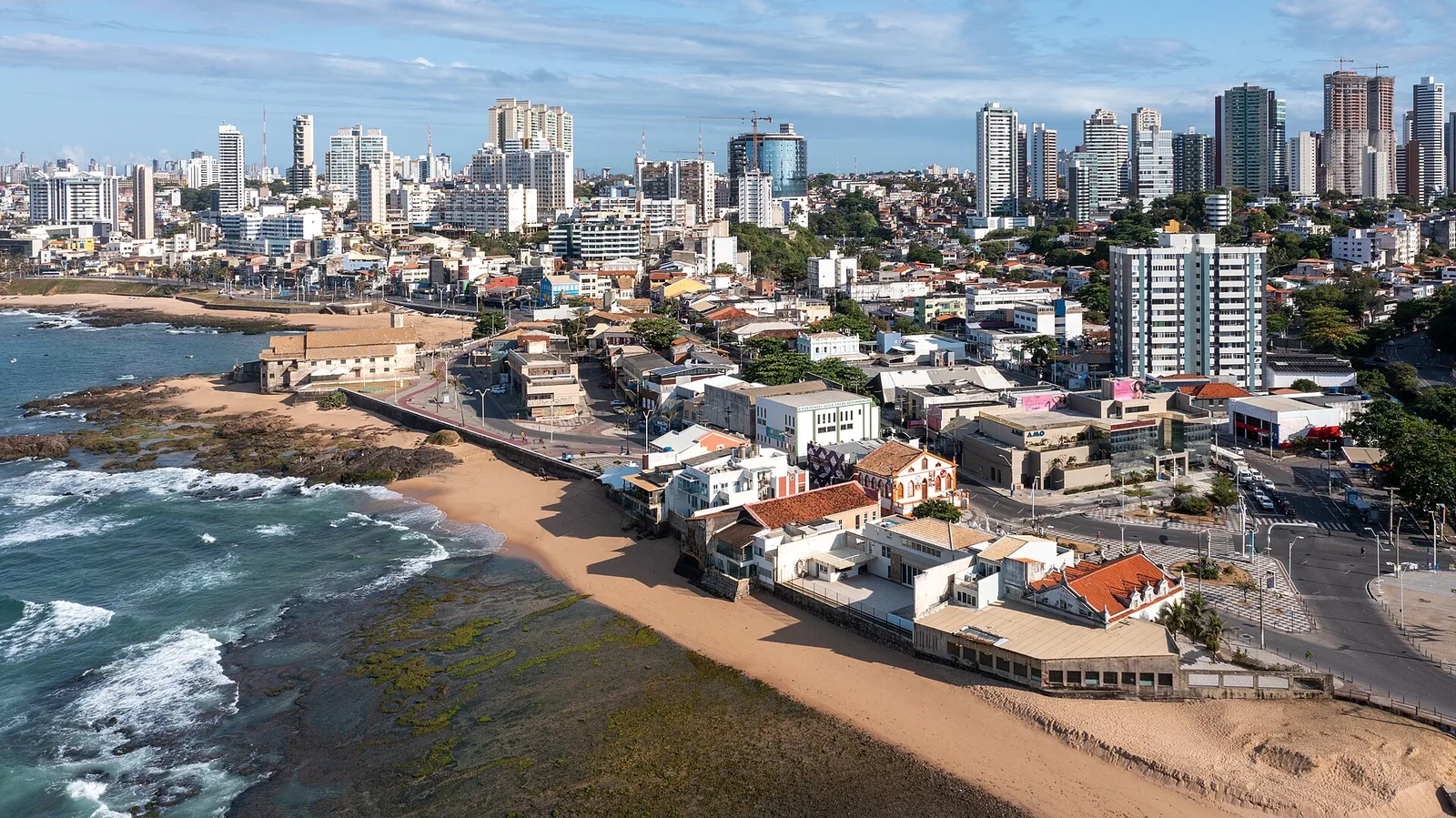
Before the neighborhoods, the geography. Salvador is a triangular peninsula wedged between the open Atlantic and the Bay of All Saints — the largest navigable bay in the Americas after Guanabara. The city splits into three large layers. The Cidade Alta (Upper City) is the limestone plateau founded in 1549 by Tomé de Sousa: this is where the Pelourinho, the Cathedral, Santo Antônio, Carmo and Saúde sit, and where most of the baroque churches that earned the city its UNESCO listing are. The Cidade Baixa (Lower City) is the narrow strip at the foot of the plateau, facing the bay: Comércio, Água de Meninos, Calçada, Ribeira and Bonfim — the neighborhoods of the port, the schooners, and the churches you see from the boat. And the Atlantic Coast is the curve from the Barra Lighthouse to Stella Maris, twenty kilometers of urban beaches that house the modern residential Salvador: Barra, Ondina, Rio Vermelho, Pituba, Itapuã.
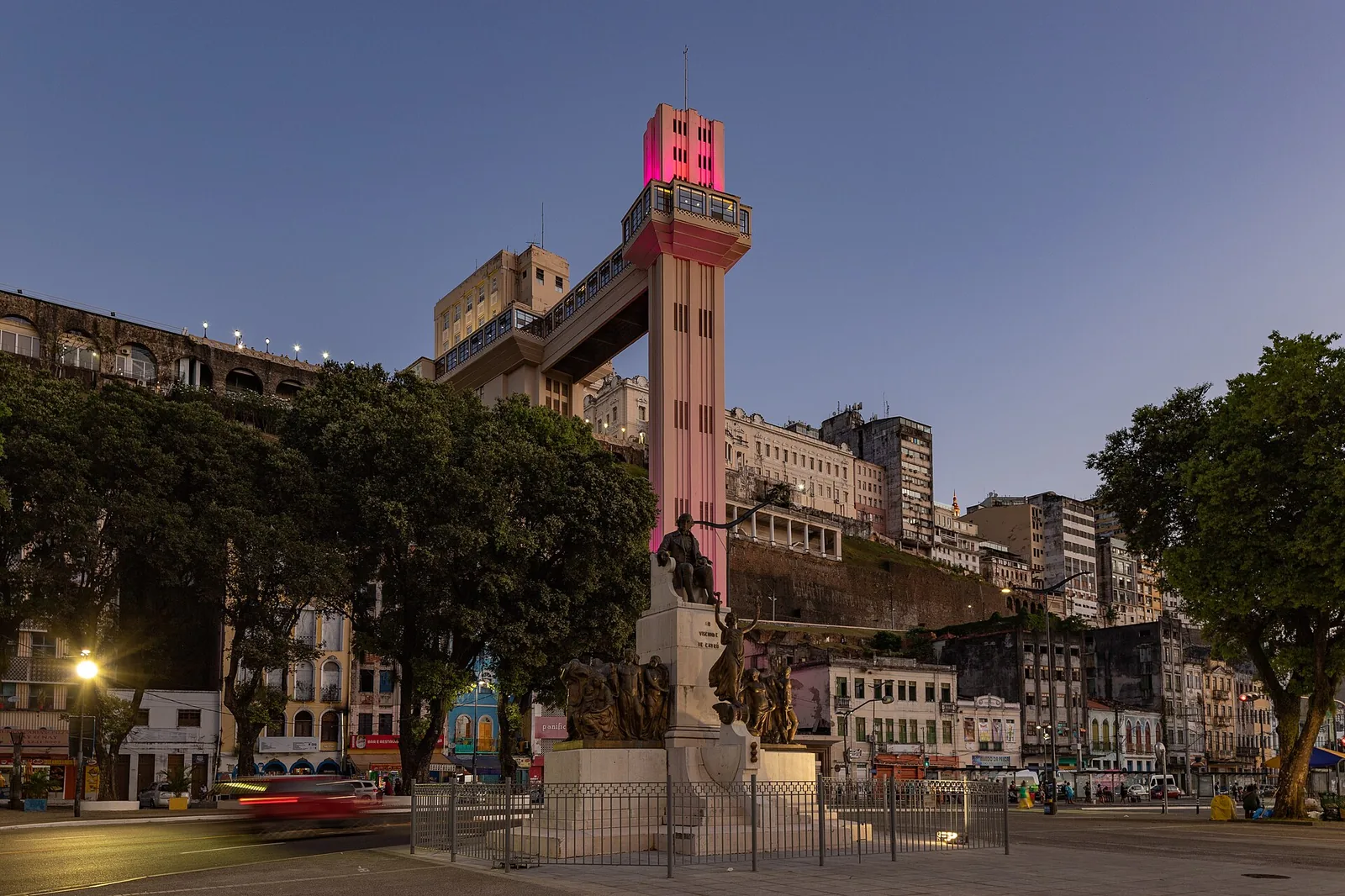
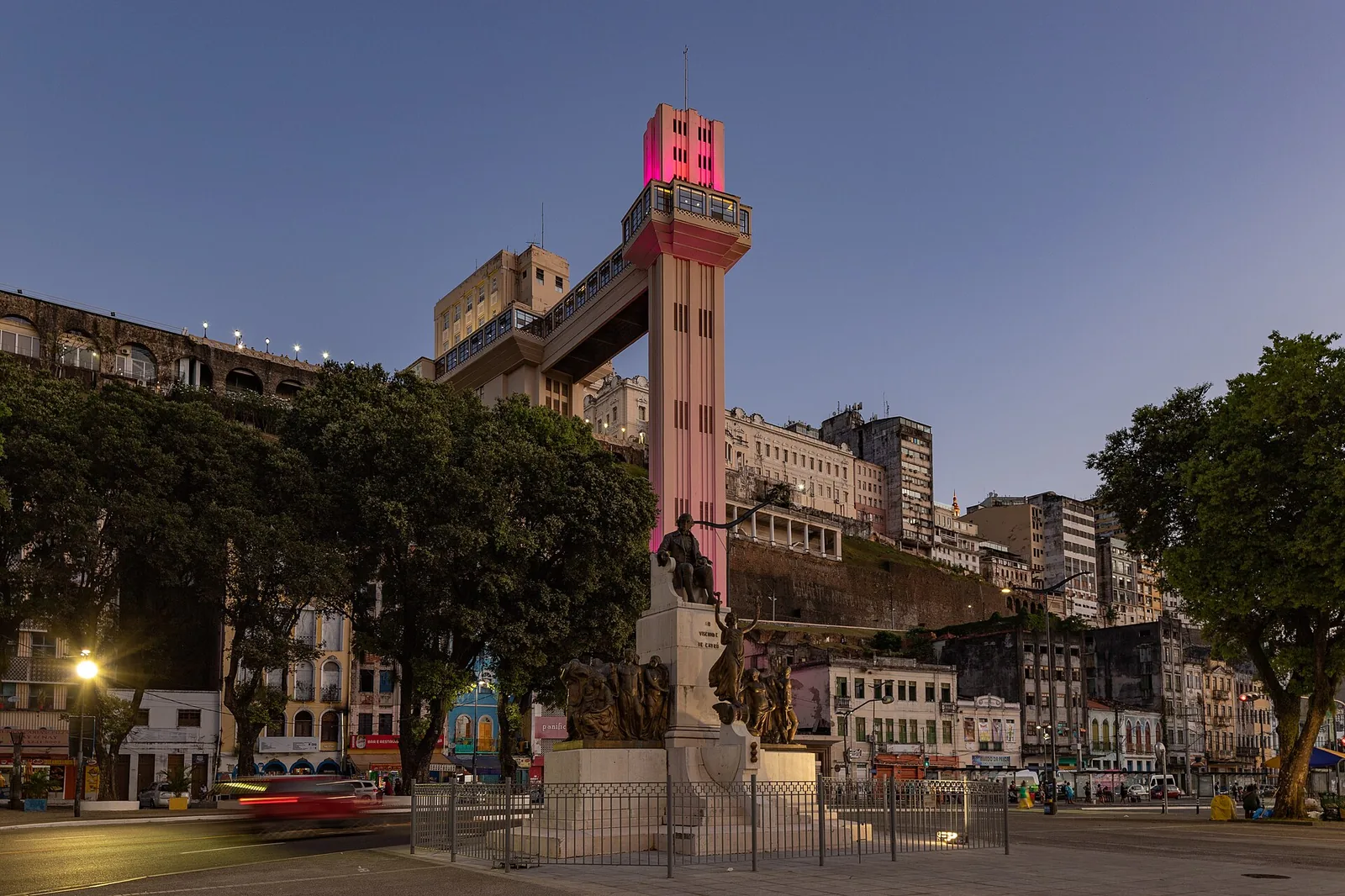
Between Upper and Lower City sits a 72-meter cliff, scaled since 1873 by the Lacerda Elevator — the world's first public urban elevator. The Via Avantgarde suites are a three-minute walk from it, on the plateau, with a direct view of the Mercado Modelo and the schooners of Comércio.
Pelourinho — the heart that beats in Olodum's drum cadence
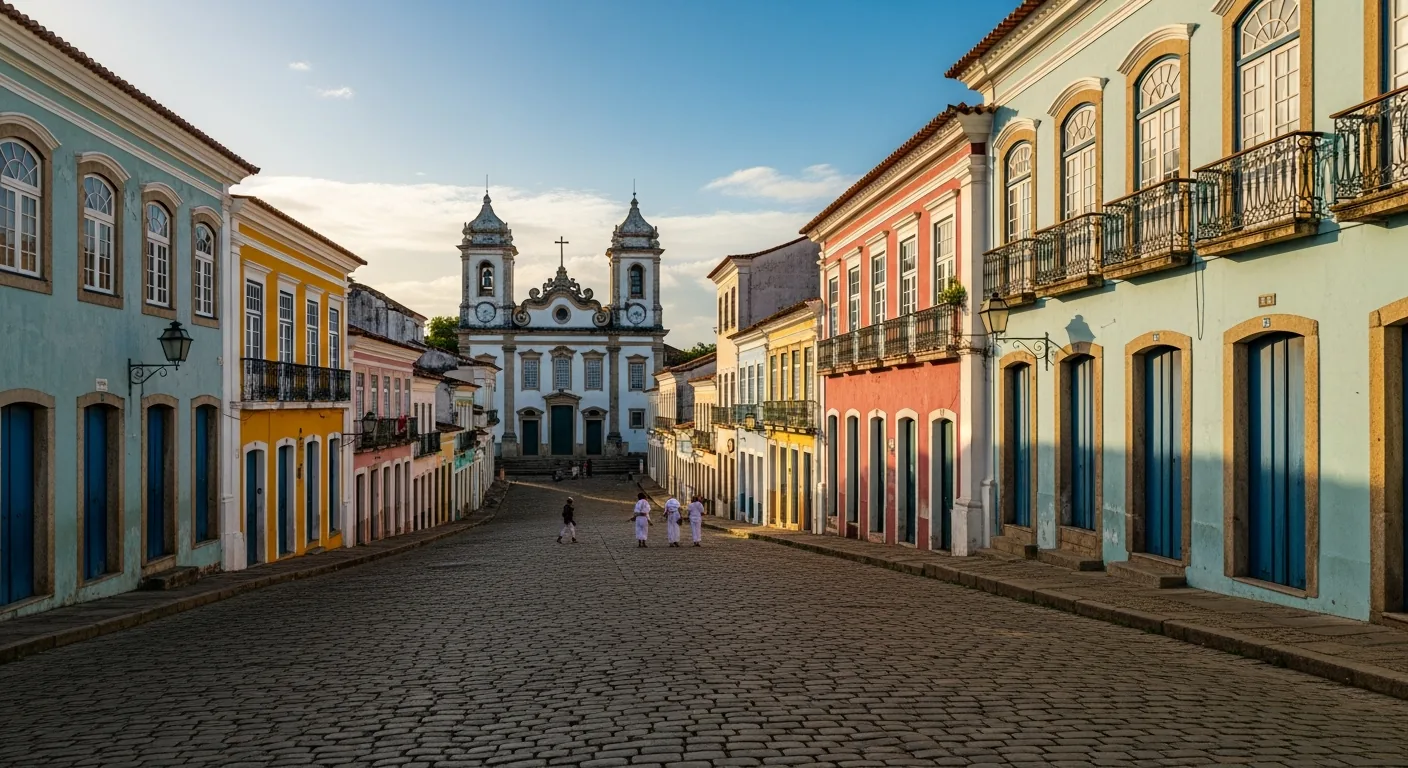
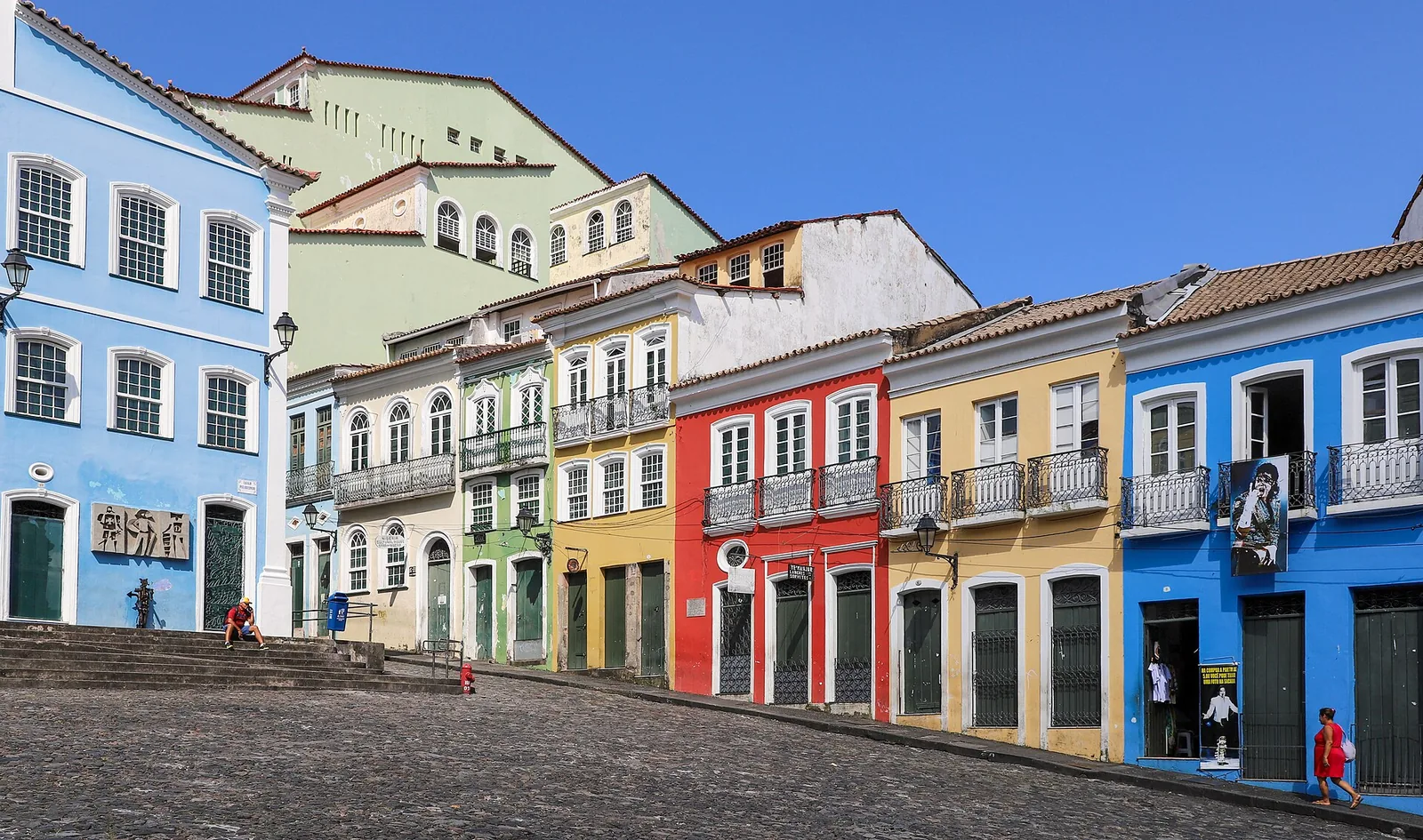
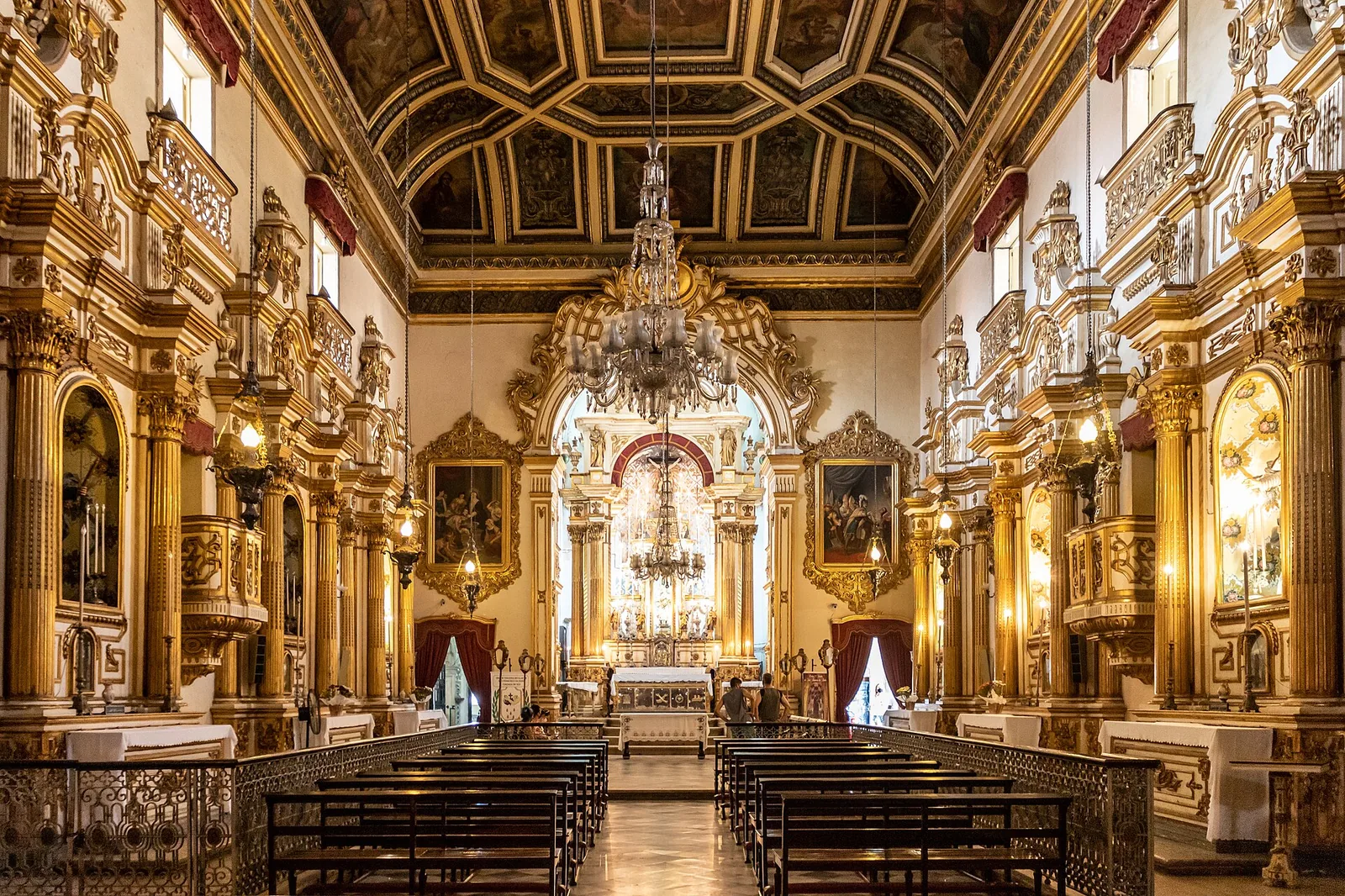
If Salvador were a word, the Pelourinho would be the stressed syllable. Listed by UNESCO as a World Heritage Site in 1985, the Pelô is the largest concentration of colonial baroque and rococo architecture in the Southern Hemisphere. Eight hundred colonial townhouses in stone and lime, cobblestone streets polished by centuries, gilded churches, wrought-iron balconies, and the capoeira that still happens at the Largo do Pelourinho the way it has for the last two hundred years.
The name comes from the pelourinho itself — the stone column where enslaved people were publicly whipped between the 16th and 19th centuries. The neighborhood's history carries that weight, and any honest visit acknowledges it. The 1990s rehabilitation of the Pelô displaced part of the original population and turned the central streets touristy — but daily life continues, mostly at the edges: Santo Antônio, Saúde, Carmo. On Tuesday nights, Olodum rehearses on the Largo do Pelourinho, and the sound of surdos and timbais echoes through the streets with a force that justifies everything.
Worth sleeping here? Yes — and it's why the Via exists. You're walking distance from the Terreiro de Jesus, the Cathedral Basilica, the São Francisco church (the gilded one), the Largo do Pelourinho, the Casa de Jorge Amado, the Pelourinho and Lower City restaurants, and three minutes from the Lacerda Elevator. What to avoid? Dark slopes after midnight (Santa Tereza, parts of Saúde), and an open backpack on central streets at peak tourist hours.
Santo Antônio Além do Carmo — the Pelourinho that learned to breathe
Five minutes on foot from the Largo do Pelourinho, climbing the Carmo Slope, you leave the touristy quarter and enter what many consider the best neighborhood to live in Salvador. Santo Antônio Além do Carmo — the long name is the official one — is the Pelô that exhaled. Same colonial architecture, same baroque churches, same bay views. But with charming guesthouses instead of queues of tourists, with independent cafés instead of cocada vendors, and with real neighborhood life: the bakery, the fish shop, the capoeira school, the carnival in the square.
It's where much of the Bahian and Rio-São Paulo intelligentsia that moved to the city in the last fifteen years live — writers, photographers, designers, guesthouse owners, actors and filmmakers tired of the southern metropolises. The Largo de Santo Antônio has Salvador's most reposeful sunset: beers on the Forte wall, conversations in three languages, European honeymooners.
Vila Brandão — the favela with penthouse views
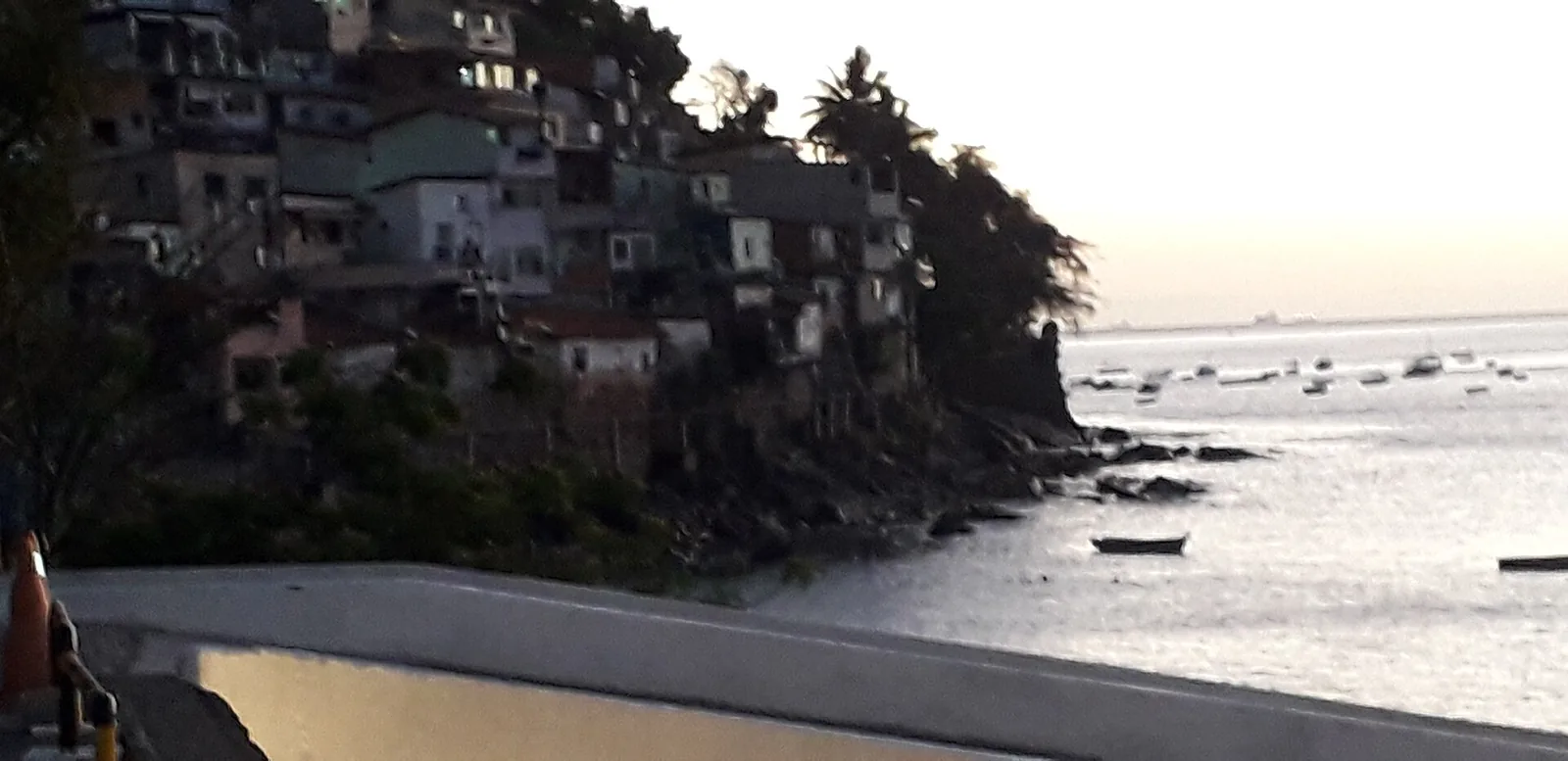
The Vila Brandão is a community of about 1,200 families clinging to a steep slope between the Graça neighborhood and Avenida Centenário. From above, it's a cascade of colored houses tumbling down to the Bay of All Saints. From below, from Graça beach, it's one of the city's most striking human landscapes. The view from some Vila Brandão houses is better than the view from the penthouses of Vitória. Some say this is a metaphor for Brazilian social geography — beauty is distributed in ways that money doesn't always reach.
The community has existed since the 1930s, when squatters settled in what is now one of the most valuable areas of Salvador. For decades the state pushed for removal; in the last fifteen years, with legal recognition of land tenure and the work of residents' associations, Vila Brandão consolidated as a neighborhood. Today there's social housing, schools, a health post, and a community tourism circuit led by residents — guided walks through the alleys, conversations with leaders, lunch in a family home. We recommend the walking tour by @vivavilabrandao — three morning hours, walking from Avenida Centenário, with the view that justifies the neighborhood's name.
Gamboa de Baixo — the favela that breathes the Bay of All Saints
Back in the Upper City. Next to the Forte de São Paulo, on the slope below Avenida Lafayete Coutinho — where the Fasano hotel and the Edifício Marquês de Caravelas sit (next door to two of the Via's suites) — a stone staircase descends to the Gamboa de Baixo Community. About 600 families live in stepped houses on the slope, with the Bay of All Saints lapping the rocks just below. It's the most beautiful view in Salvador. The wealthy look over the wall of the Avenida; the residents of the Gamboa look out the window.
The Gamboa's history is the history of urban Black resistance in Salvador. The community has existed since the mid-19th century — descendants of quilombolas, freed fishermen, marisqueiras (shellfish gatherers). For decades the state pushed for removal; for decades the community resisted, with strong female leadership and the support of social movements and UFBA researchers. In 2021 the community achieved recognition as an urban quilombola territory — a milestone for Brazil.
The Gamboa also has a community tourism circuit run by the women themselves through the AMAGB — Association of Residents and Friends of the Gamboa de Baixo. The visit includes the historic staircase, the Chapel of Nossa Senhora do Monte Serrat, conversation with leaders, and a fresh-fish lunch at a marisqueira's home. We recommend the morning walk — three hours, with breakfast — for guests who want to understand a dimension of Salvador that doesn't fit into a tourist brochure.
The other neighborhoods, in a paragraph each
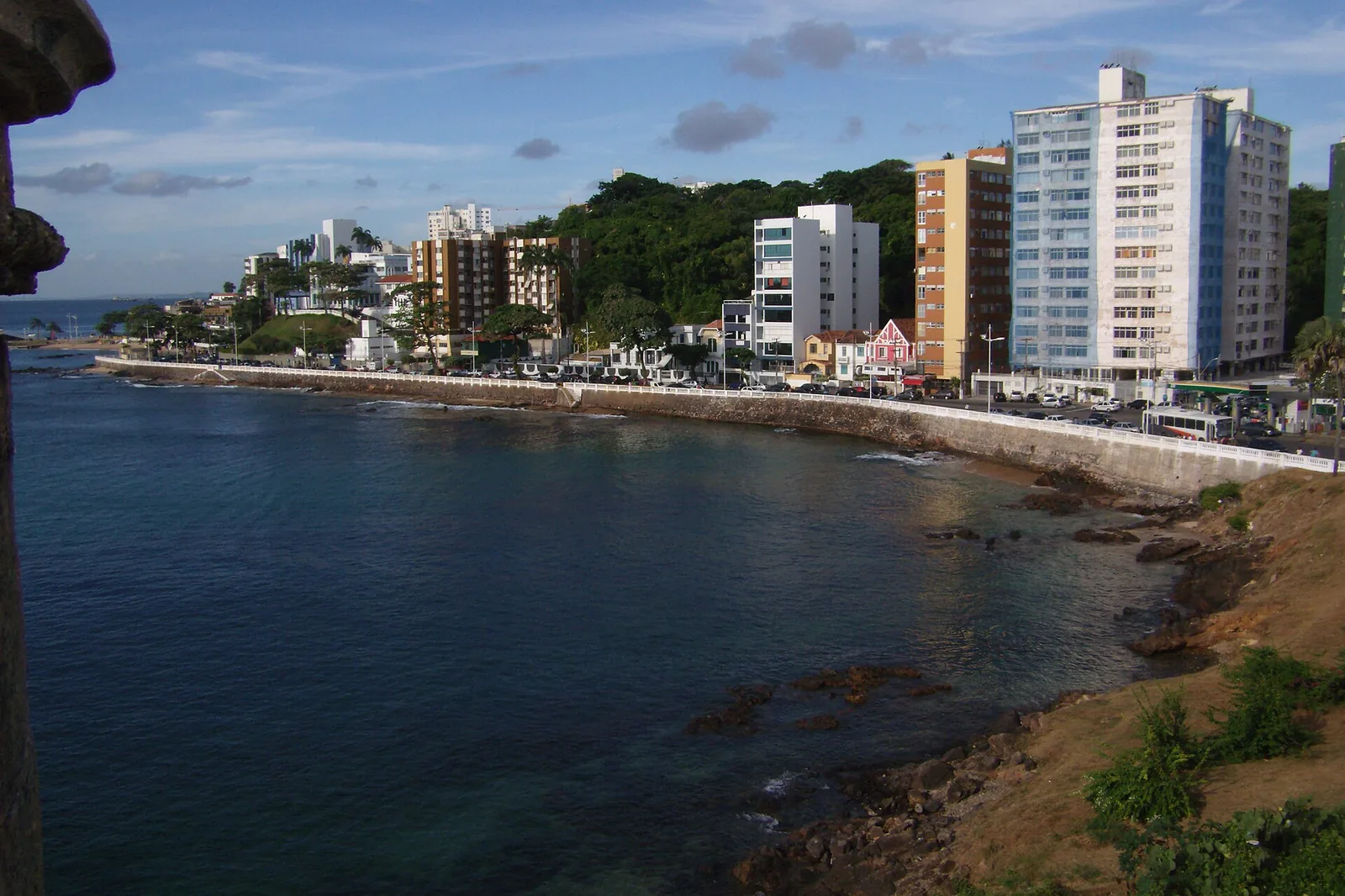
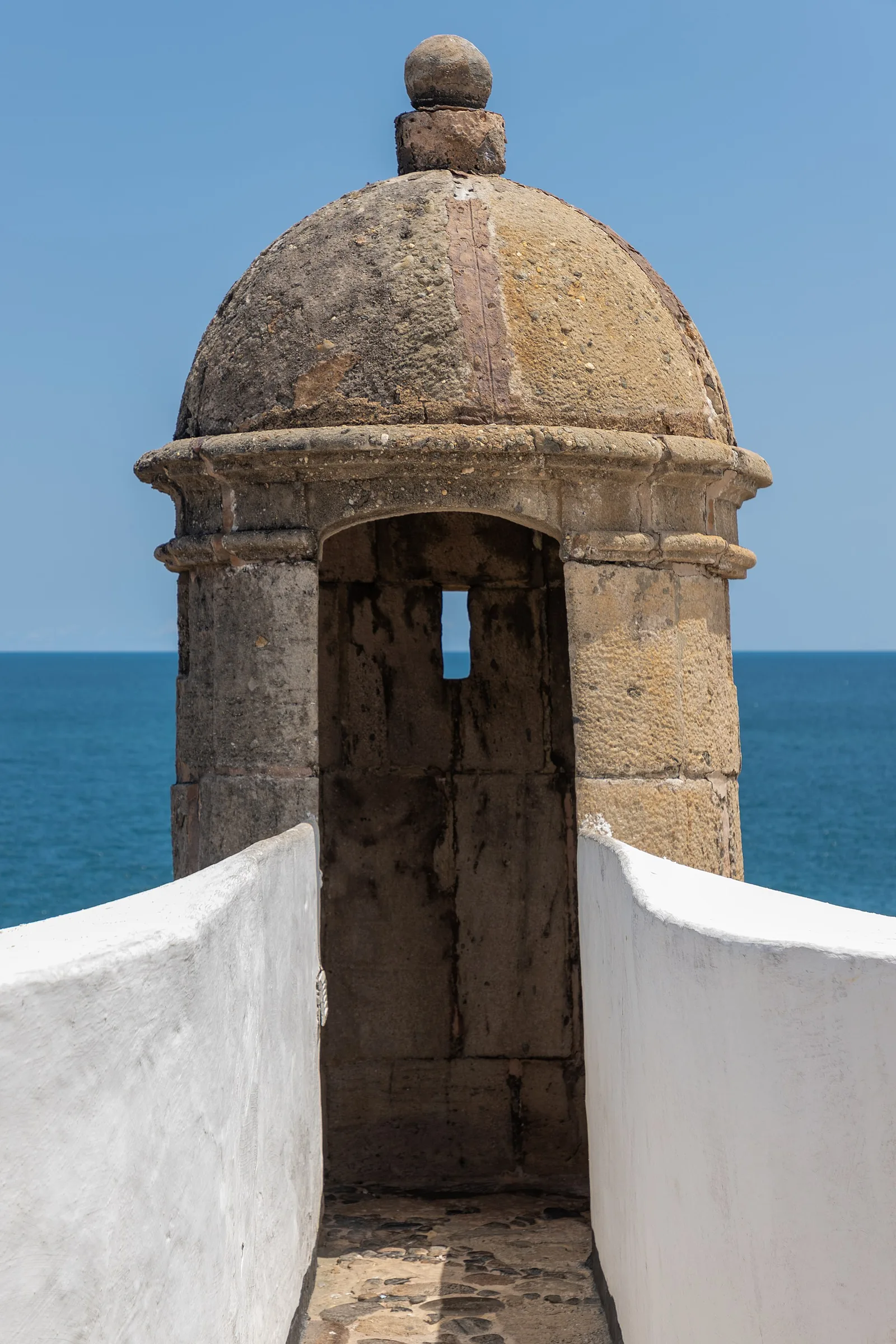
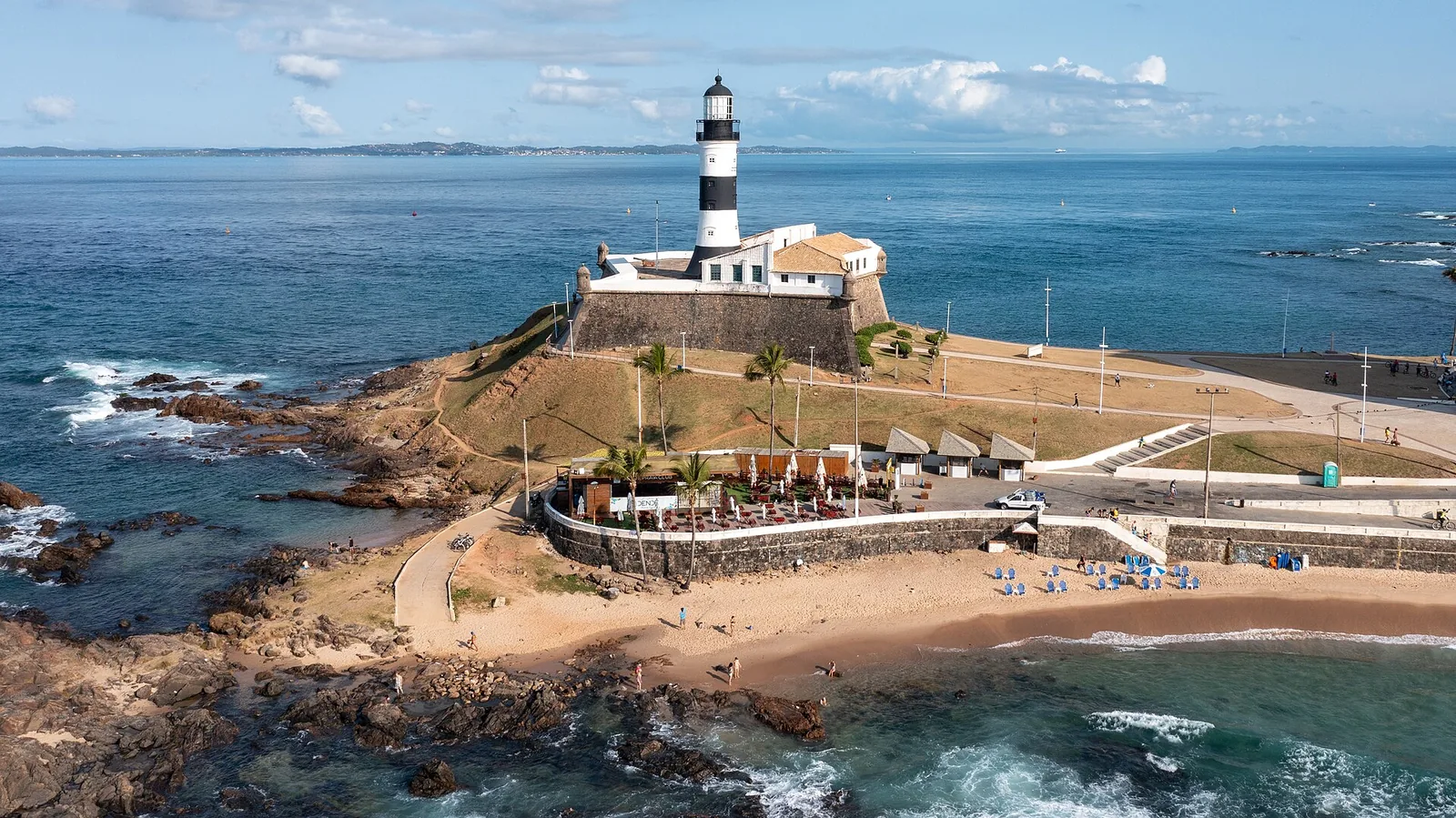
Barra — the southern tip of the peninsula, the Atlantic meets the bay. The Lighthouse from 1839 sits inside the Forte de Santo Antônio (1696). Porto da Barra is the only urban beach in Brazil where the sun sets over the sea — the Salvador postcard. Excellent first-trip neighborhood for families.
Vitória / Graça / Canela — old-money corridor, museum row (Costa Pinto, Rodin Bahia, MAB, MAM), bay views without the noise. Good for a quiet couple's stay.
Rio Vermelho — the city's eating, drinking and music neighborhood. Iemanjá's home (her February 2nd festival is one of Brazil's most beautiful religious events). The Largo de Sant'Ana and Largo da Mariquita are the night-out anchors. Fifteen minutes by Uber from the Pelourinho.
Ondina — beachfront mid-rise corridor between Barra and Rio Vermelho. Heart of the carnival's Dodô circuit.
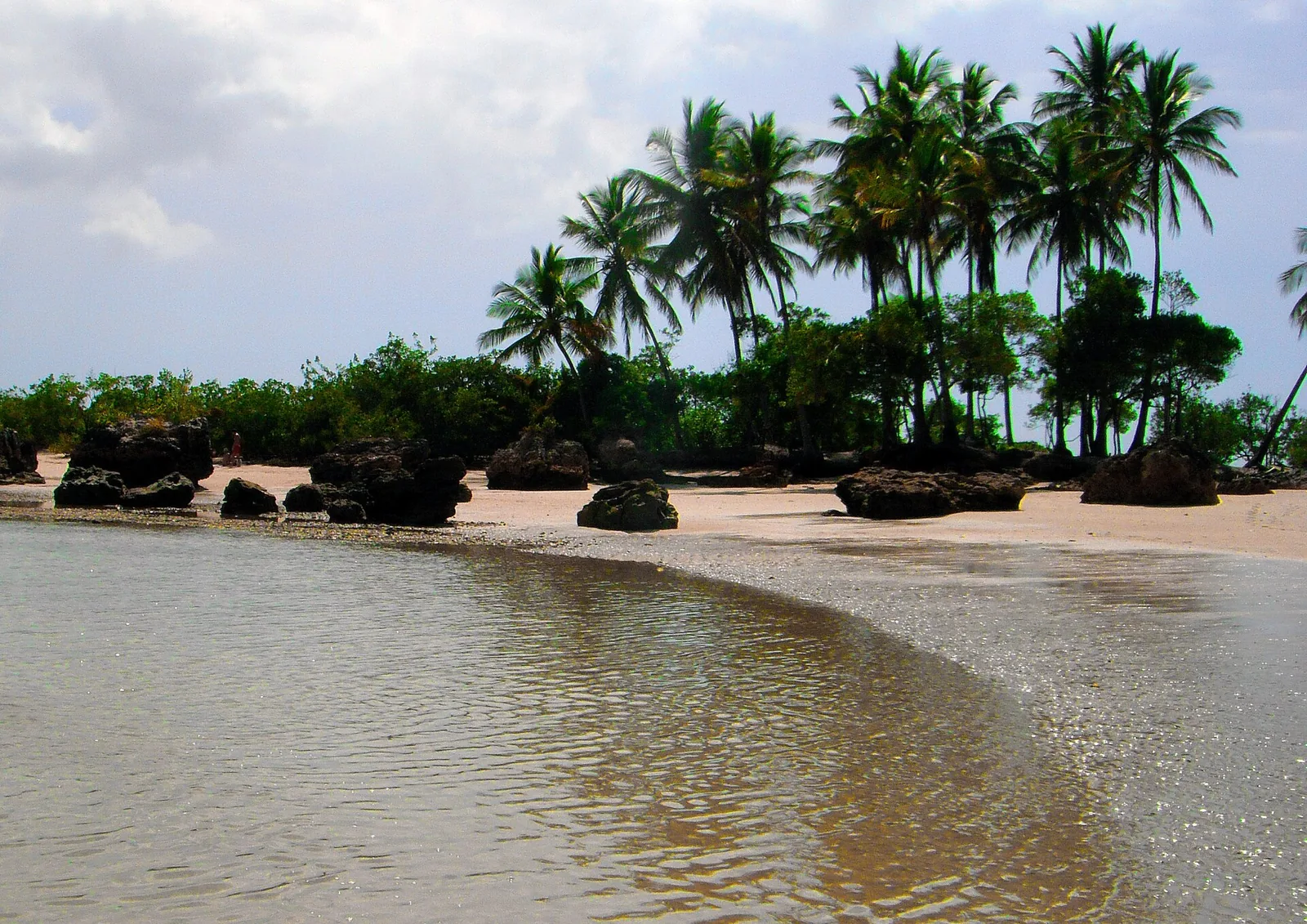
Itapuã — fishing village turned residential, twenty-five kilometers north of the center. The Lagoa do Abaeté — black-water lagoon ringed by white dunes — is one of the most singular landscapes in Brazil. Vinicius de Moraes wrote about it; Dorival Caymmi was born here.
Stella Maris and Flamengo — the longest beaches, weekend favorites. The international airport is two blocks from Stella Maris beach.
Liberdade and Curuzu — Brazil's largest Black-majority neighborhood; birthplace of Ilê Aiyê (1974), the first afro-bloc and the model for all that came after.
Comércio, Calçada, Bonfim — the Lower City. Port, schooners, the syncretic cult of Senhor do Bonfim (Oxalá in candomblé), and the Feira de São Joaquim, the largest popular market in the city.
How to cross the city
Salvador has plenty of Uber, 99 and taxi. Trips inside the center cost R$ 8 to R$ 15; center–Barra, R$ 15 to R$ 25; center–Rio Vermelho, R$ 18 to R$ 30; center–airport, R$ 60 to R$ 90 depending on time and traffic. The metro has two lines connecting the airport to Estação da Lapa (near the Pelourinho) — usable, but with limited hours (until 11pm) and little coverage in the upscale neighborhoods.
Via Avantgarde guests get optional airport transfer in an executive sedan for R$ 350 round-trip (up to three passengers) — worth the comfort of stepping out of the flight straight to the suite door. A trusted driver for the day, with good Portuguese and some English, runs R$ 60 per hour.
Each neighborhood is a character
Every Salvador neighborhood has a tempo. The Pelourinho has the tempo of the baroque — dense, ornamented, always happening. Rio Vermelho has the tempo of the night — the sun falls, the city stands up. Itapuã has the tempo of the sea — the tide writes the menu. The Gamboa and Vila Brandão have the tempo of the staircase — you climb slowly, with the Bay as the reward.
The grace of a Salvador stay is to not try to see everything. It's to choose two or three tempos and dive in. The Via guests who come back — and many do — usually come back for a specific neighborhood they didn't get to last time, or to revisit one that stayed in memory. Salvador is not a city you finish in a single trip. It's a city you go deeper into.
Salvador, in images
Photographs of the neighborhood, restaurant, and beach featured in this guide, with credit to each photographer.
Ready to discover Salvador?
Book one of the four Via Avantgarde suites in the Pelourinho — and receive the complete guides with recommendations for your stay.