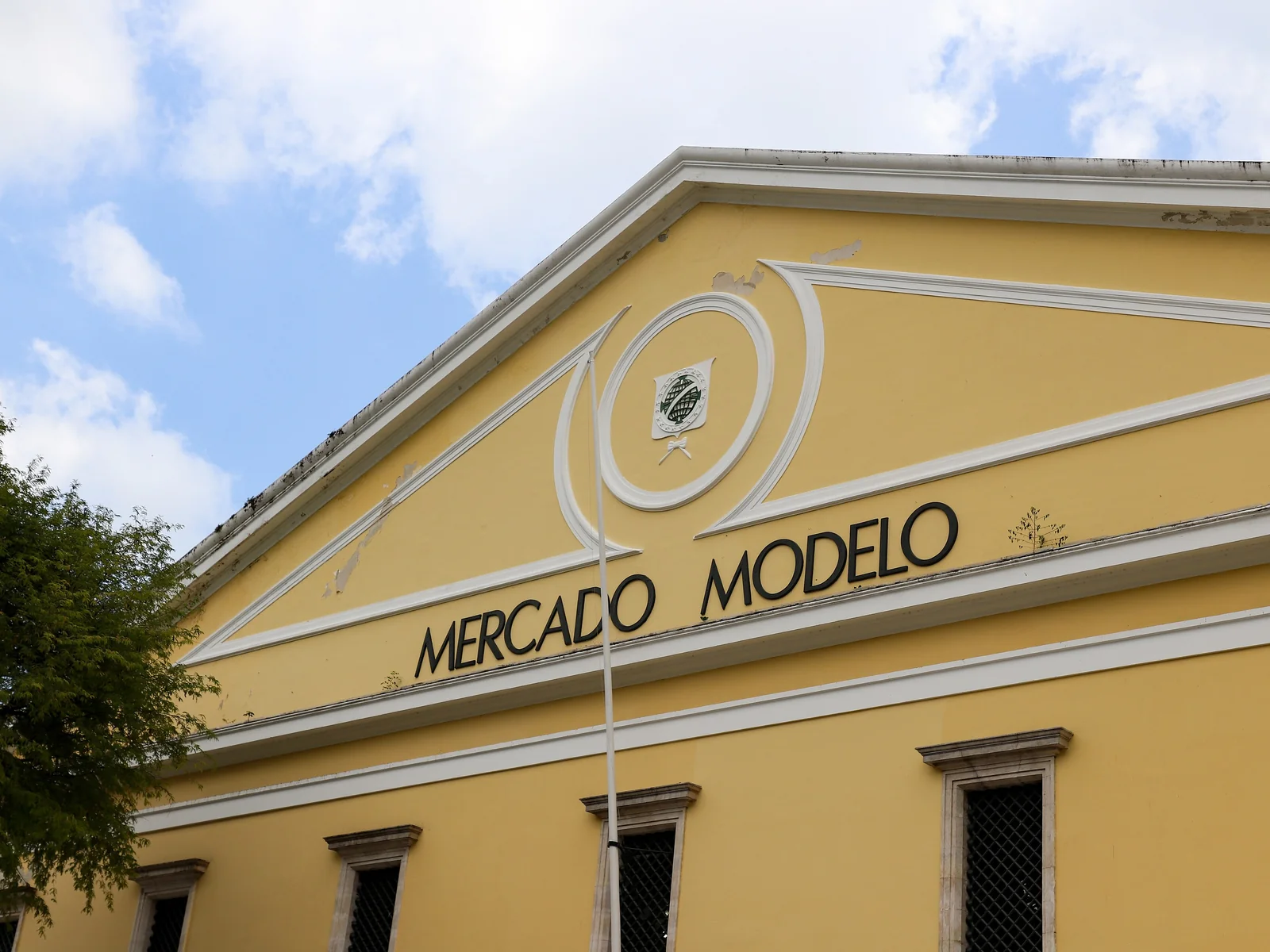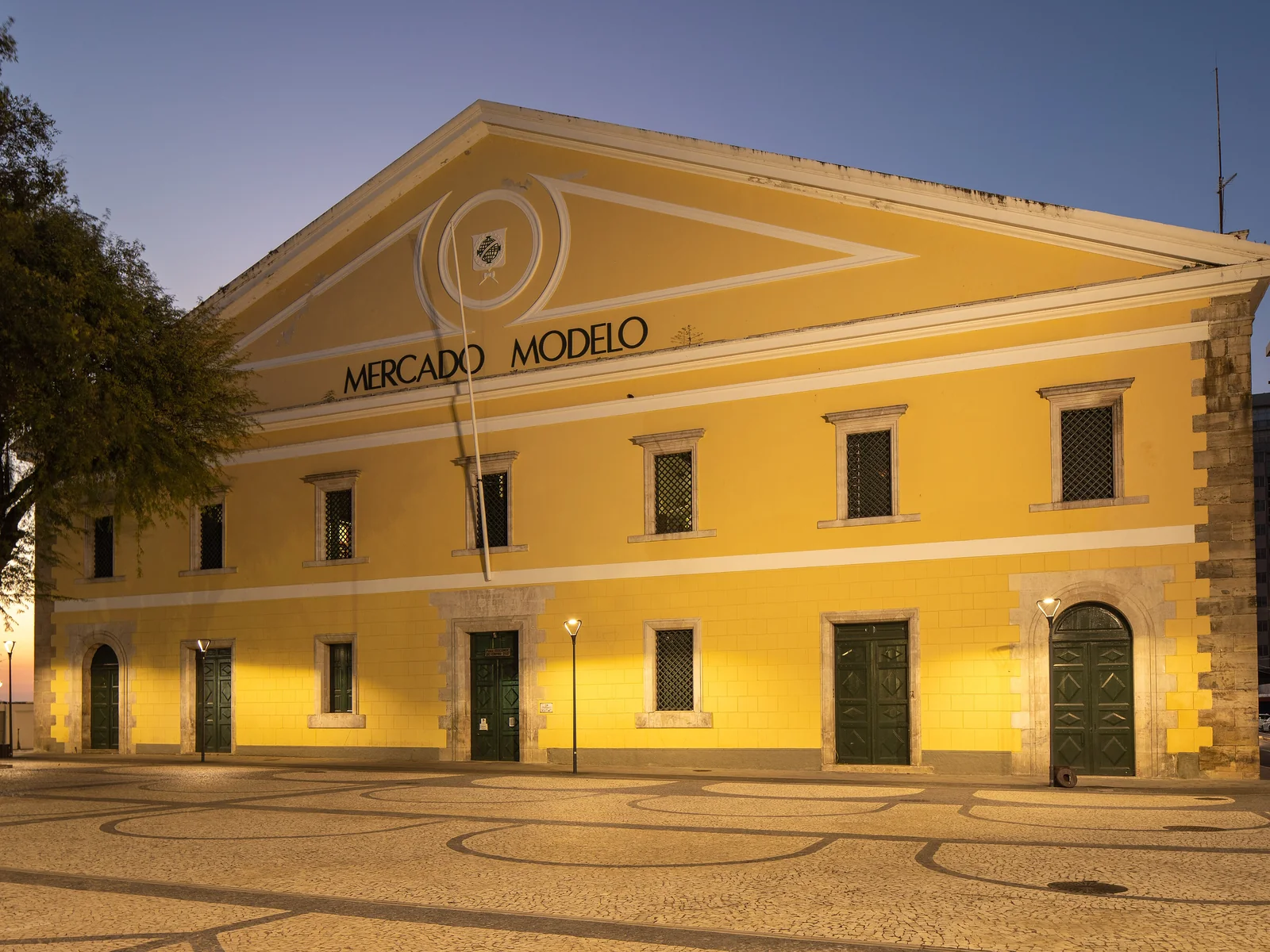
Mercado Modelo Salvador Bahia 2021-6320.jpg
Guide 55 / 64 · Salvador · 12 min · 1,480 words

Mercado Modelo Guide the craft market at the foot of the lift

Mercado Modelo Salvador guide: the old customs house, what to buy and how to haggle, the moqueca with a view, the capoeira roda and getting there by Elevador Lacerda.

By Via Avantgarde

The essentials in 30 seconds

This Mercado Modelo Salvador guide covers the city's most famous craft market, a two-storey landmark on the waterfront of the Cidade Baixa, right at the foot of the Elevador Lacerda. Behind its yellow colonial façade — a former customs house from 1861 — sit more than 250 stalls of berimbaus, hammocks, lace, spices, cachaça and souvenirs, two old Bahian restaurants with a bay view upstairs, a capoeira roda out front, and a cellar with a heavy history. It is touristy, the first price is always too high, and it is still worth an hour. Here is how to shop it well, what to eat, the one scam to sidestep, and how it connects to the historic centre where we keep our suites.

Mercado Modelo Salvador guide: where it is and what it is

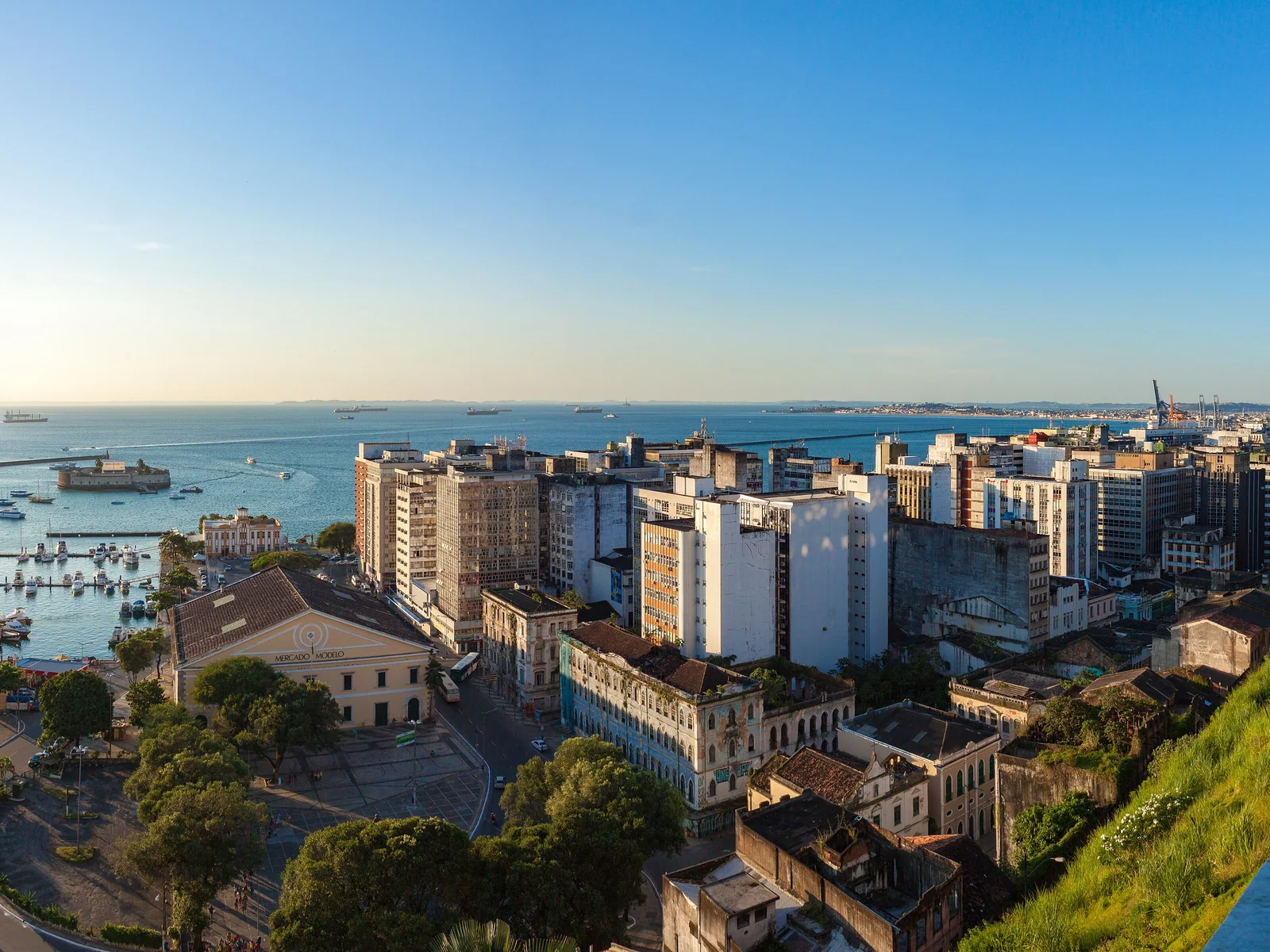
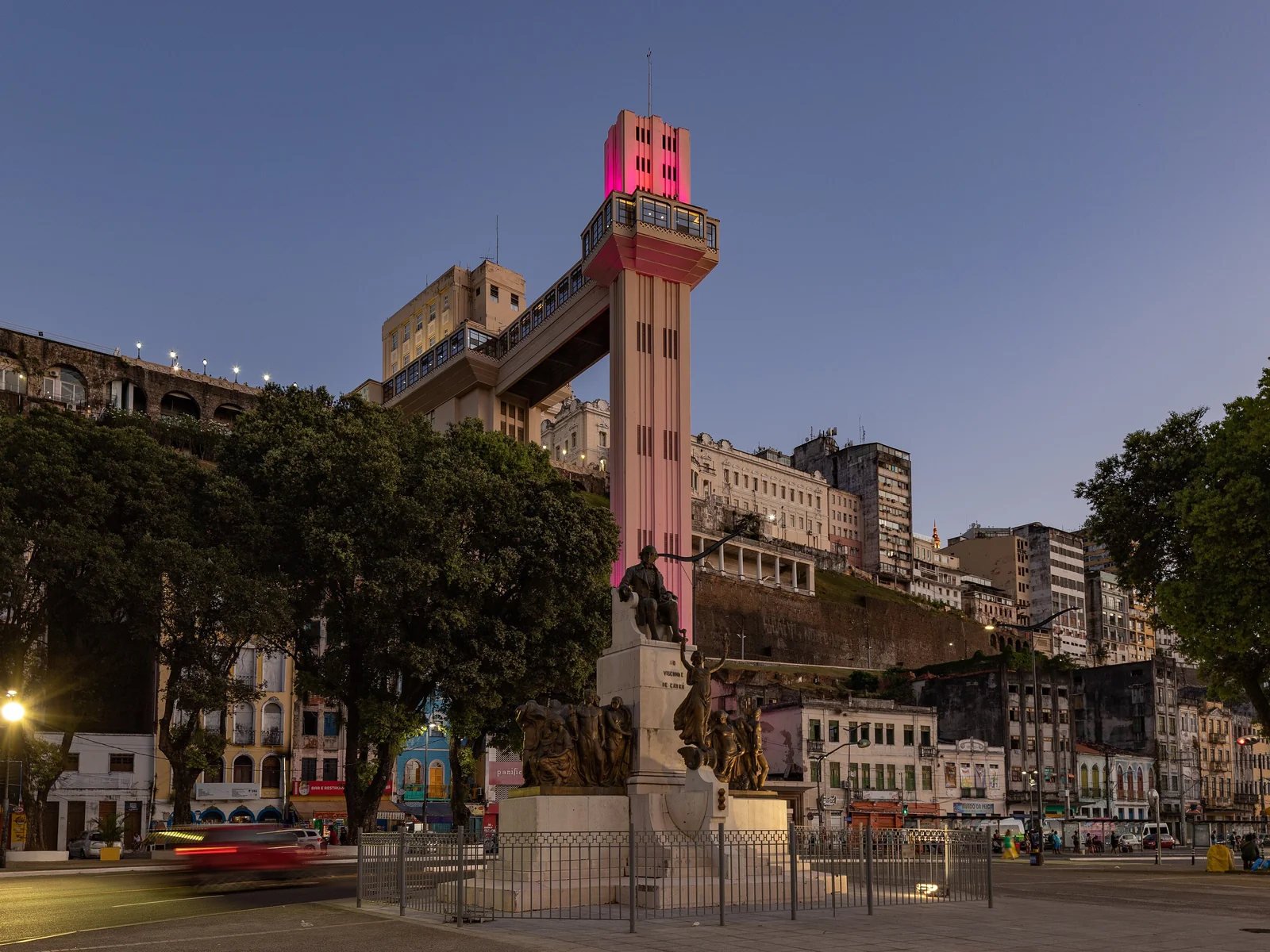
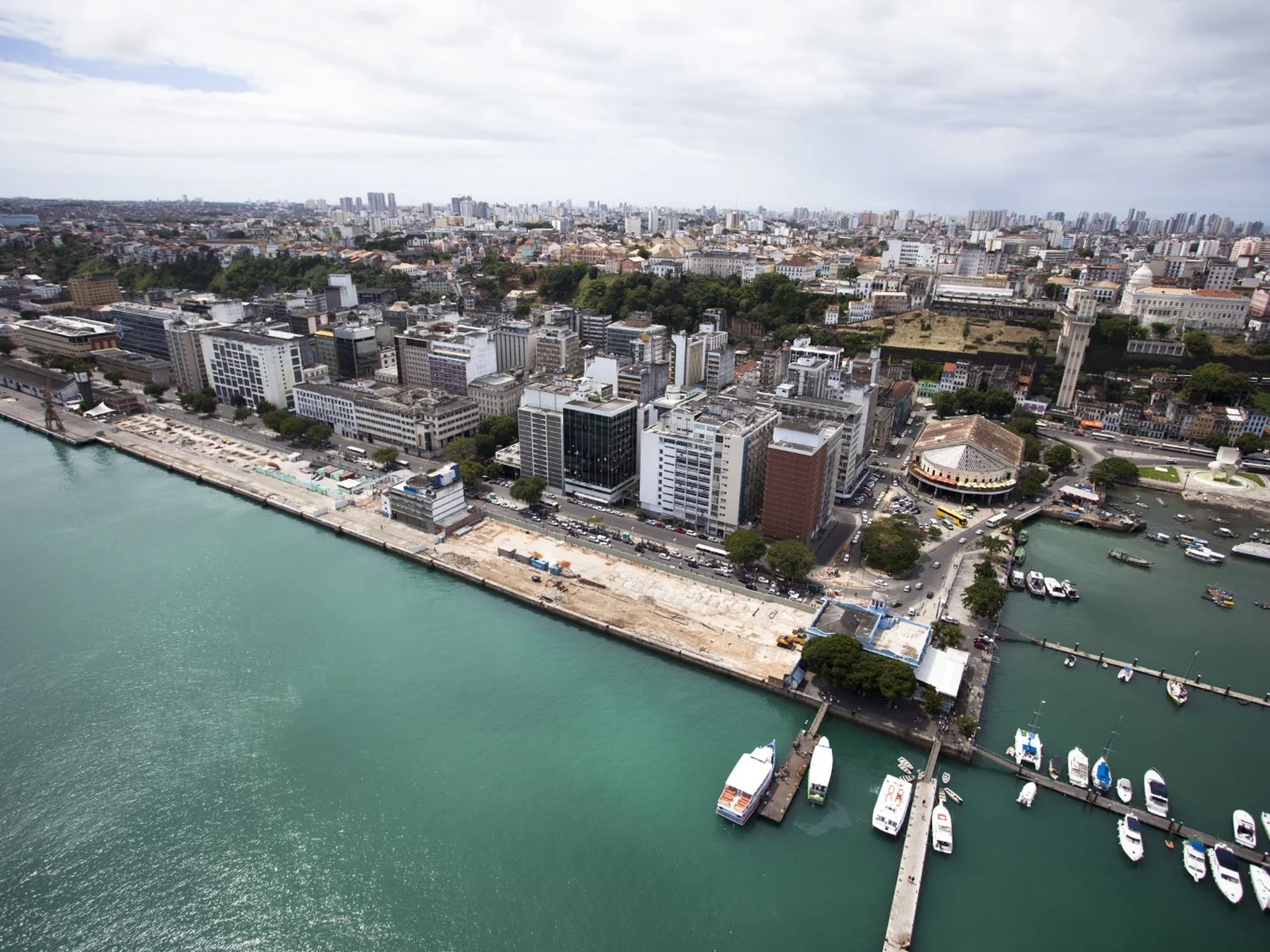
The Mercado Modelo sits on Praça Visconde de Cayru, in the Comércio district of the Cidade Baixa — Salvador's lower city — a few steps from the water and directly below the Elevador Lacerda, the Art Deco lift that drops seventy-two metres from the historic upper town. That location is the whole point: for most visitors the market is the first thing you reach when you come down from the Pelourinho, and the last stop before the ferry terminal next door. It is the city's oldest and best-known artisan market, more than two hundred and fifty stalls under one roof, and for better and worse it is where nearly every cruise passenger, tour group and first-time visitor ends up. Go in knowing that, and it is a genuinely good couple of hours; go in expecting a quiet local secret and you will be disappointed.

The building: a customs house with a heavy past

The yellow neoclassical building is older and stranger than the souvenirs inside it. It was built as the Alfândega, the customs house of the port of Salvador, and completed in 1861, back when this was the working edge of one of the busiest harbours in the Atlantic world. The market only moved in here in 1971, after the previous Mercado Modelo building burned; fire returned to damage this one too, in 1984, and what you walk through today is a careful restoration. The part people lower their voices for is underneath. The cellars, or porão, are tied in the city's memory to the transatlantic slave trade that passed through this port — by long tradition, enslaved Africans were held in these vaults before sale, and to this day offerings to the orixás are left in the old cisterns below. Historians debate the exact use of the rooms, but the weight of the place is real, and it is worth remembering that the cheerful market upstairs stands on the ground where Salvador's darkest history was transacted. For the fuller story of that history, our Afro-Brazilian heritage guide is the place to start.

What to actually buy

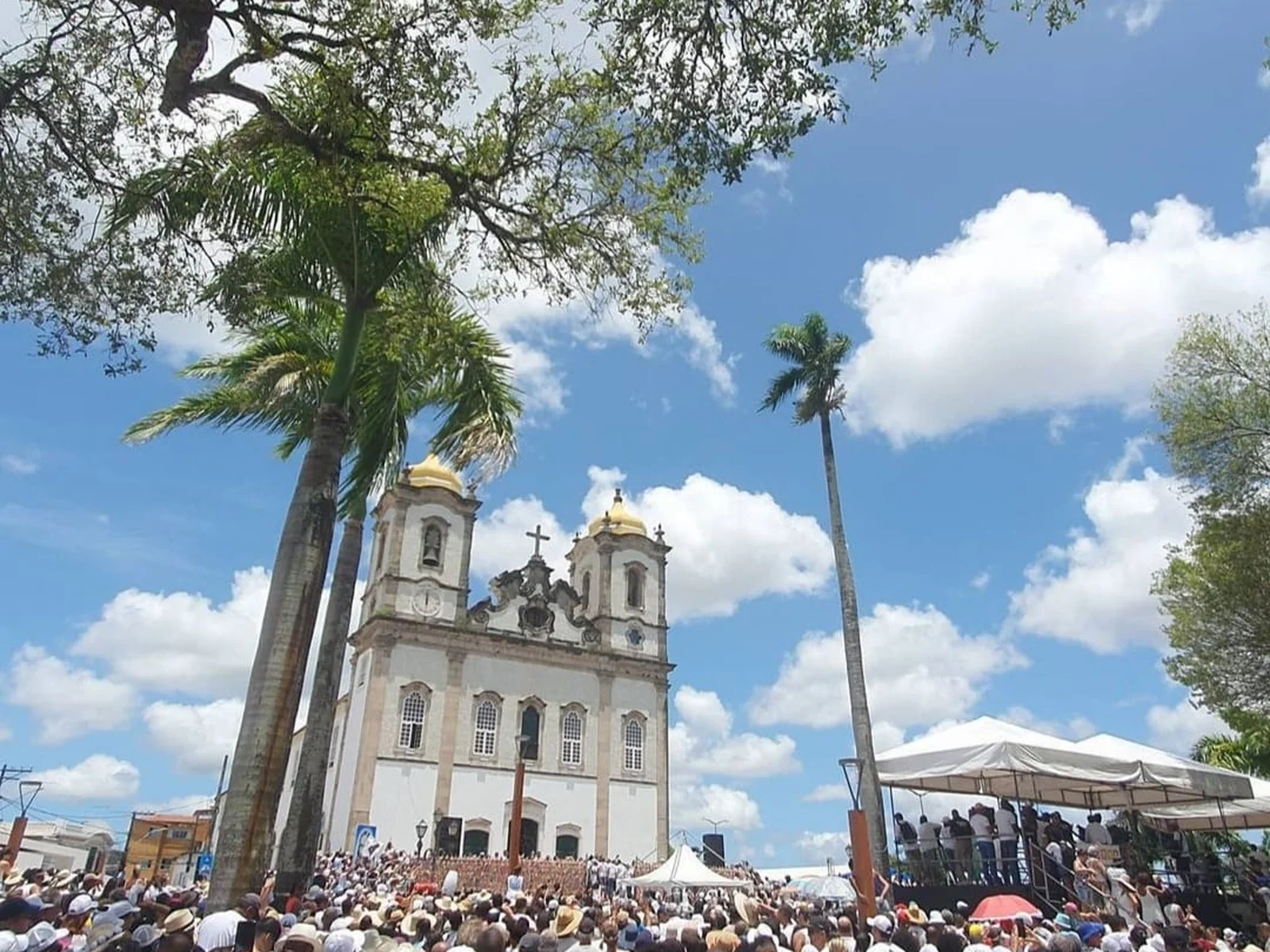
Most of what fills the stalls is repeated from one to the next, so shop for the few things Bahia genuinely makes well. The berimbau — the single-string bow that drives capoeira — is the signature buy, and a decent one with a painted gourd is a real instrument, not a toy. Look too for hammocks (redes) in heavy woven cotton, which pack flat and outlast anything; renda de bilro, the bobbin lace made along the Bahian coast; carved and painted woodwork; leather; and the small figures of the orixás, the deities of candomblé, which make the most Bahian souvenir there is. In the food stalls, bottles of artisanal cachaça, palm-oil (dendê), dried spices and cocoa from the state's south are worth more suitcase space than another fridge magnet. You will also see the coloured fitas do Bonfim, the wish ribbons of the great pilgrimage church across the bay — pick some up here and read what to do with them in our guide to the Bonfim church and its ribbons.

Good to know — Haggling is expected, not rude. The first price quoted is a starting position; a friendly counter of roughly half, settling somewhere in the middle, is the normal dance, and paying in cash (reais) gives you the most room. Compare two or three stalls before you commit — the same berimbau or hammock sits at ten different tables — and the price softens fast in the last hour before closing.

Lunch upstairs, with the bay in the window

The market's best-kept non-secret is the restaurants on the upper floor. Two Bahian institutions have traded here for generations — Maria de São Pedro and Camafeu de Oxóssi — and their terraces look straight out over the Baía de Todos os Santos to the boats and Itaparica beyond. This is a fine place to eat your first moqueca, the coconut-and-dendê seafood stew that is the state dish, or a bobó de camarão, with a cold beer and that view. It is not the cheapest moqueca in Salvador and it knows its audience, but the setting earns the mark-up in a way the ground-floor tourist cafés never do. For where the great Bahian kitchens actually are, from here to the moqueca houses of Rio Vermelho, see our full Bahian food guide.

The capoeira roda out front — and the one thing to watch

On most days a roda de capoeira forms on the square in front of the market: the berimbau starts, a circle gathers, and two players spin through the low, dance-like game that was born among enslaved Africans in exactly this part of Brazil. It is genuinely good to watch and, if you want to see capoeira properly, our capoeira guide points you to the real academies. The thing to watch for is the photo. If you lift your phone, or worse let a player pull you into the circle for a snap, a gorjeta — a tip — will be expected immediately and firmly, often more than you would guess. There is nothing wrong with paying for the show; just decide before you raise the camera, keep small notes handy, and do not be startled when the hat comes round.

Good to know — The Mercado Modelo opens roughly Monday to Saturday from 9h to 19h and Sunday from 9h to 14h; entry is free. Weekday mornings are calmest; the crush is worst when a cruise ship is in. Keep your bag zipped and in front of you in the busy aisles, as you would in any crowded market anywhere, and you will have no trouble.

Getting there — the Elevador Lacerda and the ferry next door

Getting to the market is half its charm. From the historic upper city, you ride the Elevador Lacerda, the tall Art Deco tower that has connected the two levels of Salvador since 1873 and took its current form in 1930. Four cabins drop seventy-two metres between Praça Tomé de Sousa, up by the cathedral and the Pelourinho, and Praça Cayru at the market's door, in under thirty seconds, for a fare of about fifteen centavos — a few cents, one of the great travel bargains anywhere. Right beside the market is the Terminal Náutico, where the catamarans leave for Morro de São Paulo and the boats cross to Itaparica, so the market pairs naturally with a day on the water. For how all these pieces — lift, ferry, taxi, metro — fit together, see our guide to getting around Salvador, and cruise passengers should read our Salvador cruise port guide, since the terminal is a five-minute walk away.

Is it worth it? The honest answer

The Mercado Modelo is unashamedly a tourist market, and if you go looking for undiscovered authenticity you will find souvenirs. But that is the wrong test. Taken for what it is — a handsome historic building, a one-stop spread of genuine Bahian craft, a moqueca with a bay view, a roda on the square, and a cellar that quietly holds the city's hardest history — it earns an hour of anyone's trip, especially early on, when it teaches you what Bahia makes and sells before you see it repeated everywhere else. What makes it easy is being based nearby. Our four suites sit up in the Cidade Alta, a short walk from the top of the Elevador Lacerda, so the market, the Pelourinho and the ferry are all a few minutes downhill rather than a taxi across town. If you would rather step out into the historic city than commute to it, have a look at our four suites.

em português

O essencial em 30 segundos

Este guia do Mercado Modelo em Salvador cobre o mercado de artesanato mais famoso da cidade, um sobrado histórico na orla da Cidade Baixa, bem ao pé do Elevador Lacerda. Atrás da fachada amarela colonial — uma antiga alfândega de 1861 — estão mais de 250 boxes de berimbaus, redes, renda, temperos, cachaça e lembranças, dois restaurantes baianos antigos com vista da baía no andar de cima, uma roda de capoeira na frente e um porão de história pesada. É turístico, o primeiro preço é sempre alto demais, e ainda assim vale uma hora. Aqui vai como comprar bem, o que comer, o único golpe a evitar e como tudo se liga ao centro histórico onde ficam as nossas suítes.

Guia do Mercado Modelo: onde fica e o que é

O Mercado Modelo fica na Praça Visconde de Cayru, no bairro do Comércio, na Cidade Baixa — a parte baixa de Salvador — a poucos passos da água e logo abaixo do Elevador Lacerda, o elevador Art Déco que desce setenta e dois metros da cidade alta histórica. Essa localização é o ponto central: para a maioria dos visitantes, o mercado é a primeira coisa que se alcança ao descer do Pelourinho e a última parada antes do terminal de barcos ao lado. É o mercado de artesãos mais antigo e conhecido da cidade, mais de duzentos e cinquenta boxes sob um só teto, e, para o bem e para o mal, é onde quase todo passageiro de cruzeiro, grupo de turismo e visitante de primeira viagem acaba parando. Entre sabendo disso e são duas horas realmente boas; entre esperando um segredo local e vai se decepcionar.

O prédio: uma alfândega de passado pesado

O prédio amarelo neoclássico é mais antigo e mais estranho do que as lembranças que guarda. Foi erguido como a Alfândega, a casa aduaneira do porto de Salvador, e concluído em 1861, quando ali era a borda de trabalho de um dos portos mais movimentados do mundo atlântico. O mercado só se mudou para cá em 1971, depois que o prédio anterior do Mercado Modelo pegou fogo; o incêndio voltou a danificar este também, em 1984, e o que se percorre hoje é uma restauração cuidadosa. A parte que faz baixar a voz é embaixo. Os porões estão ligados, na memória da cidade, ao tráfico transatlântico de escravizados que passou por este porto — por longa tradição, africanos escravizados eram mantidos nestes vãos antes da venda, e até hoje se deixam oferendas aos orixás nas antigas cisternas do subsolo. Historiadores debatem o uso exato das salas, mas o peso do lugar é real, e vale lembrar que o mercado alegre lá em cima se ergue sobre o chão onde se negociou a história mais dura de Salvador. Para essa história por inteiro, o nosso guia da herança afro-brasileira é por onde começar.

O que comprar de verdade

Boa parte do que enche os boxes se repete de um para o outro, então compre as poucas coisas que a Bahia faz de fato bem. O berimbau — o arco de corda única que conduz a capoeira — é a compra símbolo, e um bom, com a cabaça pintada, é instrumento de verdade, não brinquedo. Procure também redes de algodão grosso tecido, que amassam plano e duram mais que tudo; a renda de bilro, feita ao longo do litoral baiano; peças entalhadas e pintadas; couro; e as figuras dos orixás, as divindades do candomblé, que são a lembrança mais baiana que existe. Nos boxes de comida, garrafas de cachaça artesanal, azeite de dendê, especiarias secas e cacau do sul do estado valem mais espaço na mala que outro ímã de geladeira. Você também verá as coloridas fitas do Bonfim, as fitinhas de desejo da grande igreja de peregrinação do outro lado da baía — pegue algumas aqui e leia o que fazer com elas no nosso guia da igreja do Bonfim e suas fitas.

Bom saber — Pechinchar é esperado, não deselegante. O primeiro preço é uma posição de partida; uma contraproposta amistosa de mais ou menos metade, fechando em algum meio-termo, é a dança normal, e pagar em dinheiro (reais) dá mais margem. Compare dois ou três boxes antes de fechar — o mesmo berimbau ou a mesma rede está em dez mesas diferentes — e o preço amolece rápido na última hora antes de fechar.

Almoço lá em cima, com a baía na janela

O não tão segredo do mercado são os restaurantes do andar de cima. Duas instituições baianas trabalham ali há gerações — Maria de São Pedro e Camafeu de Oxóssi — e seus terraços dão direto para a Baía de Todos os Santos, para os barcos e Itaparica ao fundo. É um ótimo lugar para comer a primeira moqueca, o ensopado de frutos do mar com leite de coco e dendê que é o prato do estado, ou um bobó de camarão, com uma cerveja gelada e aquela vista. Não é a moqueca mais barata de Salvador e sabe quem é sua clientela, mas o cenário justifica o acréscimo de um jeito que os cafés turísticos do térreo nunca justificam. Para onde estão de fato as grandes cozinhas baianas, daqui às casas de moqueca do Rio Vermelho, veja o nosso guia da comida baiana.

A roda de capoeira na frente — e a única coisa a vigiar

Na maioria dos dias forma-se uma roda de capoeira na praça em frente ao mercado: o berimbau começa, um círculo se junta, e dois jogadores giram no jogo baixo e dançado que nasceu entre africanos escravizados exatamente nesta parte do Brasil. É realmente bom de ver e, se você quer conhecer a capoeira a sério, o nosso guia da capoeira aponta as academias de verdade. O que vigiar é a foto. Se levantar o celular, ou pior, deixar um jogador puxá-lo para o círculo para um clique, uma gorjeta será cobrada na hora e com firmeza, muitas vezes mais do que você imagina. Não há nada de errado em pagar pelo show; só decida antes de erguer a câmera, tenha notas pequenas à mão e não se assuste quando o chapéu passar.

Bom saber — O Mercado Modelo abre mais ou menos de segunda a sábado das 9h às 19h e domingo das 9h às 14h; a entrada é gratuita. As manhãs de dia de semana são as mais calmas; o aperto é pior quando há navio de cruzeiro. Mantenha a bolsa fechada e à frente do corpo nos corredores cheios, como faria em qualquer mercado lotado, e não terá problema.

Como chegar — o Elevador Lacerda e o ferry ao lado

Chegar ao mercado é metade do encanto. Da cidade alta histórica, você pega o Elevador Lacerda, a alta torre Art Déco que liga os dois níveis de Salvador desde 1873 e ganhou a forma atual em 1930. Quatro cabines descem setenta e dois metros entre a Praça Tomé de Sousa, lá em cima junto à catedral e ao Pelourinho, e a Praça Cayru, à porta do mercado, em menos de trinta segundos, por uma tarifa de cerca de quinze centavos — poucos centavos, uma das grandes pechinchas de viagem que existem. Ao lado do mercado está o Terminal Náutico, de onde saem os catamarãs para Morro de São Paulo e os barcos cruzam para Itaparica, então o mercado combina naturalmente com um dia na água. Para como todas essas peças — elevador, ferry, táxi, metrô — se encaixam, veja o nosso guia de como circular por Salvador, e quem chega de cruzeiro deve ler o nosso guia do porto de cruzeiros de Salvador, já que o terminal fica a cinco minutos a pé.

Vale a pena? A resposta honesta

O Mercado Modelo é, sem disfarce, um mercado de turista, e se você for procurar autenticidade não descoberta vai encontrar lembrancinhas. Mas esse é o teste errado. Pelo que é — um belo prédio histórico, um apanhado num só lugar do artesanato baiano de verdade, uma moqueca com vista da baía, uma roda na praça e um porão que guarda em silêncio a história mais difícil da cidade — vale uma hora de qualquer viagem, sobretudo no começo, quando ensina o que a Bahia faz e vende antes de você ver aquilo repetido em todo canto. O que facilita é estar hospedado perto. As nossas quatro suítes ficam lá em cima, na Cidade Alta, a uma curta caminhada do topo do Elevador Lacerda, de modo que o mercado, o Pelourinho e o ferry ficam todos a poucos minutos ladeira abaixo, e não a uma corrida de táxi pela cidade. Se você prefere abrir a porta para a cidade histórica em vez de ir até ela, dê uma olhada nas nossas quatro suítes.

The city is right there

Ready to discover Salvador?

Book one of the four Via Avantgarde suites in the Pelourinho — and receive the complete guides with recommendations for your stay.