Salvador Cruise Port Guide the perfect day ashore, on foot
Salvador Brazil cruise port guide: where ships dock in the Comércio, the perfect 6–8 hour old-town walk with times, lunch, money, taxis and the back-on-board buffer.
The essentials in 30 seconds
The Salvador cruise port is the rare stop in Brazil where the ship docks almost inside the sight you came for: the terminal sits in the Comércio, a ten-minute walk from the Mercado Modelo and a thirty-second elevator ride below the UNESCO-listed Pelourinho. You don't need a coach tour. Walk out, ride the Elevador Lacerda up, loop the old town on foot — Praça Municipal, Terreiro de Jesus, Rosário dos Pretos, Largo do Pelourinho — eat a real Bahian lunch for about R$ 75, and be back at the gangway with time in hand. Small cash, proper shoes and a ninety-minute buffer are the entire logistics. From July to October, watch for humpback whales on the way in.
Where ships dock at the Salvador cruise port
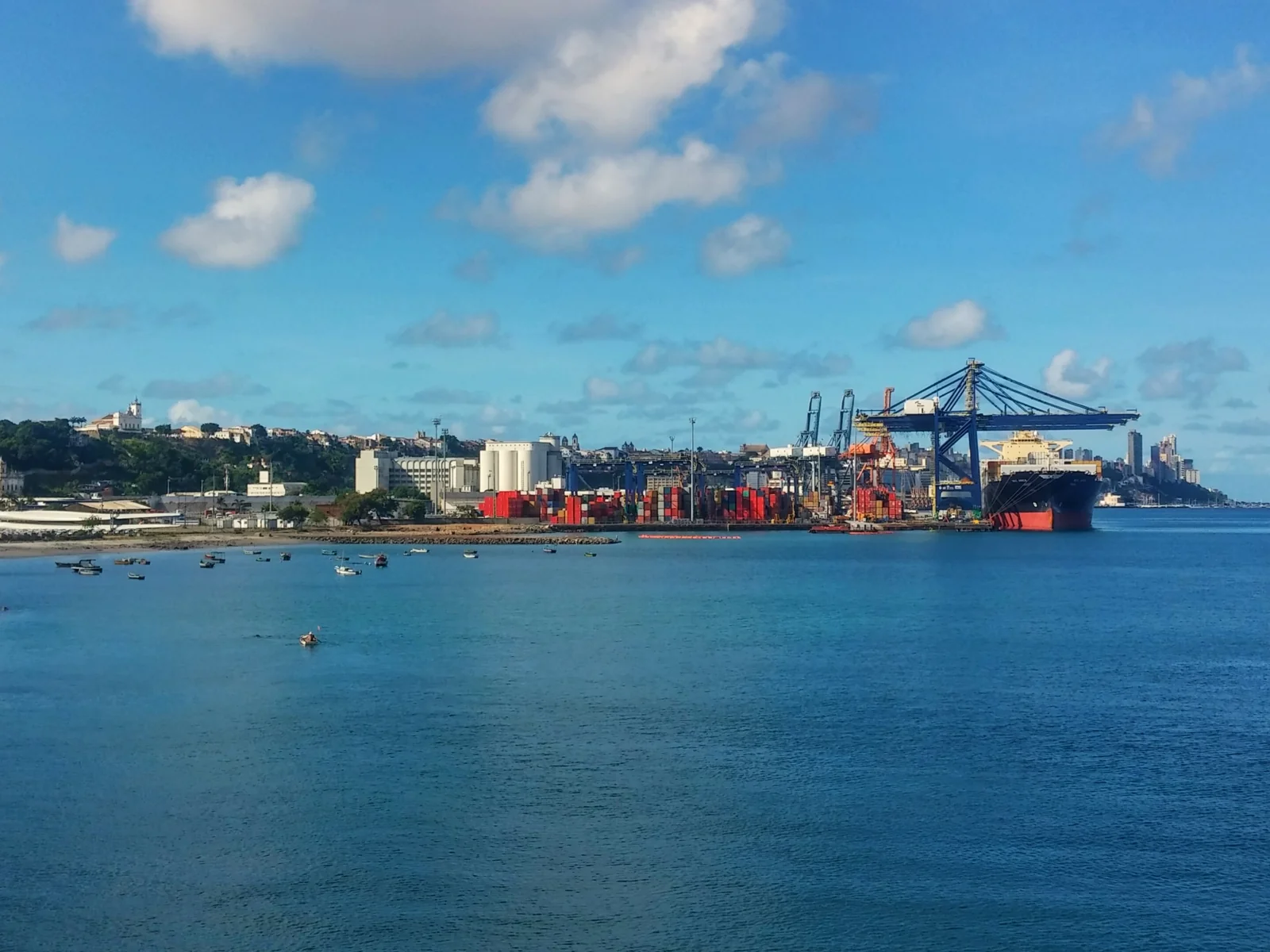
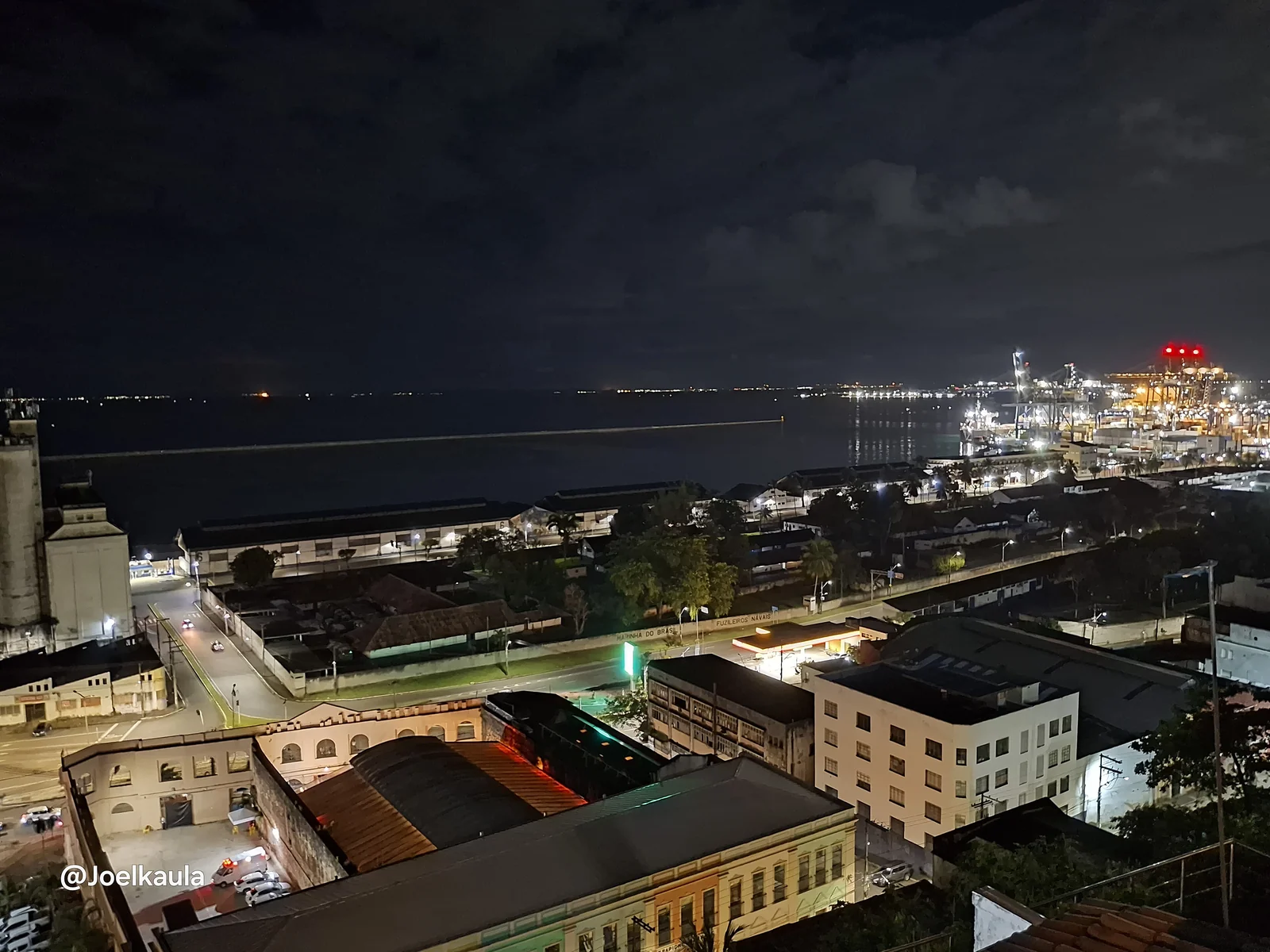
Cruise ships go alongside at the Terminal Marítimo de Passageiros on Avenida da França, in the Comércio — the lower-city business district at the foot of Salvador's 70-metre bluff. No tenders, no shuttle dependency: you clear the three-storey terminal building, run by the Contermas consortium, and you're standing on a working waterfront avenue with the round Forte São Marcelo sitting out in the water behind you. This is the third-busiest cruise port in Brazil and the main one in the Northeast: the 2025/26 season ran from early October to late April and brought 58 calls and roughly 190,000 passengers across this one pier. The upper city — the old town you came for, Brazil's first capital from 1549 to 1763 — is directly above your ship. Getting there takes about ten minutes on foot plus thirty seconds of elevator, and that is the entire commute.
The walk in: terminal gate to the Mercado Modelo
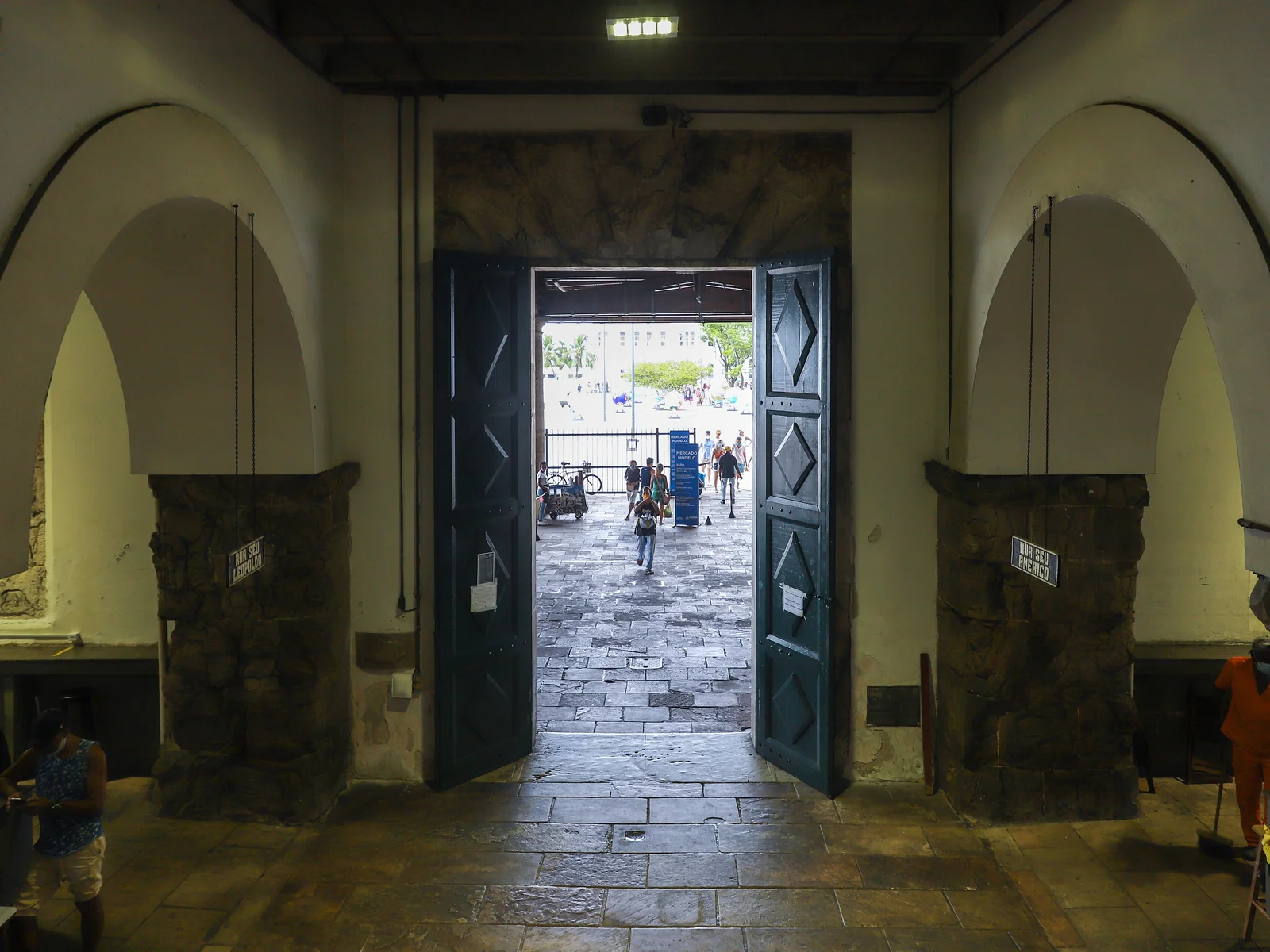
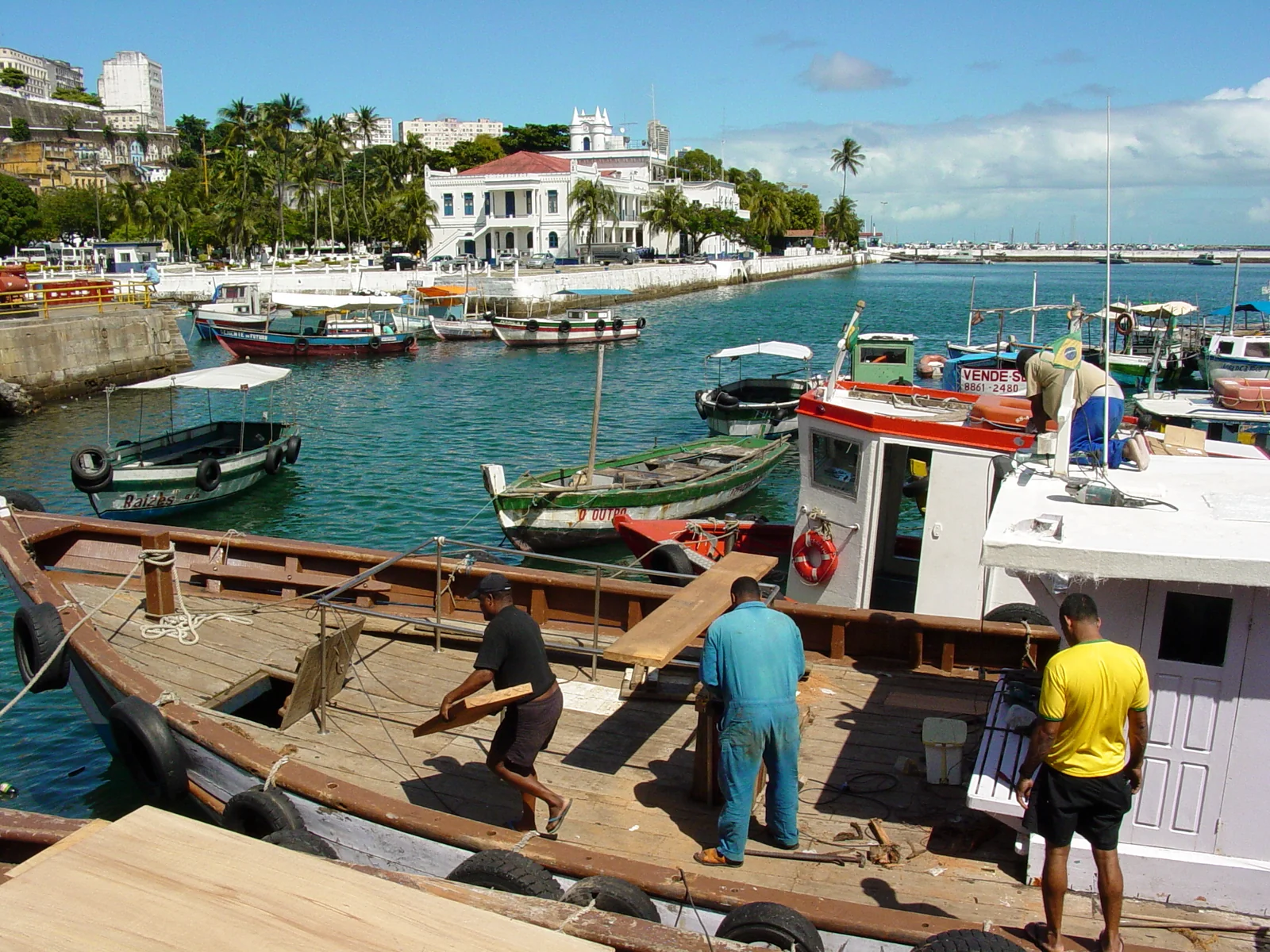
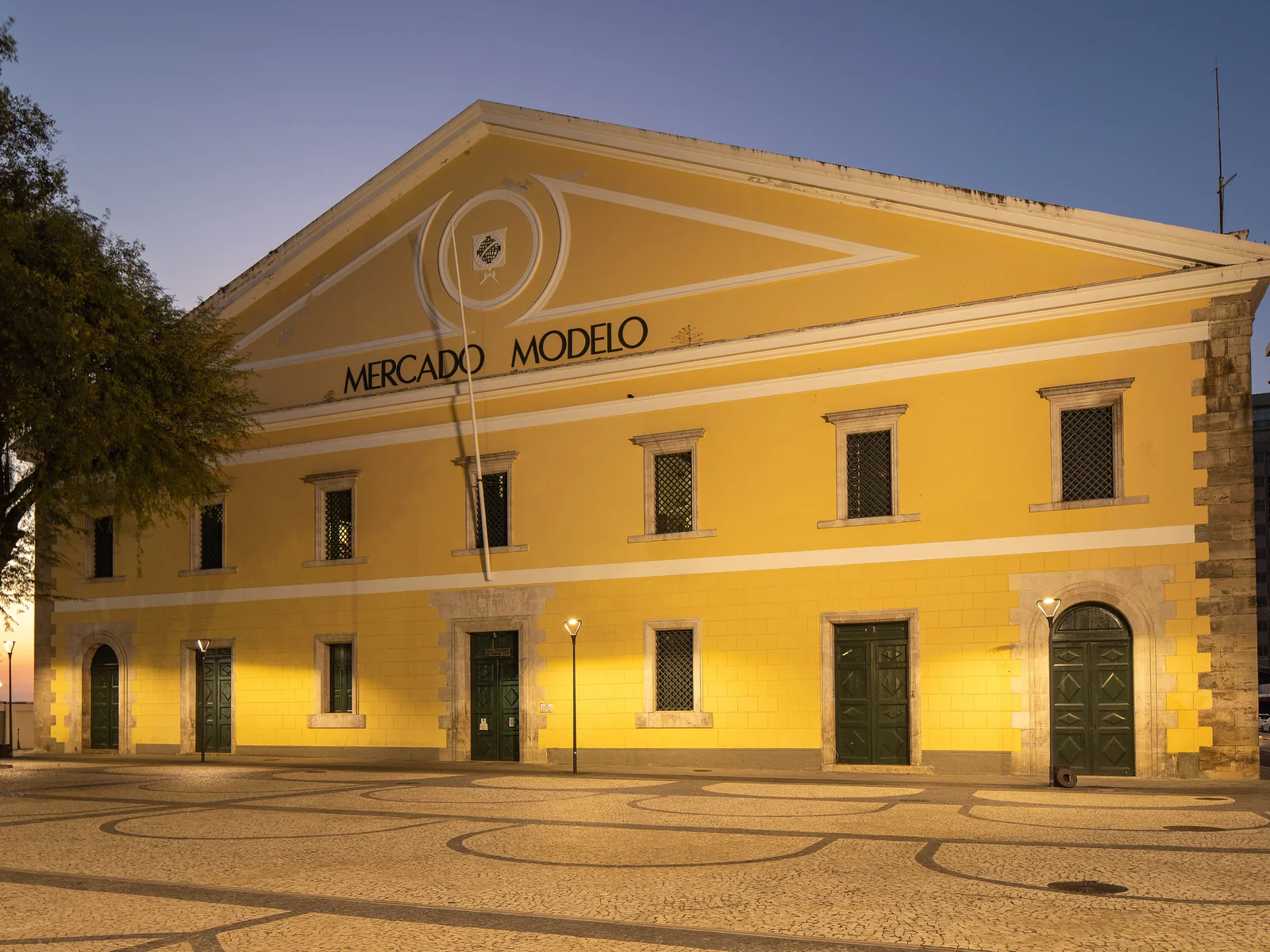
Out of the gate, follow Avenida da França with the bay on your right. You'll pass the Terminal Náutico, the smaller pier the bay schooners use, and within ten minutes reach the Mercado Modelo on Praça Visconde de Cayru — the 1912 customs house that now holds 263 stalls of cachaça, lace, berimbaus, football shirts and cocoa across two floors. It opens 9 am to 7 pm Monday to Saturday, and only 9 am to 2 pm on Sundays and holidays. Two pieces of advice: haggle gently, it's expected; and unless you're docked on a Sunday, save the actual buying for the way back, so you're not hauling a berimbau uphill and around six churches.
Thirty seconds, free in 2026: the Elevador Lacerda
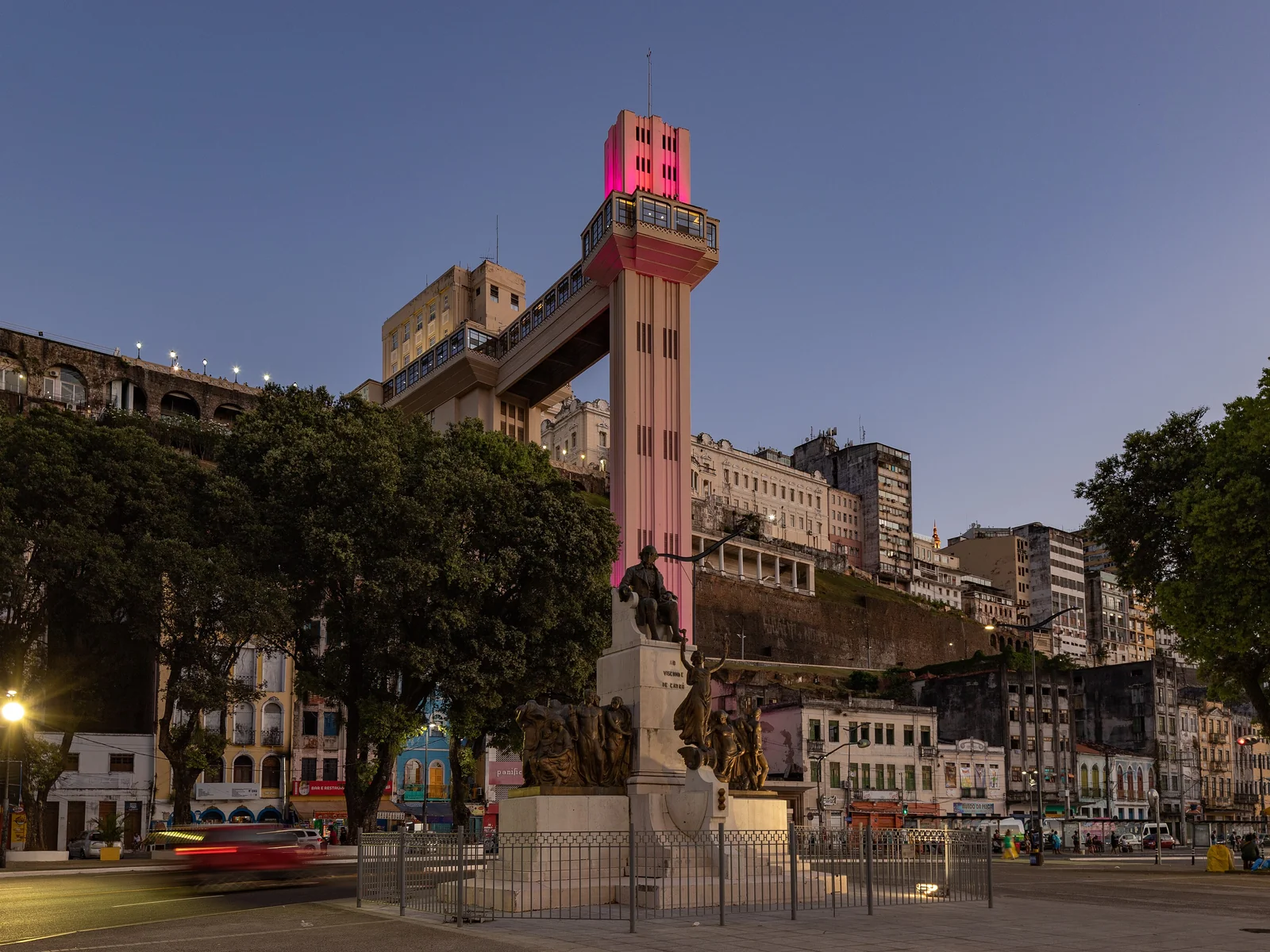
Directly across from the Mercado Modelo, the Elevador Lacerda has been stitching the two halves of Salvador together since 1873: four cabins, 72 metres, about thirty seconds, running from early morning until around 9.30 pm. It reopened in February 2025 after a floor-to-ceiling refurbishment — over R$ 14 million, four new cabins, air-conditioning — and the city announced a R$ 1 fare, though in 2026 the ride was still free. Locals grumbled anyway, which tells you something about what Salvador considers expensive. At the top you step onto the Praça Municipal, where the Palácio Rio Branco faces the old city hall, and the belvedere hands you the best free view in the city: the bay, the fort, and your own ship, looking suddenly small.
The old-town loop, with walking times
From the top of the elevator, the historic centre unrolls in a nearly straight line, level or gently sloped the whole way. The full loop is under four kilometres of walking — but they're cobbled kilometres, so wear real shoes. Budget it like this:
- Praça Municipal and Rua da Misericórdia — 15 minutes: the palace, the bay appearing between buildings.
- Praça da Sé — 10 minutes: the Cruz Caída sculpture marks where the old cathedral stood until it was torn down in 1933.
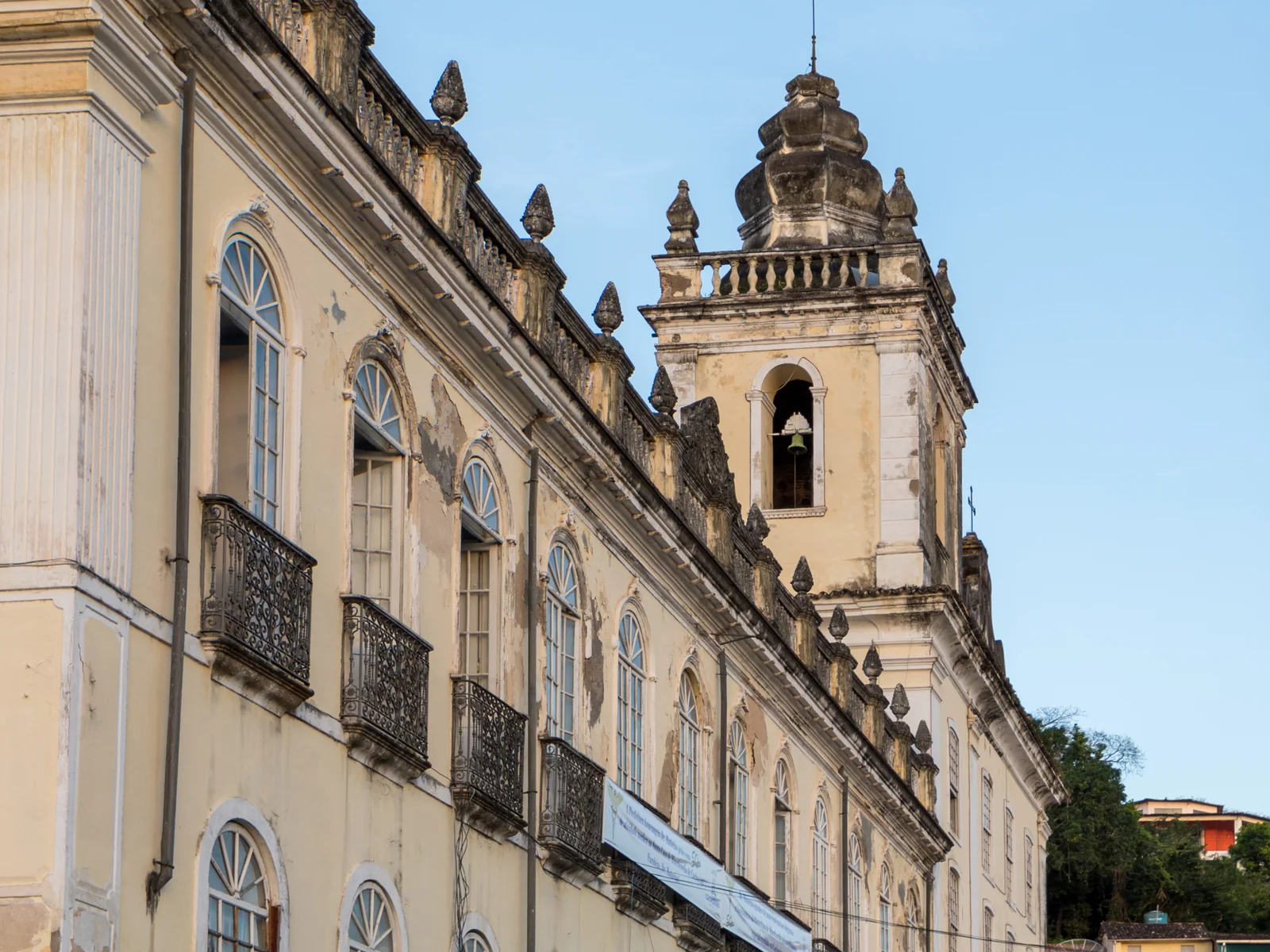
- Terreiro de Jesus — 30–40 minutes: the 17th-century Catedral Basílica, the former Jesuit church, plus baianas, ribbon-sellers and often a capoeira roda on the square.
- Cruzeiro de São Francisco — 5 minutes: the square of the famous golden church (see below), and the carved sandstone facade of the Ordem Terceira next door.
- Rua Alfredo de Brito down to the Largo do Pelourinho — 45 minutes: the blue mansion of the Casa de Jorge Amado, the Igreja do Rosário dos Pretos — built over a full century by enslaved and freed Africans for their own worship — and the sloping largo itself, the view on every postcard.
That's roughly three unhurried hours including church interiors. Our Pelourinho guide goes street by street if you want the detail, and if you'd rather walk it with a historian, our historic centre tour covers this exact ground in about two hours.
Lunch that isn't a tourist trap
The old-port rule holds here: a man outside waving a laminated menu means keep walking. The reliable answer sits at the foot of the largo. The Restaurante Escola do Senac, at Largo do Pelourinho 13, is the teaching restaurant of the state hospitality school: a buffet of some 40 Bahian dishes and 12 desserts, cooked and served by students, open 11.30 am to 3.30 pm every day including holidays, for around R$ 75 (about €12), drinks extra. It's the one place to try moqueca, vatapá, caruru and xinxim in a single pass without ordering blind — our Bahian food guide explains what each of them is. In a hurry, an acarajé from a baiana's tray on the Terreiro de Jesus is lunch in five minutes; and back at the bottom, the Mercado Modelo's restaurant terraces do a cold beer with a bay view.
What to skip — and the one taxi ride worth taking
With six to eight hours, be ruthless. Skip the beach: Porto da Barra is a genuine pleasure on a longer stay, but on a call it's a taxi each way through traffic for a swim you'll spend checking your watch. Skip anything across the water — Morro de São Paulo is a two-and-a-half-hour catamaran each way, and even Itaparica sits awkwardly in an eight-hour clock. And you don't need a coach tour of a city centre this compact; almost everything on our things to do in Salvador list stands within a kilometre of the elevator.
The one exception: the Igreja do Bonfim, Salvador's most loved church, out on the Itapagipe peninsula. If the famous ribbon-tying custom means something to you, make it your single taxi ride — 15 to 20 minutes each way; Uber and 99 both pick up at the terminal gate, and with a street taxi you agree the price before getting in. If walking isn't on the cards at all, our panoramic city tour strings the upper city, Bonfim and the viewpoints together by car and hands you back at the pier.
Money for a day ashore
Brazil runs on the real, and shops here do not take dollars or euros — don't bother trying. The good news is that you barely need cash: cards and contactless work almost everywhere, including most Mercado Modelo stalls and the Senac till. You'll see QR codes for PIX on every counter; it needs a Brazilian bank account, so it isn't for you. For one day, R$ 100–150 (roughly €16–25) in small notes covers the elevator both ways, an acarajé, coconut water, church entries of a few reais and a tip or two. There's no reason to change a wad of money for eight hours ashore; if you do need cash, use an ATM inside a bank branch rather than a machine on the street.
The buffer: getting back on board without sprinting
From the far end of the Largo do Pelourinho back to the gangway is about thirty minutes at stroll pace, elevator included. So give yourself a rule: start walking back ninety minutes before all-aboard. That sounds generous until you're behind a full ship — on big days four thousand-plus passengers are ashore at once (the MSC Preziosa called last October carrying 4,345), and the elevator queue and terminal security both back up in the late afternoon. The elevator runs until about 9.30 pm, so evening departures are safe, and the little Plano Inclinado Gonçalves does the same drop on rails when it's running. If the cobbles have won, a taxi from the rank by the Praça da Sé has you at the gate in about ten minutes.
Whales on the approach, July to October
Between July and October, humpback whales come up from Antarctic waters to breed off Bahia — the state tourism board expected some 30,000 along the coast in the 2025 season, with sightings peaking in August and September. Researchers monitor them daily from the tower of the Farol da Barra, right at the mouth of the Bay of All Saints, and every season a few are seen inside the bay itself. Most calls at the Salvador cruise port come later — the Brazilian season only opens in October — but if yours is an early-season call or a repositioning crossing, be on deck for the approach. A whale breaching off the bow before breakfast beats anything on the shore-excursion list.
Here's what eight hours in Salvador does to a surprising number of people: it turns a port call into a plan. If you're tempted to come back and give the city the days it deserves — or your cruise starts or ends here and you'd rather sleep above the old town than beside a highway — our boutique suites sit in the Cidade Alta, two minutes from the top of the elevator you rode today.
Salvador, in images
Photographs of the neighborhood, restaurant, and beach featured in this guide, with credit to each photographer.
Ready to discover Salvador?
Book one of the four Via Avantgarde suites in the Pelourinho — and receive the complete guides with recommendations for your stay.