Pelourinho how to see Salvador's historic centre
A Pelourinho guide: how Salvador's historic centre is laid out, what to see on each square, Blessing Tuesday, what's closed for restoration in 2026, safety, and whether to stay there.
The essentials in 30 seconds
The Pelourinho is the historic centre of Salvador — a hillside of cobbled lanes, pastel townhouses and baroque churches on the Cidade Alta, listed by UNESCO in 1985 and considered the finest surviving colonial quarter in the Americas. It is compact enough to cross in fifteen minutes and rich enough to fill two days. The core is three linked squares: the Terreiro de Jesus, the Largo do Cruzeiro de São Francisco and the sloping Largo do Pelourinho. Come in the morning for the churches and museums, and again on a Tuesday evening, when the whole quarter turns into a free open-air concert. It is safe by day with normal city sense, and best visited on foot.
What the Pelourinho actually is
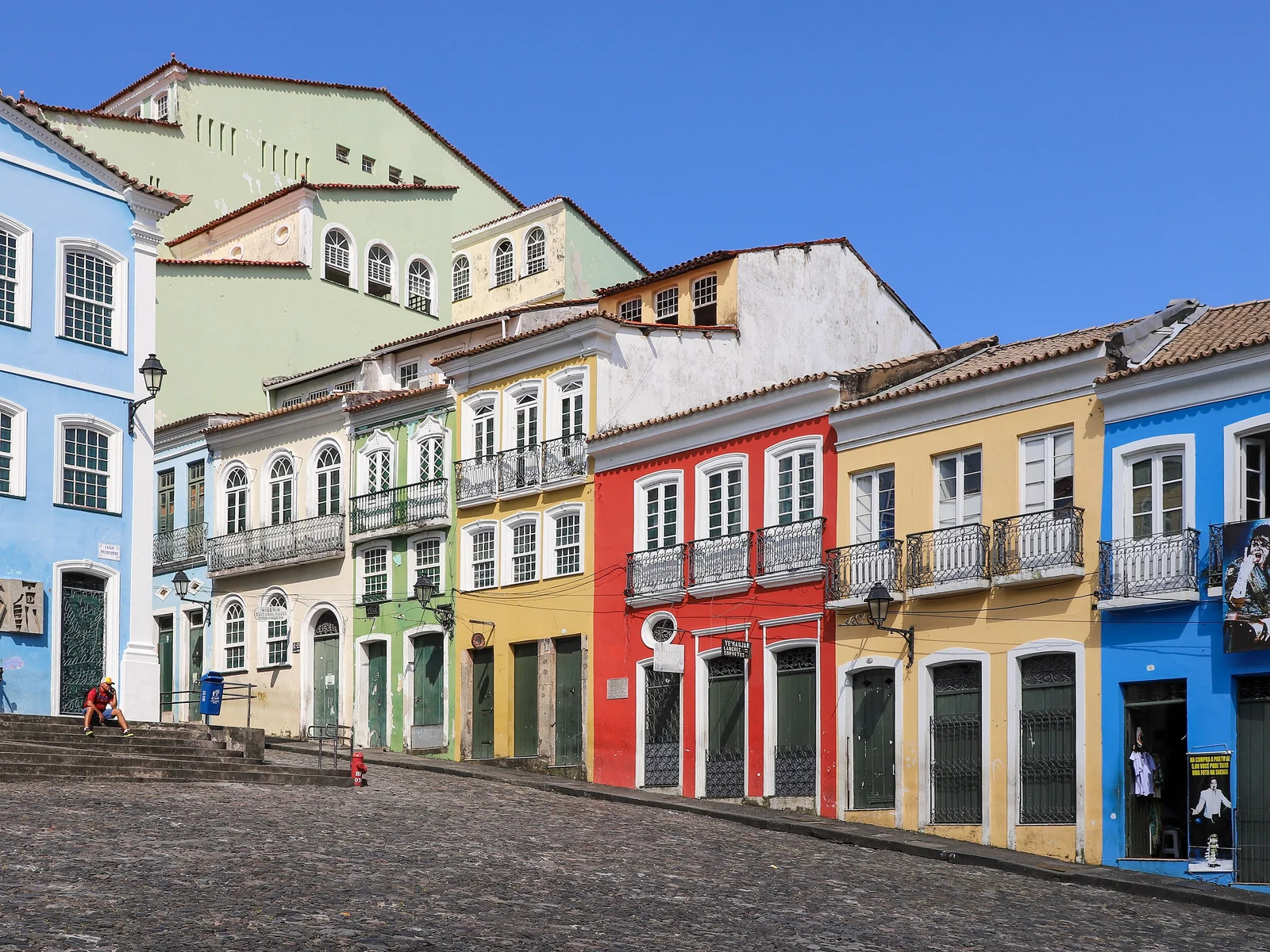
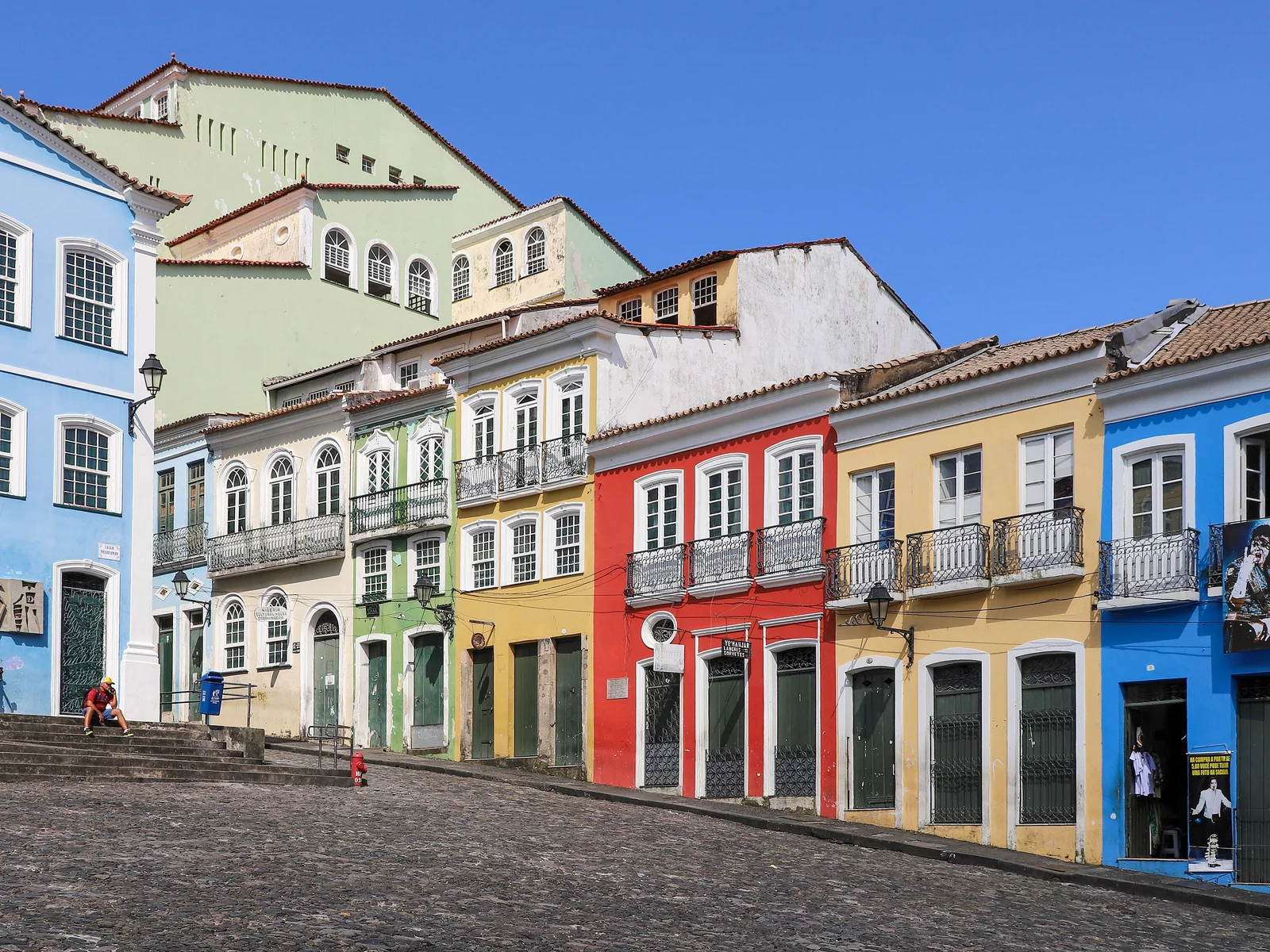
Salvador was Brazil's first capital, from 1549 to 1763, and the Pelourinho was its centre of gravity — the administrative, religious and commercial heart of a Portuguese colony built on sugar and on the labour of enslaved Africans. The name is unflinching about that history: a pelourinho is a whipping post, and one stood in the square. What survives is an extraordinarily complete 17th- and 18th-century townscape: hundreds of colonial buildings, painted in the pinks, blues, yellows and greens that Bahians restored them in from the 1990s onwards, tumbling down a steep hillside above the Bay of All Saints. UNESCO inscribed it in 1985, calling it a major example of Renaissance urban planning adapted to a colonial site.
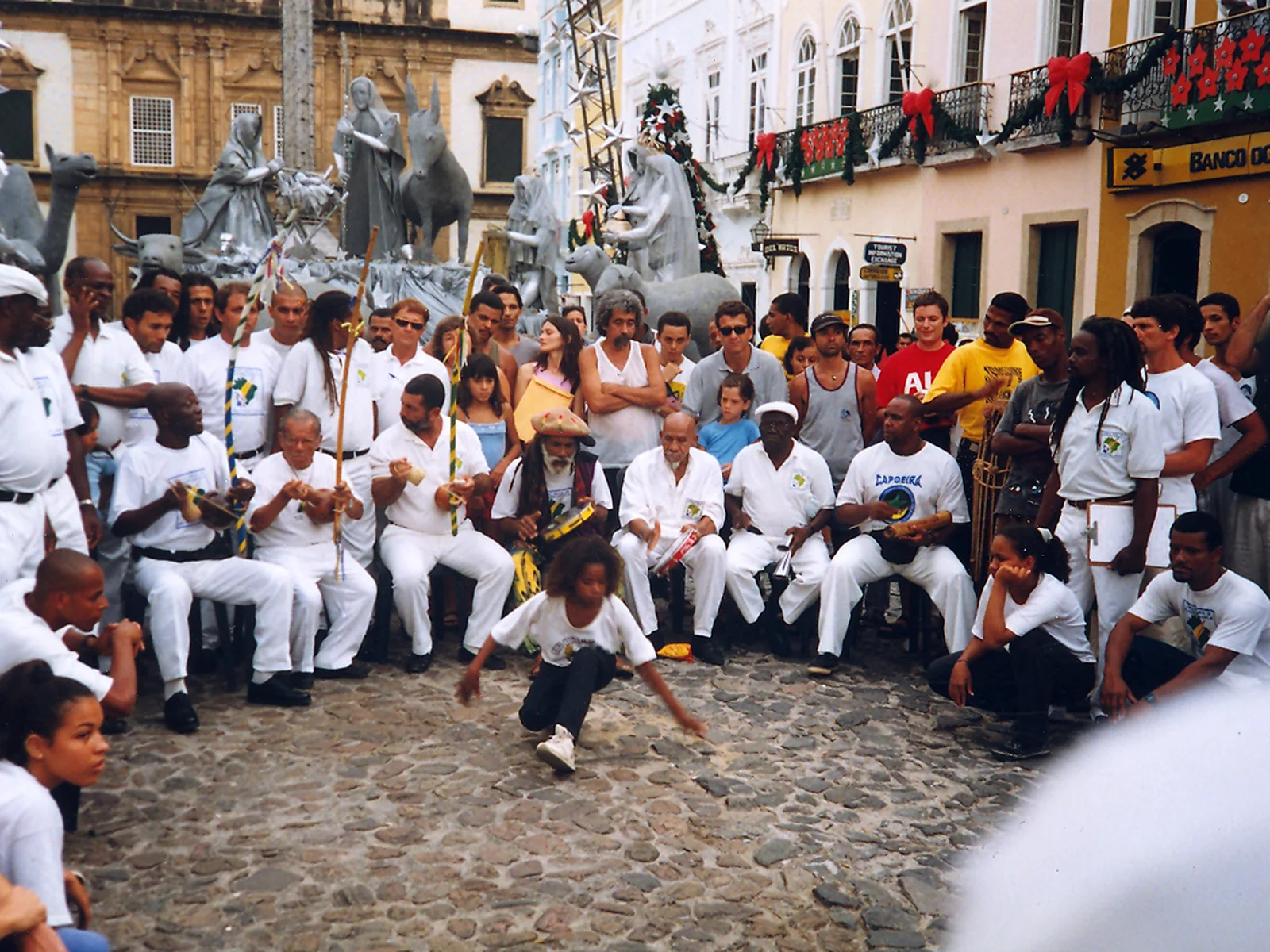
It is also, crucially, not a museum. People live here, children play football on the squares, capoeira groups rehearse in the open, bands practise in doorways, and the churches hold ordinary Sunday mass. That mix of preserved architecture and unbroken daily life is why the Pelourinho feels different from a restored old town in Europe.
How the quarter is laid out
Almost everything sits within three connected open spaces, walkable in minutes:
- Terreiro de Jesus (Praça 15 de Novembro) — the broad upper square, ringed by the Catedral Basílica and two more churches, with the Museu Afro-Brasileiro on one side and craft sellers and capoeira circles in the middle.
- Largo do Cruzeiro de São Francisco — a small adjoining square with a stone cross, the São Francisco complex and the carved facade of the Ordem Terceira.
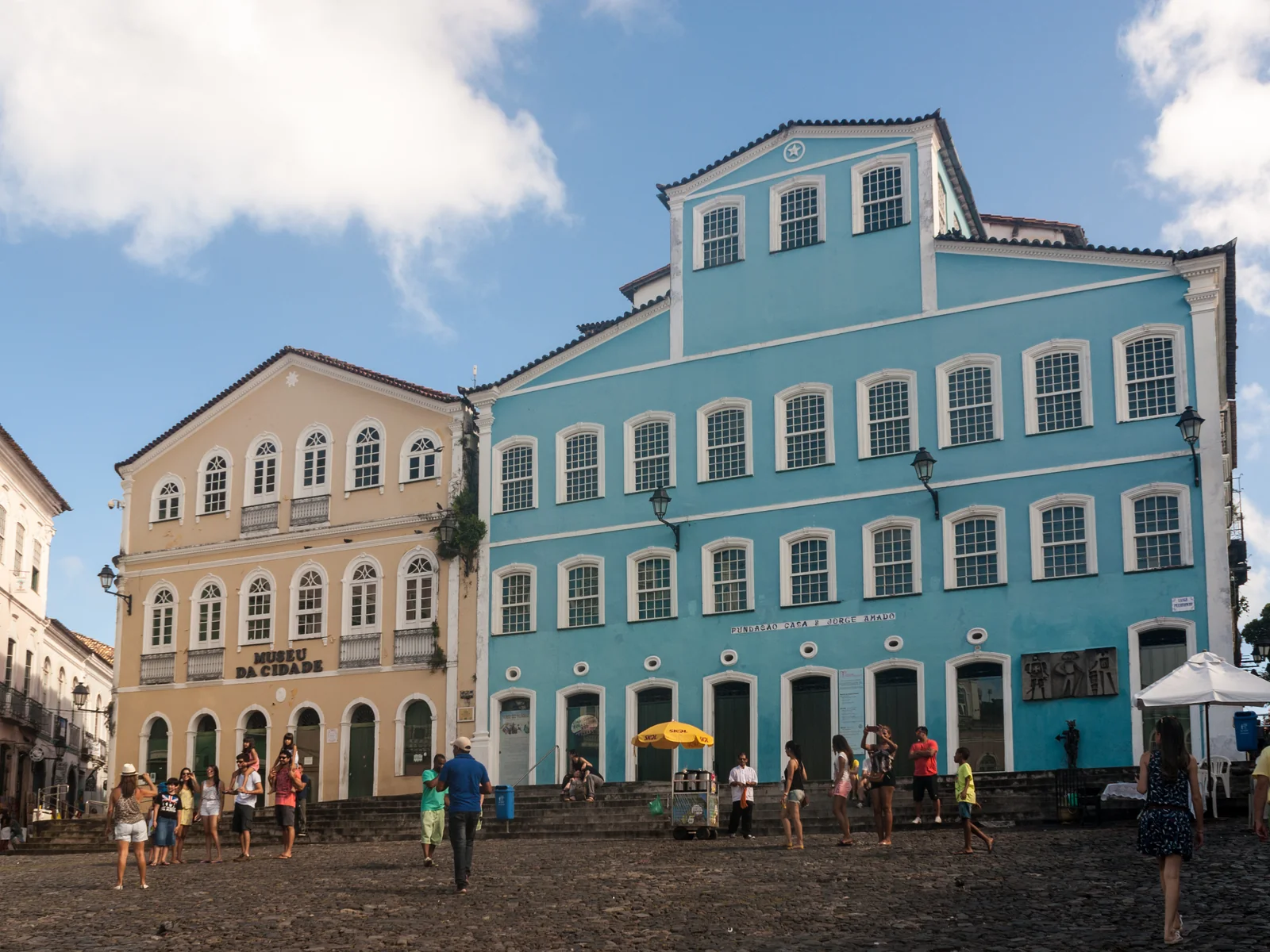
- Largo do Pelourinho — the postcard: a steep, funnel-shaped slope of coloured townhouses running down to the Igreja do Rosário dos Pretos, with the Fundação Casa de Jorge Amado at the top.
From the top of the quarter, the Praça da Sé and the Praça Municipal lead to the Elevador Lacerda and the view over the bay; from the bottom, the steps of the Ladeira do Carmo climb to the Santo Antônio neighbourhood. That's the whole geography. If you can find the Terreiro de Jesus, you cannot get lost.
What to see, in a sensible order
Start at the Terreiro de Jesus and work downhill:
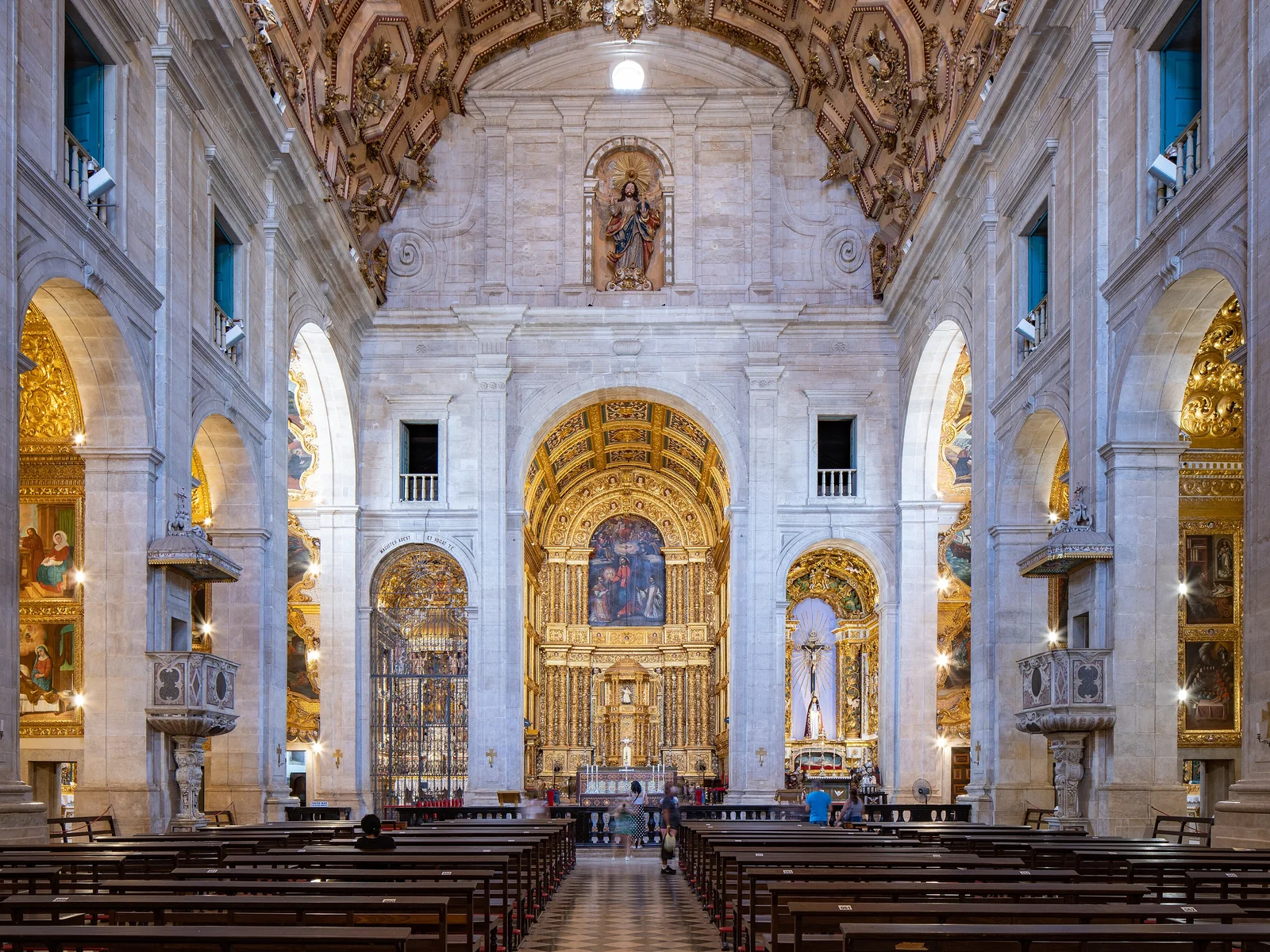
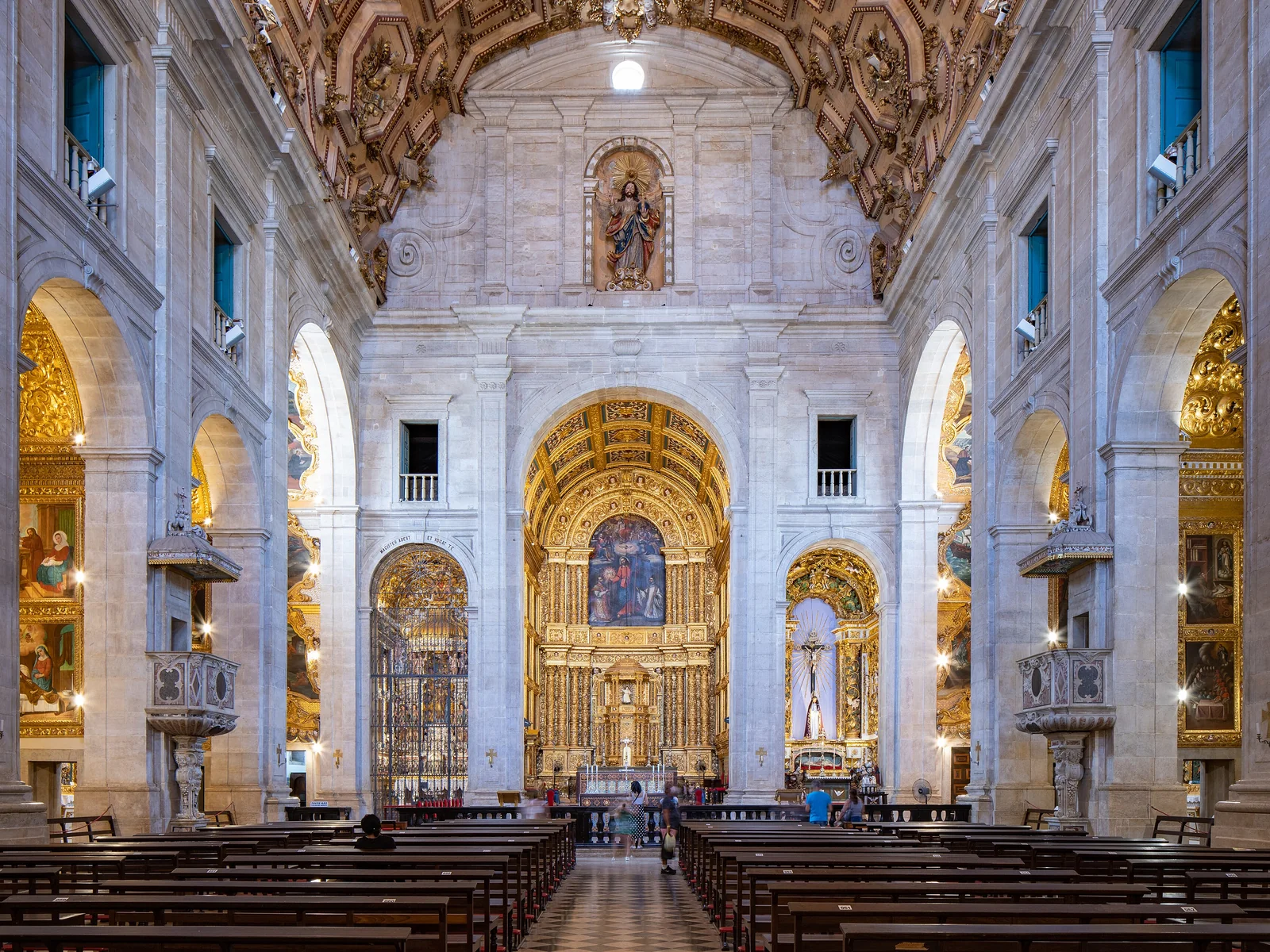
- Catedral Basílica de Salvador — the former Jesuit church, a restrained 17th-century exterior hiding a gilded interior and Portuguese tilework. Small entry fee.
- Museu Afro-Brasileiro (MAFRO) — the single best introduction to Candomblé, the orixás and the African roots of Bahian culture, housed in the old medical faculty. The carved wooden orixá panels by Carybé alone justify the ticket.
- Igreja da Ordem Terceira de São Francisco — remarkable for a facade carved in sandstone in high relief, a rarity in Brazil, plus tiled cloisters inside.
- Igreja de Nossa Senhora do Rosário dos Pretos — the blue church at the foot of the Largo, built over decades by enslaved and freed Africans for their own brotherhood because they were excluded from other congregations. Still an active parish, and the most moving building in the quarter.
- Fundação Casa de Jorge Amado — a small museum to Bahia's great novelist in a blue mansion on the Largo; free on Wednesdays at the time of writing.
- Museu da Gastronomia Baiana and the craft workshops — worth a wander for the ateliers and instrument-makers tucked into side streets.
Tuesday night, and when else to come
Go twice. In the morning, roughly 9am to 1pm, the light is good, the churches and museums are open, the squares are quiet and the heat is bearable. Then come back for A Terça da Bênção — Blessing Tuesday — when, after the evening mass at the Rosário dos Pretos, the quarter fills with free live music on several squares at once and the whole city turns out. It is the best regular night in Salvador and it costs nothing. In the weeks before Carnival the percussion blocos, Olodum among them, hold open rehearsals here too. Our music and nightlife guide has the current schedule.
Is the Pelourinho safe?
By day, yes — it is patrolled, busy and full of families, and the ordinary rules are enough: keep your phone in your pocket rather than your hand, don't wear obvious jewellery, carry a small amount of cash and leave the passport at the flat. At night the lit, populated squares are fine, especially on Tuesdays and weekends, but the empty side lanes and the steep connecting streets down toward the lower city are not — take a ride app the moment you leave the busy core. You will also meet friendly approaches with a commercial end: someone tying a Bonfim ribbon on your wrist, a costumed baiana posing for a photo, a "free" capoeira demonstration. None of it is dangerous; all of it expects payment. A polite não, obrigado works, and if you do accept, agree the price first. Our full safety guide covers the city as a whole.
Eating and drinking in the quarter
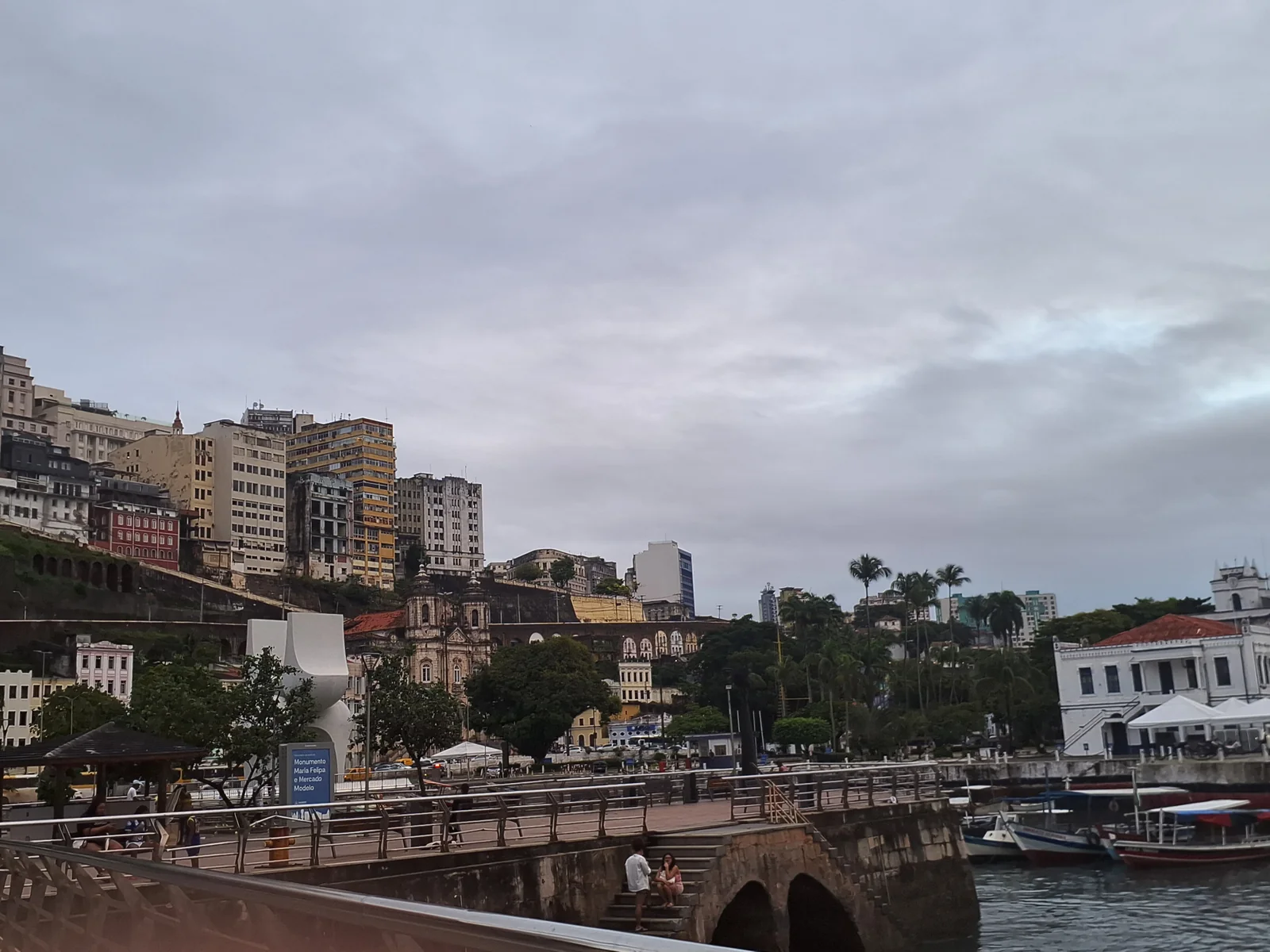
The restaurants directly on the tourist squares are the weakest value in the neighbourhood — pleasant terraces, ordinary food, inflated prices. Better: buy acarajé from a baiana at a street stand, take a proper moqueca in one of the smaller places on the side streets or in nearby Santo Antônio, and drink an ice-cold beer wherever the locals are standing. The Mercado Modelo, down at the bottom of the Elevador Lacerda, has two restaurant terraces with a bay view that are worth the trip. What to order, and how, is in our Bahian food guide and our Salvador dining guide.
Should you stay in the Pelourinho?
This is the real question, and the honest answer is: stay in the historic centre, but choose your street. The advantage is total — you wake up inside the thing you came to see, you walk to the churches, the museums, the music and the Elevador Lacerda, and you skip the daily commute that guests staying in Barra or Rio Vermelho pay in time and taxi fares. The trade-off is noise on the busiest squares on the busiest nights, and the fact that quality varies enormously street by street. The sweet spot is the calmer edges of the Cidade Alta — a few minutes' walk from the Largo do Pelourinho, quiet at night, still walkable to everything. Our neighbourhood guide compares all the options, and our four boutique suites sit exactly in that sweet spot, in restored historic buildings a short walk from the Terreiro de Jesus. For the hotels on these same streets, see our guide to hotels near the Elevador Lacerda.
Give the Pelourinho more than the ninety minutes most tours allow it. Walk it once with a map and once without. Sit on a step and let a rehearsal happen in front of you. It is the reason Salvador is on your itinerary, and it rewards the visitor who stays put — which, if you're sleeping three streets away, is easy to do.
Salvador, in images
Photographs of the neighborhood, restaurant, and beach featured in this guide, with credit to each photographer.
Ready to discover Salvador?
Book one of the four Via Avantgarde suites in the Pelourinho — and receive the complete guides with recommendations for your stay.