New Year and the Festa de Iemanjá salvador's two nights in white
New Year in Salvador and the Festa de Iemanjá: the white-clad Réveillon, the free Festival Virada, and the 2 February offering to the sea in Rio Vermelho.
The essentials in 30 seconds
Two nights in white bookend high summer in Bahia: New Year in Salvador and, five weeks later, the Festa de Iemanjá in Rio Vermelho. On the 31st the city dresses head to toe in white, jumps seven waves for seven wishes and floats flowers out to the orixá of the sea, while the free Festival Virada Salvador runs five nights of shows on the Boca do Rio seafront. On 2 February the fishermen of Rio Vermelho carry a boat of flowers and perfume out past the breakers, as they have since 1923, and the neighbourhood becomes an all-day street party after. Both dates are peak season and peak heat, and both push room prices up — book early. Here is how each one actually works, and how to take part without getting in the way.
The Salvador way to see in the New Year
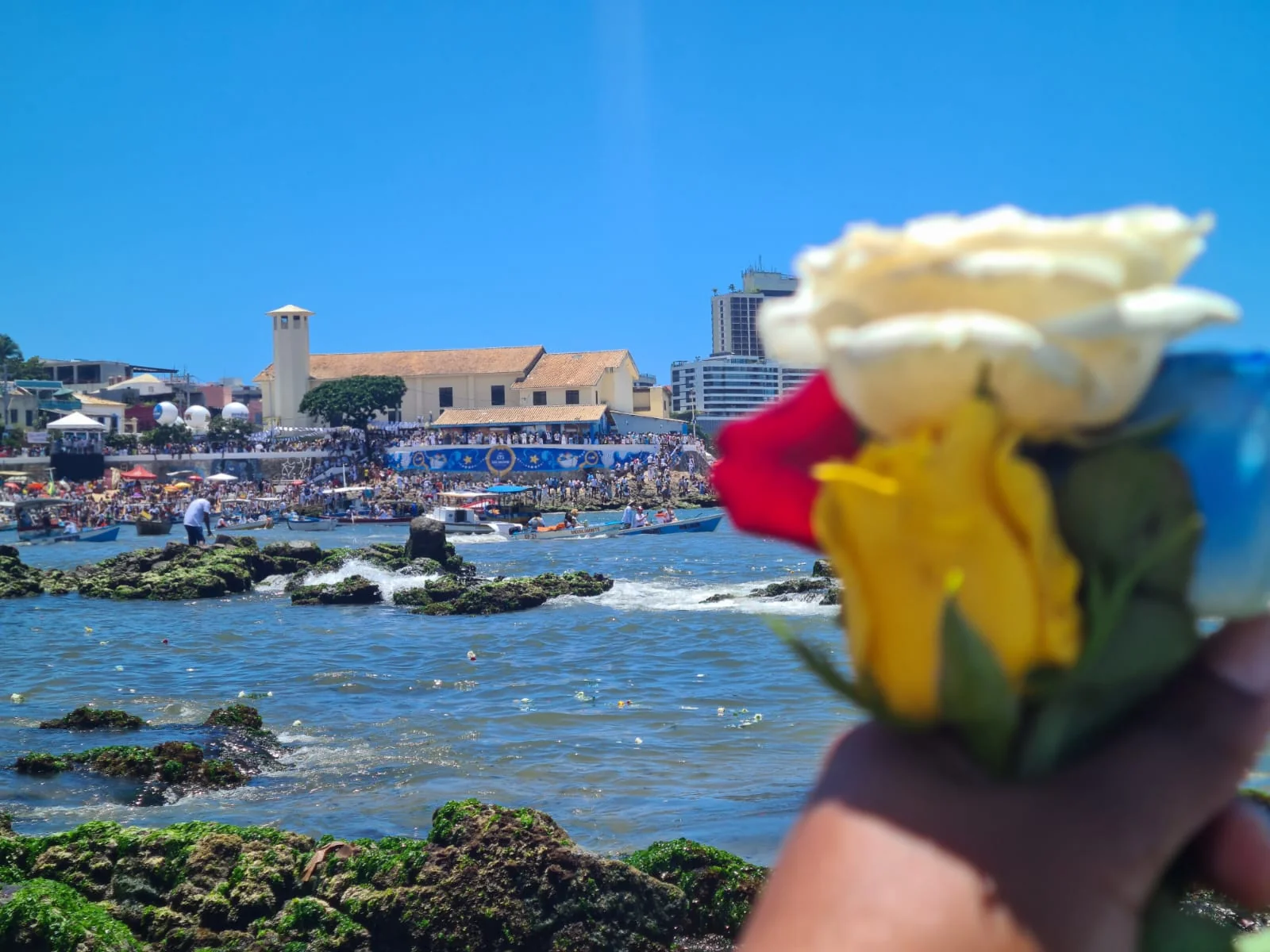
Réveillon here is a beach ritual before it is a party. As midnight nears you walk down to the water dressed in white — the colour of Oxalá, the orixá of peace, and the reason much of Brazil wears white on the 31st at all. At the waterline you jump seven small waves and make a wish on each; the seven belong to the Sete Linhas of Umbanda, and the habit, like so much in this city, comes from Afro-Brazilian faith. Many people bring white flowers, or a small comb, mirror or bottle of perfume, and set them on the water as a gift to Iemanjá, the queen of the sea. If your offering drifts out she has taken it; if it washes back, there is always next year. Our Afro-Brazilian history guide unpacks the orixás behind all of this.
Festival Virada Salvador: the official party
The city's own New Year event, the Festival Virada Salvador, is free and enormous — the biggest public réveillon in Brazil by the city's own count. The 2025–26 edition ran five straight nights, 27 to 31 December, at the purpose-built Arena O Canto da Cidade on the Boca do Rio seafront, with more than sixty acts across over a hundred hours of music, plus a Ferris wheel and a food village behind the stands. Bahian axé and pagode carry the bill: the closing night alone put Ivete Sangalo, Timbalada, Xanddy Harmonia, Jorge e Mateus, Manu Bahtidão and Mari Fernandez on one stage, and Ivete has led the midnight countdown for years. Around a million people spread along the shore between Boca do Rio and Pituaçu for the turn. The official Salvador tourism site posts the full running order each year.
Fireworks over the bay, and a stroll on the orla
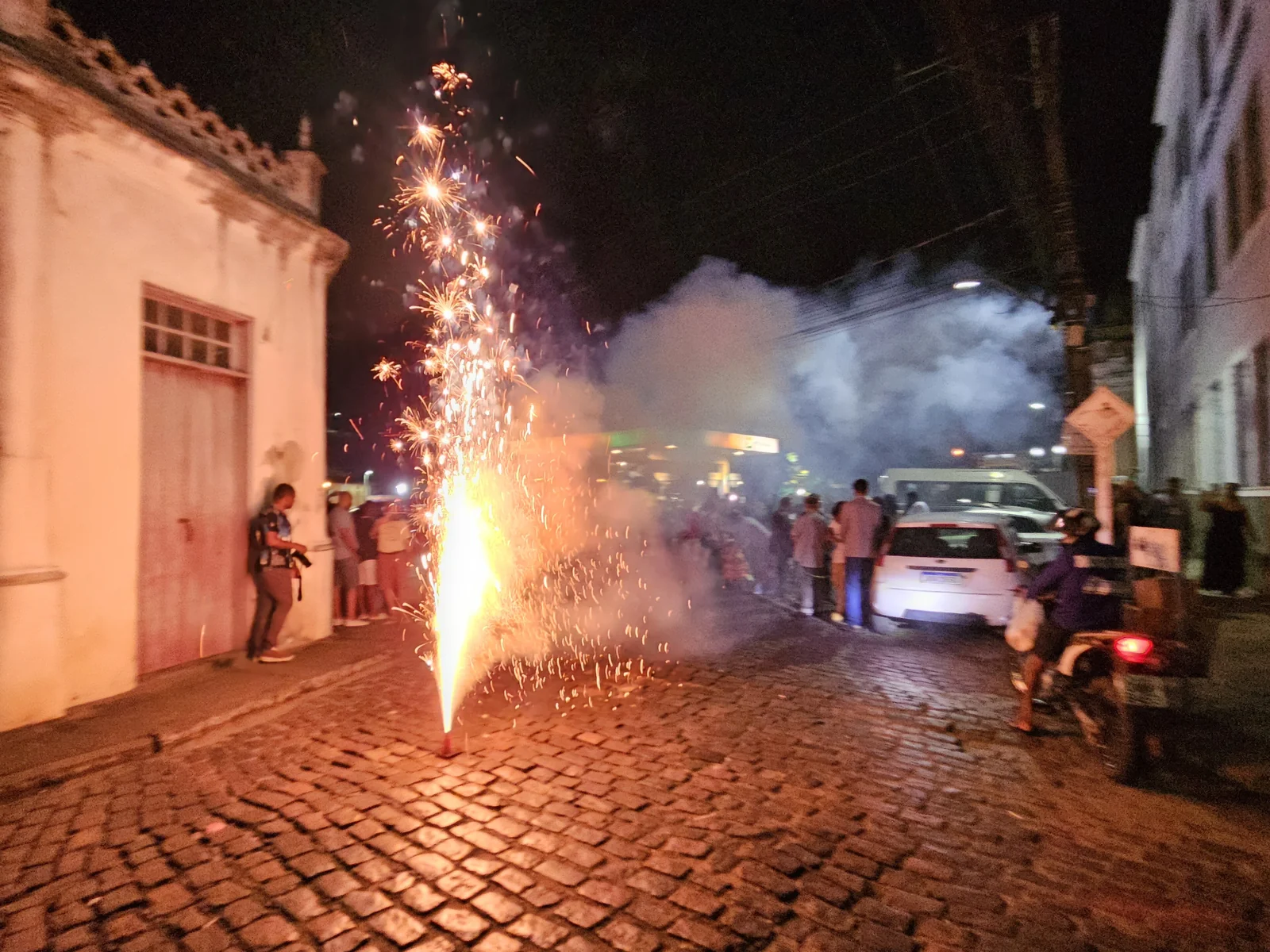
At midnight the fireworks go up from more than twenty points along the coast at once, so you needn't be at the main arena to get a show. Boca do Rio is the big one — around six tonnes of pyrotechnics over roughly ten minutes — but Barra, Ondina and Rio Vermelho each get their own. Plenty of families skip the crowds altogether and simply walk the orla, the seafront promenade, in white with a drink in hand, watching the sky from wherever they stand. Getting home is the catch: traffic crawls and the ride apps surge, so build in patience or plan to walk part of the way. Our guide to getting around Salvador covers how the city moves on the night.
Where to be on the 31st — and why to book now
You have two broad choices. Base yourself out at Boca do Rio and you are inside the main event. Stay up in the Cidade Alta, the historic upper town, and you trade the mega-stage for the older, gentler version of the night — white-clad crowds on the Praça Municipal, the lit-up bay laid out below the Elevador Lacerda, and a short walk home at the end of it. Either way, do not leave the room to the last minute. New Year is the most expensive week of the Salvador calendar; rates climb and the better places sell out months ahead. Our best-time-to-visit guide sets out how the seasons and prices move.
Five weeks on: the Festa de Iemanjá
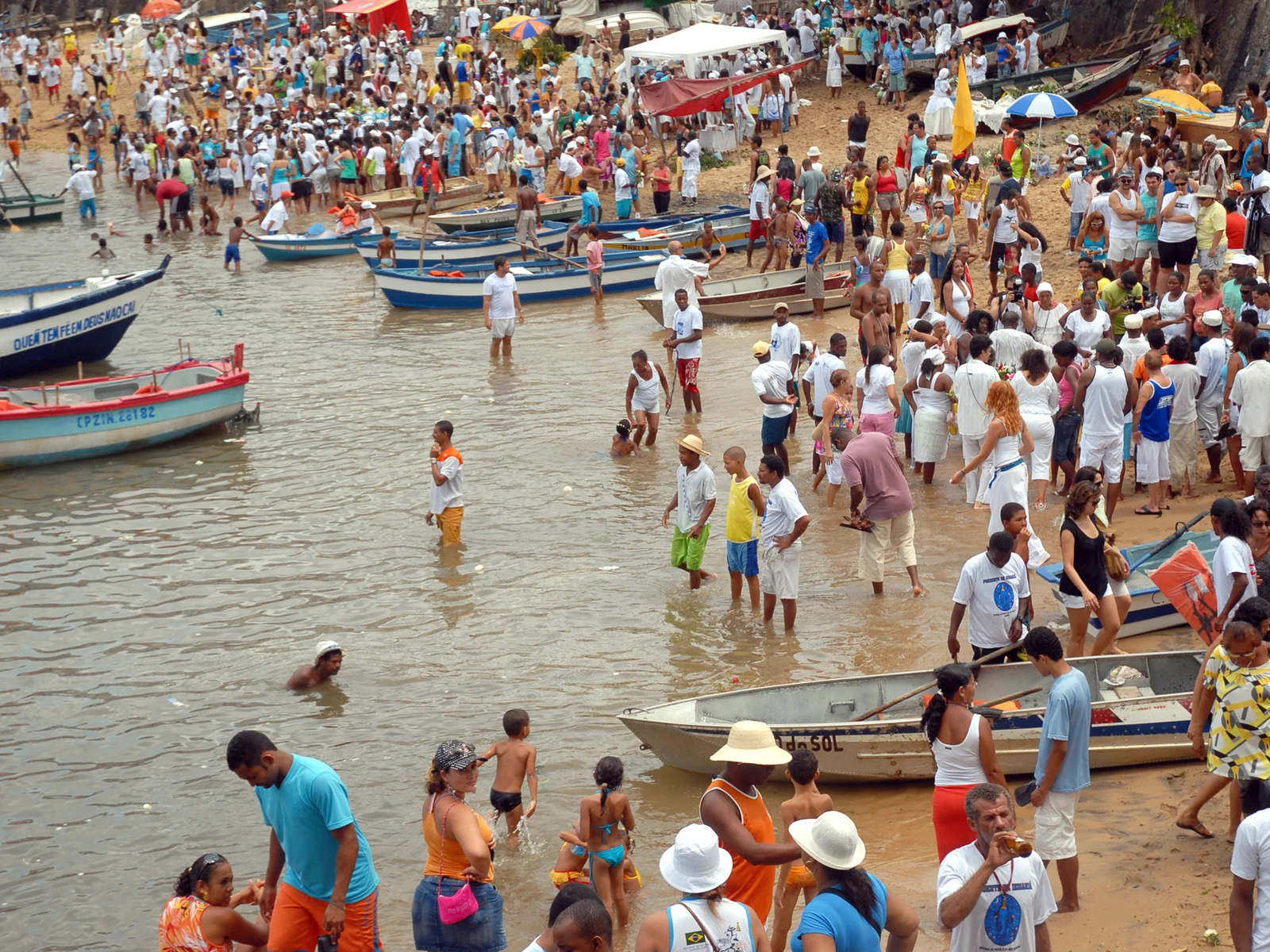
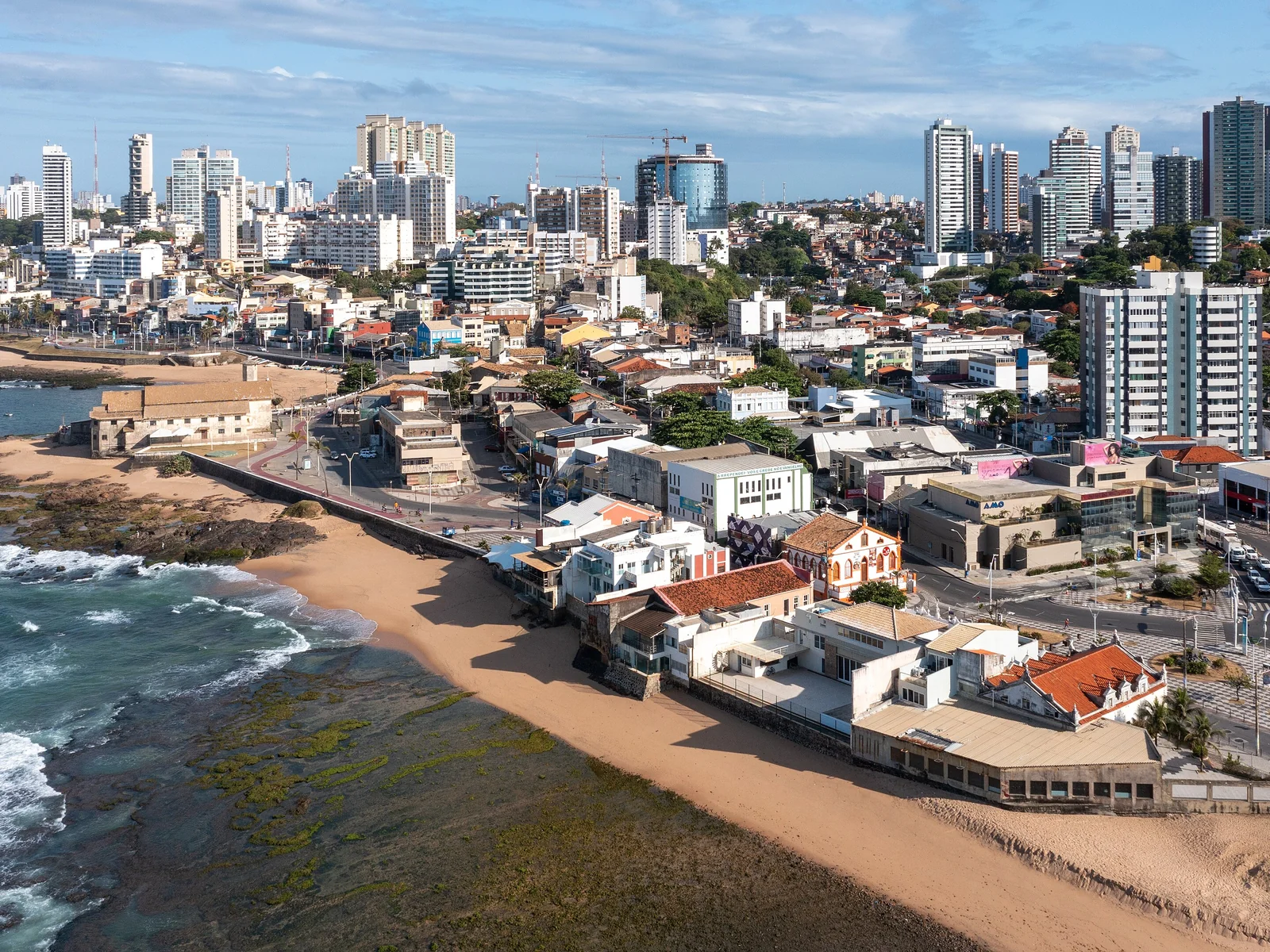
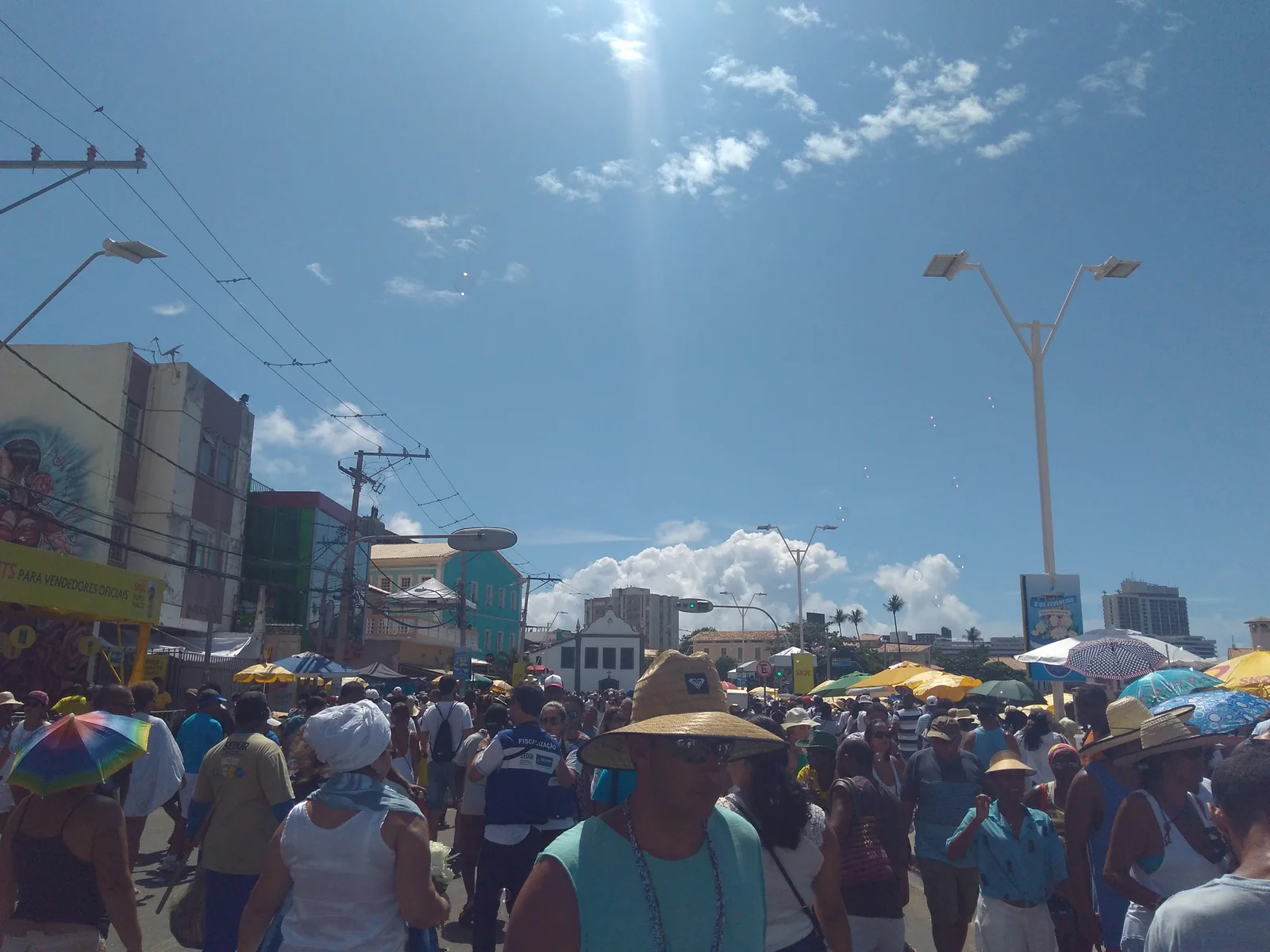
The season's second white festival is quieter in spirit, and for many locals it is the one that counts. Every 2 February, Rio Vermelho gives its whole day to the Festa de Iemanjá — the largest public act of devotion to an orixá in Brazil, and a registered part of Salvador's cultural heritage. In 2026 it reached its 104th year. It started small, in 1923: a poor fishing season sent the fishermen of Rio Vermelho to leave a gift for the Mother of Waters and ask for fuller nets, and the offering has gone out every year since. The official Iemanjá programme lists the day's events.
How the offering works
The heart of the day is the presente, the main gift to Iemanjá. Before dawn it leaves the shed of the Colônia de Pescadores Z-1, the fishermen's colony, and is carried to the shrine — the Casa de Iemanjá, beside Praia de Santana — to a small round of fireworks. All morning and afternoon a long, patient queue files in to add their own flowers, letters and perfume to the great baskets. Then, in the late afternoon, the fishermen load the baskets into their boats and take them out onto the open sea. Around it, the neighbourhood's two hubs — the Largo de Santana and the Largo da Dinha — fill up; Dinha's well-known acarajé stand at Largo de Santana opens late in the day, and the party runs deep into the night. Our Rio Vermelho guide maps the neighbourhood the rest of the year.
How to attend respectfully
This is a religious offering first and a street party second, and the order matters. A few simple things keep you on the right side of it:
- Wear white if you can. It is welcomed here, not appropriated — you will be in good company.
- Bring your own flowers to give, and never take flowers from the baskets or the shrine. Those are offerings, not decoration.
- Do the morning for the ritual and the queue, then stay for the music through the afternoon and evening. The two halves are the day.
- Don't photograph people in trance or mid-ceremony without asking. If someone is praying, give them room.
For the deeper background — what Candomblé is, and how to carry yourself around a terreiro — read our Candomblé for visitors guide before you go.
Two festivals, one thread
Set side by side, Réveillon and the Festa de Iemanjá are the same gesture five weeks apart: a city in white, walking down to the sea to thank it and ask it for something. See both and you will understand Salvador better than a shelf of museums could teach you. They sit inside a crowded summer calendar that runs on to Carnival — our Bahia festival calendar lays out the full run of dates.
One last, practical reason to base yourself in the Cidade Alta for either night: you are a short walk from both the water and the historic squares, and you come home to a quiet street rather than a beach highway still emptying at three in the morning. Our boutique suites sit steps from the old town — well placed for the fireworks in December, the offering in February, and the long Bahian summer in between.
Salvador, in images
Photographs of the neighborhood, restaurant, and beach featured in this guide, with credit to each photographer.
Ready to discover Salvador?
Book one of the four Via Avantgarde suites in the Pelourinho — and receive the complete guides with recommendations for your stay.