Salvador in the Rain the wet-season plan, squall by squall
What to do in Salvador, Brazil, when it rains: how tropical squalls work, the museum circuit, covered markets, a two-hour moqueca lunch and the schooner rule.
The essentials in 30 seconds
The honest answer to what to do in Salvador, Brazil, when it rains starts with how the rain behaves: from April to July it mostly arrives as a violent twenty-minute dump, and then the sun comes back. Wait it out over a coffee and carry on with your day. When a whole day does stay wet, the city has real cover: a museum circuit where almost nothing costs more than R$ 20 (about US$ 3.50), the 263 stalls of the Mercado Modelo, church interiors on the Terreiro de Jesus, a two-hour moqueca lunch, a capoeira class inside a colonial fort. The one true casualty is the schooner day on the bay. Everything else is a reshuffle, not a cancellation.
How the rain actually behaves: the dump, then the sun
Salvador's rain is tropical, which means it follows a different logic from the grey all-day drizzle most northern travellers grew up with. The wet season runs April to July; May is the wettest month on the long-term averages at around 295 mm, with April close behind on roughly 280 mm — the four wet months together drop more rain than London sees in a year. But those totals arrive in a particular way. The sky goes dark, the street empties, water comes down in sheets for twenty or thirty minutes, and then it stops. The gutters roar for a while. The sun comes out and the cobbles steam.
The practical consequence is the most useful thing this page will tell you: never cancel a day at breakfast because it is raining at breakfast. Order another coffee, watch the squall empty the square, and give it half an hour. Locals treat a downpour as a pause, not a verdict, and visitors who learn that rhythm keep their whole itinerary. A compact umbrella earns its place in the bag — our packing list covers the rest — but a deep doorway and a little patience do most of the work.
What to do in Salvador when it rains all day: the museum circuit
Some days the sky does settle in — May and June produce most of them — and that is what the museum circuit is for. The centre's museums are small, close together and cheap, which makes them ideal rain insurance: you commit to one at a time and move between them in the dry gaps.
- Casa do Carnaval (Tue–Sun 9–17h, R$ 20, free on Wednesdays) — Carnival's history told with costumes and a floor of trio elétrico footage; genuinely fun rather than dutiful.
- Cidade da Música da Bahia (Tue–Sun 9–17h, last entry 16h, R$ 20) — interactive galleries on Bahia's music, open since September 2021, down in the Comércio.
- MAFRO, the Afro-Brazilian museum on the Terreiro de Jesus (Mon–Fri only, 9–17h, R$ 10) — worth planning a weekday around for Carybé's 27 carved orixá panels alone.
- MAM-BA (free, Tue–Fri 13–19h, weekends 14–19h) — modern art in the 17th-century Solar do Unhão at the water's edge; on selected Saturdays, roughly every fortnight, the JAM no MAM jazz session follows from about 17h (R$ 10–40).
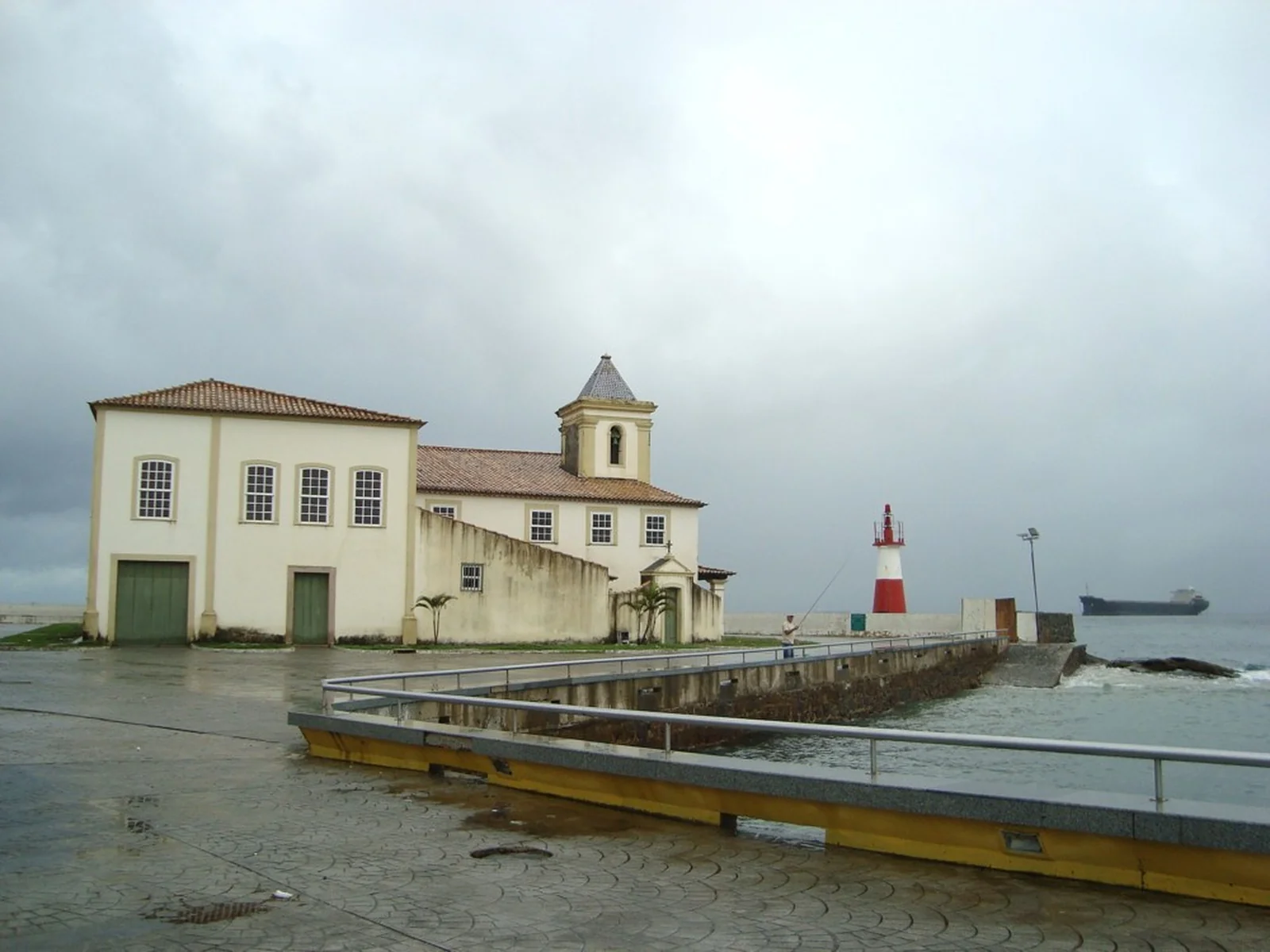
- Museu Náutico in the Farol da Barra lighthouse (daily 9–18h, R$ 20) — shipwrecks and bay history, and the surf hitting the fort is better theatre in bad weather than in good.
Which of these pair well on a single wet afternoon — and which you can skip — is the whole subject of our Salvador museums guide. Mind the calendar trap: MAFRO closes at weekends and most of the others close on Mondays, so a wet Monday is a market-and-churches day, not a museum day.
Covered space that is not a museum
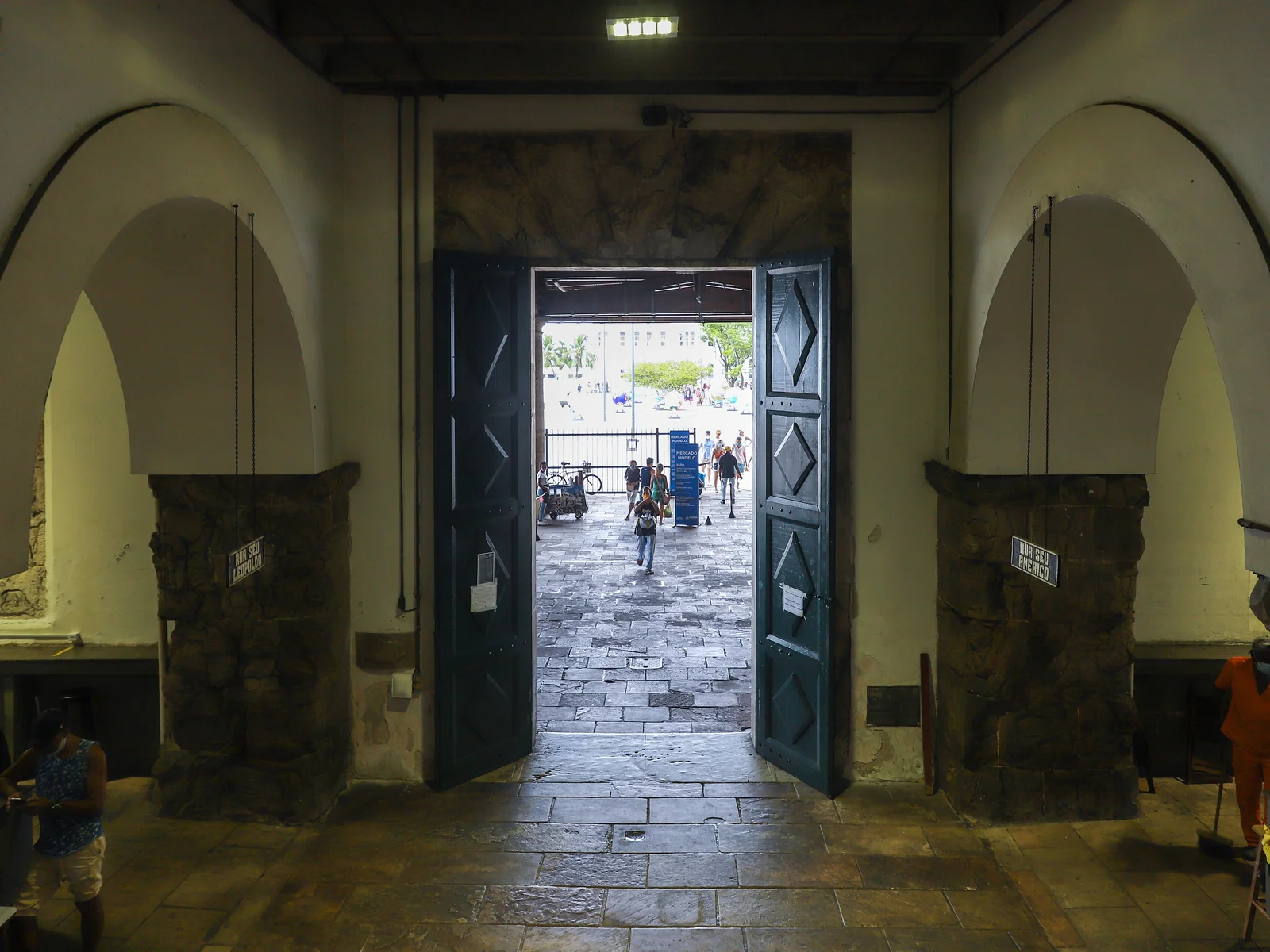
The Mercado Modelo is the roof the Cidade Baixa has always needed: 263 stalls of hammocks, cachaça, lace and berimbaus inside the old customs house, Monday to Saturday 9–19h and Sunday mornings until 14h. A squall fills it with sheltering shoppers, which rather suits it — for a half-hour it feels like the trading floor it once was. It sits directly below the Elevador Lacerda, so you can reach it from the Cidade Alta with about forty rain-exposed metres in total.
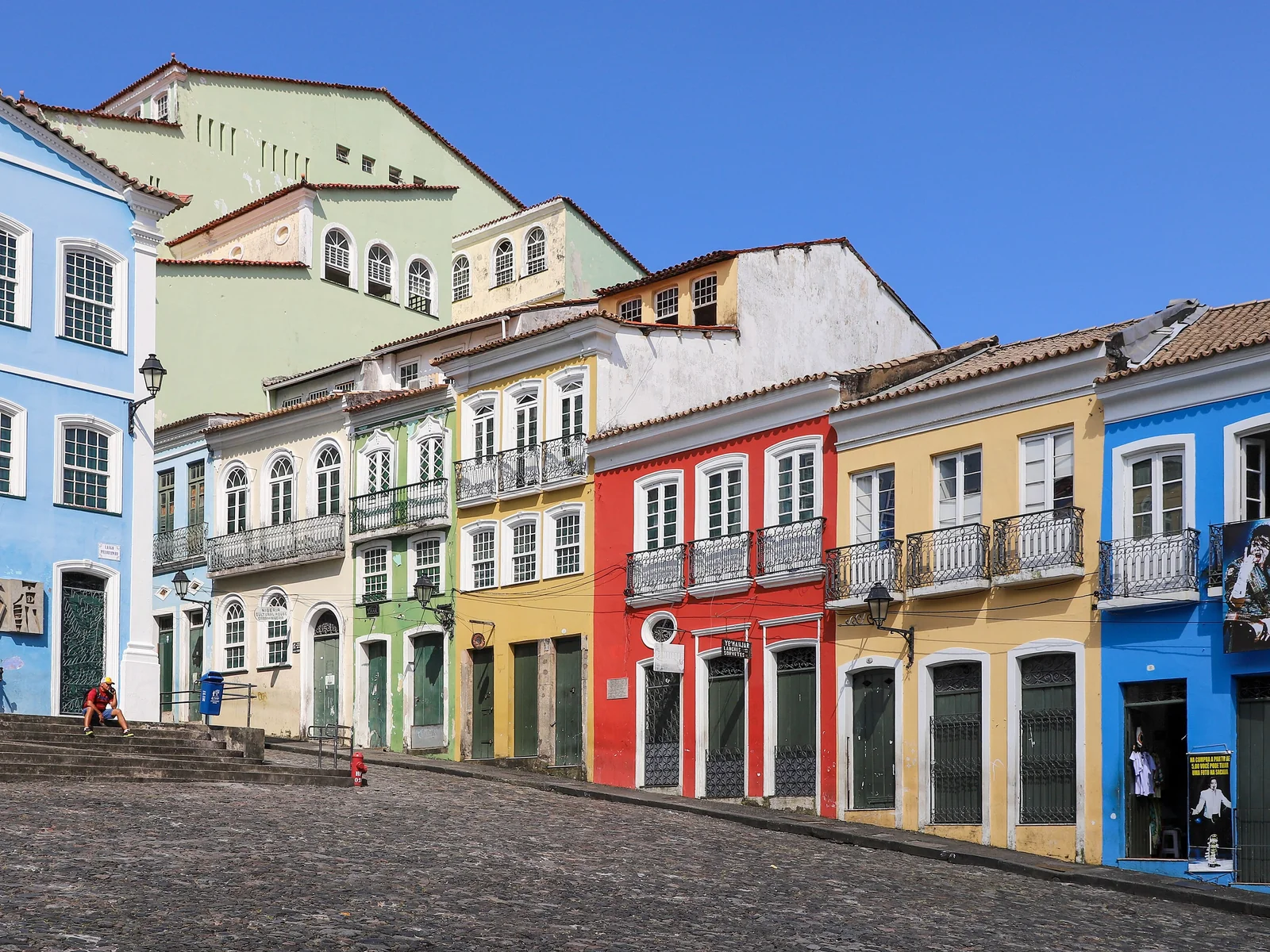
Church interiors are the other dry pleasure of the centre. The Catedral Basílica on the Terreiro de Jesus (Tue–Sat 9–16:30h, Mon from 10h, Sun 11:30–15h, R$ 10) holds one of the country's most valuable sacred collections — gilded altars and azulejo panels included — and rewards a slow circuit. The famous golden São Francisco next door remains closed for restoration until around 2029, but the Igreja da Ordem Terceira de São Francisco, with its carved sandstone facade, generally stays open, and the Rosário dos Pretos on the Largo do Pelourinho is as moving in rain as in sun, with the drumming from its Tuesday mass carrying either way.
Moqueca weather: make lunch the event
Bahians understand that stews and rain belong together, and a proper moqueca — palm oil, coconut milk, coriander, served still bubbling in its clay pot — cannot be hurried anyway. Order one for two (R$ 100–180, about US$ 18–33, at the centre's proper restaurants), add rice, farofa and a caipirinha, and the worst hour of weather will pass without you noticing it. Where to sit it out is mapped in our restaurant guide; what everything on the table actually is, in our Bahian food guide.
The single most efficient rainy-day move in the centre is the Restaurante Escola do Senac at Largo do Pelourinho 13: a teaching buffet of around forty Bahian dishes, daily 11:30–15:30h, about R$ 75 (US$ 14). It is a survey course of the whole cuisine under one roof, and the free Museu da Gastronomia Baiana in the same building (daily 8–16:20h) explains dendê, acarajé and the African spine of the Bahian kitchen while your lunch settles.
Sweat indoors: capoeira and a cooking class
Rain is the excuse the active options were waiting for. The capoeira schools inside the Forte da Capoeira — the Forte de Santo Antônio Além do Carmo, a ten-minute walk beyond the Carmo — run classes that visitors can join, with two metres of colonial stone between you and the weather. A first session needs no fitness and no Portuguese, and we can arrange one through our capoeira class. You end up wet either way, but from effort.
A cooking class is the other honest indoor commitment. Small-group Bahian classes run out of private homes across the city, most of them built around moqueca and its court of side dishes, some opening with a market run for the ingredients. They take four to six hours — which on a wet day is precisely the point — and the established ones are bookable through the big activity platforms a day or two ahead.
The mall, without pretending it is culture
Sometimes the answer is air conditioning and a cinema, and Salvador has proper malls for exactly that. Shopping Barra (Av. Centenário 2992, a short ride from the centre; Mon–Sat 9–22h, Sun from 12h) is the handiest, with a multiplex and everything still open long after the museums lock up; Salvador Shopping, further out on Av. Tancredo Neves, is the city's biggest. Neither will teach you much about Bahia, with one exception: the Mendoá counter in Salvador Shopping sells tree-to-bar chocolate grown and made near Ilhéus, with Academy of Chocolate medals from London to its name. Cacao has been a Bahian crop for two centuries, so a wet half-hour spent tasting single-origin bars is closer to the region than the setting suggests.
What not to do in the rain
The ladeiras — the steep cobbled lanes stitching the upper and lower cities together — are the genuine hazard. Centuries of feet have polished the stones, and in rain they turn slick enough to put even locals on the ground. Keep to the flatter streets, wear shoes with actual tread rather than flip-flops, and let the Elevador Lacerda do the descending for you.
Schooner days on the bay are the one real cancellation. Operators watch the sea, not the sky, and a heavy front means the boat stays tied up; in practice they move you to another day or refund, usually settled by WhatsApp the evening before. The planning rule follows from it: put your bay day early in the stay, so a washout has somewhere to go. Beaches, for their part, are pointless mid-squall and perfectly good an hour later — sand drains faster than pavement.
Month by month
Long-term averages say more than any forecast further than three days out. The figures below are rounded from the standard climate tables; our best time to visit guide turns them into an actual decision.
| Month | Rain (avg) | The honest verdict |
|---|---|---|
| January | ~75 mm | Hot and mostly dry — beach odds excellent |
| February | ~115 mm | Short showers that cool the street parties |
| March | ~165 mm | Still summer, with the first longer rains |
| April | ~280 mm | The wet season opens properly |
| May | ~295 mm | Wettest month of the year — plan indoor anchors |
| June | ~225 mm | Heavy, and the city looks inland to São João |
| July | ~205 mm | Still wet, easing late in the month |
| August | ~115 mm | Clearing — a quiet, good-value shoulder |
| September | ~95 mm | The dry stretch begins |
| October | ~100 mm | Reliable sun, warm sea |
| November | ~115 mm | Hot and mostly dry |
| December | ~125 mm | High summer, with quick evening downpours |
One caution on reading it: those April-to-July totals fall mostly in bursts. A 280 mm month still contains sunny mornings, dry afternoons and whole clear days — which is why a rainy season here wrecks far fewer holidays than the number implies.
A last argument about where you sleep: squall weather rewards a base you can duck back to. Staying in the Cidade Alta puts the museum circuit, the cathedral and the long lunch within five mostly-dry minutes, and the best seat for a proper tropical dump is a deep window in the old town with a coffee while the rain hammers the rooftops. Our suites hold exactly that position — and when the sun comes back out, which it will, the whole centre is at the door.
Salvador, in images
Photographs of the neighborhood, restaurant, and beach featured in this guide, with credit to each photographer.
Ready to discover Salvador?
Book one of the four Via Avantgarde suites in the Pelourinho — and receive the complete guides with recommendations for your stay.