Salvador Street Food the tabuleiro, stand by stand
Salvador street food, stand by stand: acarajé and abará done right, the Rio Vermelho tabuleiros, beach queijo coalho and the Feira de São Joaquim, with 2026 prices.
The essentials in 30 seconds
Salvador street food starts and ends with the tabuleiro — the tray a baiana works from on a street corner. The headline act is acarajé, a black-eyed-pea fritter fried in orange dendê palm oil, split open and filled with vatapá, caruru, salad and dried shrimp; its steamed sibling is abará. If you are new to it, ask for the chilli à parte — on the side. Around those two the city lays out a whole edible day: cocada and cold coconut, grilled queijo coalho on the sand, corn in three forms, tapioca, churros after dark, and the roaring, entirely un-touristy Feira de São Joaquim. Reckon on R$ 10 to R$ 20 for most of it. Eat where the queue is.
How to read a tabuleiro
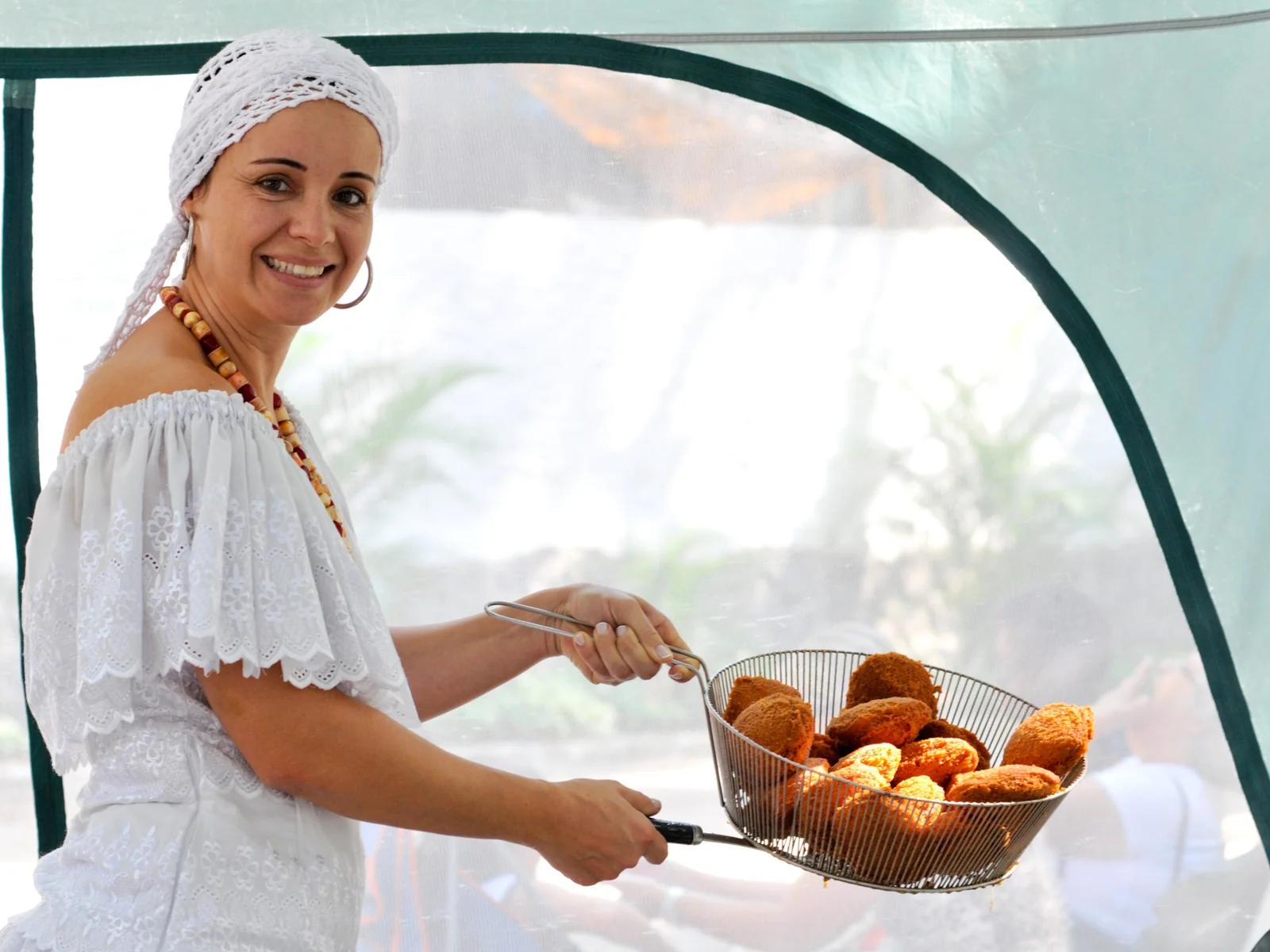
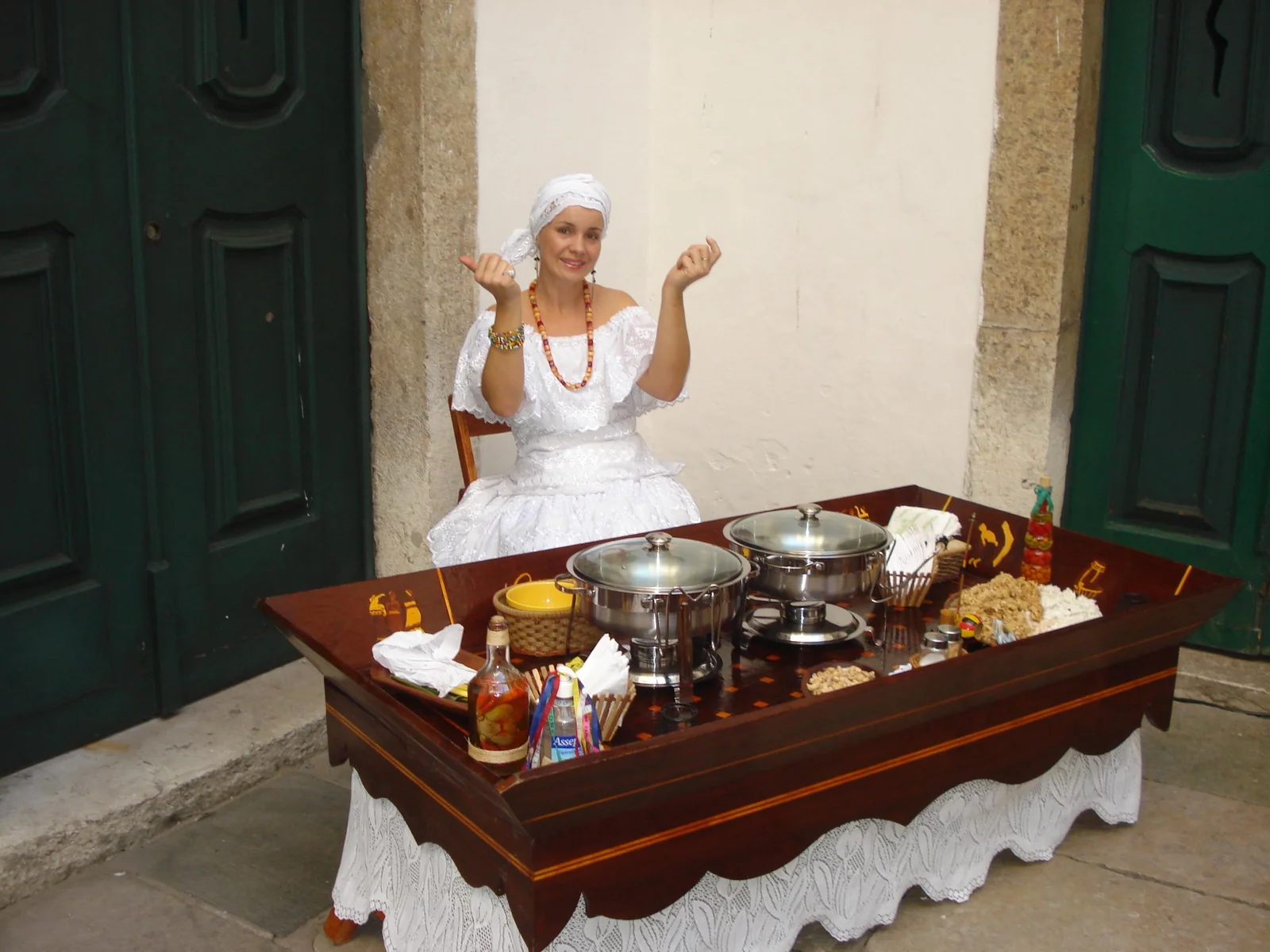
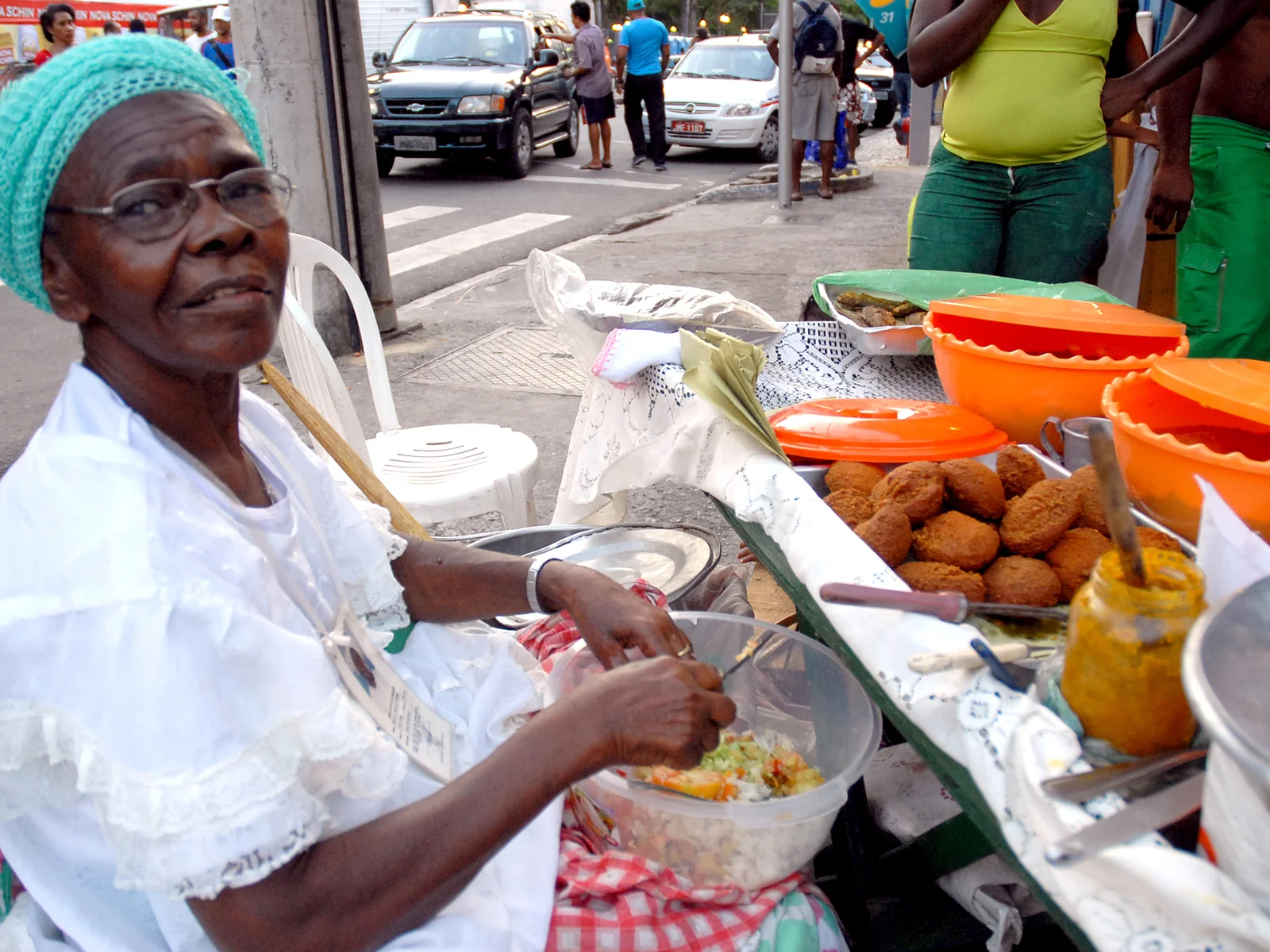
Nearly all of the best Salvador street food comes off a tray rather than out of a kitchen. The woman behind it is a baiana de acarajé, and the white dress, the beaded necklaces and the torço wrapped around her head are not a costume put on for visitors — they are working dress, and for many baianas they carry real religious weight, tied to Candomblé and the orixás. The craft has been protected as national intangible heritage since 2004, when IPHAN entered the ofício das baianas de acarajé in its Livro dos Saberes, the federal register's Book of Knowledge. Take a photo of the tray if you like, but ask first, and buy something. That is the whole of the etiquette.
Once you can read one tray you can read them all. There is a pot of orange dendê kept hot over gas or coals, a stack of raw fritters waiting their turn, bowls of the fillings, a board of sweets off to one side, and often a cooler of cold drinks underneath. Everything is made to be eaten standing up, in your hand, in about four minutes. You do not book, you do not tip, you just arrive.
Acarajé, done properly
Acarajé is the dish the whole tradition is built on, and it rewards knowing what you are looking at. The fritter is a paste of peeled black-eyed peas whipped with onion, shaped into a lump and deep-fried in dendê until the outside sets crisp and the middle stays soft. The baiana splits it like a bun and loads it: vatapá, a smooth purée of bread, dried shrimp, cashew and coconut milk; caruru, okra cooked down with more shrimp; a fresh salada of tomato and onion in vinaigrette; and a handful of small dried shrimp on top. Reckon on R$ 10 to R$ 15 — about €1.70 to €2.50, or US$2 to US$3 — at a neighbourhood tray, and R$ 18 to R$ 20 at the famous names. One well-built acarajé is a meal.
Two things are worth saying before you order. The first is that it is not vegetarian: the shrimp is in the vatapá and the caruru as much as on top, so asking for it sem camarão only gets you so far, and anyone keeping off seafood should read our vegetarian and vegan guide first. The second is the pepper.
Abará, the steamed sibling
On the same tray, usually right beside the acarajé, sits abará, and it is worth knowing the difference. Same black-eyed-pea base, but instead of being fried it is beaten with extra dendê, ginger and dried shrimp, wrapped in a banana leaf and steamed. What comes out is soft where the acarajé is crisp, and easier on the stomach if a palm-oil fritter feels like a lot at four in the afternoon. Unwrap the leaf, eat it warm, spoon on the vatapá and the rest if you want them. It costs about the same, a real or two either way, and plenty of regulars quietly prefer it.
The legendary tabuleiros: Dinha, Cira and Regina
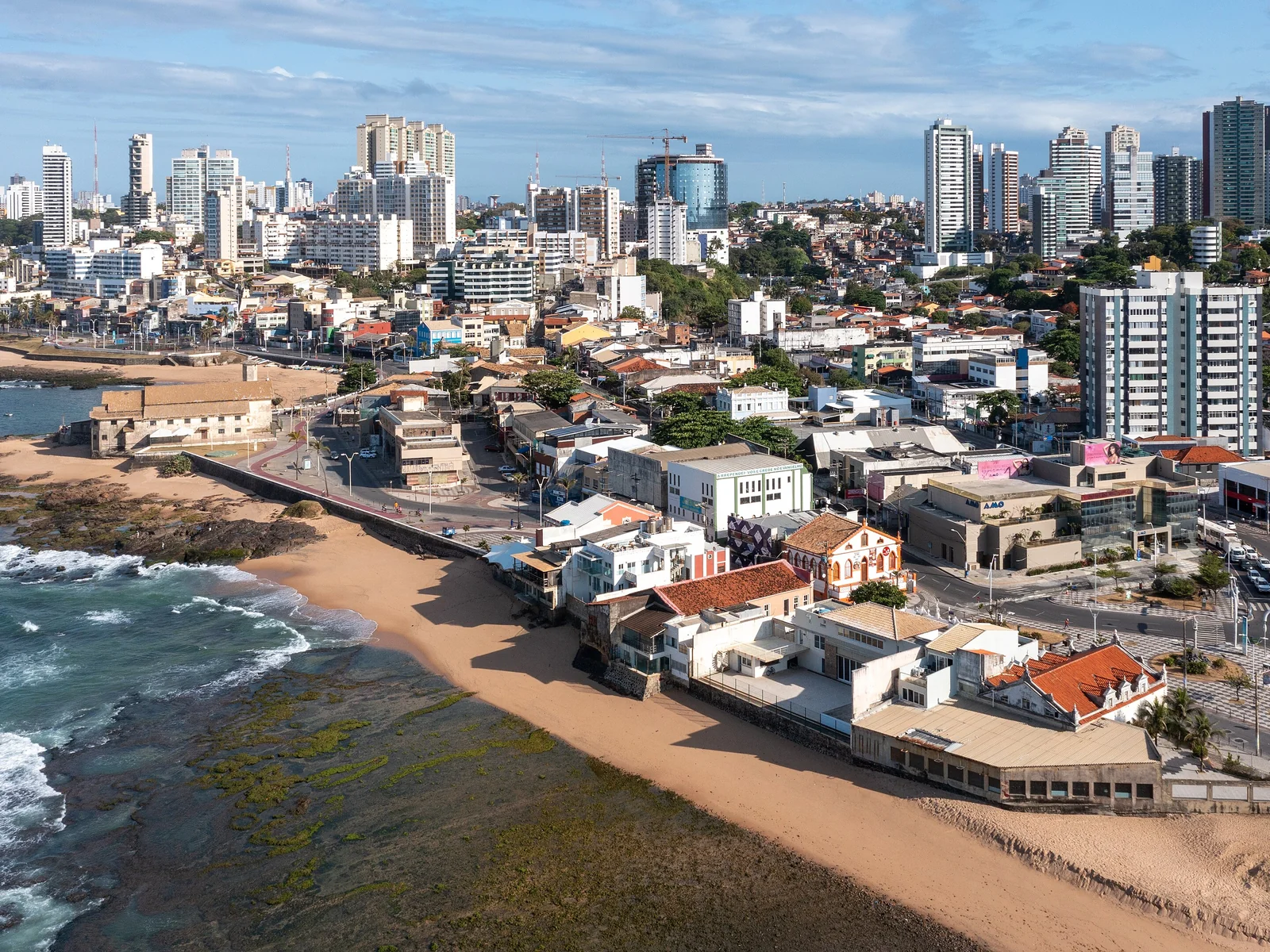
A few baianas have become institutions, and three names come up again and again — all of them in or near Rio Vermelho, the seafront neighbourhood where Salvador goes out at night. The Acarajé da Dinha, on the Largo de Santana, is the most famous of the lot; Dinha herself has died, but her family keeps the tray going, and it runs from mid-afternoon well into the night, busiest once the bars around the square fill up. A few minutes away at the Largo da Mariquita, Acarajé da Cira has been frying on the same corner for around fifty years and gets voted the city's best about as often as anyone; arrive between six and seven in the evening, before the live music starts and the queue builds, and there is a second Cira tray out at Itapuã on Rua Aristides Milton. Acarajé da Regina, thirty-odd years in and taught by her mother and grandmother, works a quieter spot on Rua Guedes Cabral, with trays in Graça and Pernambués too.
What all three share is timing. This is evening food. Most serious tabuleiros do not even light the oil until early or mid-afternoon and only hit their stride at dusk, which is the reverse of a lunch habit and worth planning around. Rio Vermelho is the place to make a night of it — acarajé first, then the bars — and our Rio Vermelho guide maps the squares and what is around them.
Sweet trays and the corn kitchen
Every tray has a sweet corner, and most of it is coconut or corn. Cocada is the one to learn: coconut cooked down with sugar and set into chewy pieces, sold two ways — branca, pale and milky, and queimada, taken darker until the sugar caramelises and turns almost to toffee. A piece is a real or two. Corn runs through the rest. Munguzá — mungunzá, if you see the other spelling — is a warm pudding of white hominy in sweetened coconut milk, a dish with as much root in Candomblé offering as in the kitchen. Mingau is its porridge cousin, made from corn, tapioca, oats or carimã by baianas de mingau who are up in the small hours making it. Both are breakfast food and, just as often, something warm to eat late.
On the sand: queijo coalho, corn and cold coconut
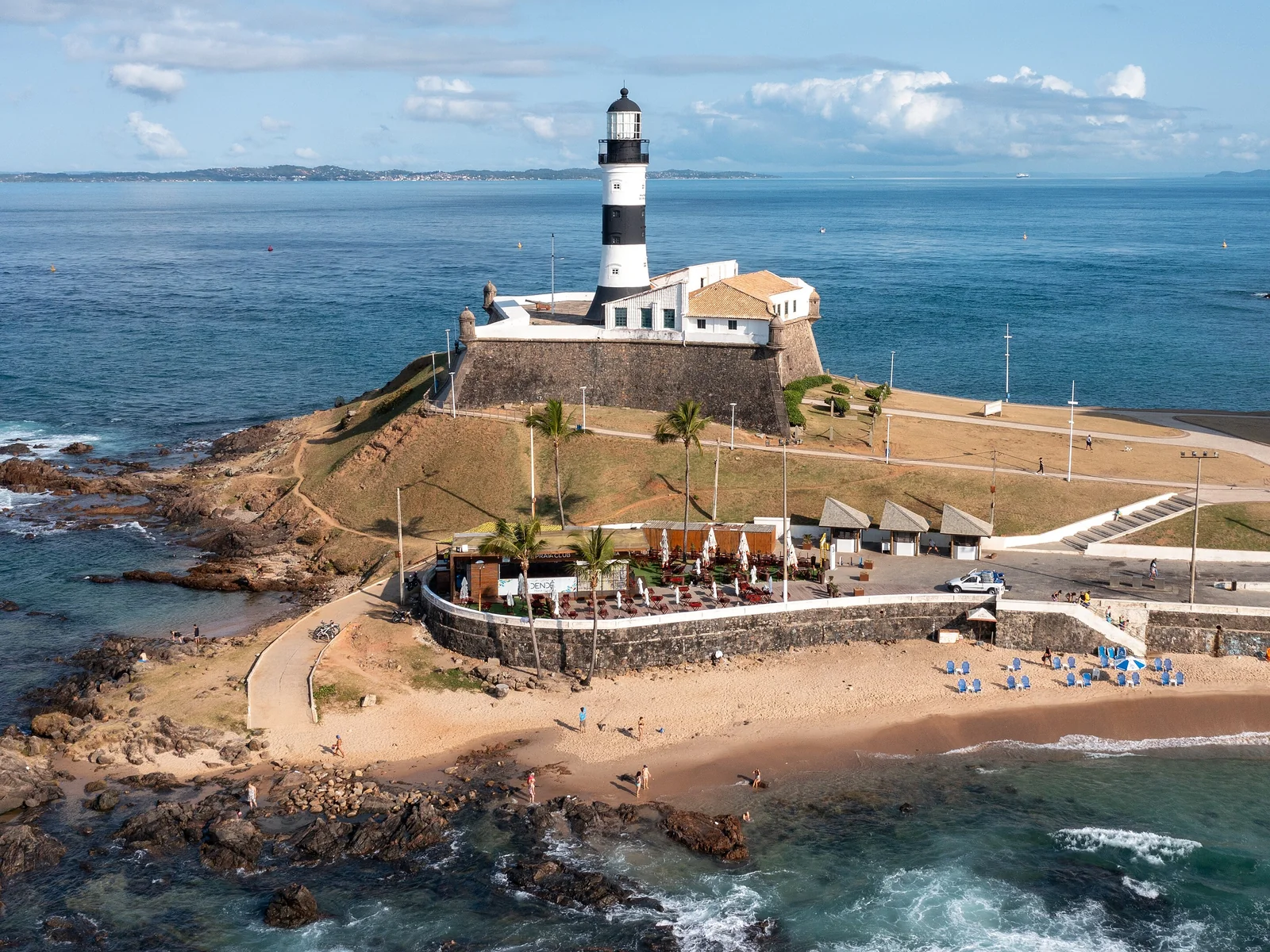
The beach runs its own moving kitchen. Vendors walk the sand at Barra, Ondina and Farol da Barra carrying a little tin brazier of coals and a box of queijo coalho, a firm, squeaky, salty cheese that holds its shape over the fire instead of melting. They grill a skewer of it to order, sometimes brushing it with oregano or molasses, and hand it over blistered and hot for a handful of reais. Alongside it come the rest: milho verde, corn boiled or grilled and sold on the cob or scraped into a cup; boiled peanuts; and the drink that keeps you upright through a Bahian afternoon, cold água de coco, coconut water straight from the green shell for about R$ 5. None of it is fancy. All of it is exactly what you want at the time.
Tapioca, churros and the late corners
Away from the trays, the street corners fill in the gaps. Tapioca — also called beiju — is a soft crêpe of cassava starch cooked dry on a hot plate until it binds, then folded around a filling either sweet or savoury: coconut and condensed milk, or cheese and dried beef, for maybe R$ 10 to R$ 15. It is naturally gluten-free, which makes a tapiocaria a useful address to keep. For something to drink with it, find a casa de suco, a juice counter blending regional fruit you may not have met — cajá, umbu, graviola, acerola, cacau — to order. After dark the fried-and-sweet corners take over: churros piped fresh and filled with doce de leite or chocolate, and the Brazilian cachorro-quente, a hot dog buried under corn, peas, potato sticks, cheese and sauces until the sausage is the least of it. Late carts of mingau and munguzá catch anyone still hungry on the walk home.
Eating your way through the Feira de São Joaquim
For the full, unfiltered version, go to the Feira de São Joaquim, the largest street market in the city — more than sixty years old, spread along the bay between the Comércio and the Calçada, open from around five in the morning until late afternoon. This is where Salvador actually shops: dendê in reused bottles, mounds of chilli and dried shrimp, bunches of herbs for the terreiros, live crabs tied up in bundles. Set among the stalls are plain cook-shops turning out the real regional plates — Pôr do Sol da Diva and Cantinho da Dadá on the Rua das Flores among them — where a bowl of mocotó, the slow-cooked cow's-foot stew, is a local badge of honour and a fairly honest test of how adventurous you actually are. Go in the morning, watch your footing, and treat it as a place to look before you eat. The sit-down side of the city's cooking — moqueca, the seafood houses — is covered in our Bahian food guide and restaurant guide.
Eating Salvador street food without getting sick
Street food here is, on the whole, safe to eat, and the way to keep it that way is judgement rather than fear. The single best rule is to follow the crowd: a busy tray turns its ingredients over fast, so nothing sits, and the popular baianas stake their name on not making anyone ill. Check that the dendê is properly hot and moving when your fritter goes in — the hot oil is doing the safety work. Prefer fruit you peel yourself and coconut water from the shell. Be a shade more careful with anything that has sat lukewarm in the sun, with raw salad at a slow stall, and with ice from an unknown source. That is about the whole of it. Salvador street food is one of the reasons to come, not a risk to be managed around, and one or two cautious calls let you eat freely everywhere else.
Almost none of this needs a plan — it needs you out on foot at the right hour, ideally hungry. That is the quiet case for basing yourself up in the Cidade Alta: step out of the door in the late afternoon and you are minutes from a first acarajé, with the whole edible city downhill from there. Our boutique suites put you in the middle of it, a short walk from the Pelourinho and a short taxi from the trays of Rio Vermelho.
Salvador, in images
Photographs of the neighborhood, restaurant, and beach featured in this guide, with credit to each photographer.
Ready to discover Salvador?
Book one of the four Via Avantgarde suites in the Pelourinho — and receive the complete guides with recommendations for your stay.