Shopping and Souvenirs in Salvador what to bring home and where to buy it
Shopping in Salvador: Bonfim ribbons, berimbaus, Bahian cachaça and chocolate, Saubara lace and silver charms, with 2025-26 prices, the best markets and stores, and customs limits.
The essentials in 30 seconds
The best souvenirs from Salvador are the things Bahia makes itself: Bonfim ribbons by the bundle, a berimbau, an Olodum shirt, Bahian cachaça, chocolate from the cacao coast, silver balangandã charms and bobbin lace from Saubara. Buy crafts at the Mercado Modelo, in the Pelourinho and at the state's Artesanato da Bahia stores, pots and spices at the Feira de São Joaquim, and everyday things in the malls. Haggle at stalls, not in shops. Leave feathers, shells, rosewood and seeds behind, and remember the duty-free limit on spirits is 1 litre in both the US and the EU.
What to buy, what it costs and where
The same magnets and printed sarongs turn up on every corner. The things worth carrying home are made in Bahia or tied to its history, and most cost less than a dinner out. Prices below come from Salvador press, shop listings and fair reports between late 2024 and mid 2026; check on the day.
| Item | Price we found (2024-26) | Where to buy |
|---|---|---|
| Fitas do Bonfim | At least R$ 5 (about US$ 1) for ten | Bonfim hill, Pelourinho, Mercado Modelo |
| Berimbau | Varies with size and finish; compare stalls | Mercado Modelo, Pelourinho shops |
| Olodum shirt | Check the band's shop | Loja Olodum (band website) |
| Bahian cachaça | About R$ 60 (US$ 12, €10) for Matriarca Amburana | Mercado Modelo food stalls |
| Southern Bahian chocolate | About R$ 11 to 25 (US$ 2-5) a bar | Brand websites, Cesol shops in two malls |
| Ceramic orixá figures | About R$ 150 (US$ 29) a pair | Artesanato da Bahia store at the Muncab |
| Crochet bags, wallets | About R$ 59 to 111 (US$ 11-21) | Artesanato da Bahia stores |
| Balangandã charms | Plated cheap, solid silver far dearer | Mercado Modelo, historic-centre shops |
| Clay pots, baskets, herbs | Local market prices | Feira de São Joaquim |
Fitas do Bonfim, bought by the bundle
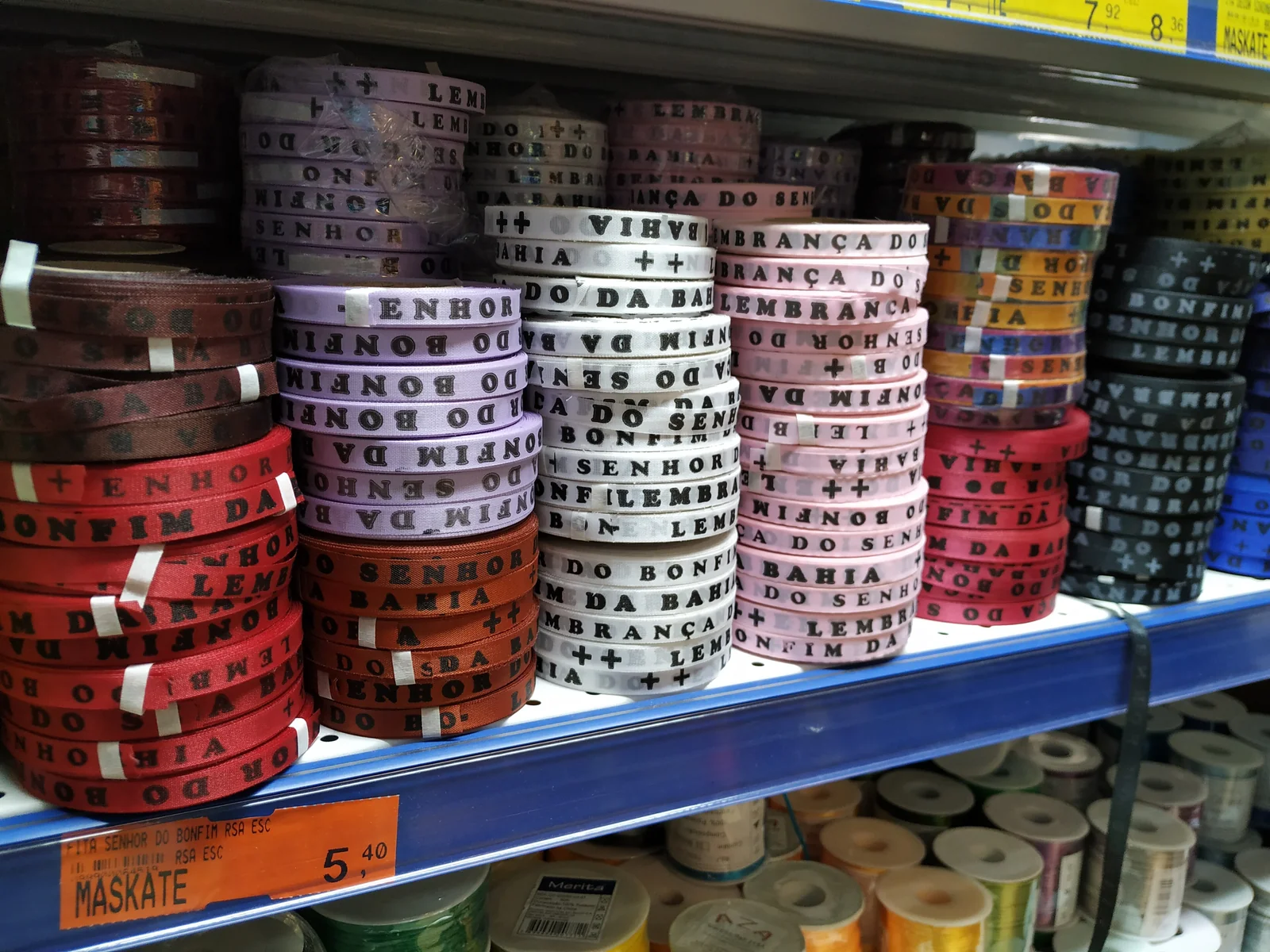
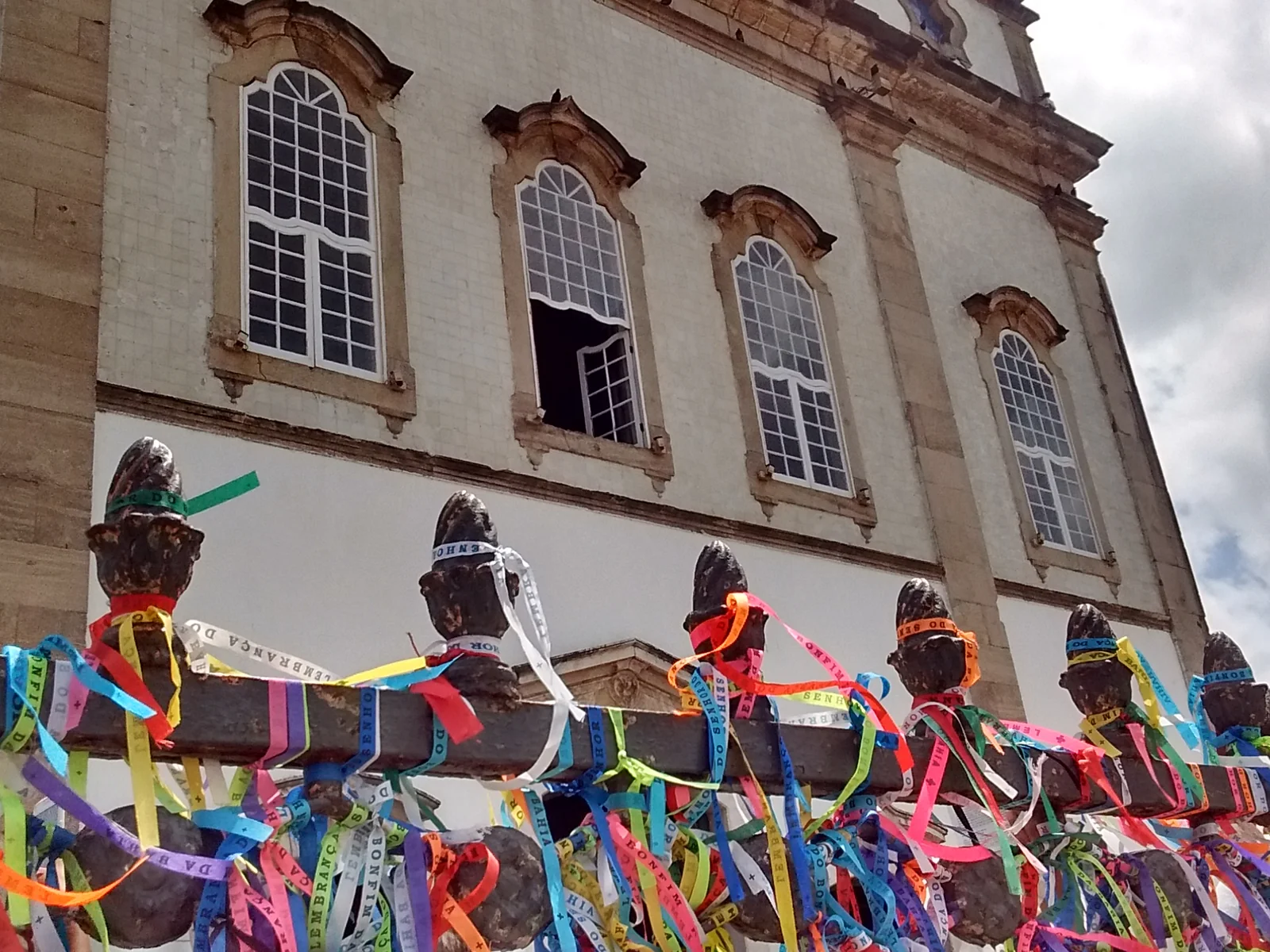
What the ribbons mean and how to tie one is in our guide to the Bonfim church and its ribbons; this is the shopping side. In January 2025 sellers on the Colina Sagrada asked at least R$ 5 for a bundle of ten, and the same bundles hang in the Pelourinho and the Mercado Modelo. Today's ribbons are polyester, which replaced acetate after the 1960s and 1970s. The official measure is 47 centimetres, the length of the right arm of the basilica's image of Christ, but many on sale run 44 to 45 centimetres and some street ones only about 30. Many are factory-made: a São Paulo manufacturer told the Correio newspaper in 2019 that Bonfim ribbons, sold in rolls of 100, were its best sellers and Salvador its biggest market. The basilica itself sells none, and every three or four months it removes and burns those tied to its railings. The Bonfim stands on the peninsula covered in our Ribeira and Itapagipe guide.
Berimbaus: choosing one and flying it home
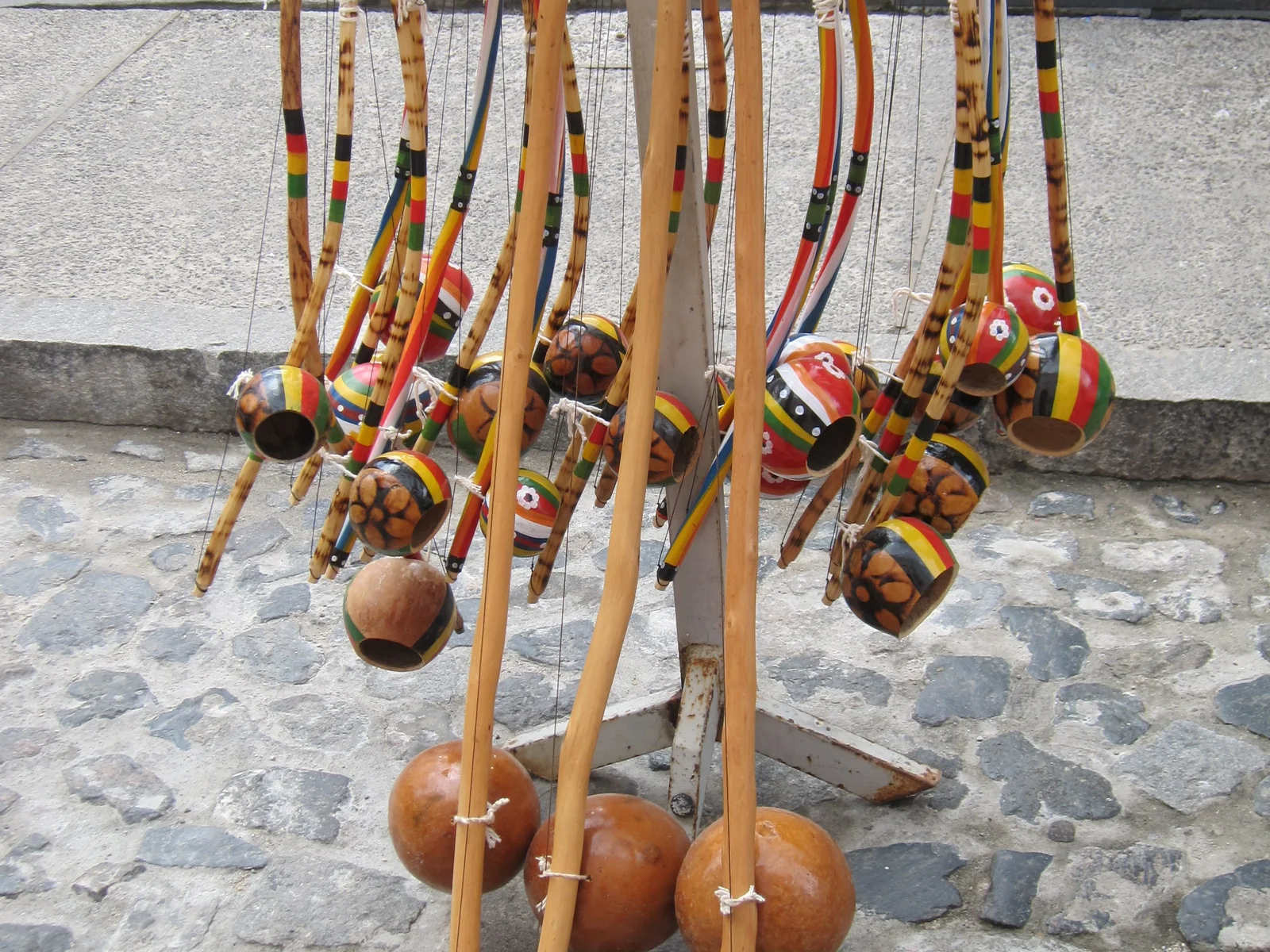
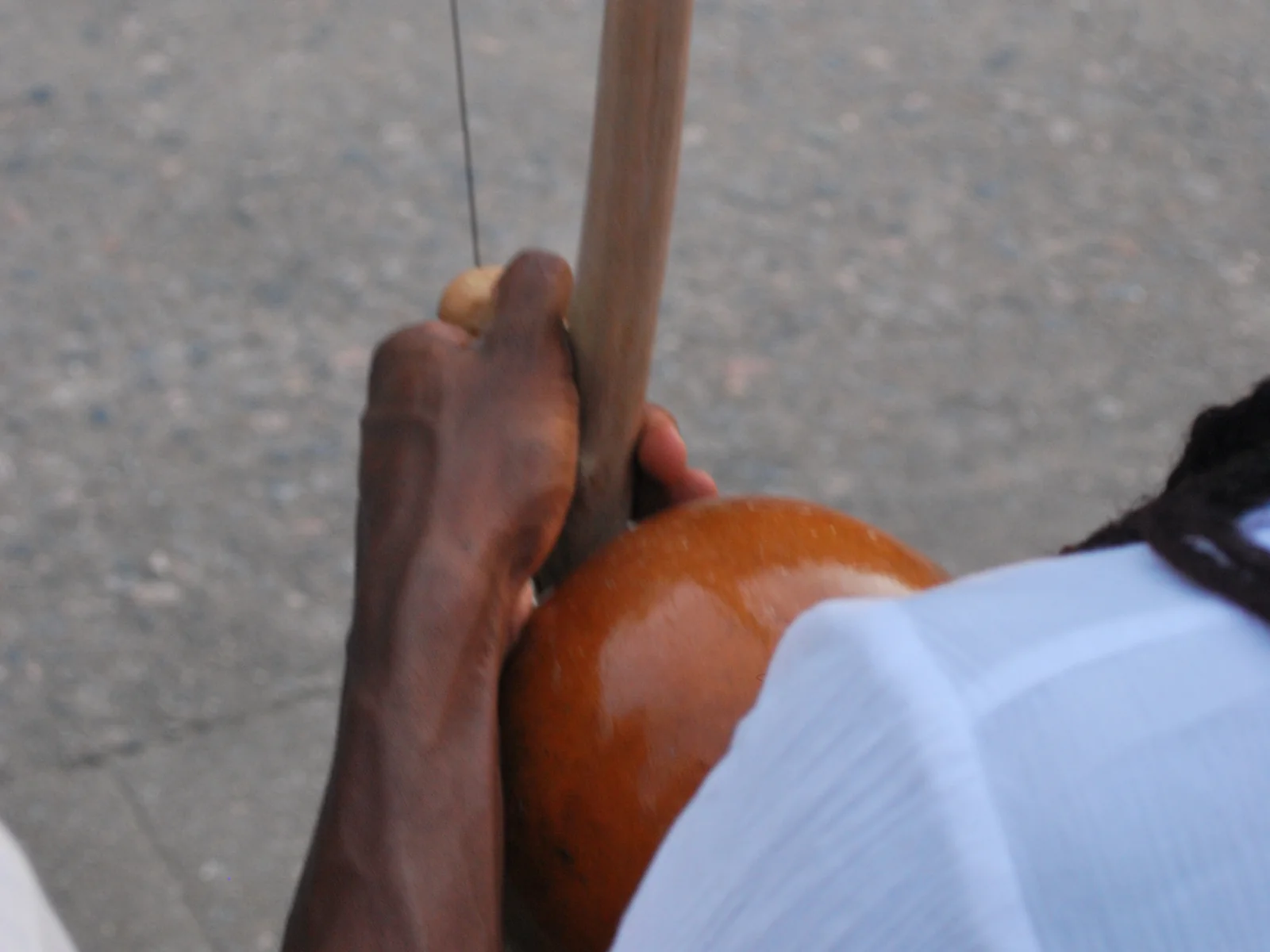
The berimbau, the musical bow that leads the capoeira circle, came from Angola. It is a kit of parts: the verga, a wooden bow traditionally of biriba; the arame, a steel string often salvaged from a car tyre; the cabaça, a dried calabash resonator; the baqueta, the stick; the dobrão, a coin or stone pressed on the wire to change the note; and the caxixi, a small rattle. Capoeiristas sort them by voice, not size: the deep gunga, the médio and the high viola. If you want to play, ask the seller to play yours first.
The bow runs about 1.2 to 1.5 metres. Ask the seller to unstring it and wrap the gourd, and pack the gourd, wire and rattle inside your suitcase. US airlines must, under 49 U.S.C. 41724, let a small instrument ride in the cabin if it fits an overhead bin or under a seat and there is room, and must accept checked instruments up to 150 linear inches (length plus width plus height) and 165 pounds; a 1.5-metre bow is about 59 inches, so it can go in a tube as checked baggage. Other airlines set their own rules. Entering the US, declare the gourd: customs asks you to declare every plant product. To hear the instrument played well, see our capoeira guide.
Olodum and bloco shirts
Street stalls sell plenty of copies of the shirt of Olodum, the Pelourinho drum group founded in 1979. The band's own website lists a Loja Olodum, its official shop, and buying there sends the money to the group. Its summer Tuesday-night shows in the Pelourinho are ticketed (in 2026, 6 January to 3 February, 19:00, Praça das Artes), so a shirt and a show can share an evening. Carnival abadás are different: they are your pass to parade with a bloco, explained in our Carnival guide; the groups are in our Olodum and bloco rehearsals guide.
Cachaça from Bahia
Our Brazilian drinks guide covers drinking cachaça and Abaíra's geographical indication. For buying: the Ministry of Agriculture's 2026 yearbook counts 31 registered producers in Bahia, with 175 cachaças and 207 brands spread over 28 municipalities. Since the ministry's 2022 standards, artesanal is no longer an official term: a label says cachaça de alambique, from a copper pot still, or plain cachaça. Choose the first for a small-batch spirit.
Names to look for: Serra das Almas, from the Chapada Diamantina, a pioneer of organic certification; Matriarca, whose Amburana-aged bottle was the best seller at Salvador's Fenagro farm fair in December 2025, at about R$ 60; Amada, from Dias d'Ávila, aged in oak and grápia; Paramirim, a 42% spirit from the southwest; and Rio do Engenho, from Ilhéus, which the state tourism office presented with Matriarca as award winners. Look in the food stalls of the Mercado Modelo and check the label for the town of origin.
Carrying bottles home
Returning US residents aged 21 or over can include 1 litre of alcohol in their US$ 800 duty-free exemption; more is dutiable, and the law of the state where you land can be stricter. Travellers entering the EU may bring 1 litre of spirits over 22% (or 2 litres of fortified or sparkling wine), plus 4 litres of still wine and 16 litres of beer, from age 17. Others should check their own allowance.
Chocolate from the cacao coast
Southern Bahia, around Ilhéus and Itabuna, was Brazil's cacao heartland until witches' broom, a fungal disease, ravaged the plantations in the 1980s. It has rebuilt on quality: in 2018 its beans won the Cacau Sul da Bahia geographical indication, about 4,000 growers belong to the association that uses the seal, and a lab in Ilhéus tests each harvest, allowing at most 3% defective beans, stricter than international norms. Look for the seal.
A Bahia Notícias round-up in July 2025 named the brands. Mendoá grows its cacao at Fazenda Riachuelo near Ilhéus; its bars started at about R$ 12 (US$ 2.40), and in October 2026 its website offered free delivery in Salvador over R$ 150. Jupará makes its chocolate in Salvador, from about R$ 11. Ju Arléo, in Ilhéus, uses beans with the geographical indication, from about R$ 25. Amma, an organic brand, works with farms near Ilhéus, Itabuna and Itacaré. To buy in person, Tombador Cacau, from Valença, was sold in 2025 at the Cesol solidarity-economy shops in Salvador Shopping and Salvador Norte Shopping. Buy chocolate near the end of your stay and pack it in the middle of your case; our Itacaré guide covers the cacao coast itself. For coffee, a bag from the Chapada Diamantina, described in our drinks guide, is the Bahian one to bring home.
Balangandãs and Bahian silver
A penca de balangandãs is a cluster of metal charms on one clasp. In the 18th and 19th centuries it was jewellery worn by Black women in Salvador, many of them enslaved women working for wages who, a historian told the Alma Preta news site, bought the silver with money saved towards their freedom. It was made to be seen, and each charm had a meaning: a pomegranate for fertility, a fish for Iemanjá, a horseshoe for luck. The Museu Carlos Costa Pinto's collection includes 26 silver pencas and one gold.
A 2016 study of the pencas sold in the Mercado Modelo and the historic centre found most were alpaca (nickel silver) with a silver plating that fades within months; solid silver had become scarce because of its price. For one that lasts, ask é prata? and look for a 925 stamp; for a keyring charm, the plated ones cost far less.
Renda de bilro and other crafts
Bobbin lace, renda de bilro, is worked on a cushion stuffed with banana leaves, with bobbins of paparaúba wood and a paper pattern, every stage done manually. On 12 August 2025 the lace of Saubara, in the Recôncavo, received a geographical indication, Brazil's 140th; it has been sold in more than 20 countries. The Recôncavo is covered in our Cachoeira and Recôncavo guide.
Also worth finding: clay orixá figures (an Iemanjá and Oxum pair by Célia Carneiro was R$ 150 at the Muncab craft store in May 2026); Recôncavo cooking pots and baskets at São Joaquim; dolls dressed as baianas; and paintings of the Pelourinho's coloured houses, which the 2016 study listed among the city's classic souvenirs.
Goya Lopes prints
Goya Lopes, Salvador's best-known textile designer, launched her Didara label in 1986 and later a brand under her own name; her prints, drawn from Afro-Brazilian motifs, are a national reference. The Museu de Arte Moderna da Bahia showed her work in July 2025. We could not confirm a shop open in late 2026, and her online store did not load when we checked in October 2026, so follow her official channels rather than an old guidebook address.
Feira de São Joaquim
The Mercado Modelo sells to visitors; the Feira de São Joaquim is where Salvador shops for itself. It is the city's largest open-air market, a maze of alleys beside the bay on Avenida Frederico Pontes in the lower city, open daily from 5:00 to 17:00. It began in the 1930s as the Feira do Sete, where saveiro boats unloaded Recôncavo produce, moved to Água de Meninos, the market Jorge Amado wrote about, and grew up here after a fire in 1964; Carybé designed the entrance railing. Expect fruit, peppers, dried shrimp, herbs, clay pots, baskets, beads, saints' images, religious articles and live animals, at low prices. A new meat hall with 107 butchers and 23 restaurants opened on 29 June 2026, and the remaining blocks are due by June 2027, so expect building work until then.
The state craft stores
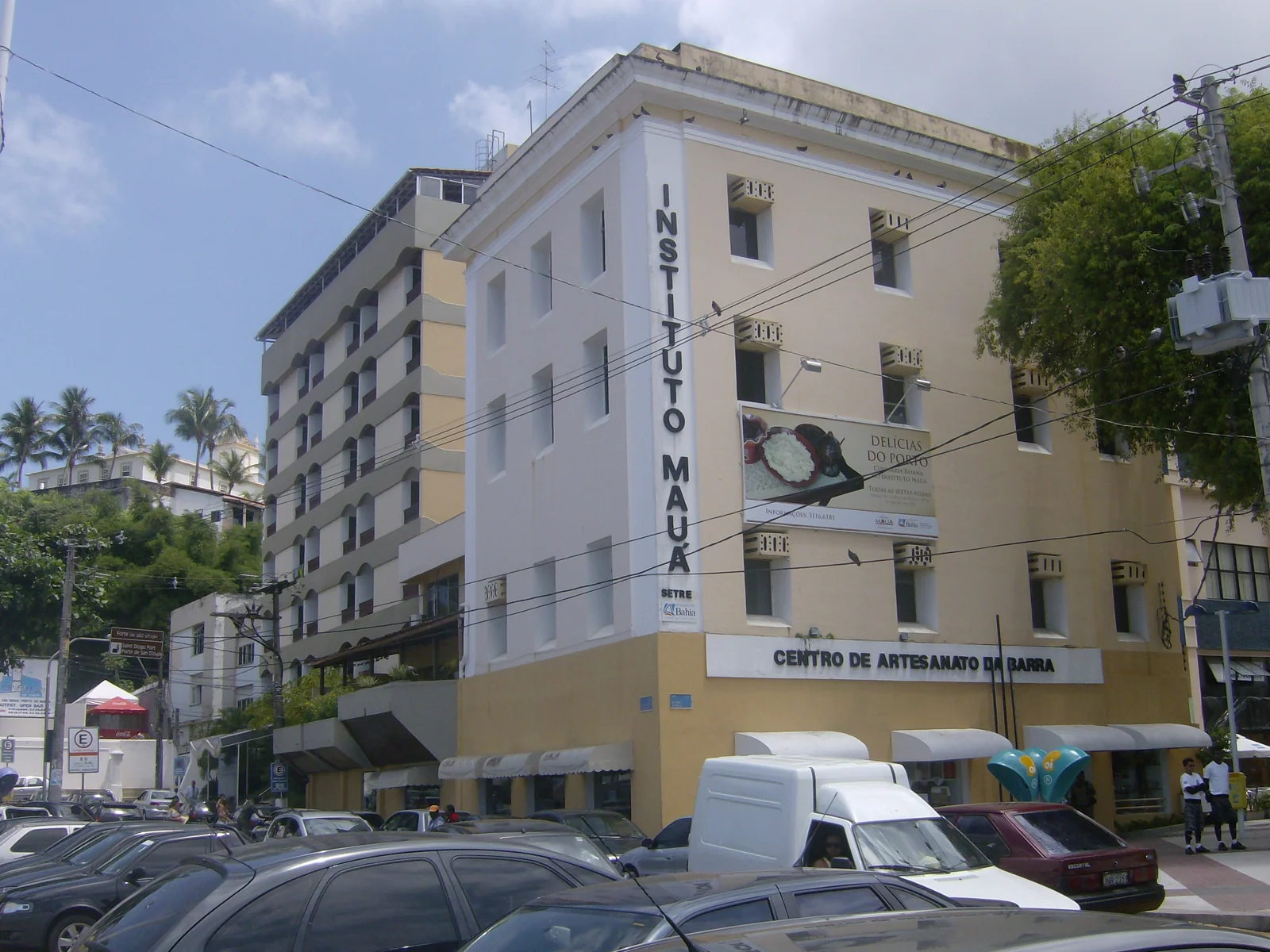
For fixed prices and work from named artisans, use the state's Artesanato da Bahia stores. The main one, the Casa do Artesanato da Bahia, fills the yellow mansion at Largo do Porto da Barra 2 that once housed the Instituto Mauá, the state craft institute founded in 1939; it reopened in August 2023 with work from about 300 artisans and a tourist desk. In May 2026 it opened Monday to Friday 9:00-18:00, Saturday 9:00-17:00 and Sunday 9:00-14:00. Two concept stores open Tuesday to Sunday 10:00-18:00: one at the Muncab, the national museum of Afro-Brazilian culture in the historic centre, opened in December 2025 with quilombola and Indigenous work, and one at the MAC Bahia museum on Rua da Graça. A fourth is in Morro de São Paulo. For the beach around the main shop, see our Barra guide.
The Pelourinho and Rua Chile
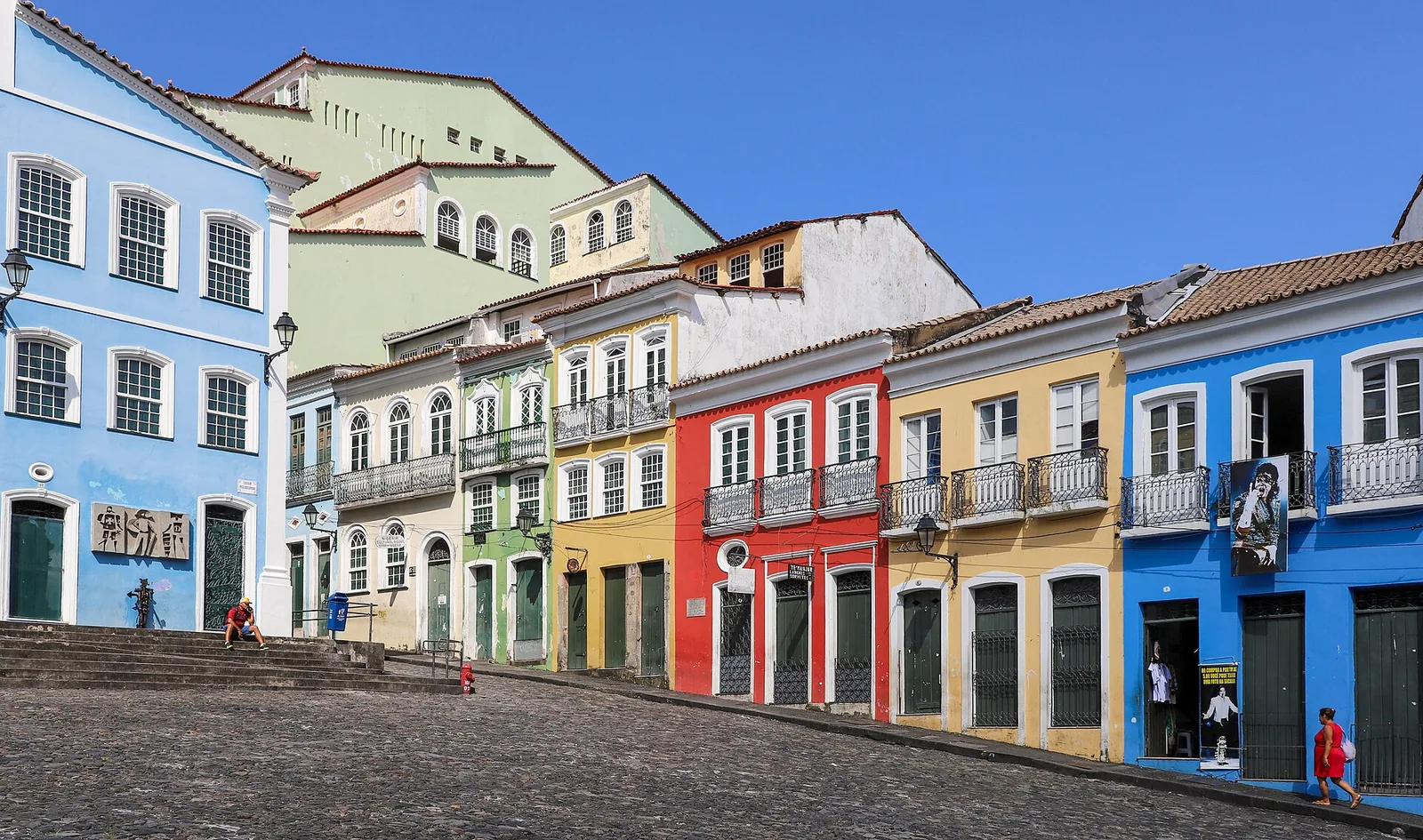
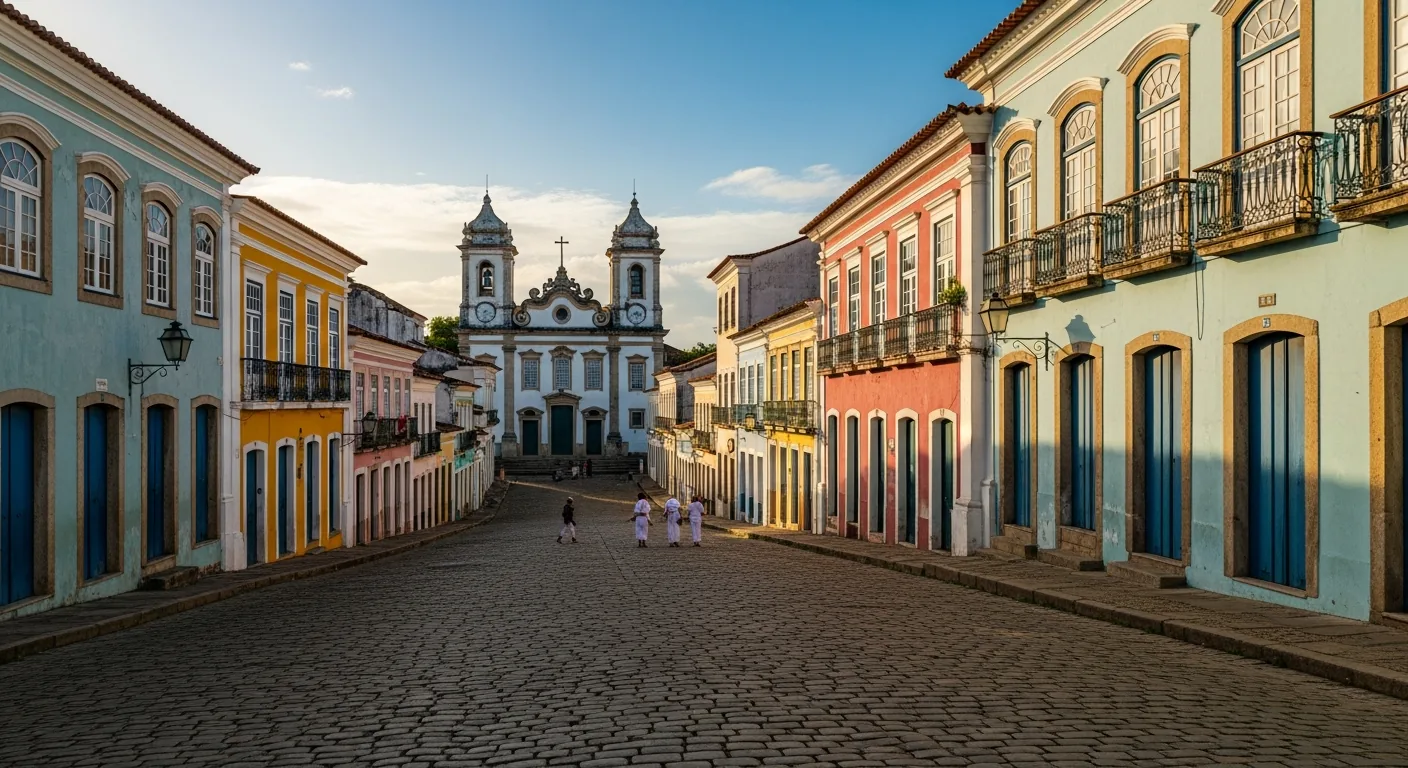
The Pelourinho's lanes are lined with shops selling embroidery, pottery, baskets, berimbaus, balangandãs and paintings of the quarter; compare a few before buying, since the same piece is rarely in only one shop (layout in our Pelourinho guide). Rua Chile, running down to the Praça Castro Alves, is counted as Brazil's oldest street, laid out in 1549 and once called the Rua Direita dos Mercadores. It was a busy street for fabrics, perfume and jewellery, then declined; its revival has come through hotels such as the Fera Palace, so walk it for the architecture.
Malls for practical shopping
For sunscreen, a charger or a bigger suitcase, use the malls. Shopping Barra, Avenida Centenário 2992, listed 9:00-22:00 Monday to Saturday and 12:00-20:00 Sunday in October 2026. Salvador Shopping, Avenida Tancredo Neves 3133, opens 9:00-22:00 Monday to Saturday and, for most shops, 13:00-21:00 Sunday. Shopping da Bahia, on the same avenue, opened in 1975 as Iguatemi and has more than 400 shops. All three are on our map of Salvador.
Paying and bargaining
Cards work in malls and shops with a till, and Pix is everywhere; our money guide explains both and why R$ 100 to 200 in small notes covers a day. Haggle politely at stalls, with street sellers and in the Mercado Modelo; at the state stores, malls and anywhere with price tags, the price is fixed. São Joaquim prices are already local. Buying several things from one seller is the easiest discount, and it costs nothing to ask faz um desconto?
What not to buy or carry home
- Feathers, shells, coral, turtle shell. Exporting wild-fauna products from Brazil needs a licence from IBAMA, the federal environment agency. US customs treats feathers, bone and shells of wild animals as wildlife products, bars most products of endangered species and advises checking with the Fish and Wildlife Service before buying tortoiseshell; most EU countries are strict too.
- Rosewood. Jacarandá-da-bahia, Bahia rosewood, has been on CITES Appendix I, the strictest trade list, since 1992. Skip anything sold as made of it.
- Seeds, plants and soil. Seed jewellery and dried pods are plant products. The US asks you to declare them all, some seeds need permits or are banned, and soil is prohibited without a permit; the EU requires a phytosanitary certificate for plants and plant products.
- Fresh fruit. US customs advises against it and warns of a US$ 300 penalty for a first offence.
- Antiques. US customs expects export permits and receipts for cultural artefacts; buy only from dealers who supply them.
Shipping it home
The Correios ship parcels abroad through Exporta Fácil, open to individuals, up to 30 kg; boxes can be up to 150 cm long, with the three sides totalling no more than 300 cm, so a 1.5-metre berimbau bow just fits. Parcels up to US$ 1,000 go with a simple customs list. Liquids, including cachaça and dendê, are excluded for individual senders. The receiving country may charge duty on arrival. Details are on the Correios international page.
A shopping day from the Cidade Alta
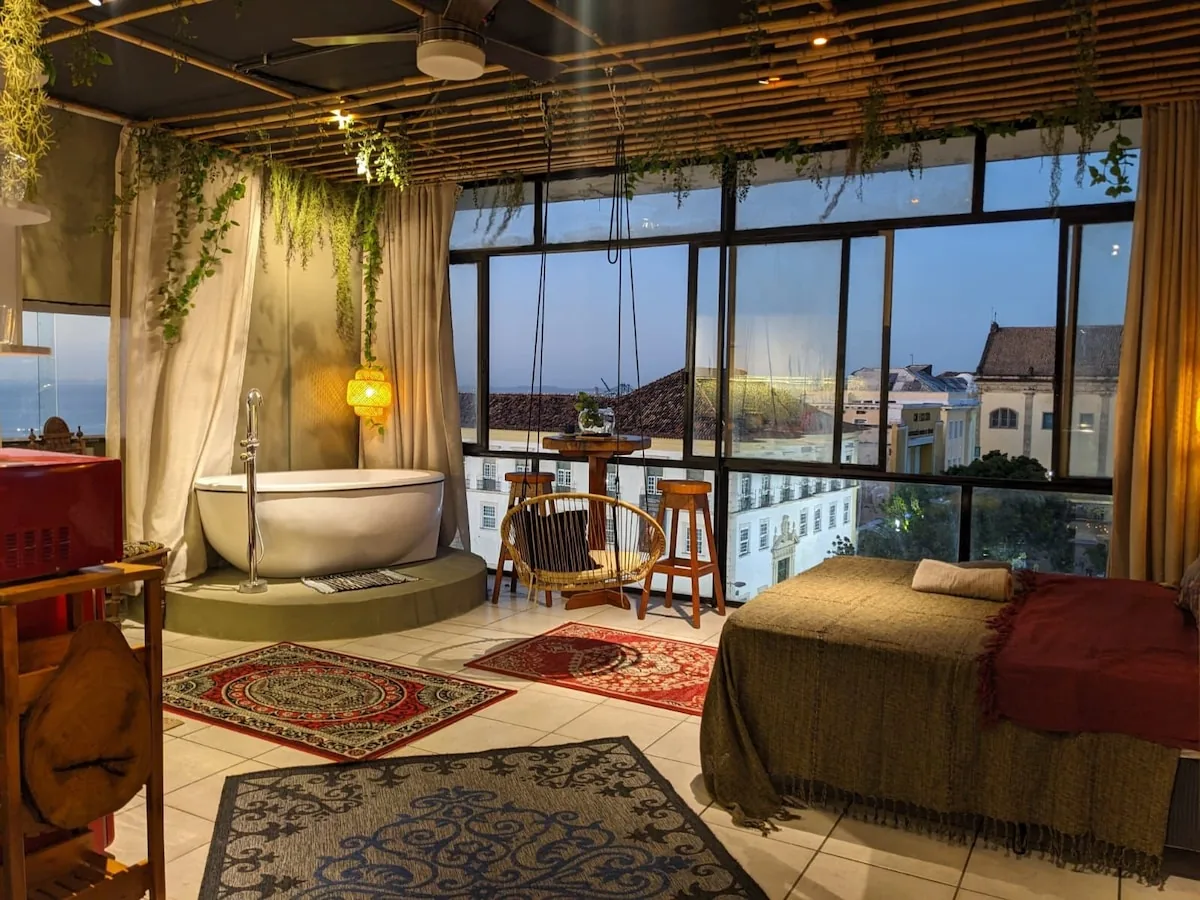
Go early to São Joaquim by ride app, come back along the bay to the Mercado Modelo for crafts and lunch, then ride the free Elevador Lacerda up to the Pelourinho shops. Our four suites are in the Cidade Alta, a few minutes on foot from the lift and the Pelourinho, so you can drop bags between stops.
Frequently asked questions
What is the best souvenir to bring back from Salvador?
Cheap and light: a bundle of Bonfim ribbons. For the music: a berimbau or an Olodum shirt from the band's shop. For food: chocolate with the Cacau Sul da Bahia seal or a cachaça de alambique. For a craft with a pedigree: Saubara bobbin lace.
Can I take a berimbau on a plane?
Yes. Have it unstrung, pack the gourd and rattle in your suitcase, and carry or check the bow in a tube. US airlines must accept checked instruments up to 150 linear inches and 165 pounds; other airlines set their own rules. Declare the gourd at US customs.
How much cachaça can I take home duty-free?
One litre for US residents aged 21 or over, subject to the arrival state's law, and 1 litre of spirits over 22% for travellers entering the EU. More is allowed but taxed. Pack bottles in checked luggage.
Is the Feira de São Joaquim worth visiting?
Yes, to see how Salvador shops and eats. It opens daily from 5:00 to 17:00; go early, by ride app, with small notes, and expect building work until about mid 2027.
Should I haggle in Salvador?
At stalls, with street sellers and in the Mercado Modelo, yes, politely. In state craft stores, malls and shops with price tags, no.
Can I mail souvenirs home from Salvador?
Yes, with the Correios' Exporta Fácil, up to 30 kg and 150 cm long, but not liquids such as cachaça or dendê.
Sources
- Correio: Bonfim, first Friday of 2025 and Correio: history of the ribbons, 2019 (prices, length, supply; in Portuguese; checked Oct 2026).
- Wikipedia: Berimbau and Cornell LII: 49 U.S.C. 41724 (parts, length, airline rules; checked Oct 2026).
- Olodum: official site (shop, 2026 shows; checked Oct 2026).
- Movimento Econômico: cachaça yearbook, Jul 2026, A Tarde: Fenagro cachaças, Dec 2025, A Tarde: Expocachaça, 2024 and Agência Sebrae: label categories, Sep 2025 (in Portuguese).
- Cornell LII: 19 CFR 148.33, Your Europe: alcohol allowances and TSA: liquids rule (checked Oct 2026).
- Bahia Notícias: Bahian chocolate brands, Jul 2025, Agência Brasil: southern Bahian cacao, 2022 and Mendoá Chocolates (in Portuguese).
- Alma Preta: balangandãs, 2023, Wikipedia (PT): Balangandã and Revista Mosaico: Sura Carmo on balangandãs, 2016 (in Portuguese).
- Agência Sebrae: Saubara lace, Aug 2025 and Muita Informação: Goya Lopes at MAM-BA, Jul 2025 (in Portuguese).
- Salvador da Bahia (city tourism): Feira de São Joaquim and Jornal Grande Bahia: São Joaquim meat hall, Jun 2026 (in Portuguese).
- Correio: Casa do Artesanato opens, 2023, Correio: craft stores and hours, May 2026, Bahia Notícias: Muncab store, Dec 2025, Muita Informação: craft prices, Dec 2024 and Palladium guide: shopping in Salvador (in Portuguese).
- Wikipedia (PT): Rua Chile, Wikipedia (PT): Shopping da Bahia, Shopping Barra and Salvador Shopping (checked Oct 2026).
- US CBP: prohibited and restricted items, Your Europe: food and plants, Wikipedia: Dalbergia nigra and IBAMA: CITES and foreign trade (checked Oct 2026).
- Correios: international parcels (limits, customs list, liquids; in Portuguese; checked Oct 2026).
Stay in the historic centre
Our four suites are in the Cidade Alta, a few minutes on foot from the Elevador Lacerda and the Pelourinho. They are booked on Airbnb.


Salvador, in images
Photographs of the neighborhood, restaurant, and beach featured in this guide, with credit to each photographer.
Ready to discover Salvador?
Book one of the four Via Avantgarde suites in the Pelourinho — and receive the complete guides with recommendations for your stay.