Elevador Lacerda the lift between salvador's two levels
The Elevador Lacerda in Salvador: 72 metres in 30 seconds since 1873, the 2025 reopening, hours, the free ride, the view of Forte São Marcelo and the other lifts between the two levels.
The essentials in 30 seconds
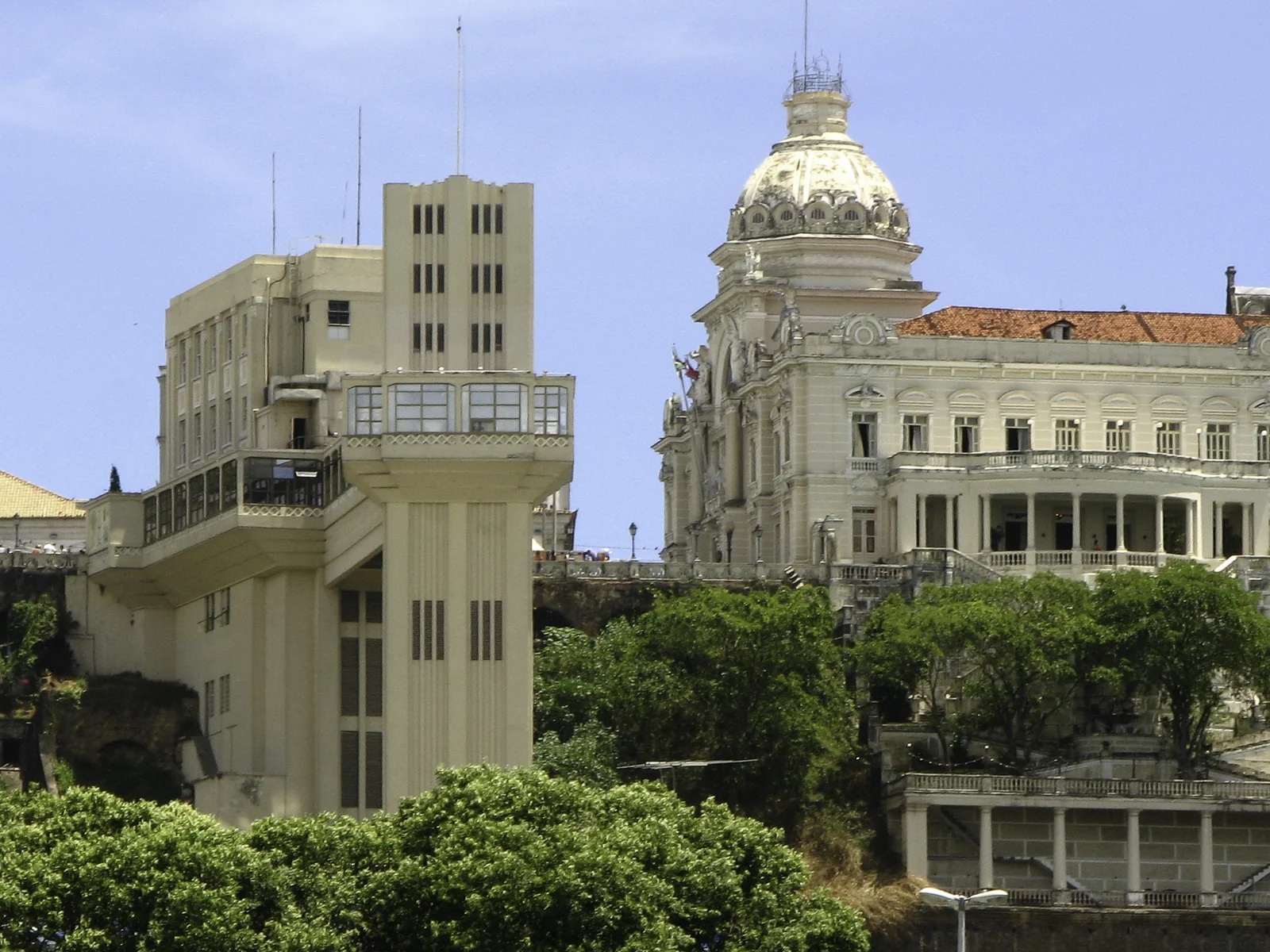
The Elevador Lacerda is the Art Deco lift that joins Salvador's two levels: four cabins travel 72 metres in about 30 seconds between the Praça Tomé de Sousa, in the historic Cidade Alta, and the Praça Maria Felipa (the old Praça Cayru), across from the Mercado Modelo. It first ran in 1873, took its present shape in 1930 and reopened on 26 February 2025 after a ten-month renovation. It runs 6:30 to 21:30 on weekdays, 7:00 to 21:30 on Saturdays and 7:00 to 21:00 on Sundays and holidays, and the ride was free when we checked in May 2026. Go late in the afternoon: the square's parapet and the lift's upper balconies face west over the bay, toward the sunset and the round Forte São Marcelo.
What the lift does
Salvador sits on two levels. Up on the ridge is the Cidade Alta, with the Praça Tomé de Sousa, the Praça da Sé, the Terreiro de Jesus and the Pelourinho. At the foot of the escarpment lies the Cidade Baixa: the Comércio business district, the port, the Mercado Modelo and the Terminal Náutico, where the boats leave for Itaparica and Morro de São Paulo. The Elevador Lacerda is the quickest way between the two, and for most visitors it is the first thing they do in the city.
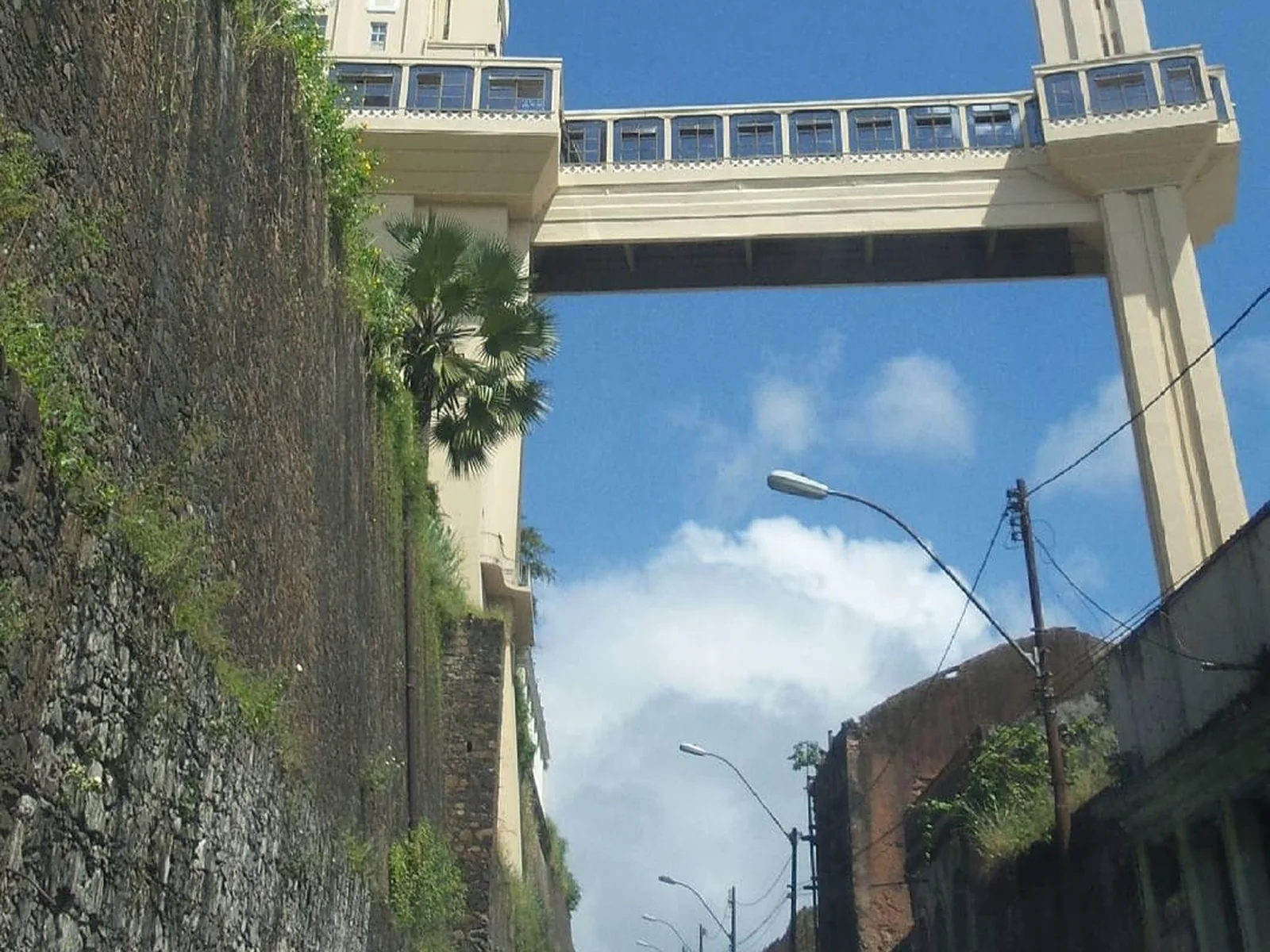
The structure is really two towers. One rises from the rock itself and passes the Ladeira da Montanha, the road that winds down the slope; the other, the tall pale tower on every postcard, carries the cabins down to the lower city. You walk in from the Praça Tomé de Sousa, cross a hall, step into one of four cabins and walk out about half a minute later on the Praça Maria Felipa, with the Mercado Modelo straight ahead and the water a few steps beyond. Going up works the same way in reverse.
History, from 1869 to 1930
Before the lift, people and goods climbed between the port and the upper town on steep ladeiras and slow carts. Work on a mechanical link began in 1869, and it was a family project. Antônio de Lacerda conceived it, his brother, the engineer Augusto Frederico de Lacerda, saw it built, and their father, the Portuguese-born merchant and comendador Antônio Francisco de Lacerda, stood behind it with family money.
It opened on 8 December 1873 as the Elevador Hidráulico da Conceição, a water-powered lift in a tower 63 metres tall. The city's own heritage portal calls it the first urban elevator in the world and the tallest of its day. Locals nicknamed it the Parafuso, the screw, and in 1896 it took the family name it still carries. In 1906 it switched from hydraulic power to electricity.
The lift you ride today is the result of a second rebuild, begun in 1927. The design came from the Danish architect Fleming Thiesen and the work from the Danish construction firm Christiani & Nielsen, with advice from Otis. They added the second tower, doubled the cabins from two to four and gave the whole thing the clean Art Deco lines that made it the symbol of the city. The new lift was inaugurated on 7 September 1930, and with the later extensions it now stands 72 metres high.
Later work was mostly mechanical: a full overhaul completed in 1961, a review of the concrete in the early 1980s and of the electrical systems in 1997. In December 2006 the national heritage institute, IPHAN, listed the lift as a protected national monument.
The Lacerda name in 2026
On 5 August 2026 the human-rights prosecutors of the Bahia state public ministry (MP-BA) opened a procedure to look into the history behind the name. Press coverage cited research suggesting that part of the Lacerda family's wealth, which helped pay for the lift, may have come from the illegal trade in enslaved Africans. After the story spread, the MP-BA said the aim is historical context and the public's right to information about the monument, and that no procedure to rename the lift exists. Plaques or educational material are among the options that were mentioned. For the wider story of the port below and what passed through it, see our Afro-Brazilian history guide.
Renovation and reopening in 2025
The lift closed in April 2024 for its biggest renovation in decades, timed to its 150th anniversary. The city reinaugurated it on the evening of Tuesday 25 February 2025, and the public rode again from 26 February. The halls and cabins are now air-conditioned, with new paint, lighting and wall and floor finishes; the facades and the upper-level balconies were brought back to their original colours, and the balconies look straight out over the bay. Press coverage of the reopening put the cost at more than R$ 14 million (about US$ 2.7 million).
People came back fast. The city's mobility department counted about 250,000 riders in the first 30 days after the reopening. The neighbours noticed too: A Cubana, the ice-cream counter that has served lift riders since the 1930s, reported better sales in the weeks after the doors opened again.
Hours and fare
| Day | Opening hours |
|---|---|
| Monday to Friday | 6:30 to 21:30 |
| Saturday | 7:00 to 21:30 |
| Sunday and public holidays | 7:00 to 21:00 |
The ride was free for residents and visitors when we checked in May 2026. The city announced a small fare for after the renovation, with residents who carry the SalvadorCard exempt, so if a ticket window is open when you arrive, have a few coins or a card ready and check at the door. Special hours apply at Carnival (see below), and the timetable can change on election days and big festival dates, so check the city's announcements before you build an evening around the last cabin.
At the top: the Praça Tomé de Sousa
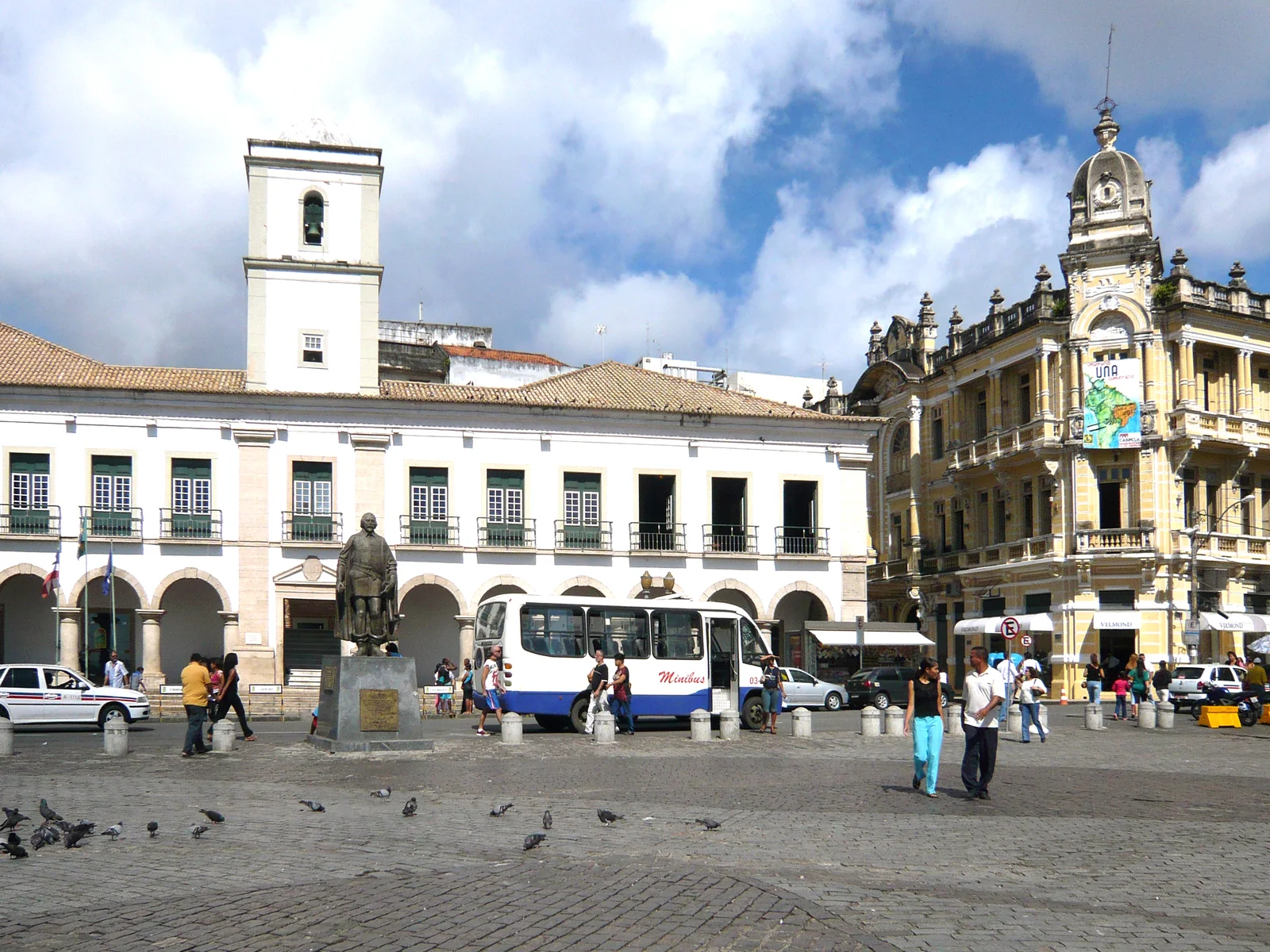
The upper door opens onto the Praça Tomé de Sousa, which most people in Salvador call the Praça Municipal. This is where the city began: in 1549 the first governor-general, Tomé de Sousa, grouped the colony's public buildings around this square, and his statue stands on it. The square was once known as the Praça da Parada, for the military parades held here. Three buildings frame it, and each has a 2026 story.
Palácio Rio Branco. The seat of government stood here from the founding of the city. The building was hit during the bombardment of Salvador on 10 January 1912, left nearly in ruins, and rebuilt by 1919, when it took the name of the diplomat Barão do Rio Branco. It is now closed while it becomes a hotel: the work order was signed on 1 June 2026 for a project of 90 suites, 27 of them in the historic building, and at an inspection by the state tourism department on 24 September 2026 the works were reported on schedule. Enjoy the facade from the square for now.
Paço Municipal. The city council, created with the city in 1549, meets in Brazil's oldest legislative house among the state capitals; the present building dates from 1660. A fire damaged its roof in February 2025, emergency repairs followed, and council sessions moved to another hall while a longer plan, including a legislative museum, takes shape. It is one of the finest pieces of colonial civil architecture in Bahia, and the arcaded front is the part to see.
Palácio Thomé de Souza. The low steel-and-glass building beside the lift, designed by the architect João Filgueiras Lima, known as Lelé, has housed the mayor's office. A federal court case that dates back to 2000 requires it to leave the square, and the city has been preparing a move to the Palácio da Sé, a few minutes away; what replaces it was still under discussion in 2026.
A minute's walk away on Rua da Misericórdia, the Museu da Misericórdia reopened on 16 December 2024 after three years of restoration. It tells the story of the Santa Casa de Misericórdia in a seventeenth-century building, now with ramps, Braille signs and audio guides. At the reopening it was open Tuesday to Friday 9:00 to 17:00 and Saturday 9:00 to 16:30, closed Sundays, Mondays and holidays, for R$ 30 (about US$ 6), half price R$ 15.
The view and the Forte São Marcelo
Walk to the back of the square and the whole Bay of All Saints opens in front of you: the Comércio rooftops directly below, the cranes and ferries of the port, the island of Itaparica on the horizon. The round fort sitting in the water about 300 metres offshore is the Forte São Marcelo, also called the Forte do Mar or the Forte de Nossa Senhora do Pópulo e São Marcelo. It was begun in 1608 and finished in 1623, gained its central tower in a rebuild ordered in 1650 and its outer wall in 1728, and it is the only cylindrical fort in Brazil. IPHAN listed it in 1938.
You can photograph it, but you cannot visit it for now. The fort opened to the public in 2006, closed again in 2018, and in May 2026 the federal government handed its management to the Bahia state tourism department for 20 years, together with the fortress at Morro de São Paulo. The state is studying the restoration first, and a reopening date depends on those works.
At the bottom: Praça Maria Felipa and the Comércio
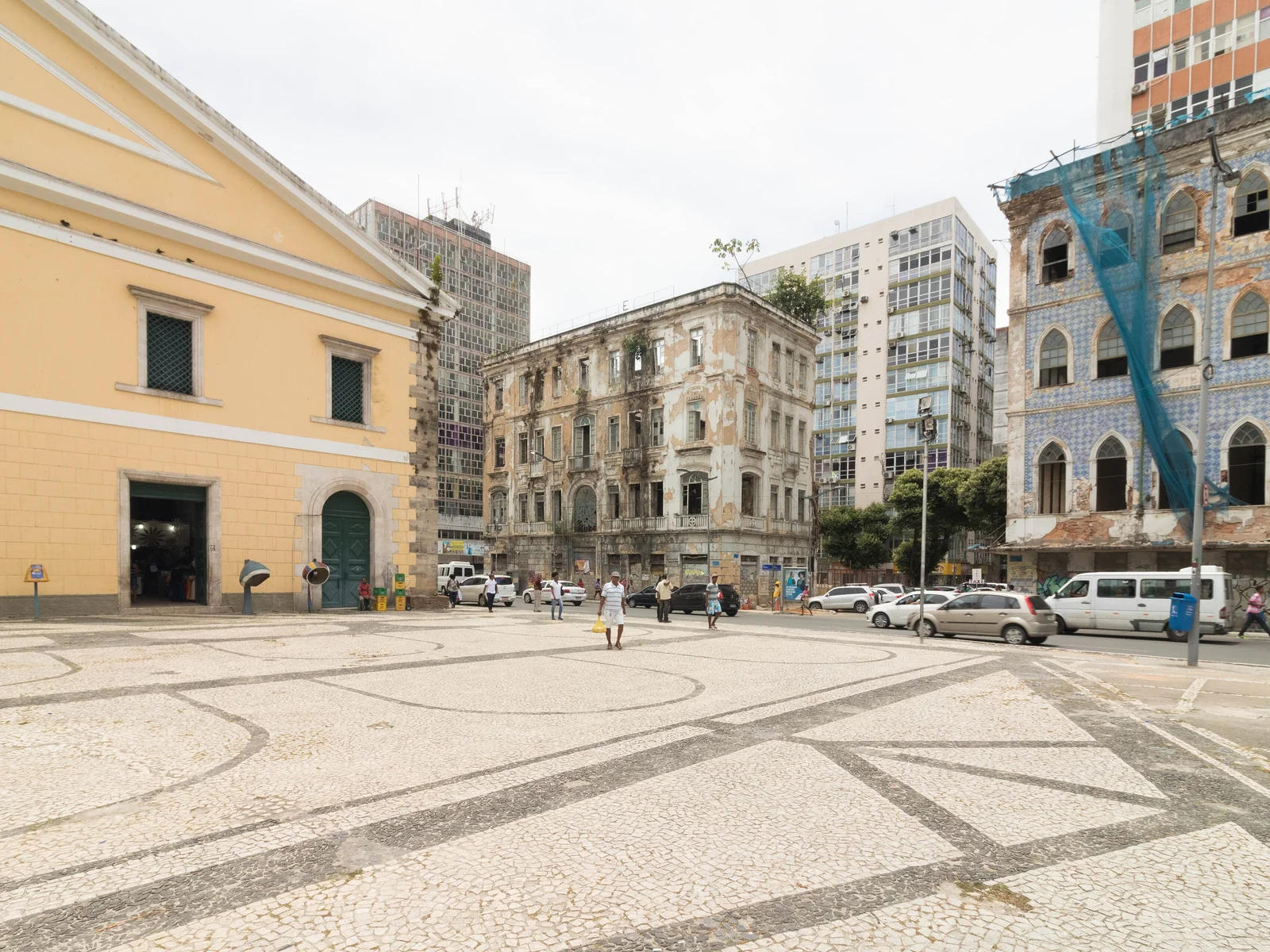
The lower door lets you out on the square long known as the Praça Visconde de Cayru. Since 2024 it has officially been the Praça Maria Felipa, renamed by municipal law 9.787/2024 after a monument to Maria Felipa, a heroine of Bahia's war of independence, was unveiled here in July 2023. Signs, maps and taxi drivers use both names, so do not be thrown if someone says Praça Cayru. The independence story itself, and why 2 July matters so much here, is in our Dois de Julho guide.
Straight across the square is the Mercado Modelo, the city's best-known craft market, and on the waterfront beside it the Terminal Náutico, where the crossings to Itaparica and the catamarans to Morro de São Paulo leave; our boat trips guide has the details. An old townhouse on the square, once the home of the Visconde de Cairu, houses the Cidade da Música da Bahia and the Casa das Histórias de Salvador, two of the newer museums in the city. Beyond them, the Comércio is a working district of banks, offices and warehouses, busy on weekdays and quiet in the evenings.
Other ways between the upper and lower city
The Lacerda is the famous link, but not the only one. Salvador has a small family of lifts and funiculars, and in October 2026 most of them were running.
| Link | Connects | Status, October 2026 | Hours |
|---|---|---|---|
| Elevador Lacerda | Praça Tomé de Sousa to Praça Maria Felipa | Running | Daily, 6:30 or 7:00 to 21:30 (21:00 Sun) |
| Plano Inclinado Gonçalves | Praça Ramos de Queirós, by the Casa do Carnaval, to Rua Francisco Gonçalves | Running since 1 Dec 2025, free | Mon to Fri 7:00 to 18:00, Sat 7:00 to 13:00 |
| Elevador do Taboão | Ladeira do Taboão, at the lower edge of the Pelourinho, to the Comércio | Running, free | Mon to Fri 7:00 to 17:30 |
| Plano Inclinado do Pilar | Cruz do Pascoal, in Santo Antônio, to Rua do Pilar | Out of service since 8 Oct 2026, no return date | Normally Mon to Fri 7:00 to 17:00 |
| Ladeira da Montanha | The Comércio to the Praça Castro Alves | A road, open to traffic | Not a walking route |
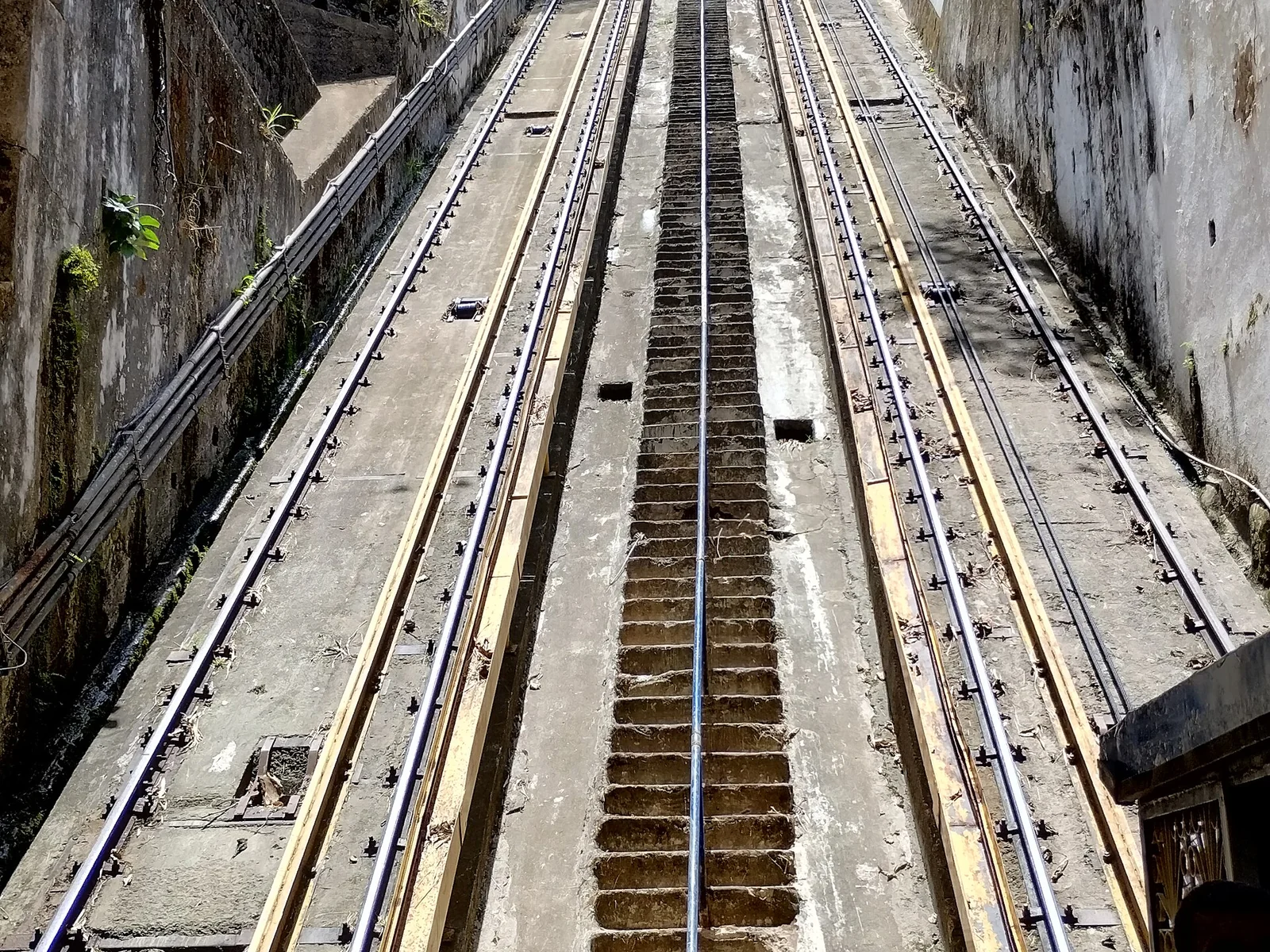
Plano Inclinado Gonçalves. This funicular opened on 25 December 1889. It was meant to honour Princess Isabel, but the Republic was proclaimed weeks earlier, so it took the name of the construction company's director, Comendador Manuel Francisco Gonçalves. It runs two cars on a ramp the Jesuits once used for their own cargo crane, the Guindaste dos Padres. It closed on 27 October 2025 for new parts, paint and railings and reopened on 1 December 2025, free to ride. The upper station is a couple of minutes from the Praça da Sé, which makes it a handy alternative when the Lacerda queue is long or when you want to come up closer to the Terreiro de Jesus.
Elevador do Taboão. Opened on 19 January 1896 by the tram company Linha Circular, it links the lower end of the Pelourinho with the Comércio. It is a weekday, working-hours lift, free, and handy if you have finished at the Largo do Pelourinho and want the lower city without walking back to the Praça Tomé de Sousa.
Plano Inclinado do Pilar. Built in 1897, it climbs from Rua do Pilar, near the Pilar parish church, to the Cruz do Pascoal in Santo Antônio Além do Carmo. It stopped on 8 October 2026 for corrective maintenance, with component replacements and safety tests and no return date announced; the city named it, together with the Liberdade-Calçada funicular, as next in line for a full refurbishment after the Gonçalves.
Ladeira da Montanha. Cut into the rock and opened in 1885, this road runs about 660 metres from the Comércio up to the Praça Castro Alves, and the lift's rock tower stands beside it. It is a traffic route with buses and cars, not a pleasant walk, and the lift does the same climb in half a minute.
Photos and the sunset
Salvador's old town faces west across the bay, so the sun sets over the water in front of the lift. At 13 degrees south the time barely moves through the year:
| Date | Sunset | Last light (civil twilight ends) |
|---|---|---|
| Late January | about 18:10 | about 18:30 |
| Early June | about 17:15 | about 17:35 |
| Late October | about 17:35 | about 17:55 |
Arrive half an hour before sunset and you get the best of it in one place. From the parapet at the back of the Praça Tomé de Sousa and from the lift's upper balconies, the Forte São Marcelo sits in the middle of the frame, the ferries cross to Itaparica, and the Comércio lights come on below you. A short lens is enough for the wide view; a longer one pulls in the fort and the boats.
For the tower itself, go down. The bay-facing side of the lift is in shade in the morning, while the sun is still behind the ridge, and takes the full afternoon light from mid-afternoon on. The Praça Maria Felipa gives you the classic upward view of the tower against the escarpment; walk a little toward the water by the Terminal Náutico and the tower lines up with the old town above it. The other good angle is from the water: a ferry from the Terminal Náutico gives you the whole Cidade Alta, lift and all, as the boat pulls away. Our sunset spots guide lists the other places in the city worth an evening.
The lower city after dark
The Comércio is an office district, and it empties when the offices close. Plan your time down there for daylight: the market, the waterfront, the Cidade da Música, a boat. In the evening, ride the lift back up while it is running and spend the night on the upper level, where the squares of the historic centre stay lit and people are out. After the lift closes, or if you are coming back late from Barra or Rio Vermelho, a ride-hailing car to your door is simple and cheap. The steep ladeiras that connect the two levels on foot are best left for another day, and with luggage they are never worth it. Our guide to staying safe in Salvador has the city-wide picture in a few calm paragraphs.
The lift at Carnival
During Carnival the lift becomes part of the city's festival transport plan, because the Comércio is a natural place to leave or join the old-town party. In 2025 it ran around the clock from 27 February to 4 March, closing at its normal 21:30 on Ash Wednesday. In 2026 the city announced its Carnival transport plan a week before the opening Thursday, and a city update on the fourth day of the festival counted 24,400 passengers through the lift, more than the year before.
Carnival 2027's main days are 4 to 9 February. Expect queues at peak hours, keep your phone in a front pocket in the crowds, and check the city's announcement for the year's special hours in the week before. Our Salvador Carnival guide covers the circuits, the blocos and when to book.
Where to stay near the lift
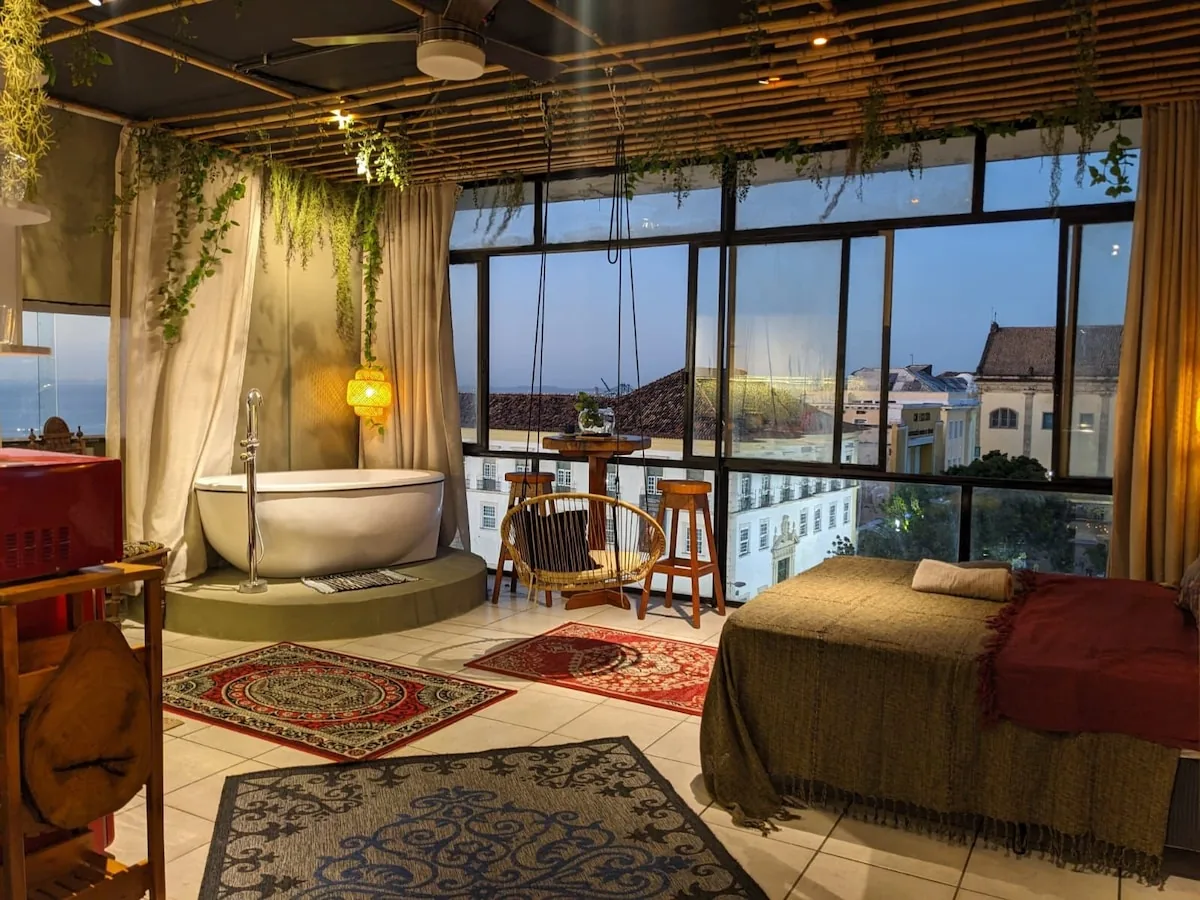
Staying on the upper level turns the lift into your front door: the market and the boats are half a minute away, and the sunset is a two-minute walk. We compare the hotels within ten minutes of the upper door, with walking times, in our guide to hotels near the Elevador Lacerda. Our own four suites are in the Cidade Alta, a few minutes on foot from the lift and the Pelourinho, booked on Airbnb, where you message us directly; the Historic Loft is a studio right beside the elevator.
Frequently asked questions
Is the Elevador Lacerda free?
It was free for everyone when we checked in May 2026. The city announced a small fare after the 2025 renovation, with residents who hold the SalvadorCard exempt, so check at the door and carry a few coins or a card in case a ticket window is open.
What are the Elevador Lacerda opening hours?
Monday to Friday 6:30 to 21:30, Saturday 7:00 to 21:30, and Sundays and public holidays 7:00 to 21:00. Hours change during Carnival, when it has run around the clock, so check the city's plan that week.
How high is the Elevador Lacerda and how long is the ride?
The structure is 72 metres high, and each of the four cabins makes the trip in about 30 seconds. The original 1873 tower was 63 metres; the 1930 rebuild added height, a second tower and two more cabins.
Can you visit the Forte São Marcelo?
Not at the moment. The fort has been closed since 2018, and in May 2026 the state tourism department took over its management for 20 years with restoration studies first. The best view of it is from the parapet beside the lift.
Is there another way down to the Mercado Modelo?
Yes. The Plano Inclinado Gonçalves, a free funicular near the Praça da Sé, runs on weekdays and Saturday mornings, and the free Elevador do Taboão links the lower Pelourinho with the Comércio on weekdays. The Plano Inclinado do Pilar, in Santo Antônio, was out of service from 8 October 2026.
Does the Elevador Lacerda run during Carnival?
Yes, and with longer hours: in 2025 it ran 24 hours a day from 27 February to 4 March. The city publishes each year's transport plan in the week before Carnival; in 2027 the main days are 4 to 9 February.
Why is it called Lacerda?
It carries the name of the family that built it: Antônio de Lacerda, who conceived it, his engineer brother Augusto Frederico de Lacerda, and their father, the merchant Antônio Francisco de Lacerda. It took the name in 1896; in 2026 the state public ministry opened a procedure to research the family's history, and said it is not seeking a new name.
How far is the Elevador Lacerda from the Pelourinho?
About 10 minutes on foot from the upper door, by way of the Praça da Sé and the Terreiro de Jesus. The route is mostly level stone paving along the ridge; see every stop on our map of Salvador.
Sources
- Prefeitura de Salvador, Pelourinho Dia e Noite: Elevador Lacerda (opening date, 63 and 72 metres, two towers, ride time, hours; in Portuguese; checked Oct 2026).
- Wikipedia: Elevador Lacerda (1869 start, original name, 1896 rename, 1906 electrification, 1930 inauguration, later overhauls, 2006 listing; in Portuguese; checked Oct 2026).
- A Tarde: Além de transporte, Elevador Lacerda é símbolo da história de Salvador (1927 rebuild by Fleming Thiesen and Christiani & Nielsen; in Portuguese; checked Oct 2026).
- Bahia Notícias: renovation tender, October 2023 (Lacerda brothers, A Cubana since the 1930s; in Portuguese; checked Oct 2026).
- A Tarde: Elevador Lacerda pode mudar de nome? Entenda investigação do MP-BA (17 Aug 2026; Antônio Francisco de Lacerda, MP-BA procedure; in Portuguese; checked Oct 2026).
- Bahia Notícias: Após 10 meses fechado, Elevador Lacerda será reaberto (April 2024 closure, works list; in Portuguese; checked Oct 2026).
- Pontos pra Voar: Elevador Lacerda é reinaugurado (public reopening 26 Feb 2025, restored balconies, cost, Carnival 2025 hours, SalvadorCard; in Portuguese; checked Oct 2026).
- Bahia Notícias: 250 mil pessoas transportadas em 30 dias (riders, timetable; in Portuguese; checked Oct 2026).
- Muita Informação: Carnival 2026 passenger figures (24,400 lift passengers; in Portuguese; checked Oct 2026).
- A Tarde: Plano Inclinado Gonçalves volta a operar (1 Dec 2025 reopening, hours, free fare; in Portuguese; checked Oct 2026).
- Muita Informação: Plano Inclinado Pilar out of service (9 Oct 2026; Elevador do Taboão hours; in Portuguese; checked Oct 2026).
- Prefeitura de Salvador: Plano Inclinado Gonçalves, Elevador do Taboão, Plano Inclinado do Pilar and Ladeira da Montanha pages (stations, opening dates; in Portuguese; checked Oct 2026).
- Jornal Grande Bahia: Palácio Rio Branco terá hotel de 90 suítes (Sept 2026 inspection; in Portuguese; checked Oct 2026).
- Bahia Notícias: recuperação do Paço Municipal (1660 building, February 2025 fire; in Portuguese; checked Oct 2026).
- Wikipedia: São Marcelo Fort (dates, shape, 1938 listing, 2006 to 2018 opening; checked Oct 2026) and Jornal Grande Bahia: state takes over the fort for 20 years (May 2026; in Portuguese).
- Wikipedia: Praça Visconde de Cairu (renaming to Praça Maria Felipa, law 9.787/2024; in Portuguese; checked Oct 2026).
- Muita Informação: Museu da Misericórdia reaberto (Dec 2024 hours and prices; in Portuguese; checked Oct 2026).
- Sunrise-Sunset.org: Salvador sunset and twilight times (dates in 2026; checked Oct 2026).
Stay in the historic centre
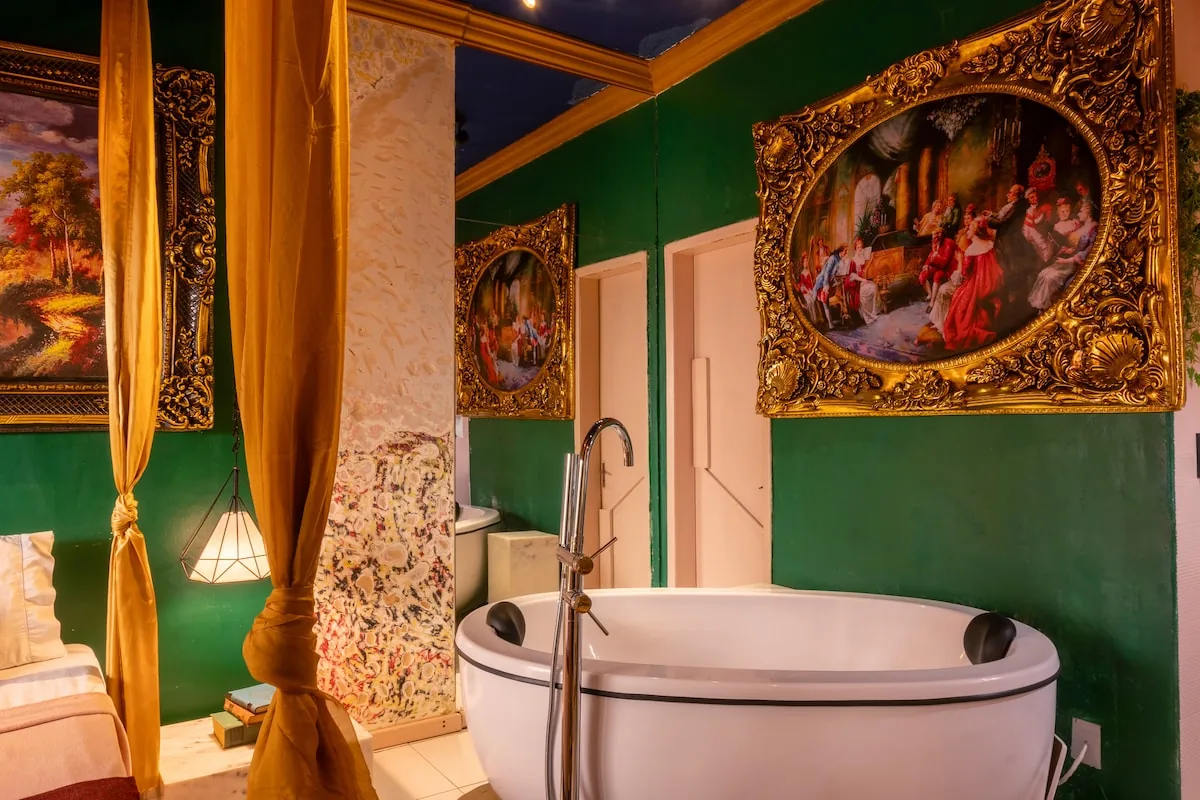
Our four suites are in the Cidade Alta, a few minutes on foot from the Elevador Lacerda and the Pelourinho. They are booked on Airbnb.


Salvador, in images
Photographs of the neighborhood, restaurant, and beach featured in this guide, with credit to each photographer.
Ready to discover Salvador?
Book one of the four Via Avantgarde suites in the Pelourinho — and receive the complete guides with recommendations for your stay.