Two Weeks in Bahia Salvador, the Chapada and the coast
Two weeks in Bahia, day by day: four nights in Salvador, the Chapada Diamantina from Lençóis, then Itacaré, Morro or Boipeba, with 2026 bus, boat and ferry prices.
The essentials in 30 seconds
Two weeks in Bahia fits three very different places: four nights in Salvador's old town, four in the Chapada Diamantina highlands around Lençóis, and four on the coast to the south, at Itacaré, Morro de São Paulo or Boipeba, with one night in Salvador between the hills and the sea. The Lençóis bus takes about six and a half hours and in 2026 costs roughly R$ 150-200; the coast is a catamaran ride of about two and a quarter hours to Morro, or a ferry-and-bus day to Itacaré. Fly home from Salvador, or from Ilhéus if you end in Itacaré. September and October are the best months for all three parts.
How this itinerary works
Bahia is large, and the three parts of this trip point in different directions from Salvador: the Chapada Diamantina is about 410 km inland to the west, while the islands and Itacaré lie down the coast to the south. Salvador is the hub for both, so the plan uses the city twice, at the start and once more between the highlands and the beach. That extra night costs you little and saves a long, awkward overland connection between Lençóis and the coast.
The plan below is written for 14 days and 13 nights, travelling by bus and boat, with the flight options noted where they exist. It assumes you arrive in Salvador. If you prefer slower travel, drop the Chapada and use the Salvador itinerary plus one coastal base; if you prefer to hike, see the 10-day and family versions further down.
The plan at a glance
| Days | Base | Highlights | How you get there |
|---|---|---|---|
| 1 to 4 | Salvador, Cidade Alta | Pelourinho, Elevador Lacerda, Bonfim, Santo Antônio, a day on the bay | Fly into Salvador; metro Line 2 and shuttle, or a car |
| 5 to 8 | Lençóis, Chapada Diamantina | Morro do Pai Inácio, caves, Cachoeira da Fumaça, river pools | Rápido Federal bus, about 6.5 hours, roughly R$ 150-200; or Azul's twice-weekly flight |
| 9 | Salvador | A slow evening, a last moqueca in the old town | The same bus back, about 6.5 hours |
| 10 to 13 | Itacaré, or Morro de São Paulo, or Boipeba | Beaches and trails, rafting, a cacao farm; or car-free island days | Ferry and bus to Itacaré, 7 to 8 hours; catamaran to Morro, about 2 hours 15 minutes |
| 14 | Home | A last swim | From Itacaré, bus to Ilhéus (about 2 hours) and fly; from the islands, boat back to Salvador |
Days 1 to 4: Salvador
Four nights is the right amount for a first visit: enough for the historic centre, the Bonfim peninsula, one day on the water and a free evening for music. Stay in or near the Cidade Alta, the upper town, so that most of the first two days happen on foot. From the airport, Metro Line 2 reaches the Aeroporto station, linked to the terminal by a free electric shuttle of about four minutes; our airport guide covers the metro, apps and taxis.
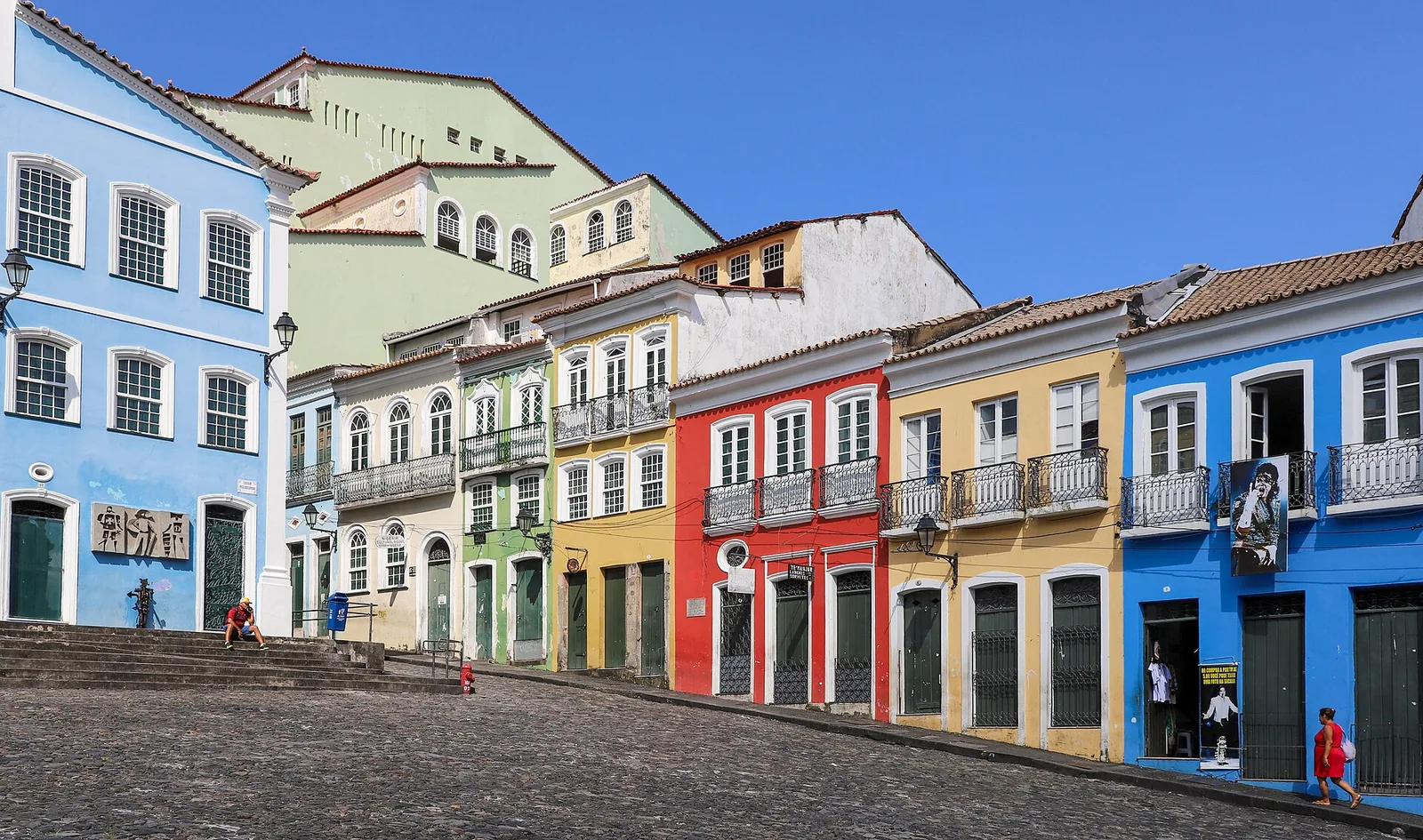
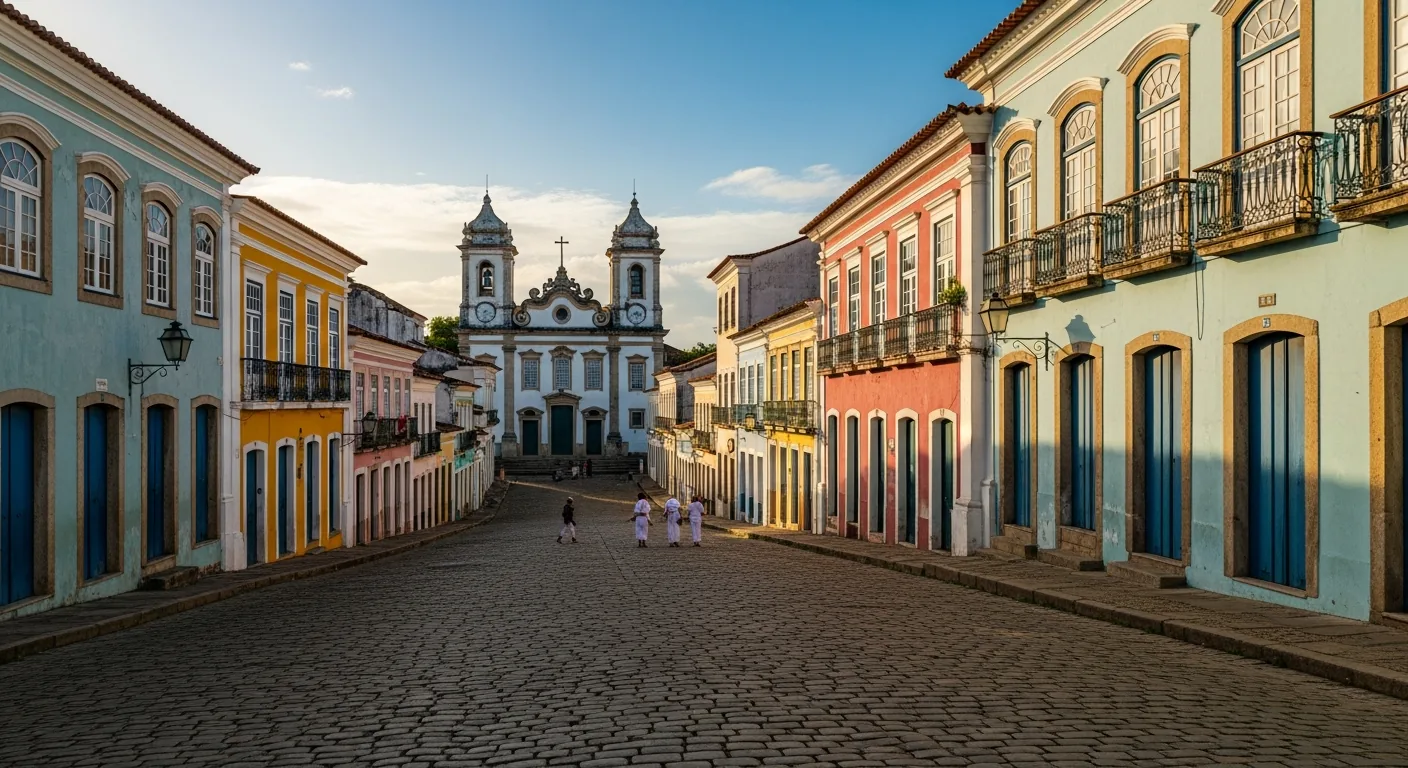
Day 1, arrival. Settle in, then take an easy first walk around the Pelourinho, the historic centre that UNESCO listed as a World Heritage Site in 1985. Keep the evening simple: dinner close to where you sleep, and an early night if you flew overnight. Our Pelourinho guide explains how the squares fit together.
Day 2, the old town on foot. Start at the Terreiro de Jesus with the Cathedral Basilica, then the São Francisco complex. The main Igreja e Convento de São Francisco has been closed since its ceiling collapsed on 5 February 2025, so visit the Igreja da Ordem Terceira de São Francisco next door instead. Walk down to the Igreja do Rosário dos Pretos on the Largo do Pelourinho, and in the afternoon ride the Elevador Lacerda down to the Mercado Modelo. In 2026 the lift is free and runs from 6:30 to 21:30 on weekdays, 7:00 to 21:30 on Saturdays and 7:00 to 21:00 on Sundays and holidays. Our churches guide and Salvador itinerary give a route and the order to see things in.
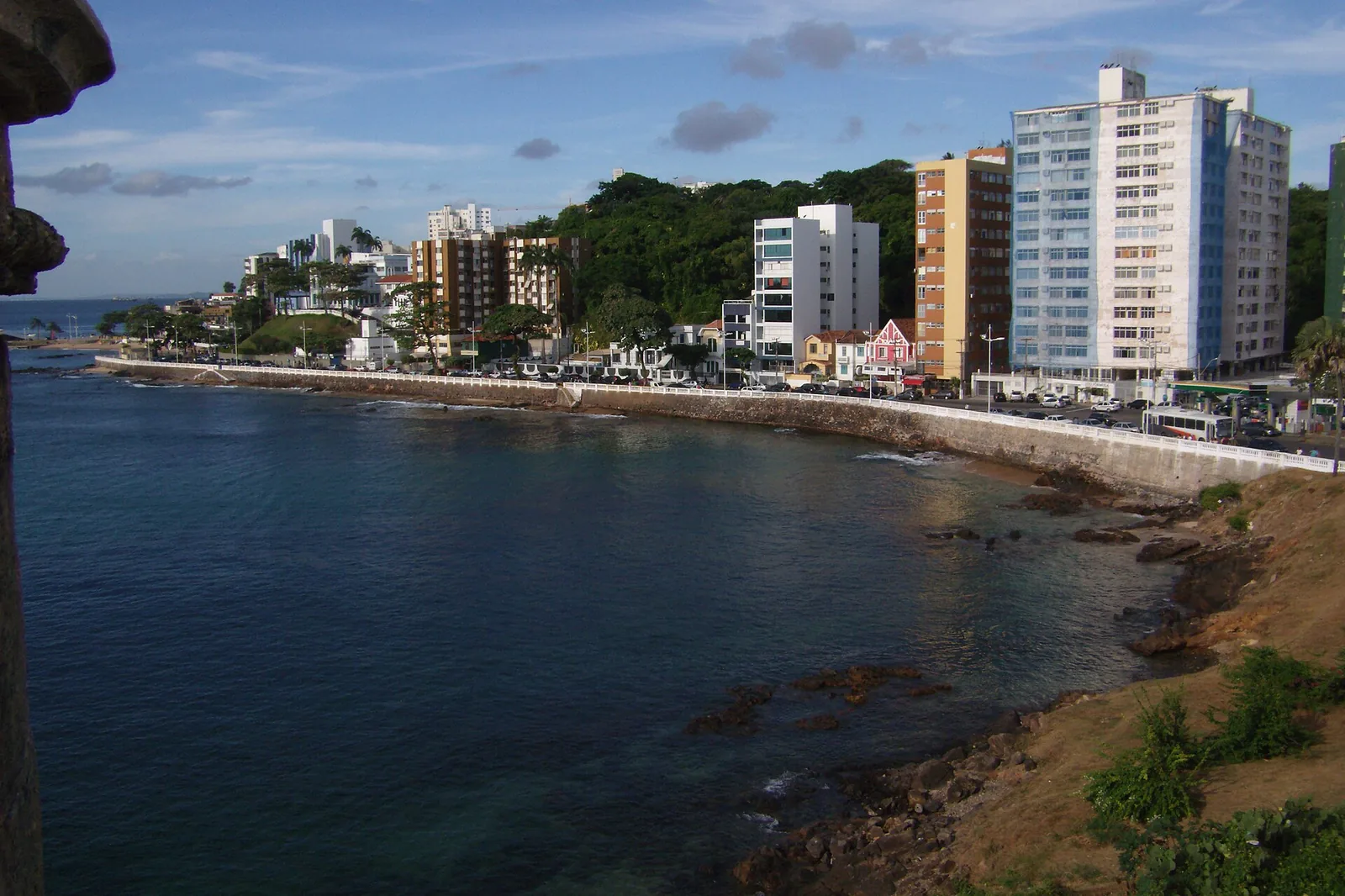
Day 3, Bonfim and Santo Antônio. Spend the morning on the Itapagipe peninsula: the Bonfim church and its ribbons, then the waterfront of the Ribeira. In the late afternoon, walk the old streets of Santo Antônio Além do Carmo, just north of the Pelourinho, and stay for sunset over the bay; our sunset guide lists the best viewpoints.
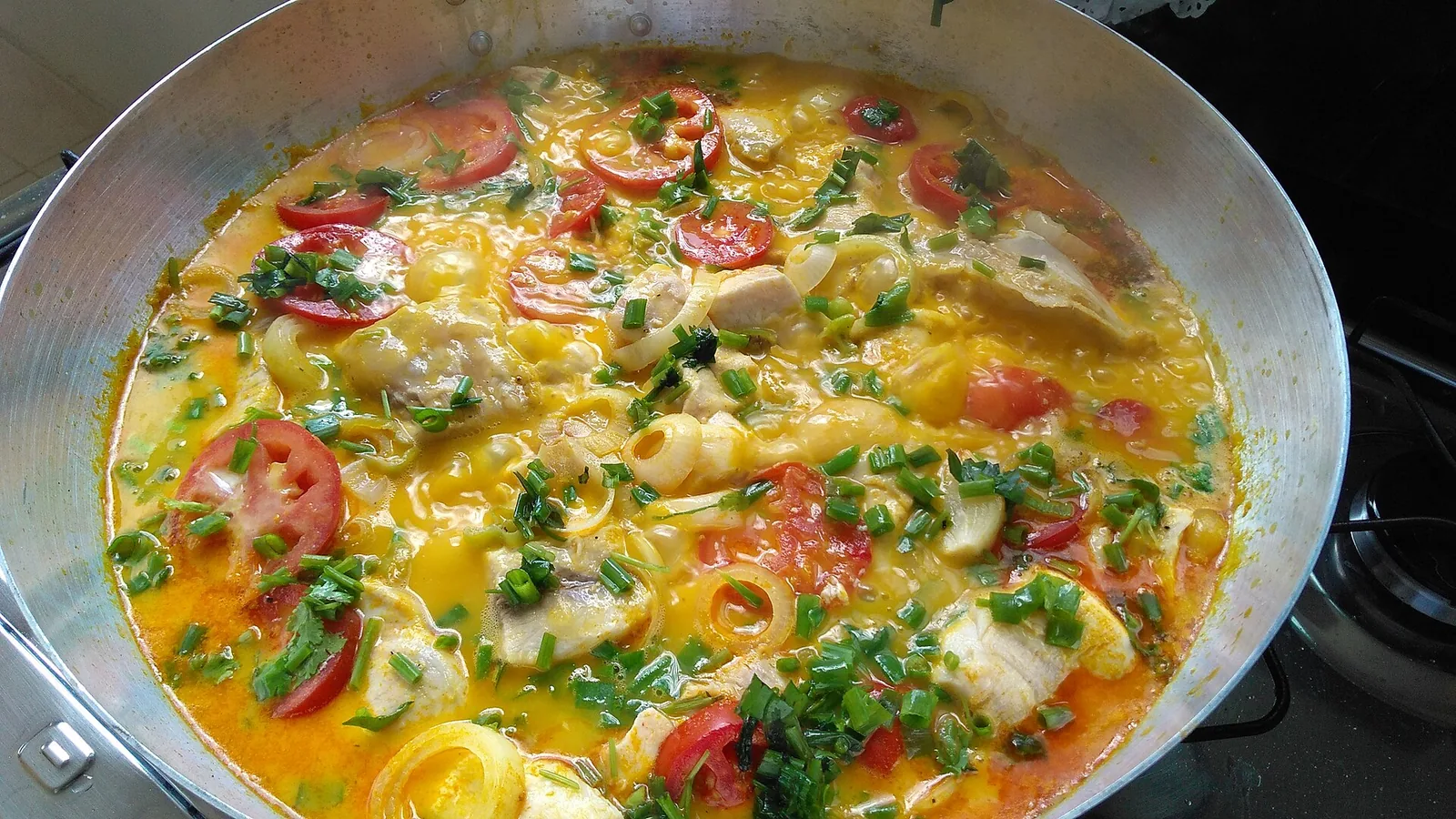
Day 4, the bay or the beaches. Choose one: a schooner day to the islands of the Bay of All Saints (see our boat trips guide), or the ocean side of the city, with Barra in the morning and Rio Vermelho for dinner. In the evening, look at our guides to Olodum and the bloco rehearsals and capoeira, and eat well: start with moqueca baiana and our wider Bahian food guide.
Getting to the Chapada Diamantina
Lençóis, the old diamond town that serves as the usual base, is about 410 km from Salvador. There are two practical ways there, plus driving.
- Bus. The route is run by Rápido Federal, part of the Guanabara group that also owns Real Expresso. A listing checked in October 2026 showed departures at 8:00, 13:00 and 23:00, taking 6 hours 10 minutes to 6 hours 40 minutes, with fares equivalent to about US$ 28-37, roughly R$ 150-200. The 8:00 bus reaches Lençóis around 14:40, in time for an afternoon walk; the 23:00 night bus arrives at about 5:10 and saves a night's lodging, at the cost of a tired first morning.
- Flight. Azul flies Salvador to Lençóis on ATR 72-600 turboprops, twice a week on Thursdays and Sundays at last report. The airport (code LEC) is about 20 km from town and was transferred to GRU Airport under a concession in November 2025. The schedule has changed before, so confirm the days in Azul's app before building the trip around it.
- Car. A hire car gives freedom inside the park, but most of the big hikes still need a local guide, so it pays off mainly for families and for travellers who want to reach the scattered caves at their own pace.
Days 5 to 8: Lençóis and the Chapada
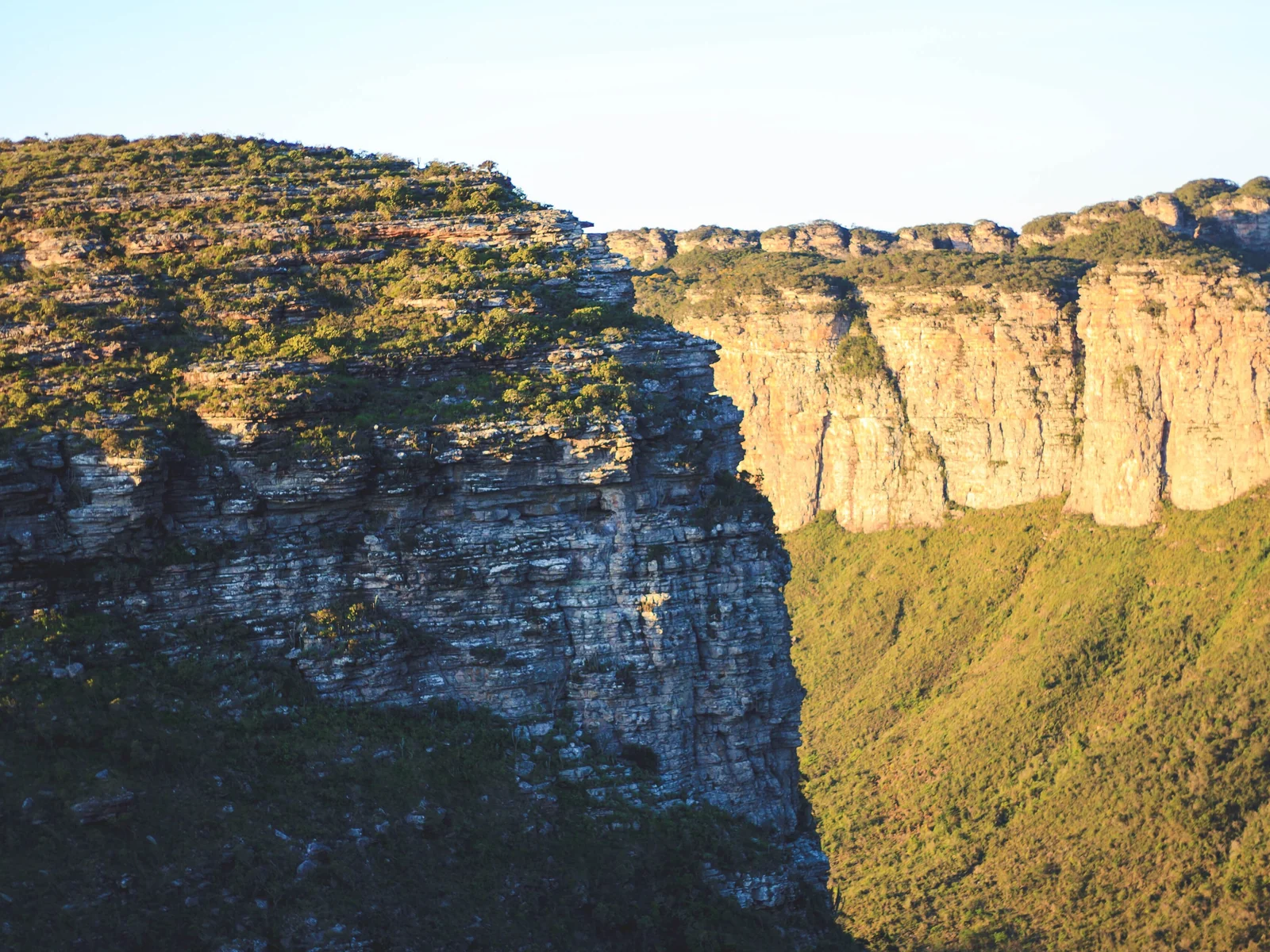
Lençóis grew from 1845, when diamonds were found in the hills; it became a town in 1856 and its historic centre was listed by IPHAN, the national heritage institute, in 1973. It is a small place of cobbled streets on a river, with guiding agencies, pousadas and restaurants, and it sits on the edge of the Parque Nacional da Chapada Diamantina, created in 1985 and covering about 152,000 hectares of tablelands, canyons and rivers. Our Chapada Diamantina guide goes deeper into each sight; this is how four nights fit together.
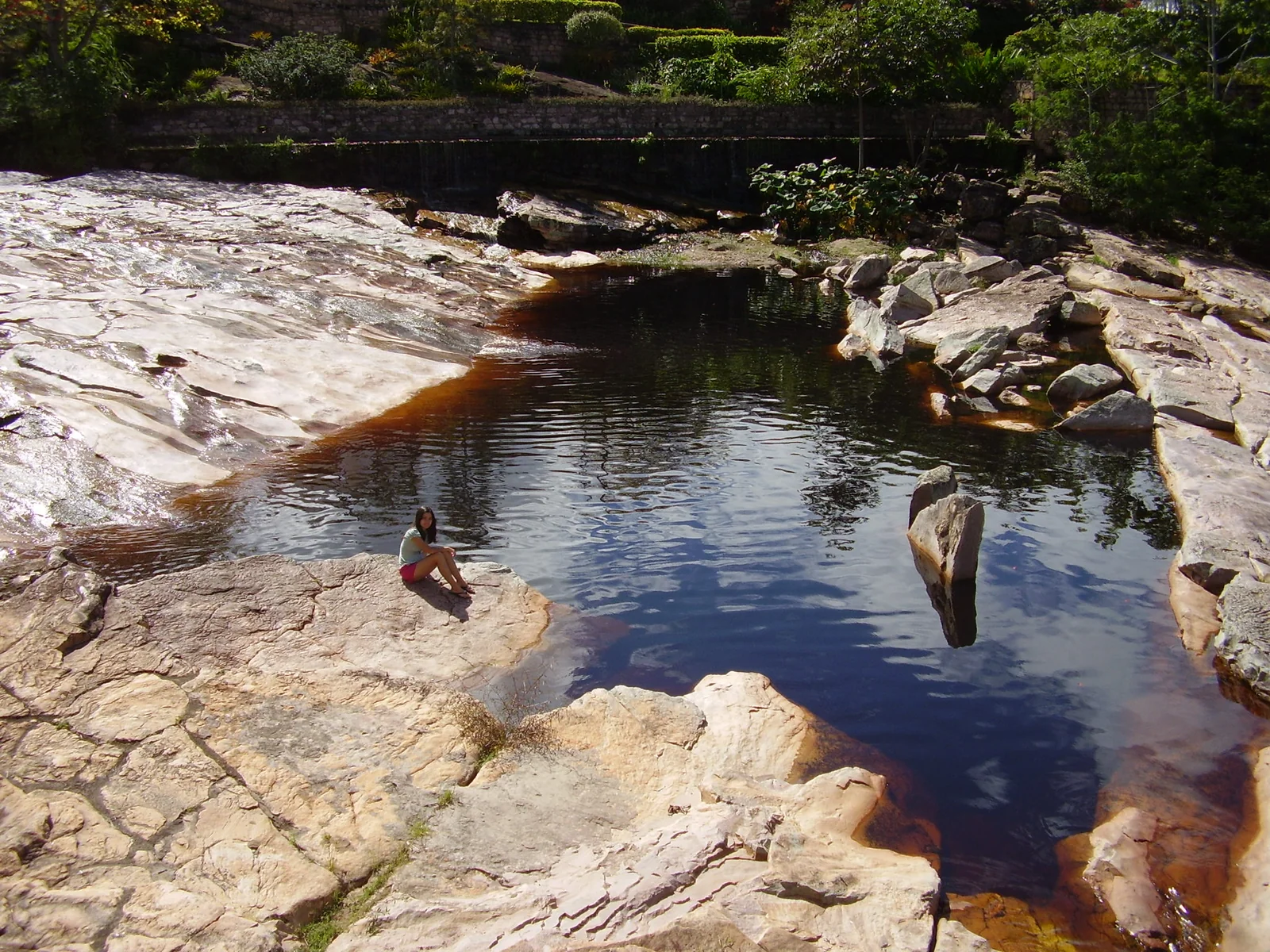
Day 5, arrival. If you took the morning bus, stretch your legs on the riverside walk out of town. The Ribeirão do Meio, a river pool about 3 km from the centre, is the classic first afternoon, and you can do it without a guide. Book your guide or tours for the next three days this evening; agencies line the streets around the centre.
Day 6, Pai Inácio and the caves. The standard first tour takes in the Gruta da Lapa Doce, a large dry cave about 1 km off the main road, the clear-water pools at Pratinha, and ends with a short, steep climb up the Morro do Pai Inácio, the flat-topped hill above the highway that is the region's signature sunset viewpoint.
Day 7, Cachoeira da Fumaça. The "smoke waterfall" drops about 340 metres in the Vale do Capão and counts among the tallest falls in Brazil. A trail of about 6 km climbs to the top of the falls, where you look over the edge as the water turns to spray. Go with a guide; it is a long day with a steep start.
Day 8, your choice. Use the last full day for the blue-water flooded caves to the south, a canoe trip on the wetlands, or simply a slower day of river pools close to town. Keep the evening light if you are catching the morning bus.
Day 9: back to Salvador
Take the morning bus back to Salvador, around six and a half hours, and spend the night in the city. It is a quiet day: a shower, laundry, a walk to a viewpoint and a last moqueca in the old town. If you are heading to Morro or Boipeba next, staying in the Cidade Alta puts you a short ride or the Elevador Lacerda away from the Terminal Náutico, the catamaran pier beside the Mercado Modelo.
Days 10 to 13: the coast
For the last stretch, pick one base and stay put. Each of the three choices suits a different trip.
| Base | Getting there from Salvador | Best for | Getting home |
|---|---|---|---|
| Itacaré | Ferry to Bom Despacho, then bus, 7 to 8 hours | Surf, forest trails, rafting, a cacao farm | Bus to Ilhéus (about 2 hours) and fly |
| Morro de São Paulo | Catamaran from the Terminal Náutico, about 2 hours 15 minutes | Easy island days, restaurants, a livelier evening | Catamaran back to Salvador |
| Boipeba | Via Morro or via Valença, 4 to 6 hours | Quiet beaches, natural pools, early nights | Boat and road back to Salvador |
Option A: Itacaré, and out via Ilhéus
Day 10. Take an early ferry-boat from the Terminal de São Joaquim to Bom Despacho on Itaparica; the crossing takes 60 to 80 minutes and costs R$ 7.20 on weekdays and R$ 9.50 on weekends and holidays (AGERBA fares from 6 March 2026). From the Bom Despacho bus station, Viação Cidade Sol and Águia Branca buses take 5 to 5 hours 40 minutes to Itacaré, at roughly R$ 85-110. A mid-morning bus arrives mid-afternoon.
Days 11 to 13. Spend one day on the town beaches, from the Concha along the Caminho das Praias to Tiririca and Ribeira; one on the four-beaches trail from Engenhoca to Itacarezinho; and one inland, rafting class III and IV rapids at Taboquinhas (about R$ 230 a person on a 2026 listing, minimum age 8) or touring the Vila Rosa cacao farm (from about R$ 225 with pickup). Our Itacaré guide has the details.
Day 14. Rota Transportes buses leave Itacaré roughly hourly for Ilhéus, about two hours and around R$ 25-40. Ilhéus Jorge Amado Airport has nonstops to São Paulo; Gol has flown a Saturday route to Rio's Galeão since June 2026, and Azul is adding extra Ilhéus-Congonhas flights for the December 2026 to February 2027 season. A Salvador-Ilhéus nonstop runs only some seasons (in 2026, Gol on Saturdays from 20 June to 1 August), so most travellers book an open-jaw ticket: into Salvador, home from Ilhéus.
Option B: Morro de São Paulo, back to Salvador
Day 10. The catamaran leaves from the Terminal Náutico beside the Mercado Modelo and crosses about 64 km to the island. Biotur's posted fare is R$ 172.51 from Salvador, including the port fee, and R$ 158.71 for the return (about US$ 33 and US$ 31). The companies quote about 2 hours 15 minutes; part of the route is open sea, so take a seasickness tablet before boarding if you are prone to it. When the sea is rough, operators switch to a land-and-boat route via Valença, which takes longer. Morro charges a visitor fee on arrival; our Morro de São Paulo guide has the current amount, the boat timetable and the beaches.
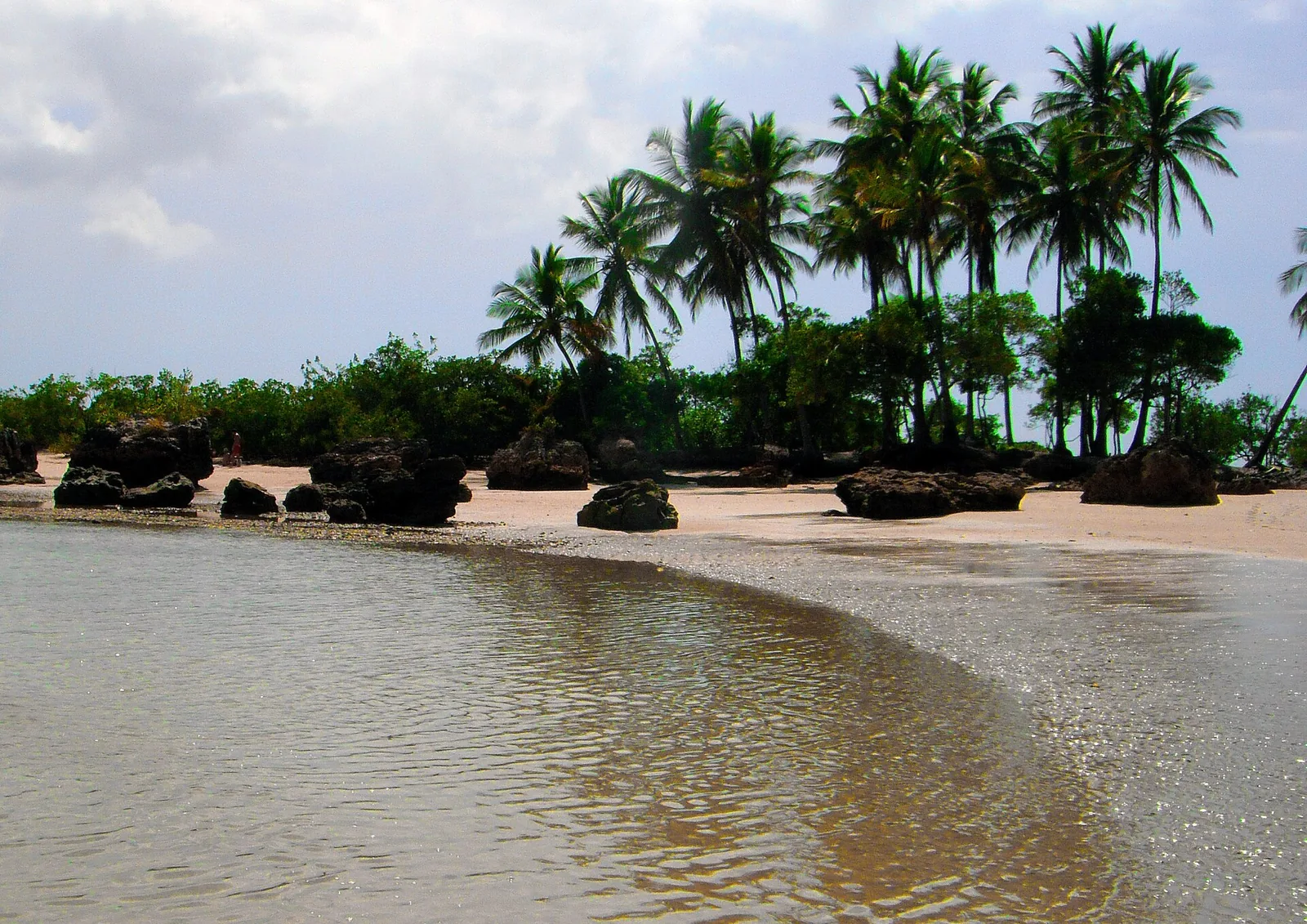
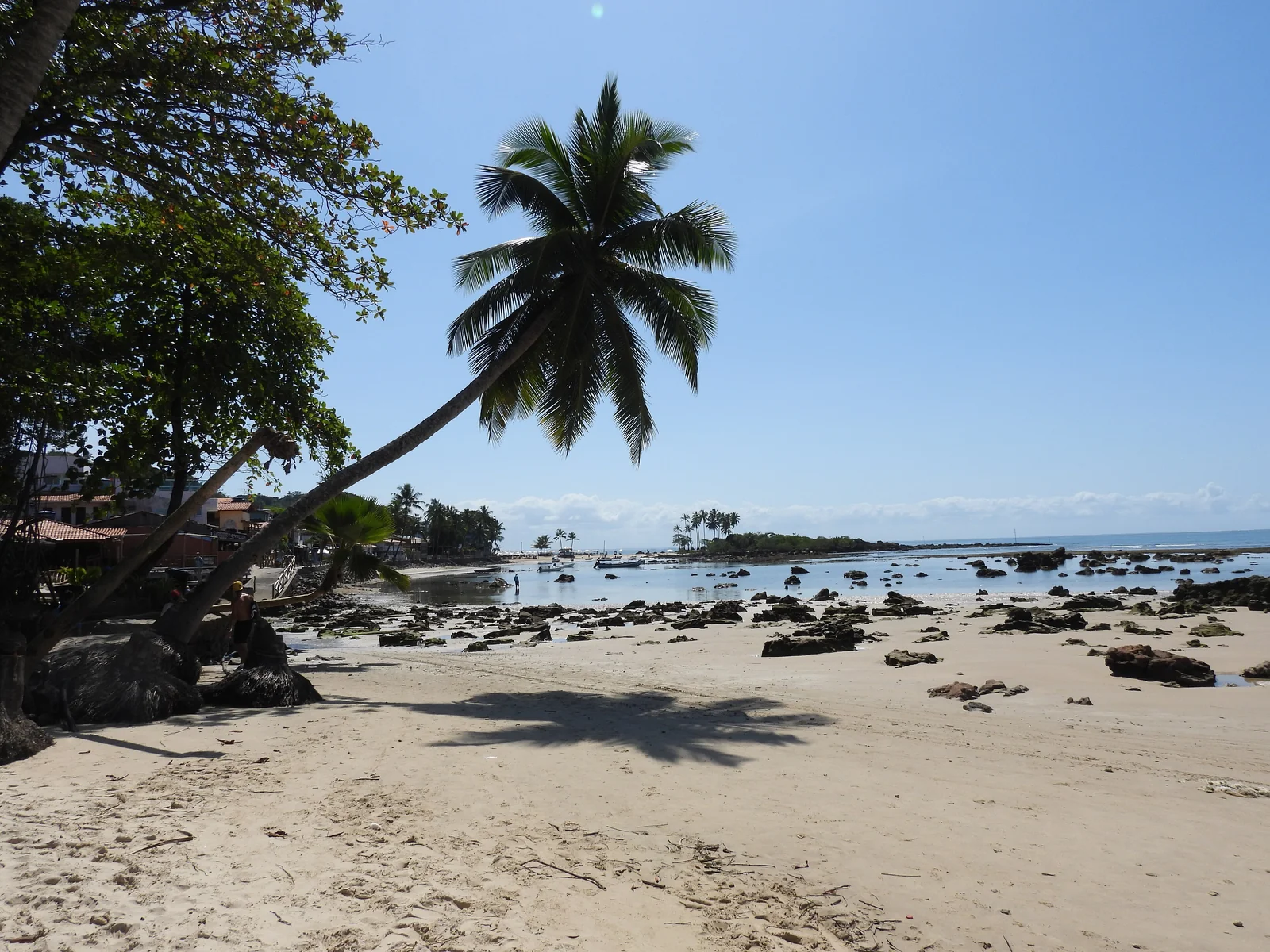
Days 11 to 13. Walk the numbered beaches, time the natural pools to low tide, and take a boat to Gamboa or around the island. If you want quieter sand for the last two nights, move on to Boipeba by 4x4 and boat.
Day 14. Take the catamaran back and fly home from Salvador. Biotur advises leaving at least six hours between the boat's departure from Morro and your flight, because bad weather can turn the trip into the slower land route.
Option C: Boipeba
Boipeba is the quieter island south of Morro, in the same municipality of Cairu, with beaches such as Boca da Barra, Tassimirim, Cueira, Moreré and Ponta dos Castelhanos. You reach it either from Morro by a 4x4 transfer and a short river crossing, or from Valença by fast launch, about an hour and a half, after the ferry and bus from Salvador. Count on four to six hours from Salvador either way and stay at least three nights; our Boipeba guide explains the routes and the natural pools at Moreré.
What it costs to get around
Transport is a modest part of the budget on this route, and most of it is regulated or listed online. These are 2026 prices where we could find them; check before you travel.
| Leg or activity | Approximate 2026 price | Notes |
|---|---|---|
| Elevador Lacerda | Free | Daily, hours vary by day of the week |
| Bus Salvador to Lençóis | R$ 150-200 (US$ 29-38) | About 6.5 hours, day and night buses |
| Ferry-boat Salvador to Bom Despacho | R$ 7.20 weekdays, R$ 9.50 weekends | Small car R$ 64.70 / R$ 91.70 |
| Bus Bom Despacho to Itacaré | R$ 85-110 (US$ 16-21) | 5 to 5.5 hours |
| Catamaran Salvador to Morro | R$ 172.51 (US$ 33) | Biotur posted fare, port fee included |
| Bus Itacaré to Ilhéus | R$ 25-40 (US$ 5-8) | About 2 hours, roughly hourly |
| Rafting near Itacaré | About R$ 230 (US$ 44) | Minimum age 8 |
| Vila Rosa cacao farm tour | From about R$ 225 (US$ 43) | With hotel pickup |
| TAMAR, Praia do Forte | R$ 54 adult, family R$ 150 | Tuesday to Sunday, 11:00 to 17:00 |
For daily budgets in Salvador, see what Salvador costs; for cards, Pix and how much cash to carry on the islands and in Lençóis, see money in Brazil.
What to book ahead
- Before you fly: your Salvador nights, the open-jaw flights if you end in Ilhéus, and the Lençóis flight if Azul is flying on your days.
- A few days ahead: the Lençóis bus in busy periods, and the return catamaran from Morro in high season, when the afternoon boats fill first.
- In Lençóis on arrival: guides and day tours for the Chapada.
- If you drive to Itacaré: a Hora Marcada slot on the ferry, bookable up to 30 days ahead; on the 7 September holiday weekend in 2026 the car queue passed three hours, while foot passengers moved freely.
The 10-day version
With ten days, keep all three flavours and trim each one:
- Days 1 to 3, Salvador: the old town, Bonfim and Santo Antônio.
- Days 4 to 6, Lençóis: morning bus out on day 4, then Pai Inácio and the caves, then Fumaça or the river pools.
- Day 7, Salvador: bus back.
- Days 8 to 9, Morro de São Paulo: catamaran out, two nights on the island.
- Day 10: catamaran back and fly home, with the six-hour margin.
If hiking is not your thing, swap the highlands for more coast: four nights in Salvador, two on Morro or Boipeba, three in Itacaré, and the flight home from Ilhéus.
The version with children
Children manage this trip well if you cut the number of long transfers and plan each day around one main thing. Our Salvador with kids guide covers the city with strollers and cobbles.
- Five nights in Salvador, including a day at Praia do Forte, about 80 km north. Its TAMAR sea turtle centre opens Tuesday to Sunday from 11:00 to 17:00; tickets are R$ 54 for adults, R$ 27 from age 6, free under 5, and R$ 150 for a family of two adults and two children. In nesting season, hatchlings are walked to the sea at 17:00 on the beach beside the centre.
- Three nights in Lençóis, ideally on the flight if it fits your dates. Choose the short outings: the Ribeirão do Meio near town, the caves, and the Pai Inácio climb at sunset.
- Four nights on the coast. In Itacaré, the Concha is the calm town beach and Havaizinho has calmer water on the trail; rafting takes children from age 8. On Morro, plan the natural pools around low tide.
On the catamaran, sit low and near the middle and give a seasickness remedy in advance if your children are prone to it.
When to go
Each part of the trip has its own weather, and the INMET climate normals show where they line up.
- Salvador is wettest from April to June, with about 285 mm in April and 302 mm in May, and driest in December and January, at about 63 and 77 mm. September to November sit around 90 to 110 mm.
- Lençóis is driest from May to September, with only about 26 mm in September, and wettest in March and November. Nights are coolest in July.
- The southern coast, measured at Ilhéus, gets rain in every month, with the least in August and September.
Put together, September and October suit the whole loop: Salvador is drying out, the Chapada is still in its dry season, the coast is at its driest, and humpback whales pass along the coast until October. December to February are the driest months in the city and bring summer festivals, but they are wetter in the Chapada and the busiest weeks on the coast. In 2027, Salvador's Lavagem do Bonfim falls on 14 January, the Festa de Iemanjá on 2 February and Carnival's main days on 4 to 9 February. July is Brazil's school holiday, with cool, dry highland days. Our best time to visit guide goes month by month.
Packing pointers
This route asks for three wardrobes in one bag. Bring walking shoes or light boots that are already broken in for the Chapada trails, sandals for the coast, one warm layer for highland nights, a light rain jacket, quick-dry clothes and a swimsuit you can hike in, sun protection, insect repellent and a refillable bottle. Add seasickness tablets if you are taking the catamaran, a small dry bag for boat days, and some cash for boatmen and beach kiosks. Our packing list has the full checklist, and our safety guide covers sensible habits for the city and for trails.
Where to start and finish
Because Salvador is the hub for both the highlands and the islands, a central base saves time on every transfer. Our four suites sit in the Cidade Alta, a few minutes on foot from the Elevador Lacerda and the Pelourinho, with the catamaran pier at the foot of the lift. They are booked on Airbnb, where guests message the host through the platform, and they suit both the first four nights and the night between the Chapada and the coast.
Frequently asked questions
Is two weeks enough for Bahia?
Two weeks covers Salvador, the Chapada Diamantina and one coastal base at a comfortable pace, with four nights in each and one night in Salvador between them. It does not cover the whole state; the far south around Porto Seguro and the north coast need a separate trip.
How do you get from Salvador to the Chapada Diamantina?
By bus, with Rápido Federal, in about 6 hours 10 minutes to 6 hours 40 minutes for roughly R$ 150-200 in 2026; there are day and night departures. Azul has also flown to Lençóis twice a week, on Thursdays and Sundays, but check the current schedule before relying on it.
Should I choose Itacaré, Morro de São Paulo or Boipeba?
Itacaré for surf, forest trails and rafting, with an easy flight home from Ilhéus. Morro for the shortest trip from Salvador and a livelier island. Boipeba for quiet beaches and slow days, at the price of a longer journey.
Can I go from Lençóis directly to the coast?
It is simpler to return to Salvador, which is where the bus from Lençóis runs and where the boats and coast buses start. A night in the city between the two costs little and keeps both transfers manageable.
Do I need a car for this itinerary?
No. Buses, boats and the ferry cover every leg, and guided tours handle the Chapada sights. A car helps mainly for families in the Chapada and for exploring the coast road around Itacaré.
What is the best month for two weeks in Bahia?
September and October, when Salvador is drying out, the Chapada is still dry and the southern coast has its least rain. Whale season also runs until October.
Can I fly home from Ilhéus instead of Salvador?
Yes, and if you end in Itacaré it saves a long trip back. Ilhéus has nonstops to São Paulo and a Saturday Gol flight to Rio, so book an open-jaw ticket.
Sources
- CheckMyBus: Salvador to Lençóis (operator, departures, ride times, fares; checked Oct 2026).
- Viaje Guanabara: Rápido Federal (group ownership and bus classes; in Portuguese; checked Oct 2026).
- Wikipedia: Terminal Rodoviário de Salvador (move to Águas Claras on 20 Jan 2026; in Portuguese; checked Oct 2026).
- Wikipedia: Horácio de Mattos Airport (Azul service, distance to Lençóis, 2025 concession; checked Oct 2026).
- Wikipedia: Aeroporto de Lençóis (two weekly Azul flights, Thursdays and Sundays; in Portuguese; checked Oct 2026).
- Wikipedia: Lençóis (distance, history, IPHAN listing, INMET climate; in Portuguese; checked Oct 2026).
- Wikipedia: Chapada Diamantina National Park (1985 decree, area; checked Oct 2026).
- Wikipedia: Cachoeira da Fumaça (height, trail, guide advice; in Portuguese; checked Oct 2026).
- Wikivoyage: Lençóis (sights near town, 2022 tour prices; checked Oct 2026).
- Biotur: Horários e tarifas (catamaran fares, distance, six-hour flight margin; in Portuguese; checked Oct 2026).
- Wikivoyage: Morro de São Paulo (crossing time, seasickness advice, land route; checked Oct 2026).
- Wikivoyage: Boipeba (routes from Valença and Morro; checked Oct 2026).
- AGERBA: Resolução nº 11/2026 (ferry fares from 6 March 2026; in Portuguese; checked Oct 2026).
- Internacional Travessias: ferry-boat (crossing of 60 to 80 minutes; in Portuguese; checked Oct 2026).
- Correio: Fila do ferry-boat passa de três horas (4 Sep 2026 queues, Hora Marcada; in Portuguese; checked Oct 2026).
- CheckMyBus: Itaparica to Itacaré (operators and ride times; checked Oct 2026).
- CheckMyBus: Itacaré to Ilhéus (Rota buses and fares; checked Oct 2026).
- Pontos pra Voar: GOL rota Rio-Ilhéus e voos sazonais para Salvador (30 Jun 2026; in Portuguese; checked Oct 2026).
- Correio: Azul anuncia 780 voos extras na Bahia (27 Sep 2026; in Portuguese; checked Oct 2026).
- Civitatis: De Contas River Rafting and Vila Rosa Cacao Farm Tour (2026 prices; checked Oct 2026).
- Projeto TAMAR: Centro de Visitantes Praia do Forte (hours and tickets; in Portuguese; checked Oct 2026).
- Wikipedia: Salvador, Bahia (INMET 1991-2020 rainfall; checked Oct 2026).
- Wikipedia: Ilhéus (INMET rainfall, airport; checked Oct 2026).
- Wikipedia: Pelourinho (UNESCO 1985, churches; checked Oct 2026).
Salvador, in images
Photographs of the neighborhood, restaurant, and beach featured in this guide, with credit to each photographer.
Ready to discover Salvador?
Book one of the four Via Avantgarde suites in the Pelourinho — and receive the complete guides with recommendations for your stay.