Women's World Cup 2027 in Salvador matches, tickets and planning a trip
Women's World Cup 2027 in Salvador: the seven Arena Fonte Nova matches (25 June to 12 July), tickets, the Fan Festival by the Elevador Lacerda, metro, weather and where to stay.
The essentials in 30 seconds
The Women's World Cup 2027 in Salvador means seven matches at the Arena Fonte Nova between 25 June and 12 July 2027: six group games and one round-of-16 tie. The tournament runs from 24 June to 25 July across eight Brazilian cities, with 32 teams and 64 matches, and Brazil play their group games in Rio, São Paulo and Brasília, not here. The teams coming to Salvador will be known after the final draw in Rio on 11 December 2026, and tickets are not on sale yet: FIFA has only opened a register of interest. The city has chosen the square in front of the Mercado Modelo, at the foot of the Elevador Lacerda, for its FIFA Fan Festival. Expect warm, showery winter weather, São João on the opening day and Bahia's Dois de Julho holiday on a Salvador match day.
The tournament at a glance
Brazil 2027 is the tenth Women's World Cup, and the second and last with 32 teams: the 2031 edition grows to 48. Brazil won the hosting vote at the FIFA Congress in Bangkok on 17 May 2024, beating the joint bid of Belgium, Germany and the Netherlands by 119 votes to 78. Spain are the defending champions. The opening match, with Brazil, is at the Maracanã in Rio de Janeiro on Thursday 24 June 2027, and the same stadium stages the final on Sunday 25 July.
FIFA published the full match schedule on 20 August 2026 in Zurich. Every host city gets at least seven matches, including at least one knockout game. Salvador, Brasília, Porto Alegre and Recife host matches up to the round of 16; Belo Horizonte, Fortaleza, Rio and São Paulo carry on into the quarter-finals; São Paulo and Rio take one semi-final each, and São Paulo also has the bronze final.
| Host city | Stadium (FIFA name) | Last stage played there |
|---|---|---|
| Rio de Janeiro | Estádio do Maracanã | Opening match, semi-final (21 July), final (25 July) |
| São Paulo | Arena Itaquera | Semi-final (20 July), bronze final (24 July) |
| Belo Horizonte | Estádio Mineirão | Quarter-final (16 July) |
| Fortaleza | Arena Castelão | Quarter-final (17 July) |
| Brasília | Estádio Nacional | Round of 16 |
| Porto Alegre | Estádio Beira-Rio | Round of 16 |
| Recife | Arena de Pernambuco | Round of 16 |
| Salvador | Arena Fonte Nova | Round of 16 (12 July) |
Brazil arrive as South American champions: they beat Colombia on penalties in the 2025 Copa América final for their ninth continental title, a year after taking Olympic silver in 2024. Coach Arthur Elias will name his World Cup squad closer to the tournament. Marta, the Women's World Cup's all-time top scorer with 17 goals, retired from the national team in 2024, came back for the 2025 Copa América and scored a late equaliser in the final; she turns 41 in February 2027.
Salvador's seven matches
FIFA's schedule, dated 17 August 2026, gives the Arena Fonte Nova these dates. For now each game is a group slot, because the teams are only drawn in December.
| Date (2027) | Day | FIFA match no. | Stage |
|---|---|---|---|
| 25 June | Friday | 2 | Group A |
| 27 June | Sunday | 11 | Group F |
| 29 June | Tuesday | 16 | Group H |
| 2 July | Friday | 26 | Group E |
| 4 July | Sunday | 33 | Group A |
| 7 July | Wednesday | 43 | Group F |
| 12 July | Monday | 54 | Round of 16: winner of Group G v runner-up of Group H |
A few things in that table are worth knowing before you plan. Group A is Brazil's group, and it comes to Salvador twice: on 25 June and again on 4 July, the day Brazil play their last group game in Brasília. Group F also visits twice, on 27 June and 7 July. Because Brazil sit in Group A and the Salvador knockout game is drawn from Groups G and H, Brazil cannot play in Salvador under the current schedule. After the last group game here on 7 July the stadium has four clear days, 8 to 11 July, and Friday 9 July is the tournament's rest day, with no matches anywhere in Brazil. The round of 16 as a whole runs from 10 to 13 July.
What is still to be decided
The final draw takes place on Friday 11 December 2026 at the Museum of Modern Art of Rio de Janeiro (MAM Rio), in Flamengo Park on Guanabara Bay. FIFA expects more than 1,000 guests and will confirm the time of the live show later. The 32 teams are split into eight groups of four, and the draw includes slots for teams still in the play-off tournament, which is played in February 2027.
After the draw, FIFA will publish an updated schedule that allocates the group-stage fixtures to host cities and confirms kick-off times, and the current PDF carries the words "subject to change". Treat Salvador's dates as the plan, expect team names and kick-off times in December, and keep your bookings flexible until then. Groups move around the country: Group A, for instance, plays in Rio, Salvador, Recife, São Paulo and Brasília.
Tickets: what FIFA has announced so far
As of late October 2026, tickets for the Women's World Cup are not on sale. FIFA has opened a register of interest at FIFA.com/tickets, with a separate list for hospitality packages, and by 25 August 2026 more than 800,000 people had signed up. Registering is free and puts you on the list for sale announcements; it does not reserve a seat or fix a price. FIFA has not yet published sales phases, dates or price categories.
Two parts of the picture are already known. A bill approved by Brazil's Congress in 2026 for the tournament lets FIFA set prices, including dynamic pricing that moves with demand, as long as the price is shown clearly at purchase; it allows digital tickets in the buyer's name and keeps Brazil's existing half-price rights (meia-entrada) for students, seniors and low-income young people. And Brazil's 2024 bid book gave estimated prices. They are a guide to the scale, not FIFA's price list:
| Match type | Estimate in the 2024 bid book |
|---|---|
| Group stage and bronze final | about R$90-200 (US$17-38) |
| Opening match | about R$115-270 (US$22-52) |
| Final | about R$190-440 (US$37-84) |
| Hospitality package, group stage | from about R$1,200 (US$230) |
The Arena Fonte Nova
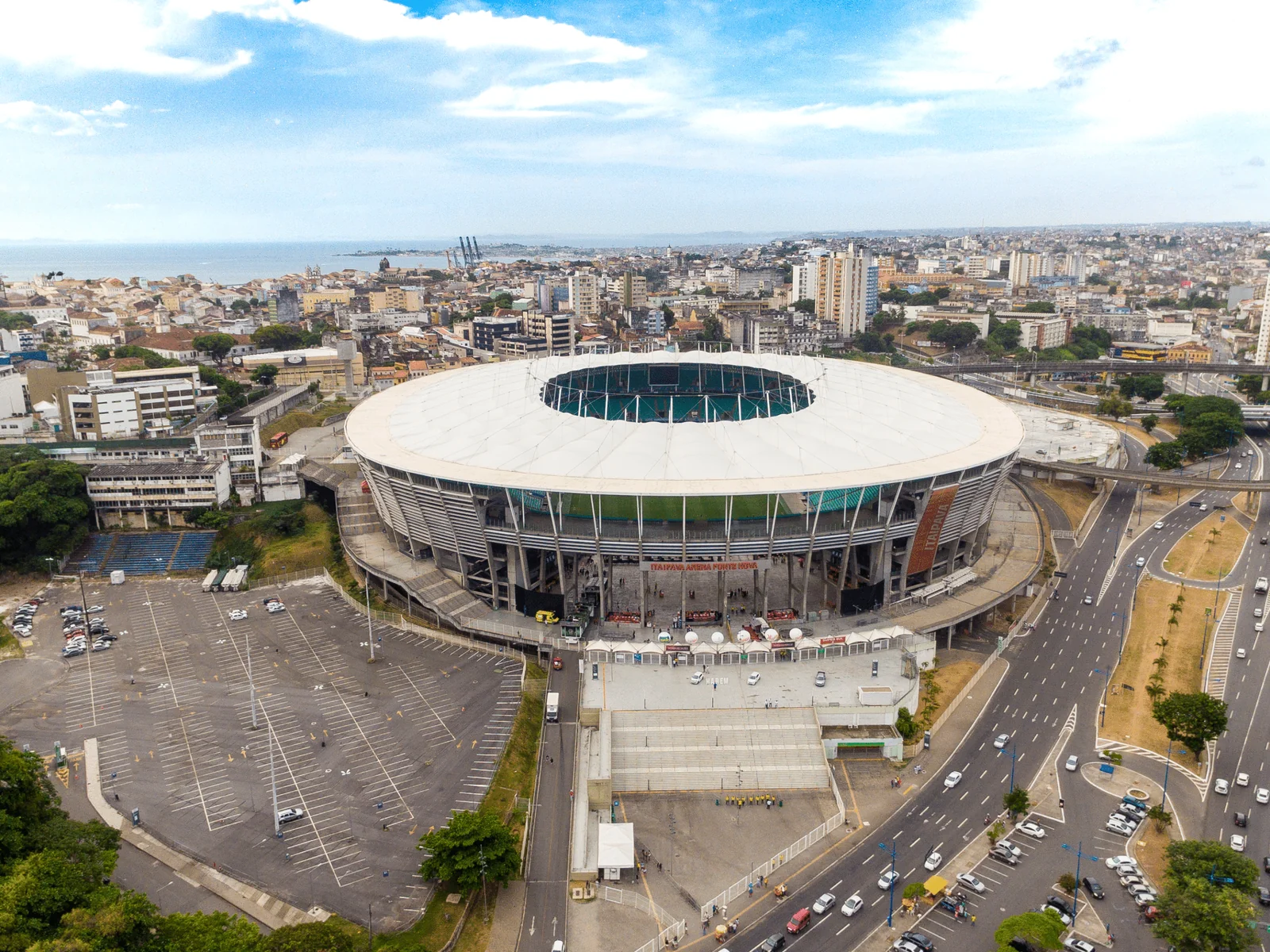
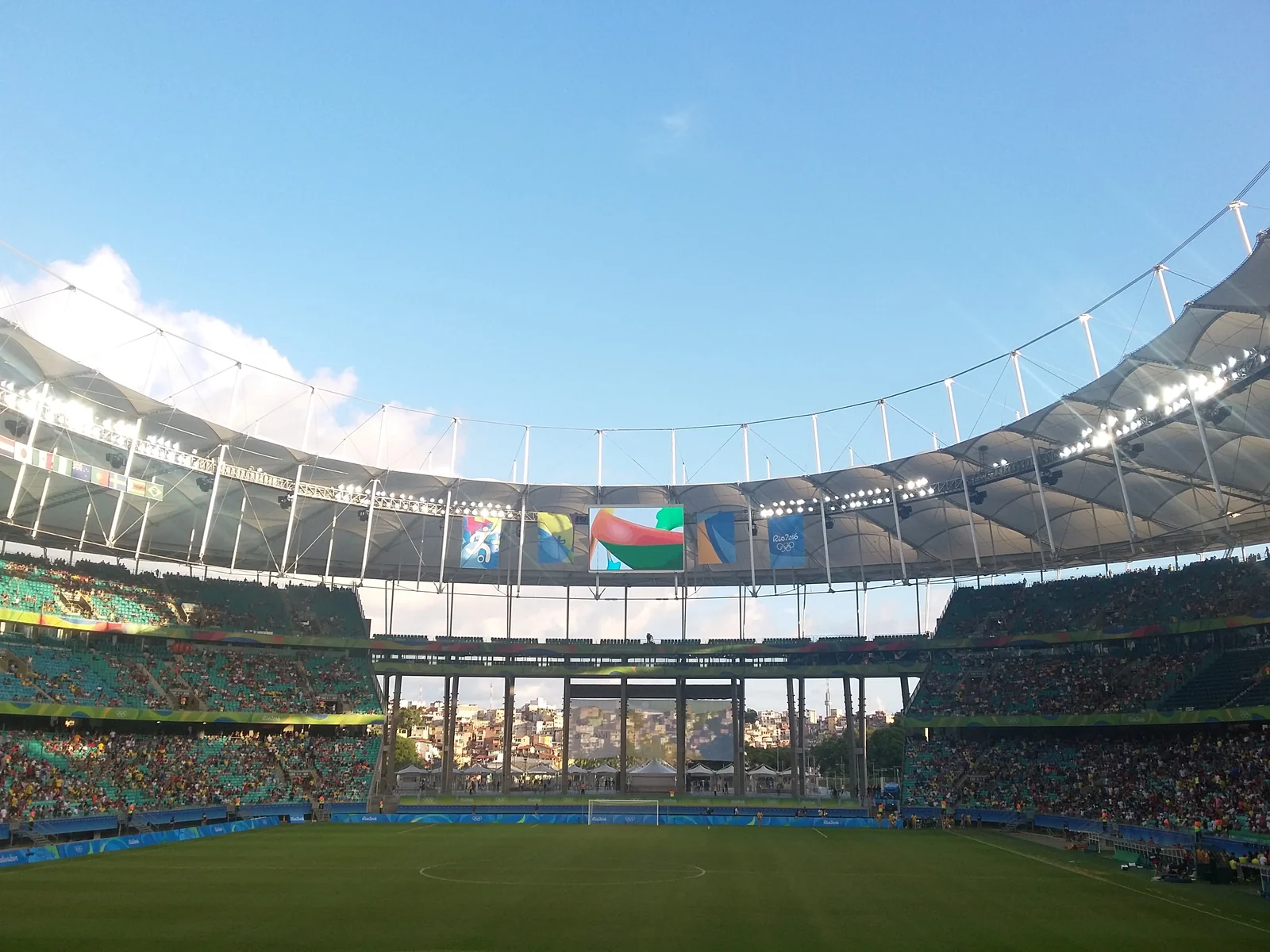
The stadium sits in a hollow in the Nazaré district, on Ladeira da Fonte das Pedras, with its open end facing the Dique do Tororó lake. It belongs to the State of Bahia, is home to Esporte Clube Bahia and seats about 48,000, and a membrane roof covers every seat, which matters in a rainy-season tournament. The old Fonte Nova opened in 1951 and closed after part of a stand collapsed in 2007, killing seven people; it was demolished in 2010, and the new arena opened in April 2013. Local signs put a sponsor's name in front of "Arena Fonte Nova"; FIFA's schedule uses the plain name.
It has hosted big tournaments before: three games of the 2013 Confederations Cup, six at the 2014 World Cup (among them Spain 1-5 Netherlands), Olympic football in 2016, including the women's quarter-final Germany 1-0 China, and a 2019 Copa América quarter-final.
Two local touches are planned for 2027. Bahia's baianas de acarajé will be allowed to sell inside the stadium during the tournament, by agreement with FIFA, and the state is preparing a Sala Lilás, a support room for women, inside the arena, alongside new family bathrooms. For the city's clubs and how to see a game the rest of the year, see our football in Salvador guide.
Getting to the stadium
By metro. Line 1 is the match-day route. Get off at Campo da Pólvora, one stop from the Lapa terminus, which the operator and the state have used as the arena's station at past games; the stadium is a short walk away. From the airport, take Line 2 to Acesso Norte and change to Line 1 towards Lapa. A ride costs R$4.10 (about US$0.80) and the metro runs daily from 5:00 to midnight. For big games the operator adds trains and staff and keeps Campo da Pólvora open for boarding after the final whistle: on the night Brazil played here in the 2019 Copa América, boarding stayed open until 00:30.
On foot from the Cidade Alta. The stadium is about 1 km in a straight line from the Terreiro de Jesus and the Pelourinho, and a little more from the Praça da Sé and the top of the Elevador Lacerda. The old city stands on a ridge and the arena sits in a valley, so allow 20 to 30 minutes on foot. The city has said it will mark cultural routes linking the stadium with the Fan Festival in the Comércio. Walking down with the crowd before a game is easy; after an evening match, the metro or an app car is the simpler way home, and our safety guide covers moving around at night.
By car. At the 2019 Copa América the state security department set a perimeter around the arena, and taxis, app cars and private cars could only get so far. Expect something similar in 2027 and leave extra time. The city is also planning a BRT bus line to the Fonte Nova and special traffic arrangements for match days, with details due closer to June. Our getting around guide explains the metro, buses and apps.
The FIFA Fan Festival in Salvador
In June 2026 the city announced that Salvador's FIFA Fan Festival will be set up in the Praça Maria Felipa, in the Comércio: the square in front of the Mercado Modelo, at the foot of the Elevador Lacerda. It will show the matches on big screens alongside music and cultural programming. Alexandre Reis, the city's secretary of culture and tourism, said the square was chosen for its history and for being close to the city's cultural venues. Dates and opening hours have not been published yet.
Many locals still call it the Praça Cairu. It was the Praça Visconde de Cairu until 2024, when it was renamed for Maria Felipa, the Itaparica shellfish gatherer who fought in Bahia's war of independence, and a 2026 bill in the city council proposes changing the name back. Either name will get you there. From the Cidade Alta, the free Elevador Lacerda drops you straight into the square. It runs until 21:30 on weekdays and Saturdays and until 21:00 on Sundays and holidays, so after a late evening at the Fan Festival, plan on an app car back up the hill. Our guides to the Elevador Lacerda and the Mercado Modelo cover both.
Salvador in late June and July
The tournament falls in Salvador's winter, in the second half of the rainy season. INMET's 1991-2020 averages give June about 238 mm of rain over 19 days and July about 194 mm over 18 days, with daytime highs around 27°C, nights near 21-22°C and humidity around 84%. The rain usually leaves dry spells: July averages about 170 hours of sunshine, against 145 in June. The roofed stands keep you dry during the game. A light rain jacket and shoes that grip on wet cobbles are the two things to pack; see our packing list and our rainy-day guide.
Two festivals bracket the group stage. São João falls on Thursday 24 June, the tournament's opening day, with its big night on the 23rd, so fans arriving for the first Salvador match on the 25th land in the festival's last hours. If you want to add a São João town in the interior, book transport and beds early; our São João guide covers the stages and the trips.
Friday 2 July is Dois de Julho, Bahia's independence day and a public holiday in the state, and it is also a match day at the Fonte Nova (Group E). The civic parade from the Lapinha to the Campo Grande crosses the old city during the day, so watch it near the Pelourinho in the morning and set off for the stadium early, with roads closed for both events. Our Dois de Julho guide explains the parade and its history.
Flights, arrival and visas
Salvador's airport (SSA) takes international flights and frequent domestic connections, and our flights to Salvador guide lists the routes. Rio and Brasília are about two hours away by air, which matters if you follow a team around the country. From the terminal, a free shuttle runs to the Aeroporto metro station, or an app car takes you into town; our airport guide has the details.
Visas depend on your passport. Holders of UK, Irish, EU and most South American passports visit visa-free for up to 90 days. US, Canadian and Australian citizens have needed an e-visa again since 10 April 2025, so apply online well before you fly. Our Brazil visa guide walks through it.
Where to stay for the matches
The stadium and the Fan Festival are both on the old-city side of Salvador, which makes the historic centre the most practical base for this trip. The beach districts work too, with an app car on match days. Distances below are straight lines; streets add a little.
| Area | To the Arena Fonte Nova | To the Fan Festival | Suits |
|---|---|---|---|
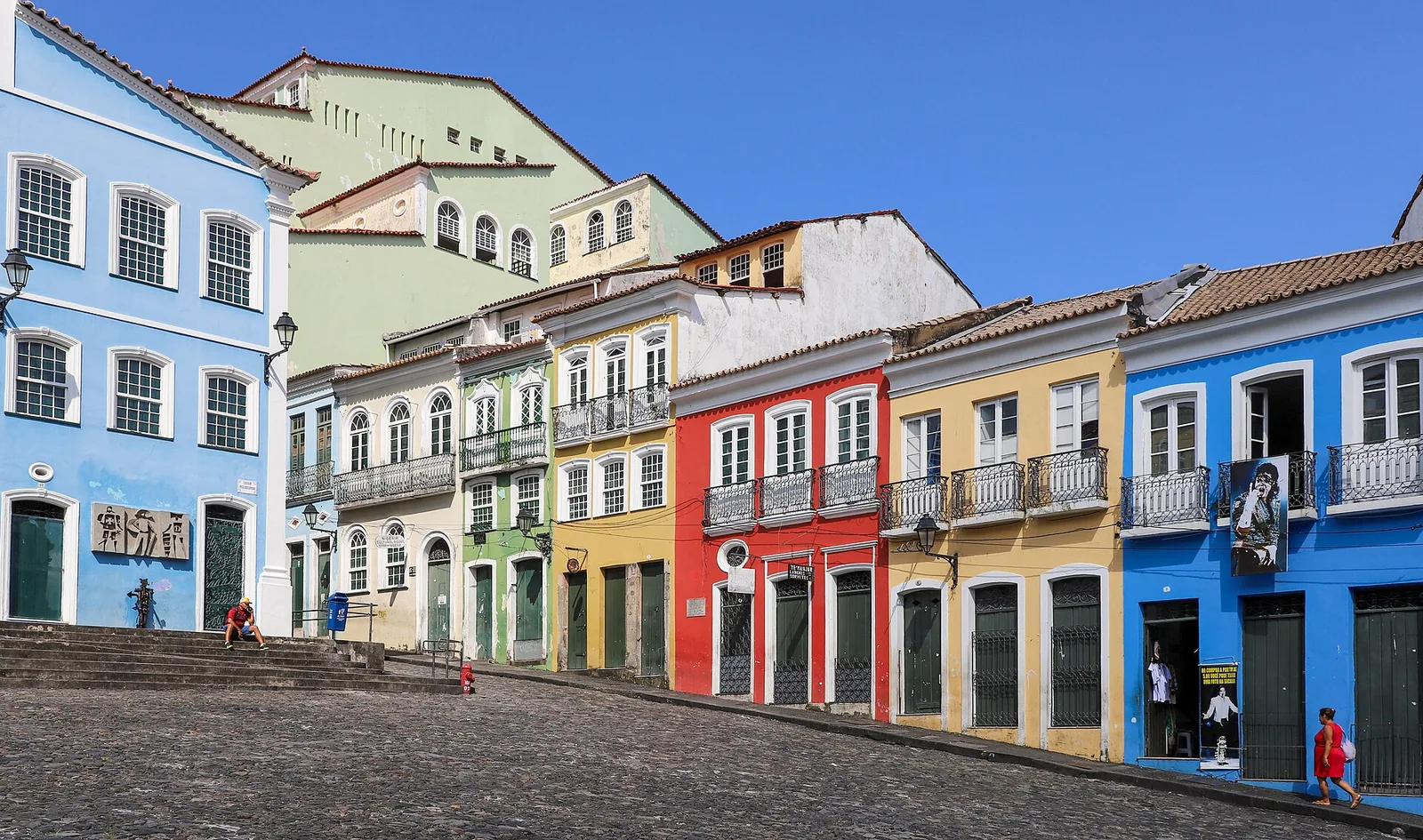
| Pelourinho and Praça da Sé (Cidade Alta) | about 1 km | under 1 km, or the elevator | walking to both; São João and Dois de Julho outside the door |
| Santo Antônio Além do Carmo | about 2 km | about 1.5 km | quieter evenings, bay views |
| Barra | about 4 km | about 4 km | beach days between matches |
| Rio Vermelho | about 4 km | about 5 km | bars and restaurants late at night |
Our where to stay in Salvador guide compares the neighbourhoods in depth, and the map of Salvador shows the stadium, the elevator and the Mercado Modelo together.
When to book
Salvador fills up for big football. In June 2014 the city received more than 825,000 tourists, according to its culture and tourism office, and during the 2013 Confederations Cup Brazilian visitors stayed 6.4 days on average and spent more here than in the other host cities. A sensible order:
- Now: register your interest at FIFA.com/tickets, check whether you need an e-visa, and book a stay you can cancel for the match dates you want.
- 11 December 2026: the draw tells you which groups and teams are in Salvador; FIFA then publishes the updated schedule with kick-off times.
- February 2027: the play-off tournament settles the last places.
- When FIFA opens sales: buy match tickets, then firm up flights and lodging around them.
Between matches
With a match every two or three days, you will have whole days free. Start with the Pelourinho, the churches and the museums, all good on a showery afternoon. On a clear day, take a boat on the Bay of All Saints or spend the day in Praia do Forte. The four clear days between the 7 July group game and the 12 July round-of-16 tie are long enough for an island break on Morro de São Paulo or a culture day in Cachoeira. For evenings, our Salvador at night guide has the bars and music, and things to do in Salvador has the full list.
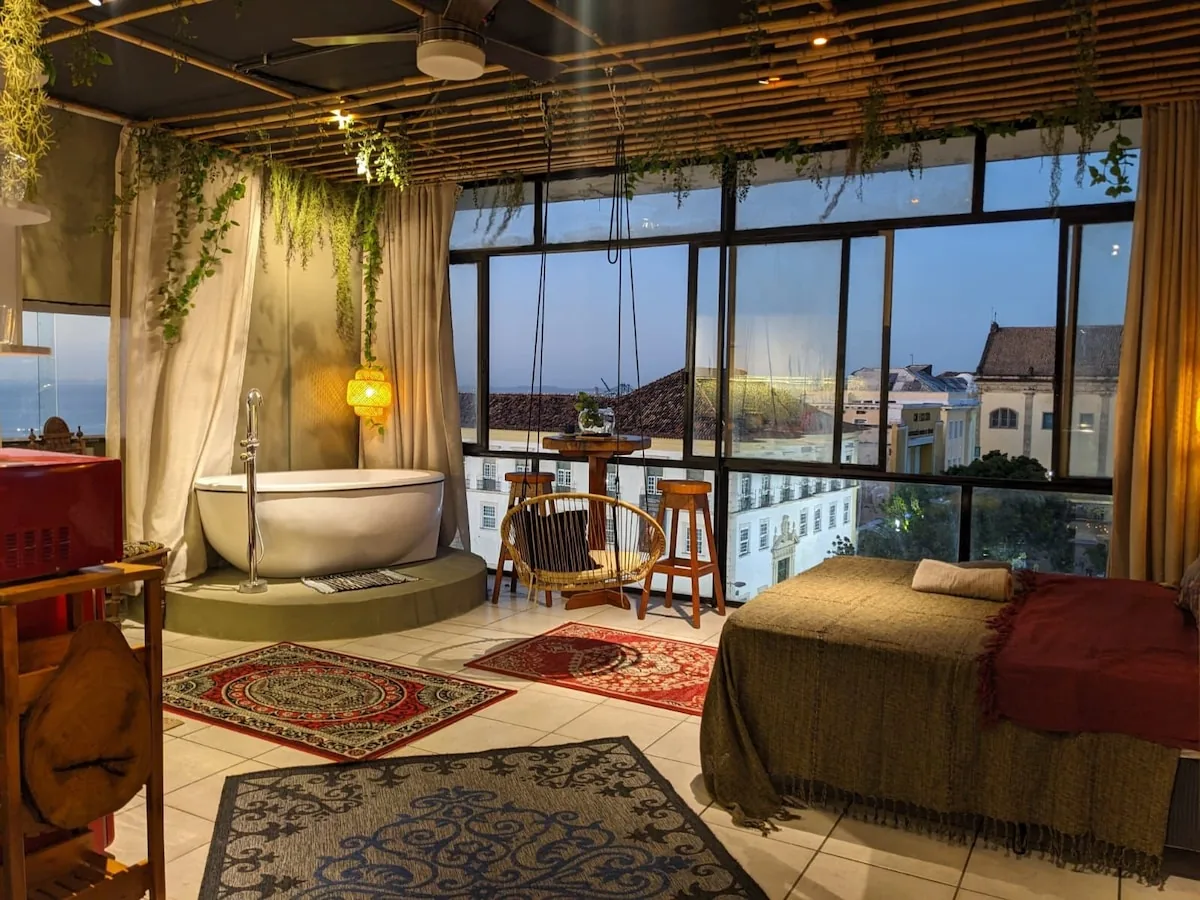
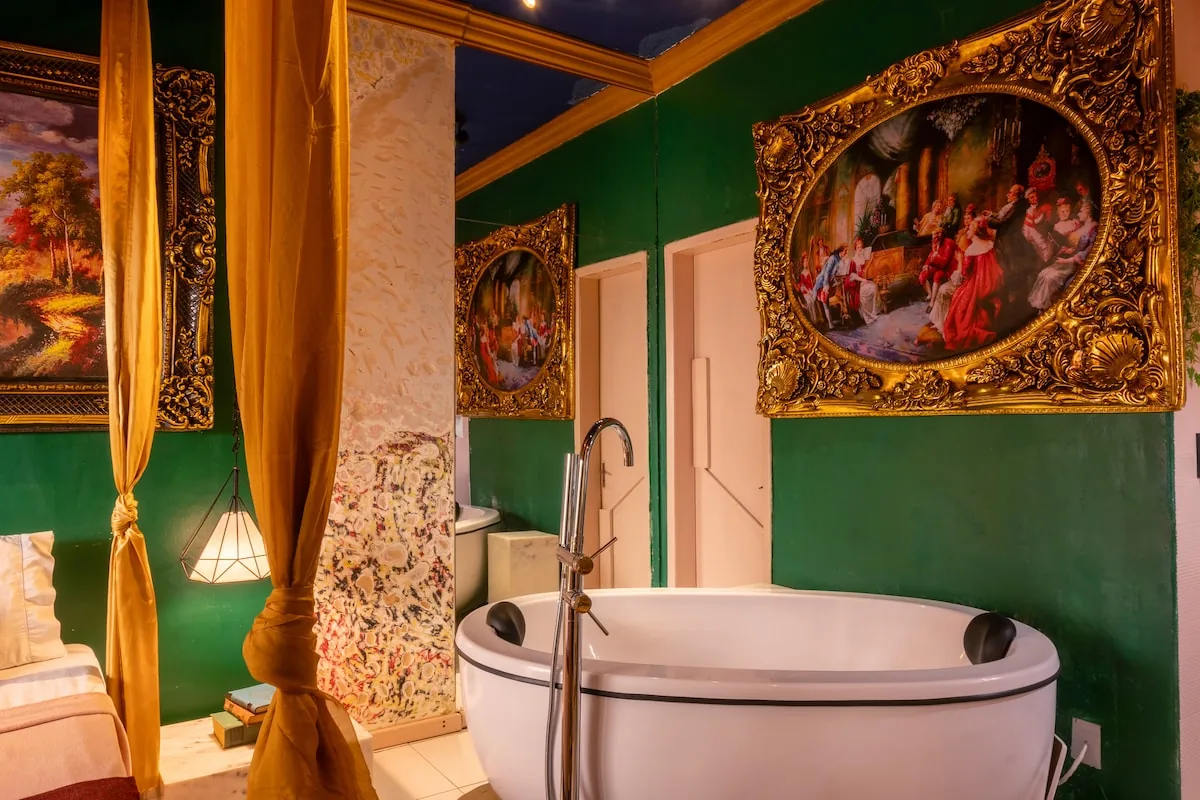
Our four suites are in the Cidade Alta, a few minutes on foot from the Elevador Lacerda and the Pelourinho, so the Fan Festival is one elevator ride away and the Fonte Nova a walk across the old city; the Historic Loft, a studio beside the elevator, is the closest of all. They are booked on Airbnb, and you can see our four suites here.
Frequently asked questions
How many Women's World Cup matches are in Salvador?
Seven, all at the Arena Fonte Nova: group games on 25, 27 and 29 June and on 2, 4 and 7 July 2027, and a round-of-16 tie on Monday 12 July between the winner of Group G and the runner-up of Group H. Salvador does not host quarter-finals or later rounds.
Will Brazil play in Salvador?
Not under the current schedule. Brazil's group games are in Rio on 24 June, São Paulo on 29 June and Brasília on 4 July, and Salvador's knockout game is drawn from Groups G and H, while Brazil are in Group A. Salvador does host two other Group A games, on 25 June and 4 July.
When do Women's World Cup 2027 tickets go on sale, and how much will they cost?
FIFA has not announced sale dates or prices yet; as of October 2026 you can only register your interest at FIFA.com/tickets. Brazil's 2024 bid book estimated group-stage seats at roughly R$90-200 (US$17-38), but FIFA sets the real prices and may use dynamic pricing.
When will we know which teams play in Salvador?
After the final draw on 11 December 2026 at the Museum of Modern Art in Rio. FIFA then publishes an updated schedule with kick-off times. A few places go to the winners of the February 2027 play-off tournament, so some teams will only be confirmed then.
Where is the Fan Festival in Salvador?
The city has chosen the Praça Maria Felipa (still widely called the Praça Cairu) in the Comércio, in front of the Mercado Modelo and at the foot of the Elevador Lacerda. It will show matches on big screens with cultural programming; dates and hours are still to be announced.
How do I get to the Arena Fonte Nova from the Pelourinho?
Walk: about 1 km in a straight line, roughly 20 to 30 minutes with the hills. Or take metro Line 1 to Campo da Pólvora, a short walk from the stadium, for R$4.10.
Does it rain in Salvador during the World Cup?
Often, but rarely all day: June averages about 238 mm of rain over 19 days and July about 194 mm over 18 days, with highs near 27°C. The Fonte Nova's roof covers every seat.
Sources
- FIFA: Women's World Cup 2027 match schedule unveiled (20 Aug 2026 release: 64 matches, host-city stages, Brazil's group dates; checked Oct 2026).
- FIFA: FWWC 2027 match schedule (PDF, 17 Aug 2026) (Salvador's seven match numbers, dates and groups, rest day, stadium names; checked Oct 2026).
- FIFA: Final draw at the Museum of Modern Art, Rio de Janeiro (11 Dec 2026 draw, February 2027 play-offs, 800,000 ticket registrations; checked Oct 2026).
- Bahia Notícias: Bahia prepares Sala Lilás and safety measures for the 2027 Cup (seven Salvador matches, acarajé in the stadium, women-only metro carriage, Mulheres Seguras seal; in Portuguese; checked Oct 2026).
- A Tarde: Fan Festival Salvador details preparations (Praça Maria Felipa, BRT line, cultural routes, 2013 visitor figures; in Portuguese; checked Oct 2026).
- Correio: A year out, Salvador advances mobility plan and Fan Fest in the Comércio (Fan Fest site, 2014 tourist figures; in Portuguese; checked Oct 2026).
- Money Times: FIFA opens ticket registration, estimated prices and sales rules (bid-book price estimates, 2026 ticketing bill, meia-entrada; in Portuguese; checked Oct 2026).
- Bahia Notícias: Renaming Praça Cairu for Maria Felipa (the square of the Mercado Modelo; in Portuguese; checked Oct 2026).
- A Tarde: Square in the Comércio may return to the name Visconde de Cairu (2024 renaming, 2026 bill; in Portuguese; checked Oct 2026).
- Metrô Bahia (Motiva): fares and hours (R$4.10 fare, 5:00 to midnight; in Portuguese; checked Oct 2026).
- Jornal Grande Bahia: The metro is the gateway to the games in Salvador (Campo da Pólvora for the arena, 2019 perimeter and extended hours; in Portuguese; checked Oct 2026).
- Wikipedia: Arena Fonte Nova (capacity, roof, address, 2013-2019 tournament matches; checked Oct 2026).
- Wikipedia: Salvador, Bahia (climate table, INMET 1991-2020) (June and July rain, temperatures, sunshine; checked Oct 2026).
- Wikipedia: 2027 FIFA Women's World Cup (host vote, 32-team format, defending champions; checked Oct 2026).
- Wikipedia: Marta and Brazil women's national team (World Cup goals record, 2025 Copa América, coach; checked Oct 2026).
Stay in the historic centre
Our four suites are in the Cidade Alta, a few minutes on foot from the Elevador Lacerda and the Pelourinho. They are booked on Airbnb.


Salvador, in images
Photographs of the neighborhood, restaurant, and beach featured in this guide, with credit to each photographer.
Ready to discover Salvador?
Book one of the four Via Avantgarde suites in the Pelourinho — and receive the complete guides with recommendations for your stay.