Salvador at Night where night happens, and how to move
Is Salvador, Brazil safe at night? Where the city goes after dark — Rio Vermelho’s bars, the Tuesday Pelourinho party — and the Uber rules that keep it easy.
The essentials in 30 seconds
Is Salvador, Brazil safe at night? Broadly yes — on the city’s terms. Take Ubers door to door, go where the people are, and the evenings become one of the best reasons to be here. Night lives in Rio Vermelho, the seaside bar district where the botecos pour past 2 am. Tuesday belongs to the Pelourinho and the Bênção street party. Sunset belongs to Barra’s seafront and the terraces of Santo Antônio, and from December to Carnival the drum rehearsals take over the calendar. On other nights the historic centre goes quiet after dinner: enjoy it early, ride everywhere late, and leave dark beaches alone.
The shape of a Salvador night
Salvador sits close to the equator, so the sun is gone by about 6:30 pm every day of the year. There are no long summer evenings; night arrives early, and the city has arranged itself around that fact. The evening starts sooner than you might expect — a beer at sunset around 5:30, dinner from 8 — and ends in stages: most kitchens wind down by 10:30, the botecos carry on past midnight, and by 1 am nearly everything outside Rio Vermelho has gone home.
The week has a rhythm worth learning. Tuesday is the historic centre’s night. Thursday to Saturday is Rio Vermelho at full strength. Saturday at dusk there is jazz by the water at the modern-art museum, and in the southern summer, Sundays end in percussion rehearsals. Salvador at night is less about finding the one right district than about knowing which night points where.
Is Salvador safe at night?
Yes, with method. After dark, the difference between a fine street and a bad one here is simply people. Where the city is out — a full square, a lit seafront, a bar-lined block — ordinary care is enough. Where it has emptied, you should not be either, however pretty the block looked at noon. Our is Salvador safe guide covers the full picture; after dark, five rules do most of the work:
- Uber, door to door. Rides across most of the tourist arc run R$ 15–30, call it €3–5, and arrive in minutes. Treat the fare as insurance and pay it even for distances you would happily walk by day — the ride home costs less than the drink you would need to talk yourself into walking.
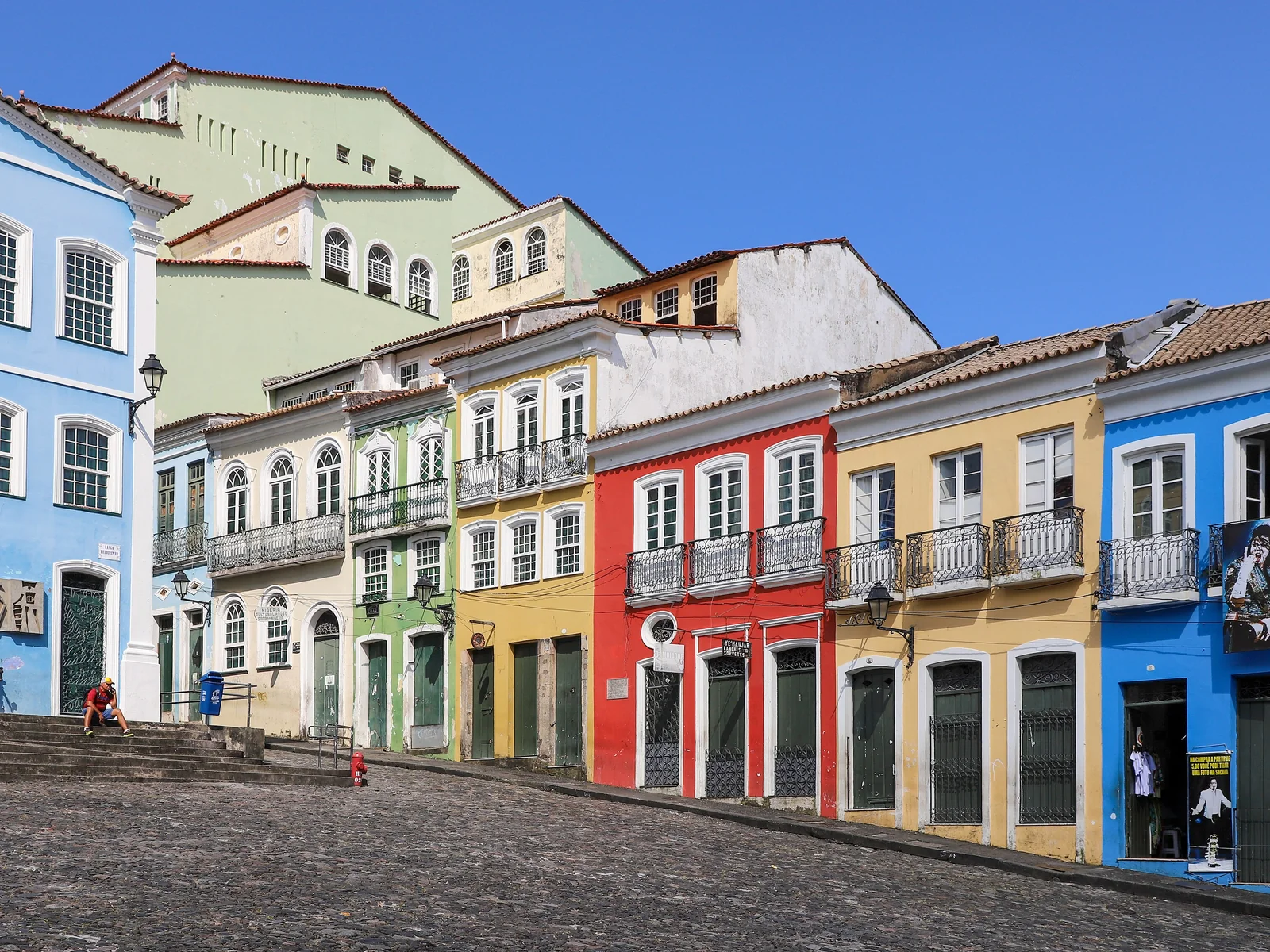
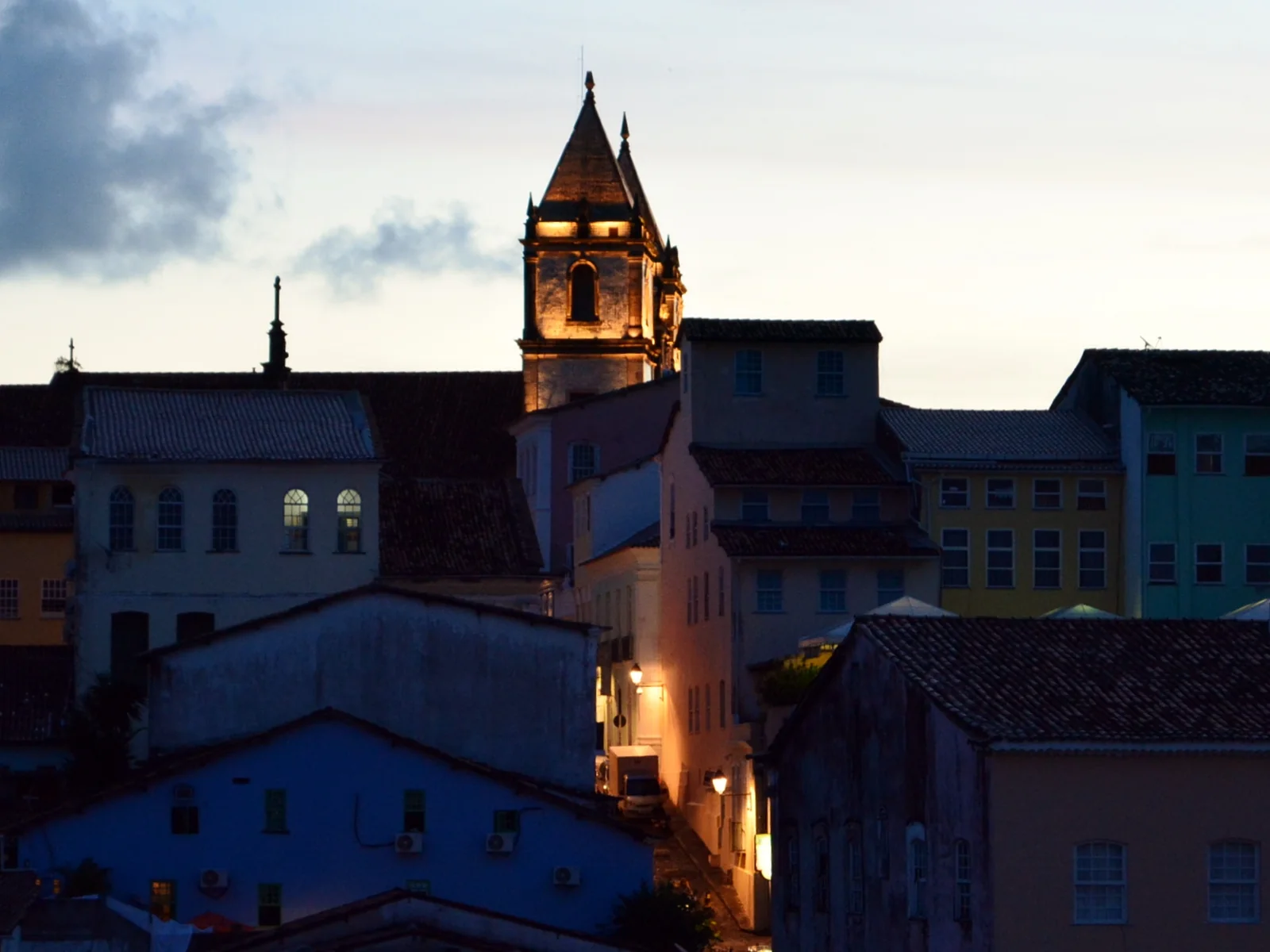
- The historic centre empties after dinner on every night but Tuesday. Early evening in the Pelourinho is one of its best hours; wandering the deserted ladeiras at 1 am is how the rare bad story starts. See it early, then be somewhere lively or be home.
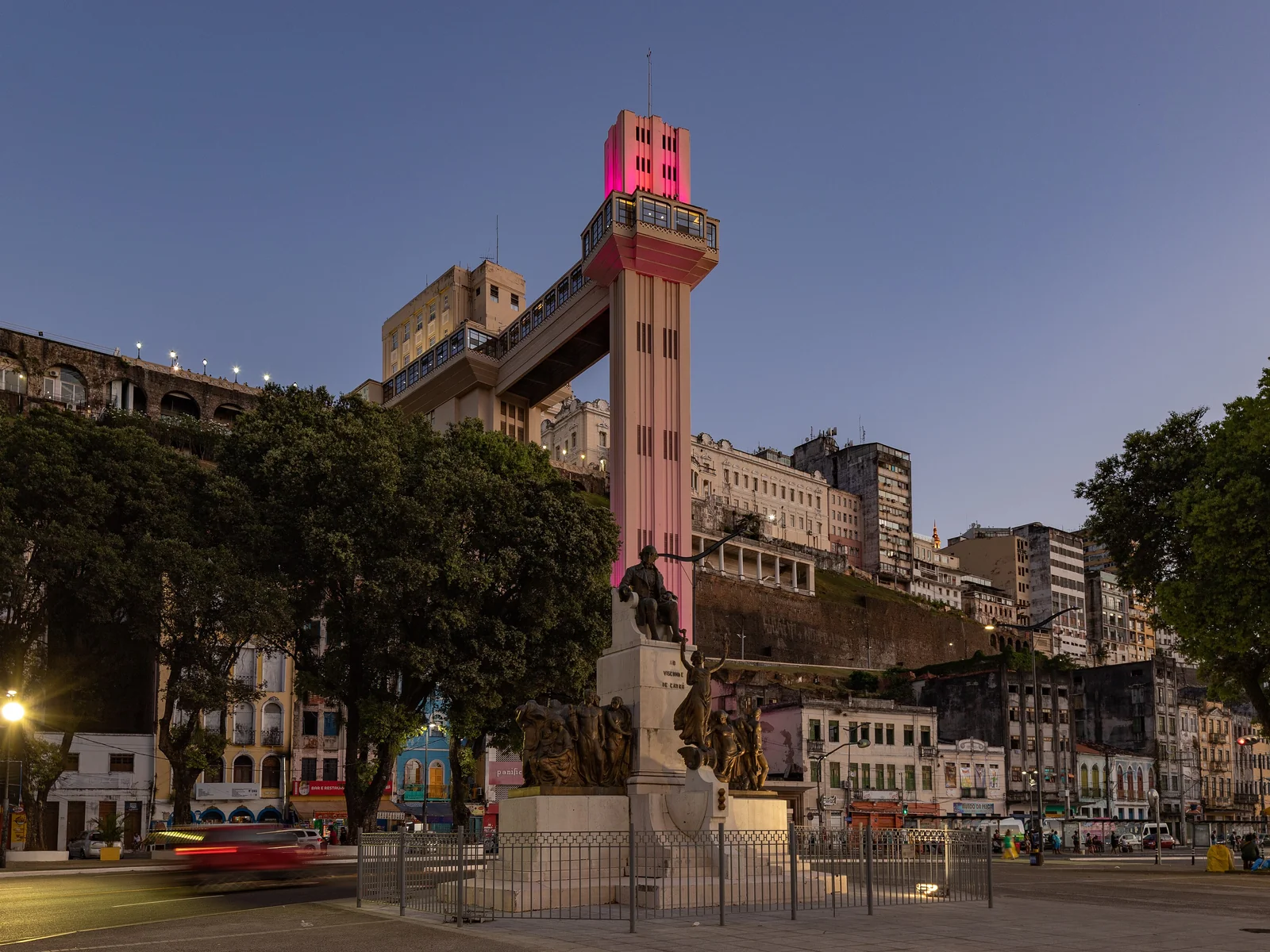
- Comércio and the Cidade Baixa shut with the offices. The lower city is a working daytime district; after dark there is nothing open and nobody about. Cross it in a car, not on foot.
- Beaches at night are for walking past, not across. The lit, busy stretches of promenade are fine; the dark sand beyond them is not. No midnight swims, no shortcuts over the beach.
- Keep the phone pocketed on quiet streets, and carry only the evening’s money.
None of this adds up to a tense night out. The rules take about a day to become automatic, and solo travellers can run Salvador at night alone on exactly this system — our solo travel guide covers the specifics, and getting around Salvador deals with the transport in detail.
Rio Vermelho, where the night actually lives
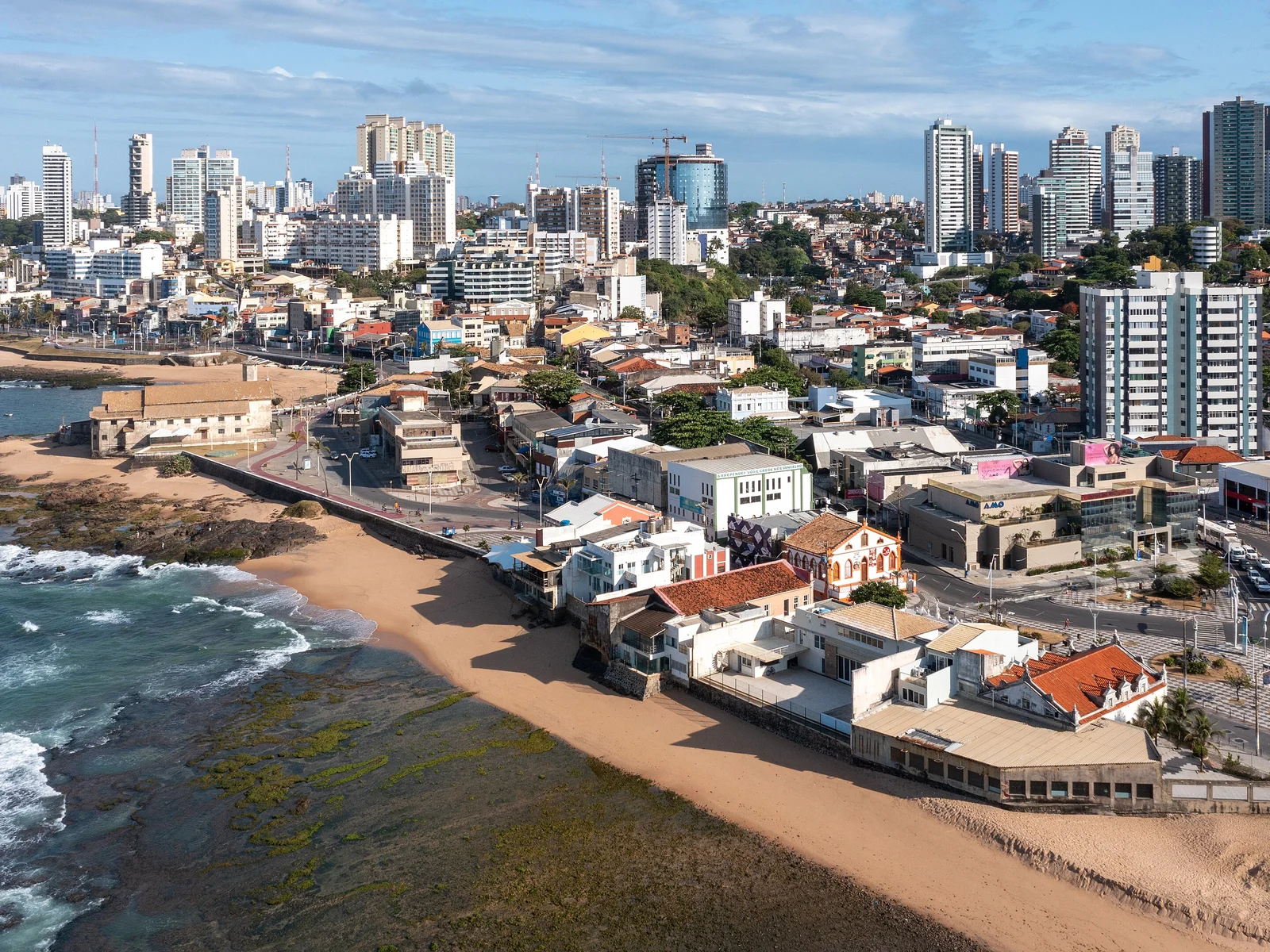
Ask anyone in Salvador where to go tonight and the answer, most nights, is Rio Vermelho — a seaside neighbourhood fifteen minutes’ ride from the Cidade Alta, the city’s bohemian quarter since long before the word was a marketing term. Jorge Amado lived here; his house on the Rua Alagoinhas is now a museum. The night arranges itself around two squares a few steps apart. Largo de Santana, which the whole city calls Largo da Dinha after the acarajé matriarch whose family still runs Casa da Dinha there, fills with tables on the cobbles from early evening. Downhill at Largo da Mariquita, Acarajé da Cira fries into the evening — before nine is safer than after — and an acarajé eaten standing, with a cold beer from the nearest bar, is a legitimate dinner.
On the seafront, the Vila Caramuru complex runs live music on several stages from about 6 pm, Thursday to Saturday. Around the squares the classic botecos hold the line: Boteco do França, the best known of them, lists hours past 2 am every night of the week and 3:30 am on Friday and Saturday. There are cocktail bars, an Irish pub and a couple of small clubs if you want them, but the neighbourhood’s true genre is the table on the street. Our Rio Vermelho guide maps it square by square.
Tuesday in the Pelourinho: the Bênção
One night a week, the old city stays properly awake. Terça da Bênção — Blessing Tuesday — grew out of the Franciscans’ weekly blessing and bread hand-out to the poor, and over the decades the hours after the evening mass turned into an open-air party across the quarter’s squares. From about 7 pm the drums start. Gerônimo, whose song É d’Oxum is close to a city anthem, has sung on the Escadaria do Passo — the theatrical staircase off the Ladeira do Carmo, the one filmed in O Pagador de Promessas, the 1962 Palme d’Or winner — for more than twenty years of Tuesdays. These days the show generally lands on the last Tuesday of the month, so check before you build an evening around it. In the summer season, Olodum rehearses at the Praça das Artes from 7 pm, a short walk away.
Honesty requires a footnote: people who knew the Bênção in the 1990s call today’s version a quieter affair, and they are right. It is also still free, still real, and still the easiest way to hear serious drumming without buying a ticket. If you are staying in the Cidade Alta, it happens at your door.
Sunset first: Barra’s orla and the Santo Antônio terraces
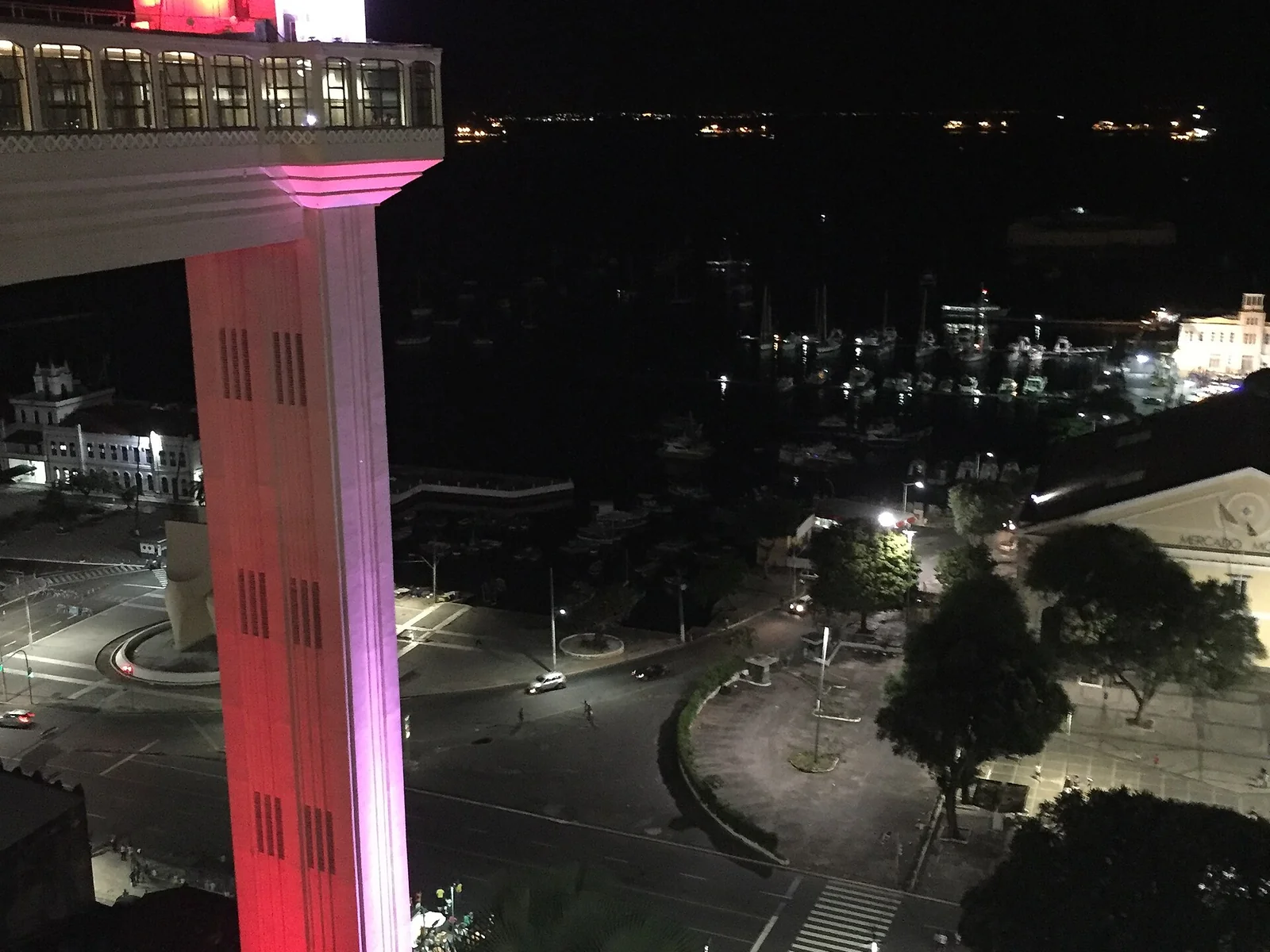
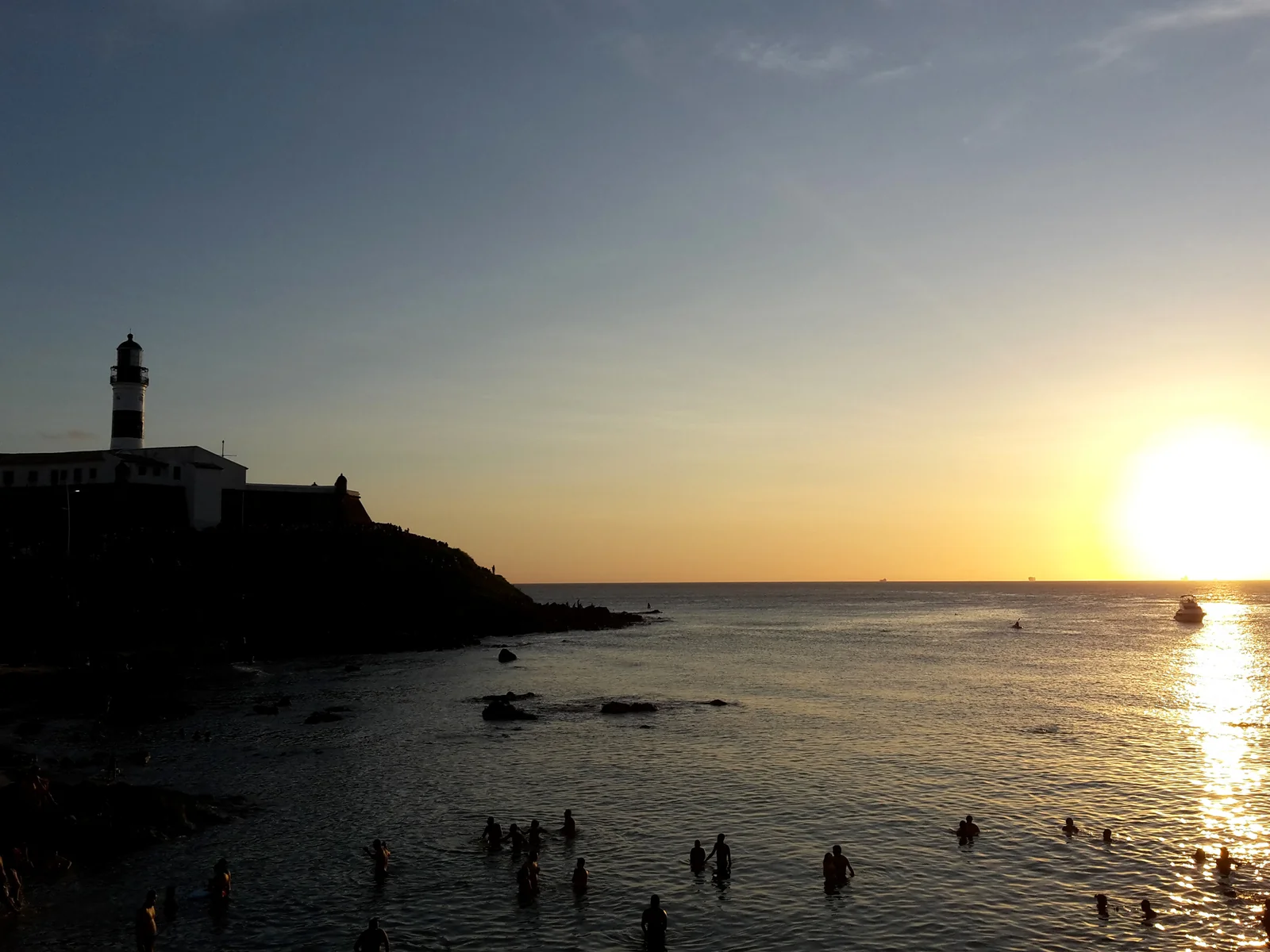
Salvador faces west over its bay, which makes the early evening a fixture rather than a bonus. At Porto da Barra the sun drops into the sea in front of the beach and the crowd applauds it down. Afterwards the orla — the seafront promenade running from the Farol da Barra towards Ondina — stays busy for hours with runners, kiosk tables and families taking the air; it is one of the easiest places in the city for an evening walk, provided you stay on the lit promenade and off the sand.
The quieter version is ten minutes’ walk from our suites, along the ridge north of the Pelourinho. Santo Antônio Além do Carmo does its evenings on terraces. Bar Cruz do Pascoal, pouring since 1952 on the Rua do Carmo, hangs its tables over the edge of the ridge with the Cidade Baixa and the whole bay below, and stays open to midnight from Tuesday to Saturday. Cafélier, at Rua do Carmo 50, serves coffee, cake and wine on a balcony built for the sunset, and half the neighbourhood’s pousadas will pour you a caipirinha on a veranda. On Saturdays, the long-running JAM no MAM — the jazz session at the Museum of Modern Art in the Solar do Unhão — starts around 6 pm as the light goes down over the water; check the programme, and take a car both ways, because the Avenida Contorno below is not a walking road at night.
December to February: rehearsal season
In the run-up to Carnival, the big percussion groups rehearse in public, and the ensaios are some of the best nights of the year — Carnival energy at neighbourhood scale, with room to breathe. Olodum’s Tuesday rehearsals at the Praça das Artes in the Pelourinho have run from early January through Carnival week in recent seasons, from about 7 pm. Timbalada rehearses on Sundays at the Candyall Guetho Square in Candeal, its home ground: the 2025–26 season ran roughly fortnightly from early December to late February, starting at 4 pm and rolling into the night, with tickets sold online. Other blocos, Ilê Aiyê in Liberdade among them, keep their own summer calendars. Carnival 2027 falls in early February, so the season builds from late November 2026. Dates shift every year; our music, nightlife and Carnival guide keeps the current picture.
What’s actually open late
A short field guide to closing time, as of mid-2026:
- Restaurants — most kitchens take last orders between 10 and 10:30 pm, a little later in Rio Vermelho at weekends. Salvador eats at 8 or 9; arrive then, not at 10.
- Botecos and bars — the default night out. Busiest from 9 pm to 1 am; Rio Vermelho’s holdouts run to 2 or 3.
- Street food — the acarajé stands are the city’s evening institution, and in Rio Vermelho several fry late. Elsewhere the baianas pack up earlier: an evening acarajé is a before-nine errand, not an after-midnight one.
- Clubs — a modest scene, mostly in and around Rio Vermelho. The city’s real talent is the open-air party, not the velvet rope.
- Delivery — the apps run late citywide, which is how much of Salvador actually handles midnight hunger.
A good night, run from the Cidade Alta
A template that works on almost any date: sunset with the bay at your feet at Cruz do Pascoal or on the Cafélier balcony, ten minutes’ walk from the suites while the streets are still lively. Dinner in the quarter, early. Then either a quiet last hour on a terrace, or an Uber to Rio Vermelho for the music and the same cheap ride back to a door the driver can stop in front of. On the last Tuesday of the month, skip the car entirely: Gerônimo’s staircase and the Bênção are five minutes away on foot.
That is the real case for sleeping in the historic centre. The city’s one great weekly street party happens outside your window, and every other night of the week is a ten-minute, five-euro ride from wherever the night has gone instead. Our four suites put you in the middle of it, with the evening already underway downstairs.
Salvador, in images
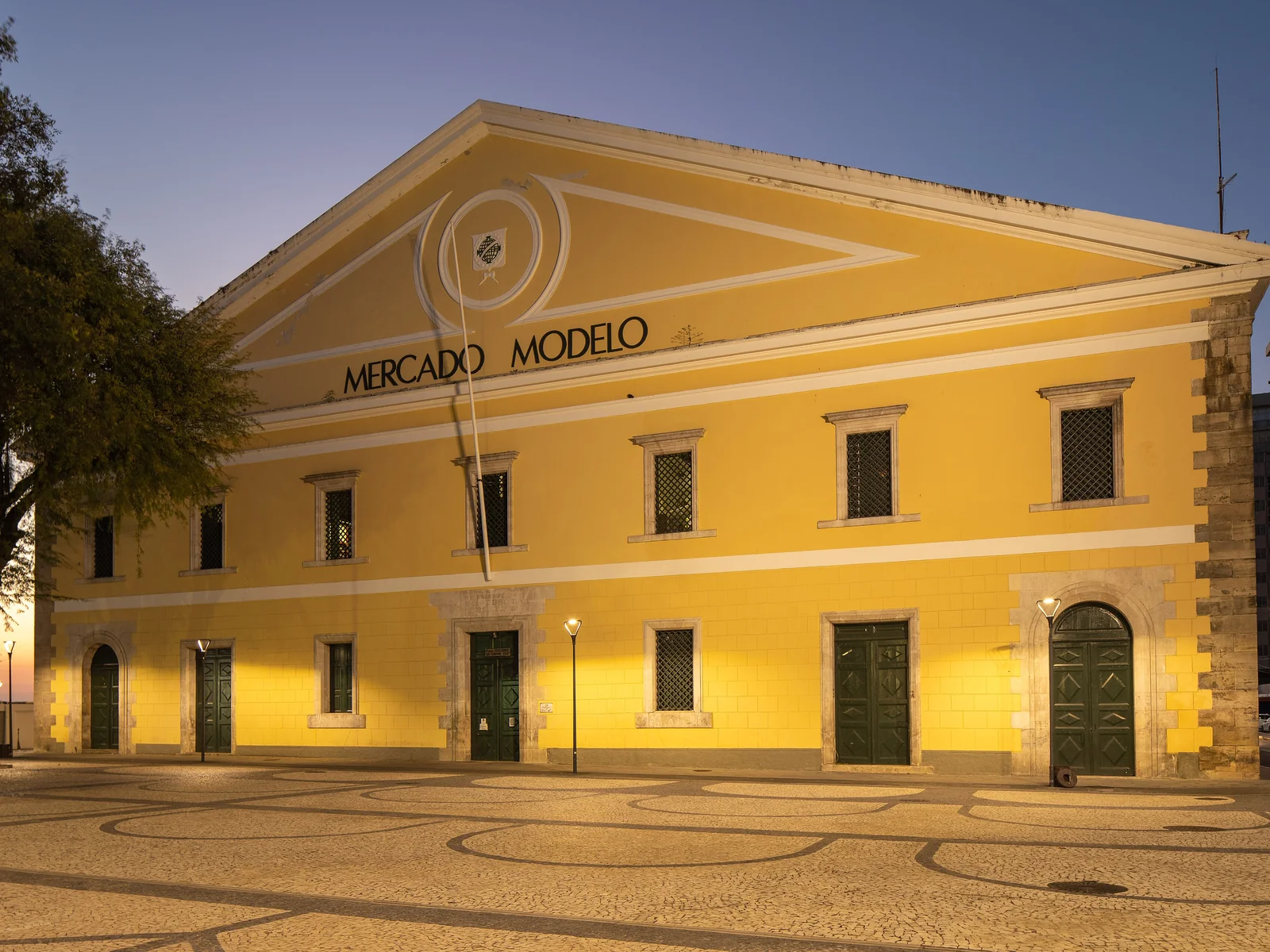
Photographs of the neighborhood, restaurant, and beach featured in this guide, with credit to each photographer.
Ready to discover Salvador?
Book one of the four Via Avantgarde suites in the Pelourinho — and receive the complete guides with recommendations for your stay.