Itaparica Island the island everyone sees, few visit
Itaparica island from Salvador: the São Joaquim car ferry or the Mar Grande lancha, a colonial town and fort, calm bay beaches, oysters, and the bridge now being built.
The essentials in 30 seconds
Itaparica island is the long green line you look at across the water from every terrace in the Cidade Alta, and the quiet joke of Salvador is that most visitors never once set foot on it. Reaching Itaparica island from Salvador comes in two shapes: the São Joaquim car ferry, an hour across the widest part of the bay, or the little Mar Grande lancha, fifty minutes from the Terminal Náutico below the Elevador Lacerda. What waits is not a resort strip. It is a colonial town with an eighteenth-century fort and a church mortared with whale oil, calm bay beaches where the water barely moves, and beach bars where lunch is a plate of oysters and a cold beer at a plastic table. The place is sleepy. That is the whole point. Give it a half-day for the town or a full day for a beach, and time the boat back for golden hour, when the city skyline lights up across the water behind you.
The island you keep looking at
The Baía de Todos os Santos holds around fifty islands, and Itaparica is by far the biggest — roughly 239 square kilometres, which makes it the largest sea island in Brazil. It sits directly across the bay from Salvador, close enough to watch the weather cross it from the Cidade Alta. Two municipalities split it: the town of Itaparica at the northern tip, and much larger Vera Cruz, whose seat is the ferry town of Mar Grande and which takes in most of the island down to the mangroves in the south. For a place this size, an hour from a capital, it is remarkably undeveloped — a few small towns, many coconut palms, and long stretches of shore holding nothing but a bar and a fishing boat. People come for the day and go home at dusk; very few stay. None of this is neglect so much as the island's character, worth knowing before you go: arrive expecting sights to tick off, and you will be disappointed by two in the afternoon.
Two ways to reach Itaparica island from Salvador
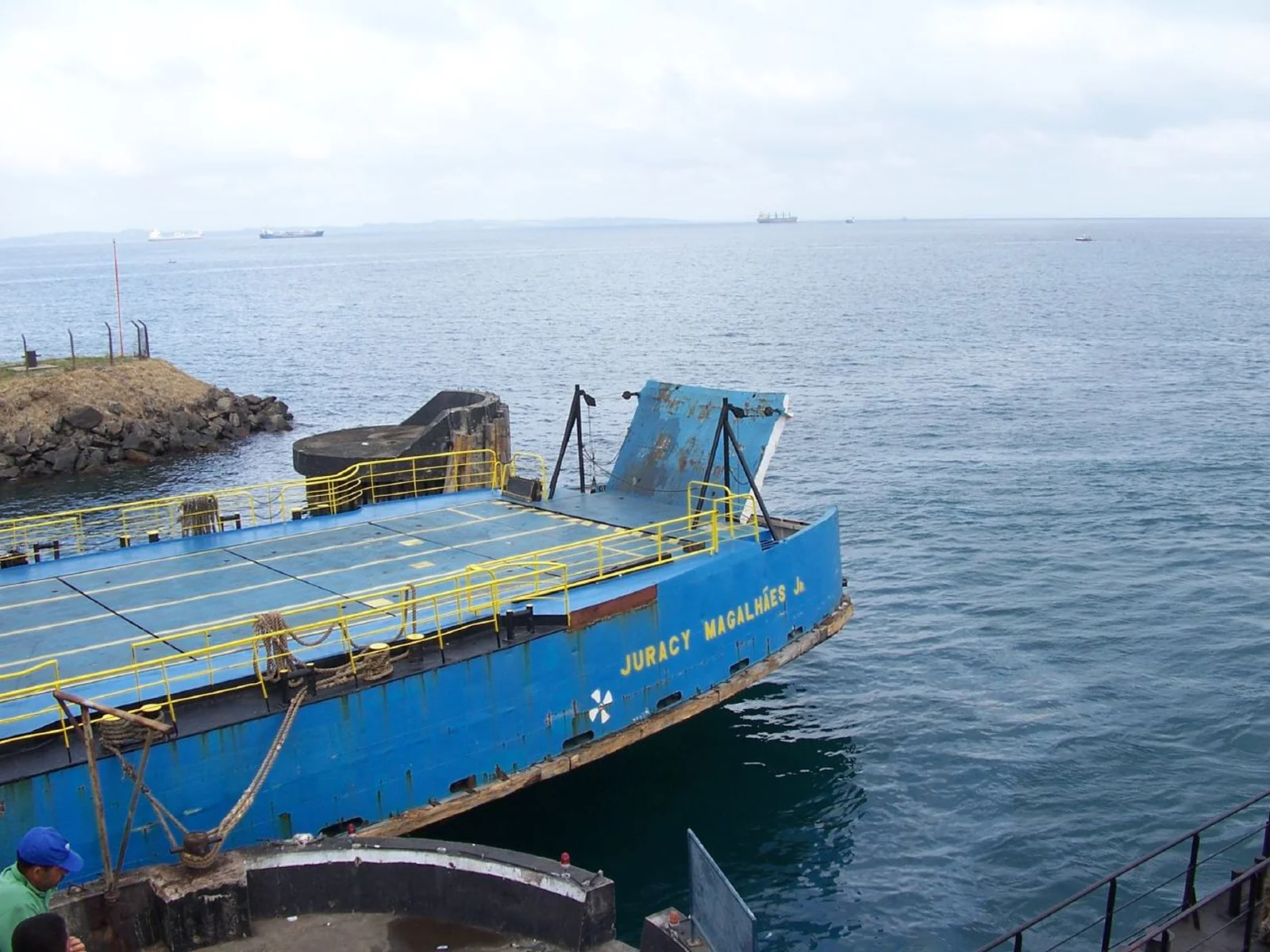
There are two honest crossings, and they suit different days. The São Joaquim car ferry runs roughly hourly from about 05:00 to 23:30 — from 06:00 on Sundays — and takes 60 to 80 minutes to cross the widest reach of the bay to the Bom Despacho terminal. A foot passenger pays R$ 7.20 on weekdays and R$ 9.50 at weekends and on holidays; a small car crosses for R$ 64.70 (about US$ 13), under the fare table in force since March 2026. This is the one to take if you are bringing a car or heading for the far south of the island, though Bom Despacho lands you a fair drive from the old town.
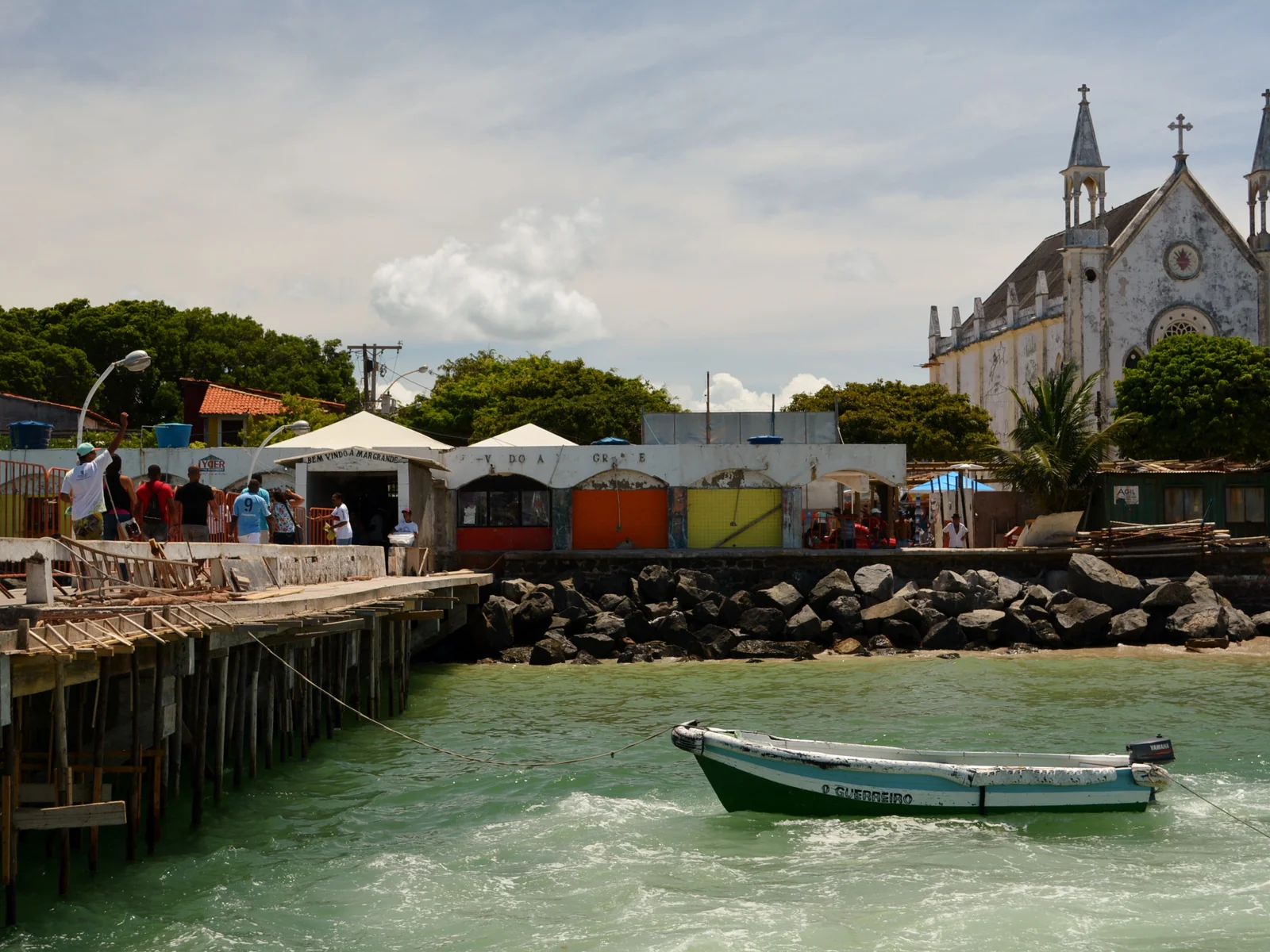
The Mar Grande lancha is the other way in. These small passenger boats leave the Terminal Náutico beside the Mercado Modelo, directly below the Elevador Lacerda, every half hour or so, and take about 50 minutes to Mar Grande. The fare runs roughly R$ 8.60 to R$ 10.50 on weekdays and R$ 13.50 on Sundays and holidays — and in 2026 the holiday rate also applies on Carnival Tuesday and on São João. It drops you straight into a beach town, not a car terminal — the better choice for a day on foot. Both routes, with the schooner tours that also stop here, are laid out in our Bay of All Saints boat trips guide.
Itaparica town: a fort, two churches and a mineral spring
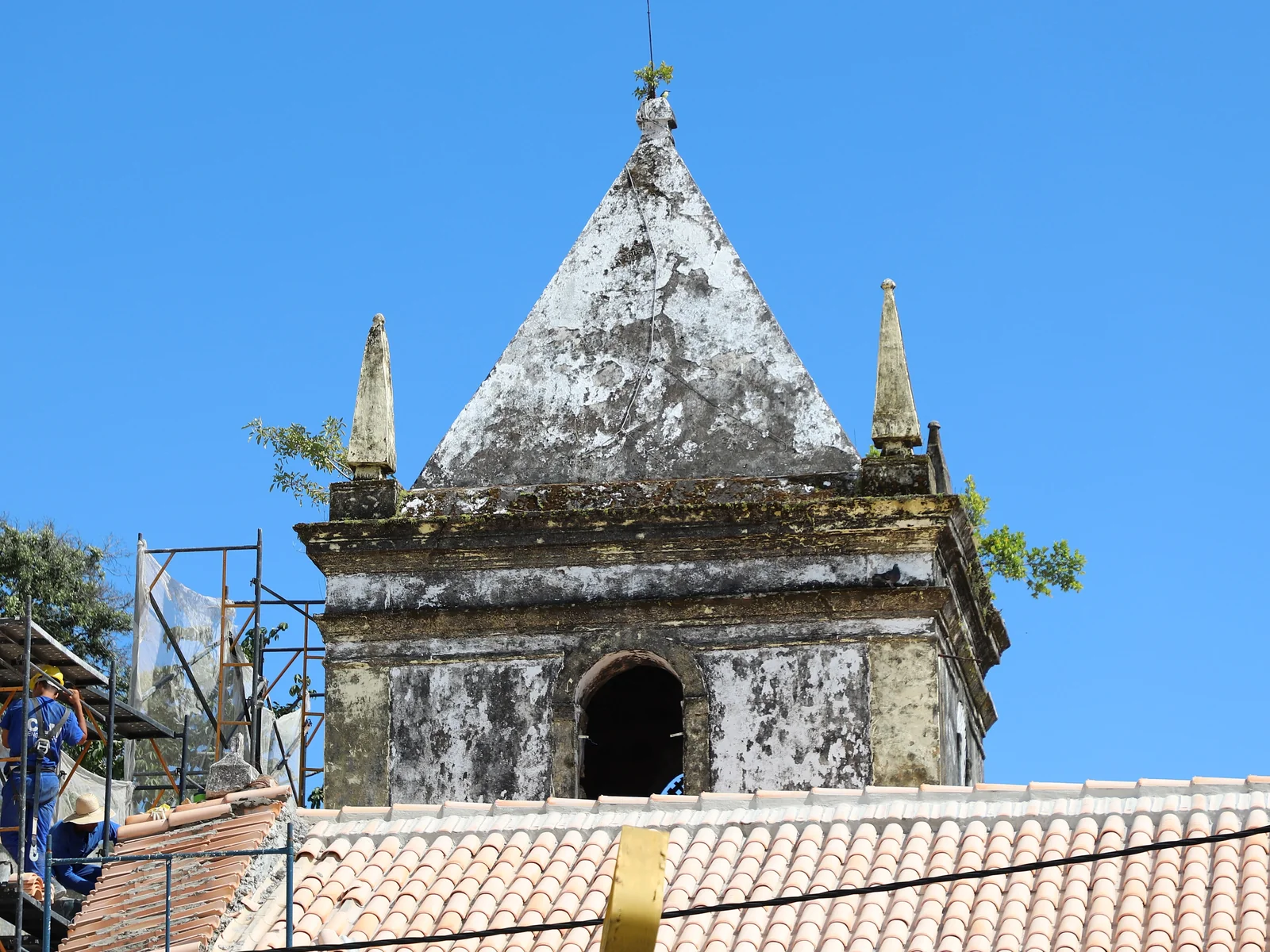
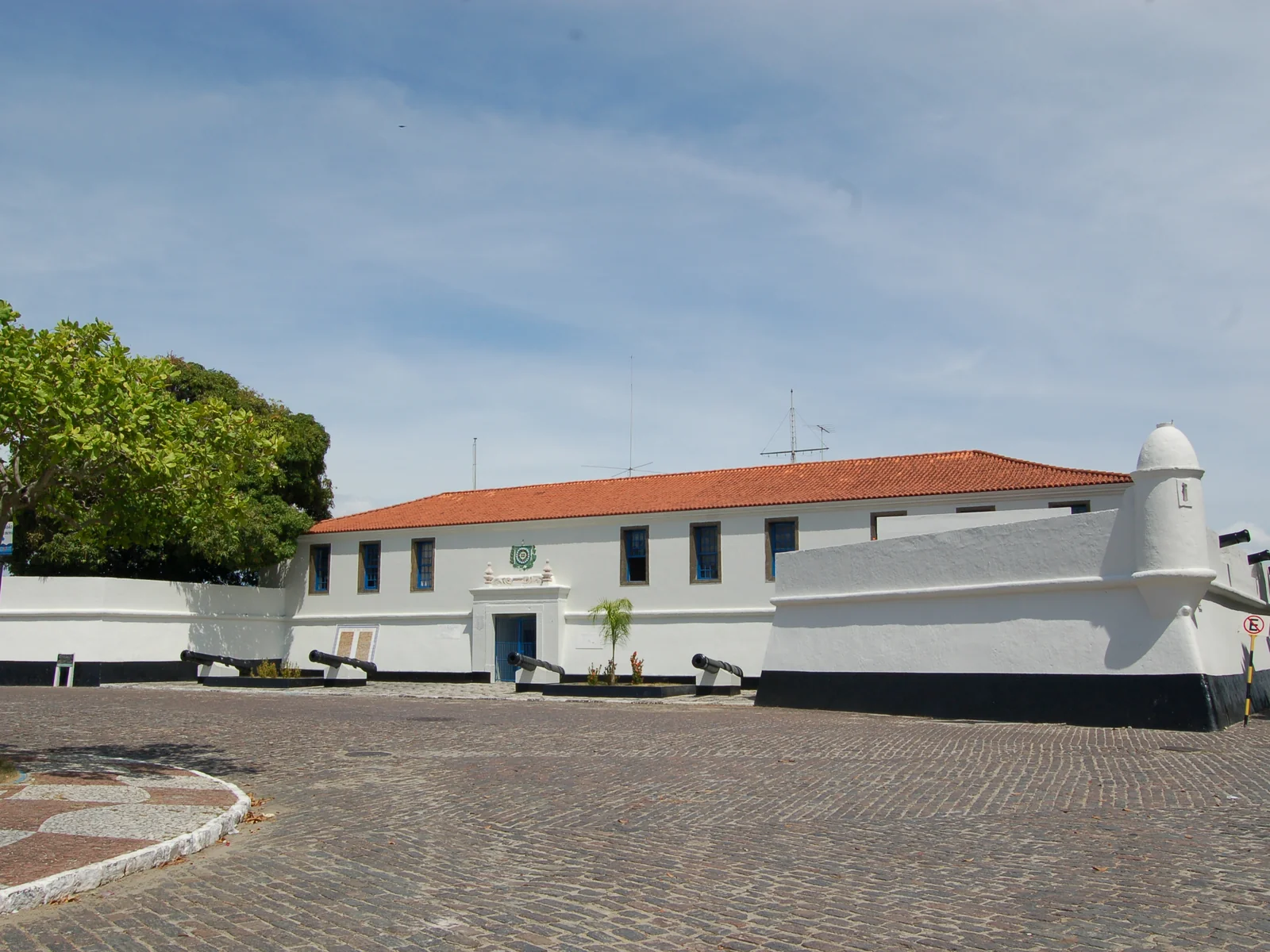
The town of Itaparica, at the island's northern point, is the reason to make the longer crossing. It guarded the approach to the Recôncavo — the ring of sugar towns around the bay — and it is still circled by the evidence. The Forte de São Lourenço, low and squat above the shore, was rebuilt from 1711 by the governor Dom Lourenço de Almeida on the site of an earlier fortification thrown up when the Dutch briefly held the island in the 1640s; it covered the only natural harbour on this side and, much later, was where islanders shelled the Portuguese fleet during Bahia's war of independence. A short walk away, the Igreja de São Lourenço dates to the early 1600s and is dedicated to Saint Lawrence, the island's patron. The grander Igreja Matriz do Santíssimo Sacramento was finished in 1794 after more than three decades of building, its walls bound with lime, stone and whale oil in the local manner; it is a listed monument and was restored between 2018 and 2021. Down on the waterfront, the Fonte da Bica is a mineral spring dressed in stone in the 1840s and said to be the only seaside hydro-mineral fountain in the Americas — it still runs, and locals still fill bottles from it. Come on a weekday and much of the town is shuttered and slow; the churches are often locked between services. That is Itaparica being itself, not letting you down.
Mar Grande, oysters and a plastic table
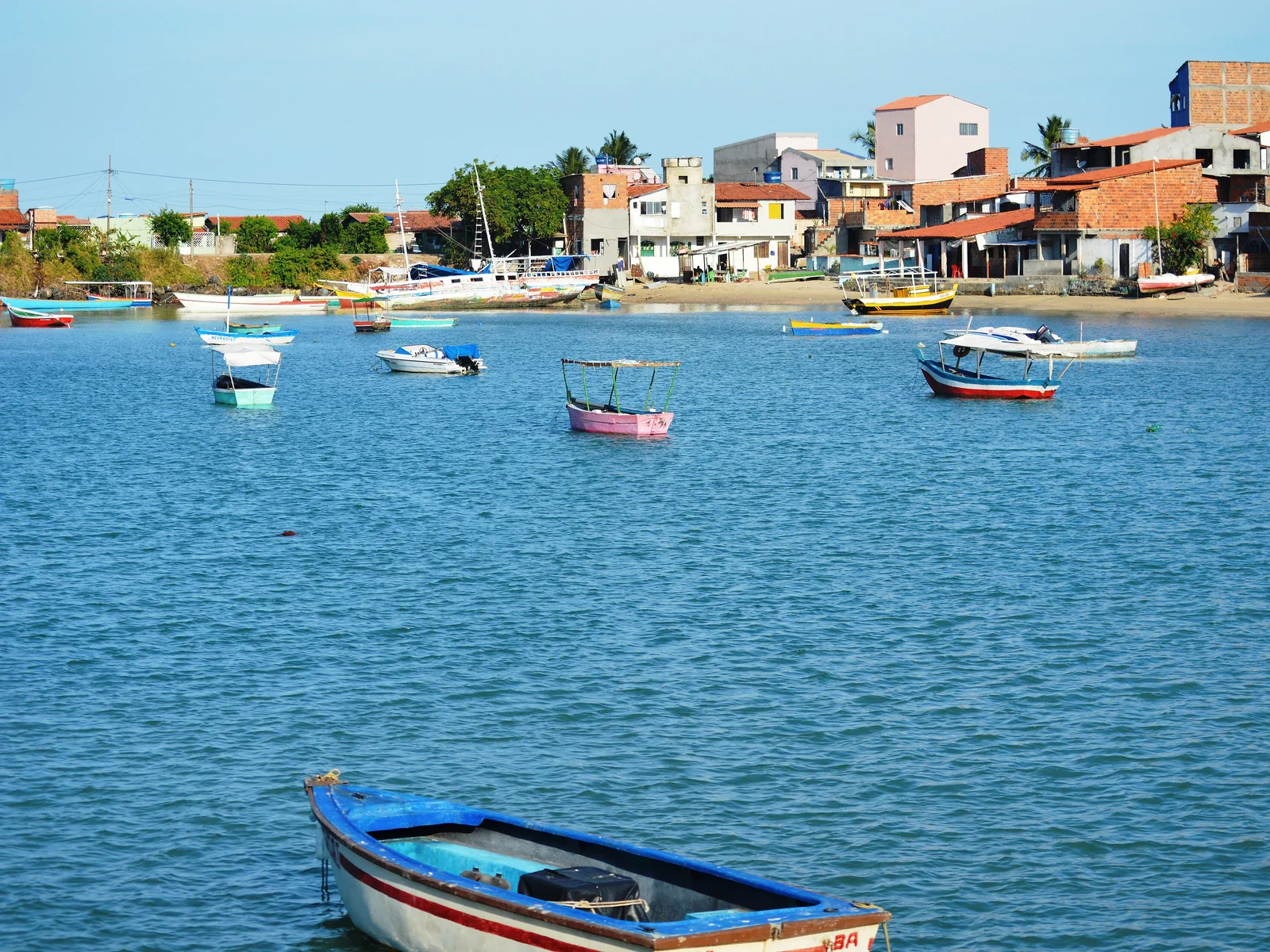
Mar Grande, where the lancha lands, is the island's workaday half — a proper little beach town rather than a monument, with a ferry queue, a square, and a run of barracas along calm, shallow, bay-warm water. This is where the island earns its keep as a day out: a plastic chair half in the shade, a big bottle of beer going soft in the heat, and a run of petiscos from the kitchen behind you — fried fish, casquinha de siri, and above all oysters. The bay is oyster country — gathered from the mangrove roots of the island's southern shore, where families have worked the shellfish beds for generations and the university ran the first local oyster-farming trials back in the 1970s — and a dozen shucked to order, dressed with nothing more than lime, is the honest glory of the place. The kitchens here also do a fine moqueca de arraia, stingray stew, which you will not see on many mainland menus. If you want to know what everything is before you point at it, our Bahian food guide runs through the lot.
The bay-calm beaches
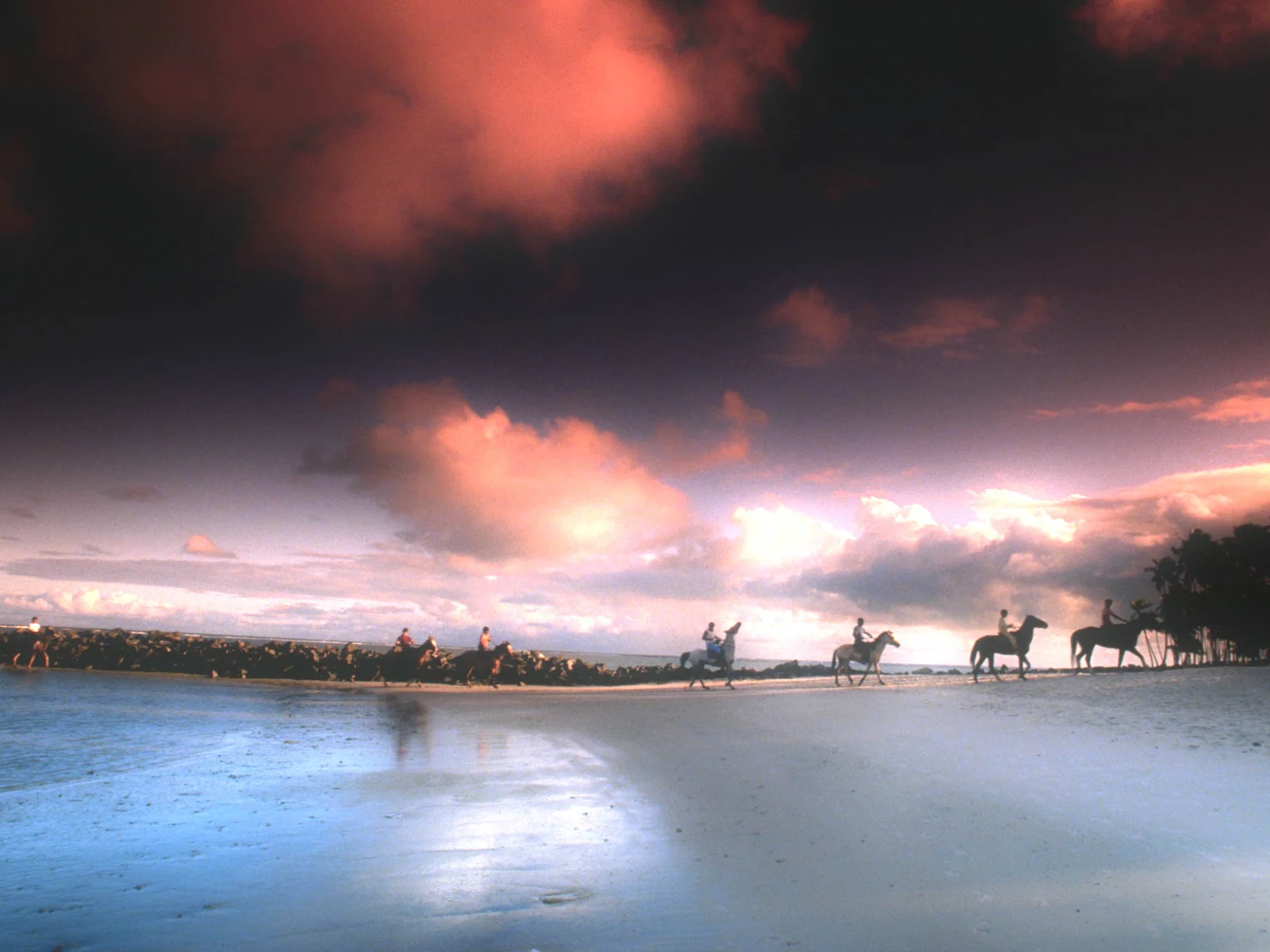
The whole eastern shore of Itaparica faces back into the bay, which means the sea here does almost nothing — flat, warm, shallow water over pale sand, the opposite of the surf beaches on Salvador's Atlantic side. Ponta de Areia, just north of the Mar Grande terminal, is the easy one: a palm-backed strip of soft sand with bars behind it and enough shade to lose an afternoon. Further down the Vera Cruz coast, Barra Grande is quieter and less built up, the water still glassy. Prettiest of all is Praia da Penha, where a small white church, the Igreja de Nossa Senhora da Penha, sits right out on the point at the end of the sand; it is usually locked — the priest comes over from Salvador only for feast-day masses — but the low-tide pools that open over the reef in front of it are the reason to walk out there. Keep going south and the shore turns to mangrove and near-empty sand around Cacha Pregos, which is where the oysters come from. Where each of these sits against the mainland beaches is covered in our beaches near Salvador guide.
A vanished Club Med and a bridge under construction
Two things bracket Itaparica's recent history, one gone and one arriving. For forty years the island had a Club Med — opened in 1979, the first all-inclusive resort in South America, 330 rooms behind its own gates — until the company pulled out in 2019 and left the site to be broken up and redeveloped. For a certain kind of Brazilian traveller, "Itaparica" still means that vanished resort. The arriving thing is far bigger: the Ponte Salvador–Itaparica, a 12.4-kilometre bridge that would run from the capital straight to the island and, its builders say, be the longest bridge over water in Latin America. After years of surveys and delays, ground was finally broken in mid-2026, with a Chinese-Brazilian consortium on the job and completion years off — the current target is around 2031. You can follow it on the official project site. When it opens it will replace the hour-long ferry with a fifteen-minute drive and change this sleepy island completely — one more reason to see Itaparica as it is now.
The postcard is the way back
Here is the thing nobody tells you about a day on Itaparica: the best view is not on the island at all. Salvador's bay shore faces west, so as the afternoon boat pulls back towards the Terminal Náutico the whole upper city rises out of the water before you — the ridge of the Cidade Alta, the Elevador Lacerda, the white dome of the Bonfim church on its peninsula — and at golden hour, with the sun dropping behind you over the island, it turns the colour of a coin. Cross late in the day if you can: it is the photograph you came to Salvador for, and you can only take it from the water.
Half a day, or the whole thing
For a half-day, take a mid-morning boat, walk the old town — fort, churches, the Fonte da Bica — eat oysters by the water, and catch a late-afternoon crossing back for that skyline. For a full day, cross earlier, spend the middle of it on a bay beach at Ponta de Areia or Barra Grande, and let the pace of the place set your clock rather than the other way round. Either way, do not overload it: Itaparica does not reward a packed itinerary, and half its value is the hour on the water at each end. If you would rather have the whole day organised — boat, lunch, a swim stop — our Frades and Itaparica schooner day folds the island into a classic bay outing. It is one of the gentlest day trips from Salvador there is.
The neat part is how close it all starts. The Mar Grande lancha leaves from the Terminal Náutico at the foot of the Elevador Lacerda, a few minutes downhill from our door — you can be eating oysters across the bay less than an hour after breakfast. That easy reach to the water, and to the historic centre above it, is the argument for basing yourself in the Cidade Alta: have a look at our boutique suites, all of them a short walk from the boats.
Salvador, in images
Photographs of the neighborhood, restaurant, and beach featured in this guide, with credit to each photographer.
Ready to discover Salvador?
Book one of the four Via Avantgarde suites in the Pelourinho — and receive the complete guides with recommendations for your stay.