Dagtrips vanuit Salvador Morro, Boipeba, Praia do Forte, Chapada
Morro de São Paulo, Boipeba, Praia do Forte en Project Tamar, Cachoeira en São Félix in de Recôncavo, Itaparica als halve dag, en de overnachtingsoptie in de Chapada Diamantina. Hoe te kiezen op basis van beschikbare tijd en stijl.
The essentials in 30 seconds
Salvador is the perfect base for the surrounding coast and interior. Within three hours, you reach the six best stops: Morro de São Paulo (2h by catamaran, no cars, pool-calm sea), Boipeba (4h, the un-touristed version), Praia do Forte (1h, Tamar Project and fishing village), Itaparica (1h by boat, Brazil's largest sea island), Cachoeira and São Félix (2h30 by car, the heart of the sugar Recôncavo), and Chapada Diamantina (6h drive or 1h flight — overnight required). This guide explains which to pick by time, travel style, and what you miss if you cut.
How to choose your day trip
Simple rule. One day, go to Praia do Forte; two, go to Morro de São Paulo; three, go to Boipeba; five, open a parenthesis for the Chapada. Culture over beach? Trade Morro for Cachoeira. With small kids? Stay with Praia do Forte. Just want a different island for half a day? Itaparica is the closer, less obvious option.
In every case, Via Avantgarde arranges transport: private van for land destinations, catamaran with transfer for Morro and Boipeba, fast launch for Itaparica, and — for the Chapada — a direct Salvador-Lençóis flight (Azul, 1h, R$ 600 to R$ 1,400 one way) with selected pousada overnight. Request 48h in advance.
Morro de São Paulo — the no-cars island
Morro de São Paulo is the best-known beach village in Bahia after Salvador's. An island in the Tinharé Archipelago, 60 km south of Salvador, it is a small village (about a thousand permanent residents) with five numbered beaches (Primeira, Segunda, Terceira, Quarta, Quinta), one main street, and one rule: no cars. All movement is on foot, by handcart (called tratorzinho), or electric buggy. That detail changes the whole rhythm of the experience.
The crossing is part of the trip. The catamaran leaves the Terminal Marítimo Náutico in Salvador's lower city three times daily (8:30, 9:00, 13:30), arriving in 2h to 2h15. R$ 110 to R$ 180 each way, depending on operator (Biotur, CatamaranAhoyTour, Farol do Morro). In rough seas (especially May–July), the crossing is uncomfortable — bring Dramamine, sit in the back (more stable), and don't eat much before. In calm seas, it's a pleasant trip with a coastal view.
The traditional ferry (slower, 4 hours, R$ 60) is an option for those with time and stomach, but for a day trip, always catamaran. There's also the flight option (15 minutes, R$ 700 to R$ 1,000 one way on a small plane; airport on the Quarta Praia), recommended for those with budget who hate seasickness.
Once in Morro, the five beaches have distinct personalities. Primeira Praia — small, choppy, the arrival point. Segunda Praia — busiest, with kiosks, restaurants, nightlife, and the best sunset on the island, viewed from the top of the Farol do Morro. Terceira Praia — quieter, with low-tide reef pools, ideal for snorkeling. Quarta Praia — long, deserted at the ends, where the upscale pousadas and the airport are. Quinta Praia (officially Praia do Encanto) — the most isolated, reached by tractor or an hour-long sand walk.
For a one-day visit: arrive at 11, walk up the Farol in 20 minutes (postcard view), lunch at Pousada Vila dos Orixás or Café das Artes, swim at the Terceira Praia, return on the 5 p.m. catamaran. For two days, sleep at the Hotel Karapitangui (Quarta Praia, R$ 800 to R$ 1,500/night) or the Pousada Vila dos Orixás (Segunda Praia, R$ 600 to R$ 1,200). morrodesaopaulo.com.br
Boipeba — Morro before tourism
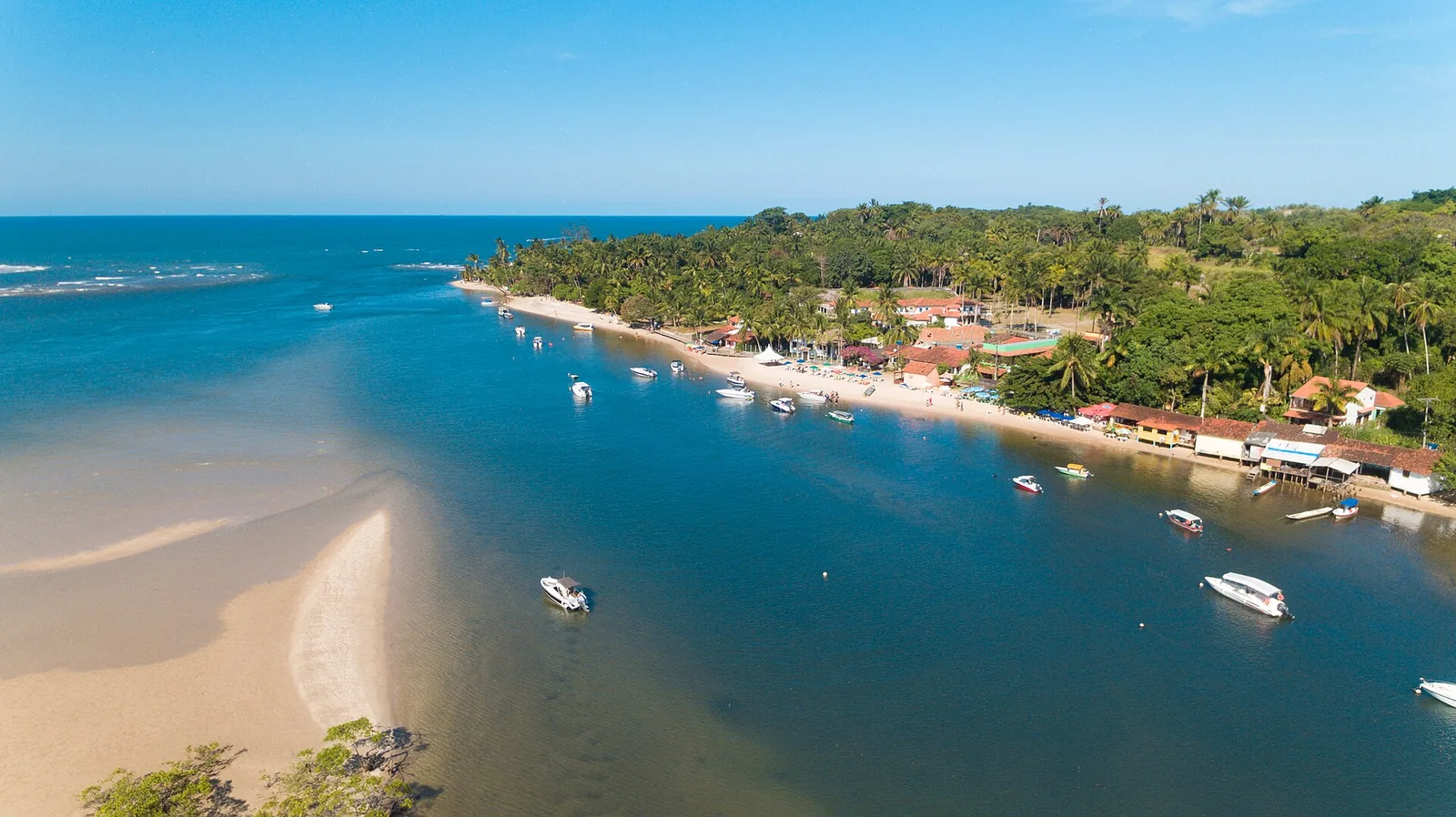
If Morro has 2,000 visitor beds, Boipeba has 200. The island just south, separated from Tinharé by a narrow channel, is the stop for visitors who want the Morro of 1985 — before the paving, before the electric buggies, before the trilingual menus. One village (Velha Boipeba), long empty beaches, transparent water, almost no nightlife.
The hard part is the access — and that's why the place is what it is. Most common way: Salvador-Morro catamaran (2h), then Morro-Boipeba launch (40 min, R$ 80 to R$ 150), then tractor from Velha Boipeba to the beach (10 min, R$ 30). Total 4 to 5 hours. Not viable as a one-day trip; overnight required, ideally two nights.
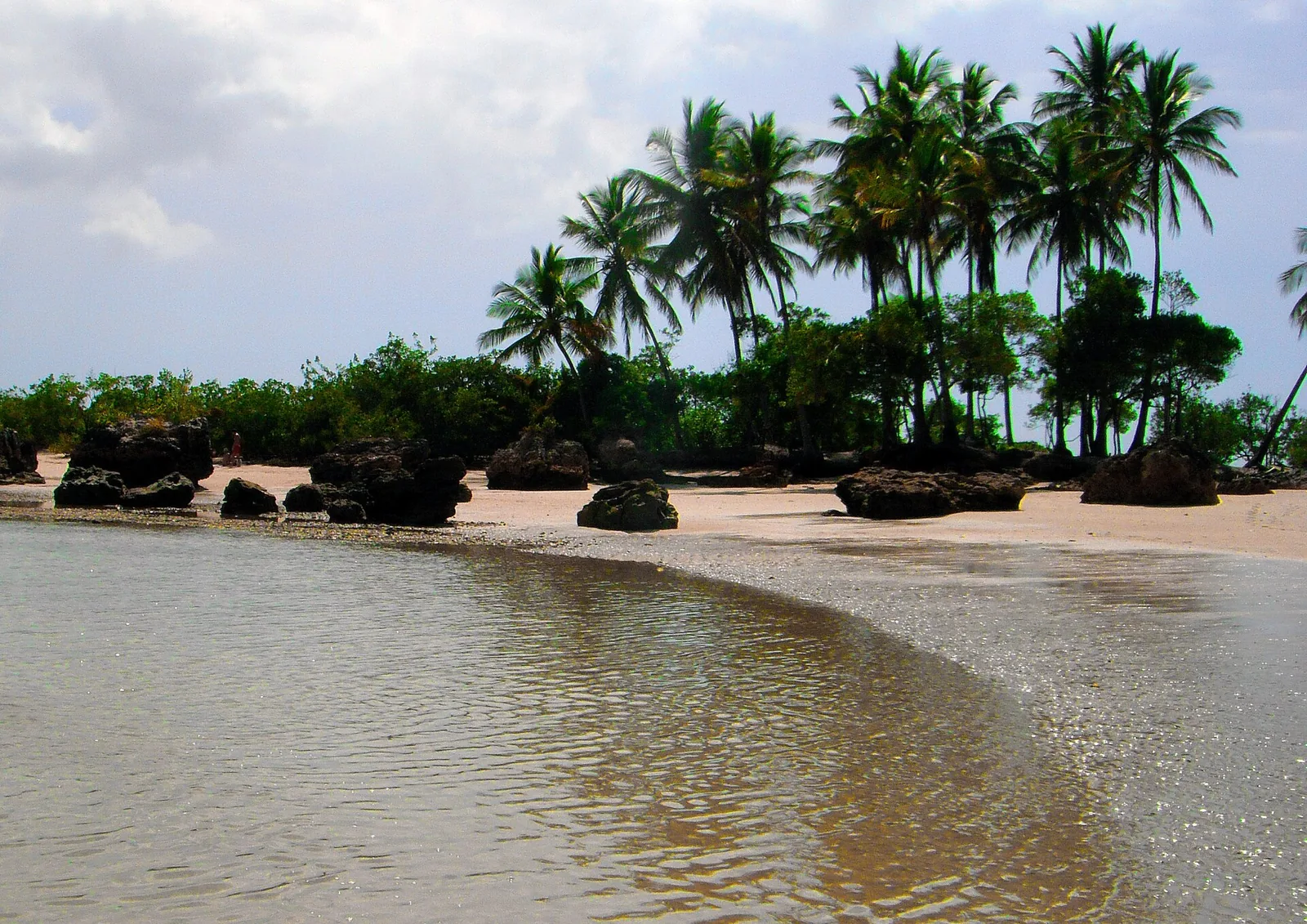
Three Boipeba beaches deserve focus: Praia da Boca da Barra (the first, with restaurants and pousadas), Praia da Cueira (vast, deserted, with low-tide pools), and Praia de Moreré (tractor access, with the famous Moreré natural pool a one-hour low-tide walk away — one of the most beautiful landscapes in Brazil). Pousadas: Mangue Seco (R$ 700 to R$ 1,300/night), Vila Sereia (R$ 800 to R$ 1,500), Tassimirim (R$ 1,200 to R$ 2,500).
Via Avantgarde recommends Boipeba for couples on a second Brazil trip, or for guests doing Salvador + an island, on itineraries from 7 nights. For 4-5 nights, stay with Morro.
Praia do Forte — the best one-day trip
Sixty kilometers north of Salvador, on the Linha Verde, sits Praia do Forte — a fishing village turned tourist destination in the 1970s, with Castelo Garcia D'Ávila, Tamar Project, and the most one-day-deliverable urban-coast village north of Salvador. Access by car or private van, 1h to 1h15 along the BA-099.
The village concentrates on a single Alameda do Sol — a paved walking street, no cars, with restaurants, shops, an ice cream parlor, and the headquarters of the Tamar Project. Tamar is the national sea-turtle protection program, founded in 1980 by biologist Suzana Marcovaldi, and the Praia do Forte base has a public-access aquarium with rescued turtles, an egg-hatching area (January through March, you can watch hatchlings emerge from the sand at sunset — free daily program), and educational exhibits. Entry R$ 35 adult, R$ 18 child, free under 5. Best children's program in all of Bahia. tamar.org.br
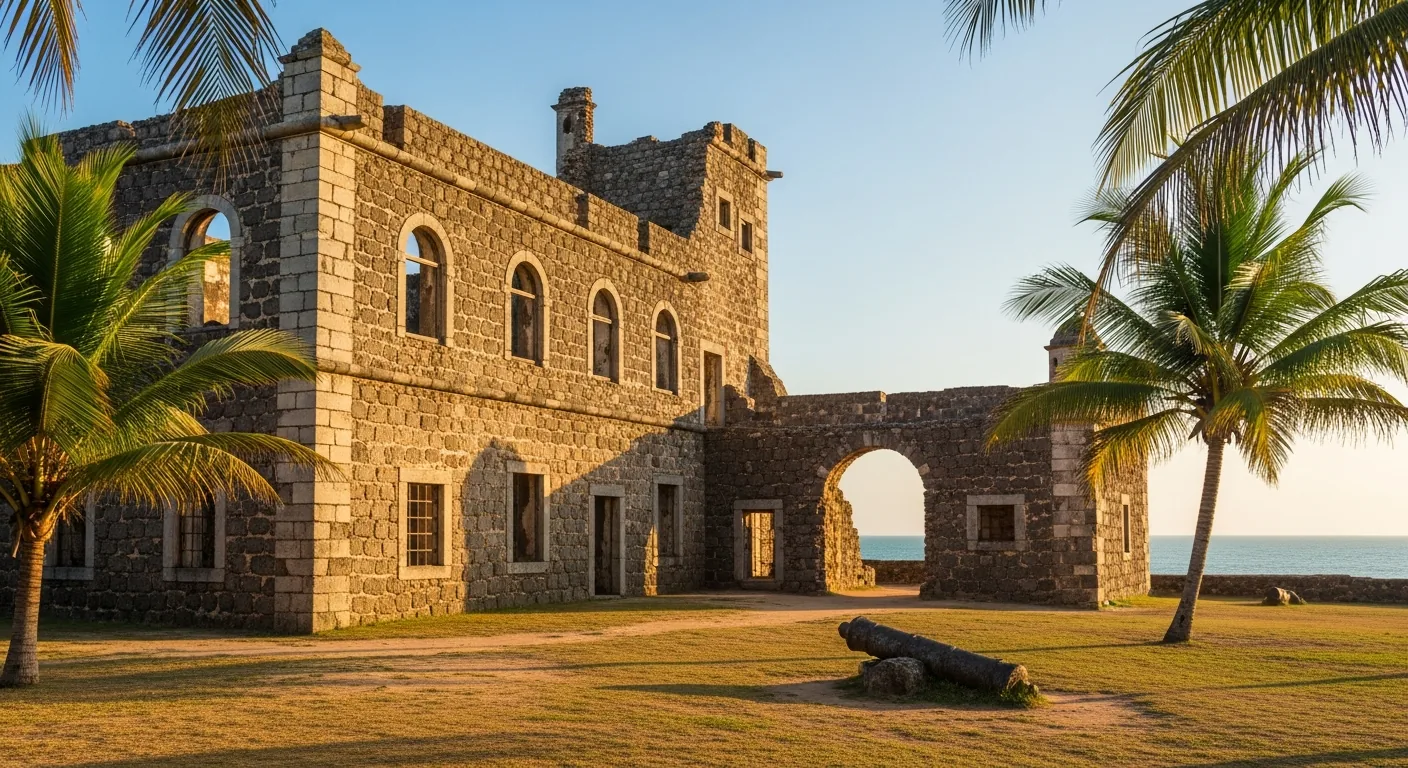
The Castelo Garcia D'Ávila, a sixteenth-century ruin, is what's left of the Casa da Torre, seat of the largest land grant in the Americas (Garcia D'Ávila in 1551 received from the Portuguese Crown lands stretching from Salvador to Maranhão — the largest private land concession in colonial Portuguese history). The ruin is now run by the Garcia D'Ávila Foundation, with a 45-minute guided circuit, archaeological exhibition, and panoramic views. Entry R$ 25.
For lunch: Bar do Souza (grilled fish on the sand, R$ 80-150 per person), Casa do Bacalhau (Portuguese-Bahian, R$ 120-200), or for luxury, Restaurante Tigre Asiático at the Tivoli Ecoresort (Asian-Bahian fusion, R$ 250-400, reservation).
Itinerary: 9 a.m. departure, 10 a.m. arrival, 10–12 Tamar, 12–2 lunch, 2–3 Castelo, 3–5 swim at the village beach or at Imbassaí (quieter neighbor), 5–5:30 sunset and return. Total for two including Via van, entries, and lunch: R$ 600 to R$ 1,000.
Itaparica — the lunch island
The Ilha de Itaparica is Brazil's largest sea island (236 km²) and sits just 12 km from Salvador, on the other side of the Bay of All Saints. The fastest day trip there is: 35 minutes by fast launch (Catamarã Bah-Itaparica, hourly from the Terminal Náutico, R$ 25 each way) or 50 minutes by ferry-boat (R$ 6 on foot). The arrival feels like crossing into another Brazil — Portuguese village of Mar Grande, white houses, seventeenth-century churches, the calm of an interior town.
The standard Itaparica program is a moqueca lunch. The classics: Volta ao Mundo (Mar Grande, beachfront, R$ 100-180 per person, live fish in the tank), Restaurante Tia Toinha (Mar Grande, the legendary cook's house, R$ 80-130, hard to reserve), and Mar e Pesca (Itaparica village, more touristy, R$ 90-150).
Before or after, three stops are worth knowing. Forte de São Lourenço, in Itaparica village, is a 1604 Dutch fortification later passed to the Portuguese — small, free, a bay view. Praia de Coroa, on the northern tip, has pool-calm water and is the island's best swimming beach. Mar Grande historic center, 5 minutes from the dock, has three baroque churches and the colonial townhouse where Castro Alves (the abolitionist poet) lived during his last years.
For a day in Itaparica: 10:00 departure, 10:35 arrival in Mar Grande, 11–12 historic-center walk, 12:30–3 long moqueca lunch, 3–5 beach at Coroa, 5:30 return. R$ 200-350 per person for the full day, including crossing and lunch with wine.
Cachoeira and São Félix — the heart of the Recôncavo
For visitors who prefer culture to beach, here is a day trip not in standard guidebooks: Cachoeira and São Félix, in the Recôncavo Baiano. Two twin cities separated by the Paraguaçu River and joined by the 1885 Dom Pedro II Bridge, they are the heart of colonial sugar Bahia and the cultural capital of the samba de roda.
Access by car: 2h30 to 3h from Salvador via BR-101 and BR-324, with a mandatory stop in Santo Amaro (the birthplace of Caetano Veloso and Maria Bethânia, with the Veloso family house-museum open Saturdays, R$ 10).
In Cachoeira, the circuit is architectural-historical. Câmara Municipal (1698) and the old jail are the two best-preserved colonial civic buildings in Brazil. Igreja e Convento de Nossa Senhora do Carmo (18th c.) — gold-leaf baroque, R$ 5. Igreja Matriz Nossa Senhora do Rosário (17th c.) — where Dom Pedro II's title of Brazilian Emperor was renewed, with a stunning baroque retable. Centro Cultural Hansen Bahia (in the house of the German-Bahian engraver Karl-Heinz Hansen, 1915-1978) — permanent exhibition, R$ 10.
The unmissable program in Cachoeira is the samba de roda. UNESCO Intangible Heritage, practiced at local schools and in private homes every weekend. The Casa do Samba in Cachoeira holds an open roda Saturdays at 7 p.m. (R$ 30, free for Recôncavo residents). The Sociedade Protetora dos Desvalidos, a Black brotherhood founded in 1832, holds a monthly roda — one of the most authentically Afro-Brazilian experiences possible. Have Via confirm the schedule.
For lunch, Restaurante Pousada do Convento (in the old Carmo Convent, now a luxury pousada, R$ 120-180 per person, reservation required) or Maria Faceira (home Recôncavo cooking, R$ 60-90).
For a couple with 5 nights in Salvador wanting a maximum cultural contrast, two days in Cachoeira is the right call. Stay at Pousada do Convento or Pousada Pai Thomaz. R$ 500 to R$ 1,200/night.
Chapada Diamantina — overnight required, worth five
The Chapada Diamantina is Brazil's most beautiful national park — 1,500-meter mountains, waterfalls, caves, sky-blue underground rivers, and a network of villages (Lençóis, Vale do Capão, Igatu, Mucugê) that lived through the 19th-century diamond rush and now live on nature tourism. It is 426 km from Salvador, and the only destination in this guide where overnight is mandatory — minimum two nights, ideally four to five.
Two ways to get there. Flight: Azul flies Salvador-Lençóis (Horácio de Mattos Airport, IATA LEC) on an ATR-72, three weekly flights, 1h, R$ 600-1,400 one way. The civilized option — wheels up after breakfast, lunch in Lençóis. Car: 6 to 7 hours via BR-242, with stops in Itaberaba and Iaçu. We recommend a Via van with driver, round trip, for guests wanting flexibility.
In Lençóis, lodging at Vila Serrano (R$ 600-1,200/night), Canto das Águas (R$ 800-1,500), or — for luxury — Hotel de Lençóis (R$ 1,200-2,500). From there, full-day tours: Cachoeira da Fumaça (Brazil's fourth-tallest waterfall, 380 m, 6 km hike), Poço Encantado (an underground river lit by a sunbeam between April and September), Vale do Pati (a 2 to 5-day trek widely considered South America's most beautiful), Morro do Pai Inácio (1,150 m viewpoint with epic sunset), and Gruta da Lapa Doce (an 850 m limestone cave).
For a typical Salvador + Chapada couple, we suggest 5 nights in Salvador (Via Avantgarde) + 4 nights in Lençóis, with a round-trip Azul flight. The combination is the classic Bahian itinerary — starts in the heat of the sea and ends in the cool of the highlands.
Costa do Sauípe — only if you're already in the resort
Mentioned for completeness. Costa do Sauípe is the hotel complex built by Sebrae in the 2000s, 70 km north of Salvador, with five large hotels (Renaissance, Sheraton, Marriott) and an all-inclusive resort infrastructure. If you're staying at Sauípe, do Salvador as a day trip from there; if you're staying at Via Avantgarde, there's no reason to go to Sauípe — the destination is designed for a travel profile opposite to the historic-apartment lodging we offer.
Bay schooner — the maritime option
For visitors who don't want to leave Salvador but want a different day, there's the schooner cruise of the Bay of All Saints — a 6 to 8-hour trip from the Terminal Marítimo visiting three islands: Frades, Itaparica, and the Ilha dos Pássaros. The traditional schooners (operators: Bah-Tour, Saveiros da Bahia) cost R$ 90 to R$ 180 per person, lunch included. Private launches (arranged by Via, with crew and captain) start at R$ 1,800/day for up to 8 people.
The cruise combines low-tide swimming-pool stops, lunch at a beach restaurant, and a return crossing the bay in late afternoon with the sun dropping over the city. The most relaxing way to spend a full day, and it works any month of the year (the Bay is sheltered and calm year-round).
Quick comparison
1 day → Praia do Forte (car) or Itaparica (boat). 2 days → Morro de São Paulo. 3 days → Boipeba. Cultural focus → Cachoeira (1 day) or Cachoeira + Santo Amaro (2 days). Nature focus → Chapada Diamantina (4 to 5 days). Sea but staying close → Bay schooner.
Golden rule: don't try to do everything in one trip. Salvador + Chapada is the right combo for 9-10 nights. Salvador + Morro is the right combo for 5-6 nights. Salvador alone is a city that reveals itself in 4-5 nights for guests who want culture, food, and urban beach — the rest is for the next trip (and there will be a next trip; nobody comes to Salvador only once).
Salvador, in beeld
Foto's van de wijk, het restaurant en het strand uit deze gids, met vermelding van elke fotograaf.
Klaar om Salvador te ontdekken?
Boek een van de vier Via-Avantgarde-suites in de Pelourinho — en ontvang de volledige gidsen met aanbevelingen voor uw verblijf.